10 Things You Didn't Know About Superstar Billy Graham

Before everyone were superstars, there was the Superstar.
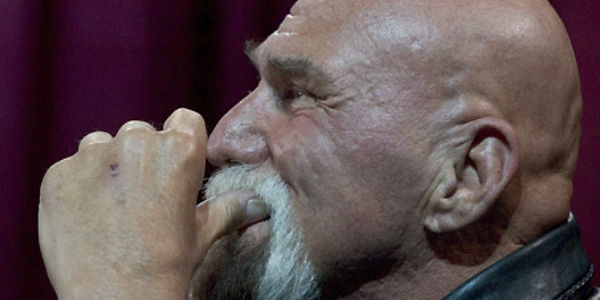
SUPERSTAR BILLY GRAHAM HAS TWO YEARS LEFT TO LIVE. This was the news that confronted crestfallen wrestling fans the world over last month. For longtime fans, this is sad, but not unexpected, news. The Superstar has battled numerous health issues since the tail end of his career in the 1980€™s, when WWF cameras documented his (Vince McMahon bankrolled) hip replacement operation. Today, The Superstar struggles with heart problems, diabetes, Hepatitis C and abject, gut wrenching depression, to name but a few of his problems, but somehow, he always seems to survive. In 2002, Graham€™s life was saved by a liver transplant he received from 26-year-old Donor Card carrier Katie Gillroy, who had tragically died in a car accident. Now, the lifesaving organ that has kept one of wrestling€™s true greats alive for around 12 years, is finally failing. The odds of him receiving another are, it must be said, pretty damning. At any given time, there are around 20,000 Americans awaiting liver transplants and, due to a lack of donors, only about 3,000 of them are actually able to receive the vital organ. HYPERLINK "http://whatculture.com/wwe/superstar-billy-graham-told-he-has-two-years-to-left-to-live.php" As What Culture writer Douglas Scarpa reported in August, with organ donors in such short supply, it seems highly unlikely that doctors will be willing to use one of these precious organs on a man of Graham€™s age and condition. Beyond keeping the man in our thoughts and (if you are so inclined) prayers, there is little that we fans can do to help him except to show our support and gratitude for his work and contributions to the industry we love. It is no secret that Superstar Billy Graham is one of my favourite performers of all time. Writing this piece is one way of celebrating his life and career. Carrying a donor card at all times is another. If you€™re a younger fan and haven€™t yet encountered €˜The Reflection of Perfection€™, then it is my firm hope that this article will encourage you to look him up and, in so doing, begin to enjoy the greatest character, as well as the most charismatic performer, to ever set foot inside a wrestling ring... Here€™s 10 facts to get you started...

10. Before Billy Graham Was A Wrestler, Wayne Coleman Worked Crowds As A Travelling Preacher...
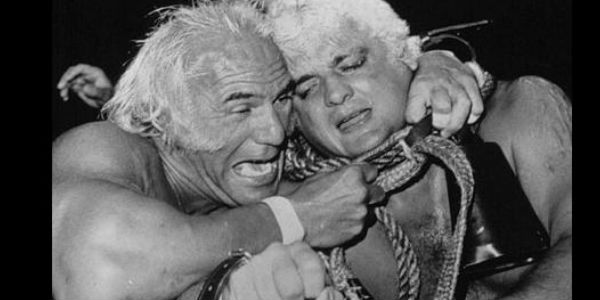
In the 1960€™s, long before he became known to fans around the world as €˜The Ladies€™ Pet and The Man€™s Regret€™, the man born Eldridge Wayne Coleman underwent a religious awakening... When he was a teenager, a religious family contacted Coleman, saying that they had seen his picture in a bodybuilding magazine and that they felt it was their duty to convert him to Christianity. Accordingly, Coleman dropped out of school and became an evangelist. A natural showman, evangelism came easily to the man who would ultimately name himself after a famous preacher. Like wrestling, evangelism shows often employ catchy promo skills and dynamic, intense performances and, like wrestlers, travelling preachers go from town to town, putting on shows for legions of adoring fans. As in wrestling, the audience has to believe what they are seeing and buy into it wholesale in order to really enjoy it. Substitute the name of your opponent for €˜Satan€™ and it€™s easy to see where the foundations of Graham€™s wrestling character came from. So, in some respects, one could say that The Superstar€™s much vaunted promo skills and stagecraft were genuinely God given, albeit in a mostly earthbound sense...

9. His Wrestling Mentors Included Stu Hart, Dr. Jerry Graham, Abdullah The Butcher And Pat Patterson...
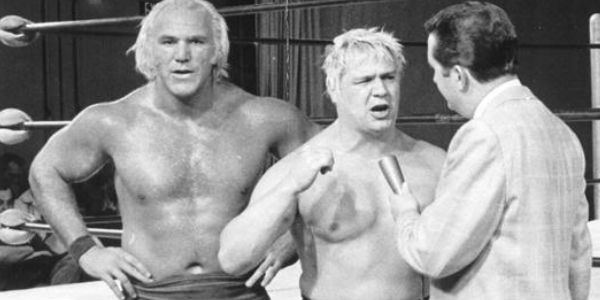
Wayne Coleman chose his ring name in honour of the American evangelist Billy Graham, who had served as a spiritual adviser to Presidents Eisenhower, Johnson and Nixon. The original Billy Graham was also a supporter of Martin Luther King, Jr, whom he once bailed out of prison after the latter was arrested for demonstrating. Keeping to the religious theme, Coleman appropriated the €˜Superstar€™ prefix from the musical €˜Jesus Christ Superstar€™. The Graham surname, on the other hand, originally came from Dr. Jerry Graham, the founding member of the fictional Graham wrestling family. Various incarnations of €˜The Golden Grahams€™ were major tag team draws at certain points in wrestling history. Long before the Dudleys, The Graham clan included a strange cavalcade of characters such as €˜Crazy€™ Luke Graham and Eddie Graham, who would be remembered best for his time as a promoter in Florida and for serving as NWA President in the 1970€™s... Dr. Jerry Graham was prodigiously talented and a genuine draw in the 50€™s and 60€™s. However, he suffered from debilitating mental illness (he was a shell shocked WW2 veteran), as well as uncontrollable alcoholism. By the early 70€™s, The Good Doctor€™s bad reputation had preceded him and promoters were no longer willing to hire him. In the meantime, Wayne Coleman had travelled up to Canada, where he would be trained for the ring by the famous promoter, wrestler and shooter Stu Hart. Hart gave Coleman the basics, but his real mentor in Canada was Abdullah The Butcher, the famous bloodletting madman, who taught him all about the inner workings of the wrestling business. Hoping for one last chance at stardom, Dr. Jerry Graham joined forces with the charismatic rookie. The pair toured Indian reservations in Arizona, putting on small-scale shows for very little (if any) financial gain. Eventually, they went to work for promoter Mike LeBell in L.A. It was here that the young Graham had the chance to wrestle (and learn from) established stars like Rocky Johnson (father of The Rock) and €˜Classy€™ Freddie Blassie. After he and The Good Doctor had parted ways (Billy was forced to distance himself from Jerry€™s antics in order to keep his job), Billy Graham was fortunate to learn from legends such as €˜The Blonde Bomber€™ Ray Stevens, High Chief Peter Maivia (Grandfather of The Rock) and Pat Patterson whilst working for Roy Shire in San Francisco. Patterson was probably the biggest influence on Graham€™s career, he taught Graham what to do in the ring, when to do it and €“ most importantly, why to do it. If you watch video footage of Graham selling, you can see Patterson€™s influence all over it. It was under Patterson€™s watchful tutelage that Billy Graham blossomed into a masterful heat magnet. He€™d got his rap from the evangelists; his start from The Good Doctor and now his rough edges were being smoothed over by one of the sharpest minds in the history of the business. Now, The Superstar was ready for immortality...

8. In Real Life, The Superstar Is Close Friends With Arnold Schwarzenegger...
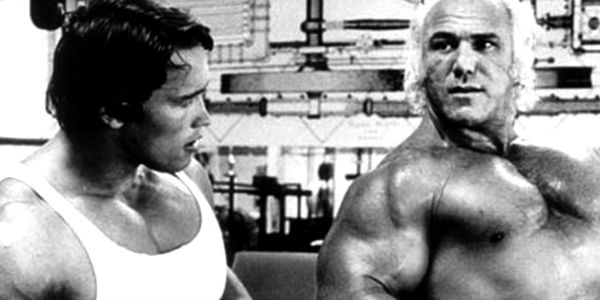
Not only is Billy Graham close friends with movie star and former Governor of California Arnold Schwarzenegger, but the pair were actually training partners for years. Arnie is even the Godfather of Graham€™s daughter... A pre-Superstar Wayne Coleman was one of Schwarzenegger€™s first friends in the USA and the two share a close bond to this day. In Graham€™s autobiography €˜Tangled Ropes€™ he fondly recalls meeting his friend Arnold for the first time (it was after he€™d been released by The Oakland Raiders football team, but before he€™d started wrestling), €œOne night in Gold€™s Gym, I bumped into the €œBlond Bomber€ Dave Draper, and an Austrian immigrant with an incredible physique. Arnold Schwarzenegger had recently moved to the United States, with just a gym bag containing his clothes, but he seemed perpetually wide eyed and happy. I remember him laughing and always telling jokes €“ he was the one who liked to tell the jokes. We became workout partners, and Arnold motivated me to push myself harder in the gym than ever before. He was there, along with Franco Columbo, spotting me when I bench pressed 605 pounds. The world record at the time was 616, held by my friend Pat Casey€ Apparently, Graham laughed when his friend told him that he was going to be a movie star one day. €œYou could only make it in foreign movies€, Coleman admonished, claiming that Arnold€™s accent and unpronounceable surname would never allow for it. Oh, hindsight...

7. He Is A Massive, MASSIVE, Bob Dylan Fan...

Pat Garrett Bob Dylan Billy Graham is a total mark for Bob Dylan; there is no other way to say it. Since Dylan first emerged as a star in the 1960€™s, The Superstar has been a diehard fan. One of Graham€™s major regrets in life is that he never got to meet his idol, although he did come close at one time. In the excellent feature length shoot interview Face-To-Face With Superstar Billy Graham, €˜The Number One Selection€™ tells his friend, indie wrestler Devon Nicholson (AKA Hannibal) all about it, €œSo, I€™m wrestling Ivan Putski. We€™re in a Denny€™s restaurant in Portland, Maine, and he (Dylan) is on tour, the Rolling Thunder Tour 1975, with Joan Baez and some other folks. They pulled into a Denny€™s restaurant and I€™m at the far end of the counter eating, Putski€™s right next to the cash register and these guys walk in and they order food to go and they look at Putski there. €˜Aren€™t you Ivan Putski?€™ €˜Yeah, dobre (Polish for €˜good€™)€™, he€™s working his gimmick (laughs). They said, €˜hey, ssh, but we have Bob Dylan out in the van. We just finished a concert and he would love to meet you. And Putski could care less about meeting Bob Dylan! I€™m the mark for Bob Dylan down at the far end, not knowing anything! So they take Putski out into the van, he meets Dylan and he sees a poster, they€™ve got a poster of me and Ivan Putski - versus Superstar Billy Graham up in their van! On the Rolling Thunder Review! Putski comes back in and says €˜Dobre, guess who I just met? Bob Dylan!€™ I said €˜What? You met Bob Dylan? Why didn€™t you come and get me!?€™ He said, €˜We had to kayfabe, we have to kayfabe!€™ I said €˜forget kayfabing, brother, this is Bob Dylan! Man, this is more than kayfabe! (laughs)€ Graham and another friend, former NWA Champion Dusty Rhodes were (and are) total Dylan obsessives. According to €˜Tangled Ropes€™, they would ride together from town to town, endlessly debating the meanings behind Dylan€™s lyrics. By Graham€™s account, they would even play each other Dylan albums over the phone. Graham did eventually become friends with Dylan€™s manager and, as it turned out; The Superstar€™s all-time musical hero was also a fan of his, which has to have been very gratifying for the lifelong Dylan aficionado.

6. He Was Never Really The Arm Wrestling Champion Of The World...
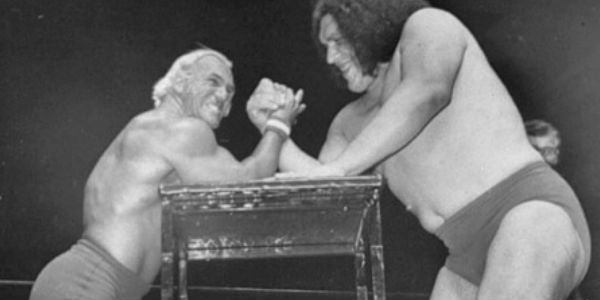
For years, Superstar Graham traded off of a supposed €˜Arm Wrestling Champion of The World€™ title, challenging members of the audience, as well as other wrestlers, to arm wrestling contests. The gimmick drew very well, but it was just that, a gimmick. Eventually, Graham found himself hounded by genuine arm wrestlers looking to challenge his €˜title€™ €“ and they followed him everywhere. Today, that would be ridiculous, but in the kayfabe era, it was de rigueur for heels to be hounded by angry fans that believed that everything they saw on television (or in the arenas) was actually happening for real. The truth is that Billy Graham was a lot stronger than most men and could probably beat the average mark in an arm wrestling contest. He had been arm wrestling for years whilst working as a bouncer in Arizona. In fact, he was so good that he managed to make a reasonable sideline from it. However, in order to keep his mystique and to absolutely guarantee a win, the referee would surreptitiously give Graham a head start. This occasionally led to legitimate fights breaking out between The Superstar and the disgruntled audience member who just got cheated in front of all his friends, as well as a paying crowd. In what will probably be Graham€™s last public arm wrestling match, he was €˜cheated€™ by his friend Hannibal in a restaurant. The pair HYPERLINK "http://www.youtube.com/watch?v=eVu7HqT0_fA" worked the entire establishment into such a frenzy (presumably just for fun), that the police even showed up to investigate. Graham and his wife Valerie ended up being legitimately barred from the premises! The video of this incident was posted on YouTube (by Hannibal himself) last year. Modern era fans can now catch a glimpse of the intense heat gained from this classic angle, which obviously still gets people riled up today - as a quick scan of the comments under the video will attest.

5. €˜The Reflection Of Perfection€™ Was The First Long Term Heel Champion In The WWE...
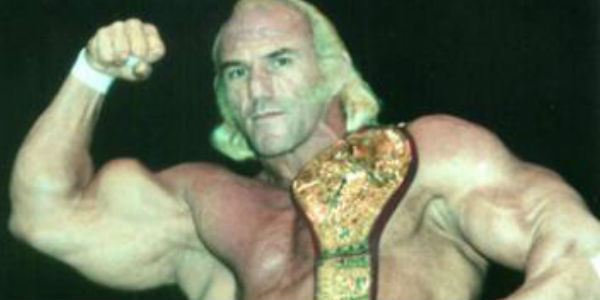
Today, it is more common to have a heel champion on top for an extended period than a babyface. Whilst €˜Wild Bill€™ Longson should probably go down in history as the industry pioneer for this approach, it was The Superstar who introduced the concept of a true heel champion to (what was then) the WWWF in the late 1970€™s... The era of the great Bruno Sammartino was coming to a close and Vince McMahon Sr. was looking for a new babyface crowd-pleaser to headline in and around the New York area. McMahon had settled on Bob Backlund, who was an affable personality, amateur wrestling champion and extremely gifted worker, but he felt that Backlund was still a little green to fill Bruno€™s massive boots. So, with the complicity of The Superstar, the older McMahon hatched a clever plan. Traditionally, heels were used only as €˜transitional€™ champions. The idea being that, if the old hero and the new hero met face-to-face, the outgoing star would eclipse the upcoming star and the loyalist fans would never accept the newcomer in the role of champion. Wrestling logic dictated that a transition was needed. A heel would triumph over the tired veteran hero, only to be vanquished a few weeks (or less) later by the fresh-faced young hero. It is a plot used extensively in mythology, folk tales, novels and movies from around the globe, recycled since time immemorial and it had worked in wrestling for over half a century at that point. This time, however, the plan was a little different. McMahon wanted Graham to buck the trend and remain on top for the better part of a year. This, he gambled, would infuriate the fans, but, crucially, would keep them coming to the shows. Graham€™s innate charisma had proven him to be a major draw by this point, so €˜The Tower of Power€™ was probably the one wrestler he had who could be relied upon to draw Sammrtino-type money. During this time, the company would commit themselves to developing Backlund and allow him to improve at his own rate, whilst keeping the title strong in the eyes of the fans. McMahon€™s master plan worked well, if anything, it worked too well. Billy Graham was so unique, so different and so thrilling to watch as Champion that he was actually getting over as a babyface. The Superstar was shining so brightly and drawing so well, that it seems mad in hindsight that they ever took the belt from him. Every promoter dreams of a run like the one that Graham was having and sadly, it was over before it had reached its zenith, cut short just before it had a chance to truly explode.... However, McMahon was adamant in his decision, and an embittered and frustrated Graham dropped the WWWF World Heavyweight Championship to Backlund in February of 1978. It would take him years to come to terms with the loss and he was never the same again. Nevertheless, during that one trailblazing title run (possibly the most important in WWE history), everything changed forever.

4. Billy Graham Is Also A Talented Artist...
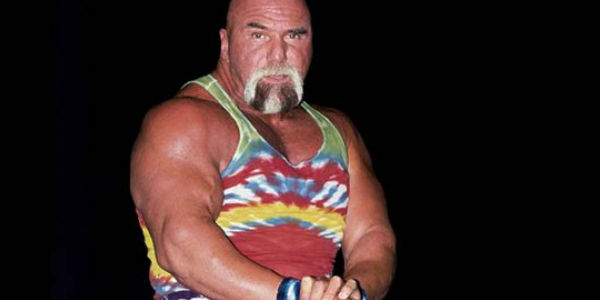
Throughout his life, Billy Graham has been an artist - and not just in the ring or on the mic. These days, The Superstar spends the majority of his free time painting. He describes it as one of his €˜salvations€™. Graham€™s artworks are often created for friends, or for friends of friends, with the sole intention of putting a smile on their faces. In the Face-To-Face DVD, Graham gifts Hannibal with a picture of a red-tailed hawk to give to his father, who had just turned 65. Hannibal then reveals that his own prize possession is a painting of a rhino created especially for him by The Superstar, whilst he was engaged in his own struggles with Hepatitis C. Superstar€™s paintings usually depict nature; indeed, they are reverent to it. His scenes often have a tranquillity about them that wrestling fans may feel contrasts sharply with his flashy, trashy ring persona. He paints animals, plants and landscapes; he uses colour boldly and expressively and has a good eye for composition. He also paints images of pro wrestlers, including one of his former protégé Ric Flair that he is especially proud of. He has painted portraits of Terry Funk and Hannibal, but his personal favourite painting of anything simply depicts a cactus, some boulders and a sun stained Arizona landscape. In his way, Billy Graham is not unlike a traditional samurai artist; grizzled and battle-scarred, complete with a dark side you could measure in fathoms, but, in his quiet time, capable of creating sweet, picturesque images of striking peacefulness and boundless joy. €œI am blessed to be an artist,€ he says.

3. Graham Was Nearly Given The Hulk Hogan Gimmick...
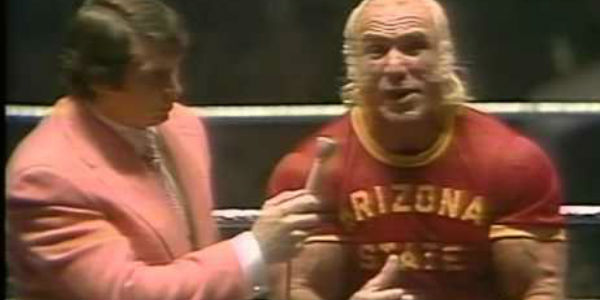
€œI always thought that we missed the boat with Superstar, and quite frankly, had I been in charge at the time, he would have been Hulk Hogan for me€ €“ Vince McMahon. Vince McMahon, Sr. was an old school wrestling promoter, through and through. He lived by the old ways, the old codes and the old agreements. He wasn€™t always trusted by the NWA, but he was always respected by his rivals. Under his watchful, steady guidance, the WWWF had blossomed into a major territory, with the earnest, reliable and principled Bruno Sammartino as its biggest and brightest star. Vince€™s father, Jess McMahon (along with former €˜Goldust Trio€™ member Toots Mondt) had founded the WWWF€™s precursor, Capitol Wrestling Corporation. His biggest star had been €˜Nature Boy€™ Buddy Rogers, a charismatic heel with an athletic build and an irrepressible aura of vanity about him. These men, Vince Jr€™s forebears, were the old guard; the keepers of the wrestling flame. Through trial and error, they knew what worked and what wouldn€™t, or at least, they thought they did. The younger Vince McMahon was a different animal entirely. He didn€™t meet his biological father until he was 12 and, before then, had been subjected to a rough upbringing that included an abusive stepfather. The lessons learned by the son were violently detached from those espoused by the father. From an early age, Vince Jr. learned to be ruthless, cunning and, if necessary, cruel. To this day, McMahon is as well known for his occasional generosity as he is for his callousness and all around combativeness. Vince€™s outlook on the business differs greatly from that of his father or his grandfather. For Vince Jr, wrestling always needed an edge. €˜Sports entertainment€™ needed rebellion and Billy Graham was the perfect rebel. With The Superstar as his Champion, Vince wanted to crown wrestling€™s ultimate rogue and market him as a rock star showman and mainstream celebrity. ...But his dad didn€™t approve. Despite his son€™s best efforts, Vince Sr. did not think that The Superstar would make it as a babyface. Senior€™s thinking was that Graham was too big, that his size and obvious strength would make it impossible to illicit sympathy from the capacity crowd. He wanted Superstar to continue playing the role of an arrogant, musclebound bully. It seems likely that Vince Jr€™s idea was to market Billy Graham as a €˜tweener€™ (across between a heel and a babyface), so that he€™d essentially be a babyface with rougher edges. His arrogance and pomposity would remain intact, but the fans would be allowed to fully connect with his charisma and charm. In truth, this is exactly the same approach McMahon took with The Rock when he flipped him baby in the late 1990€™s. The idea of a rebel character that fans could cheer for and get behind was also dusted off and re-hashed for the €˜Stone Cold€™ Steve Austin character from the mid 90€™s onwards. Had Vince Jr, taken over his father€™s company sooner, Superstar Billy Graham would have been Hulk Hogan. No question about it. However, the character may not have been as big, because cable TV and the Pay Per View format were still a few years away at that time, so Graham being the number one star in wrestling would probably not have transitioned to the same level of national success that Hogan€™s run did. Still, it does get you thinking, doesn€™t it? When the three greatest (super)stars in WWE history stood together at WrestleMania XXX earlier this year, how many people considered that Vince had promoted each one of them using plans that he had clearly first laid out for Billy Graham? What does that tell you about The Superstar€™s place in wrestling history? In fact, what term does WWE now use to describe all of its contracted wrestlers?

2. Without Billy Graham, There Would Be No Hogan, Steiner, HHH, Jesse Ventura Or Countless Others...

The list of successful pro wrestlers that were obviously inspired by The Superstar is a long and impressive one. In addition to his unique look and muscular physique, generations of wrestlers have borrowed from The Superstar€™s well-thumbed book of promo skills and showmanship. In this department, one name springs immediately to mind, Ric Flair. Flair first met Graham after graduating from Verne Gagne€™s training camp in 1972. He hung around Graham for ages, learning all he could from him. He would even pick Graham up from the airport and drive him around. It was Billy Graham€™s then-wife that gave Flair his first bleach job, creating a look that has since become iconic in professional wrestling. Today, Flair admits that he modelled his legendary promos on those of The Superstar. He€™s not alone... Former WCW Champion Scott Steiner also appropriated Billy Graham€™s look, sporting his hero€™s two-tone goatee and steroid-enhanced physique to great success over a 30-year career. But even Steiner is not alone in this regard. Modern fans cannot fail to notice the striking similarity between the towering presence of Triple H and the unmistakeable figure of The Superstar. The influence of the latter upon the former is shocking to behold. In fact, Trips has gone on record as saying that Superstar is €œthe most copied guy in the business€. Yet another wrestling star that borrowed heavily from the Billy Graham persona was Jesse €˜The Body€™ Ventura. In addition to becoming a big star in both the AWA and the WWF, Jesse worked as a commentator in the WWF, as an actor in Hollywood (screen credits include Predator, Demolition Man and The X-Files) and was elected Governor of Minnesota in 1999. Graham even helped his on-screen nemesis Bob Backlund transition from amateur to professional wrestling whilst he was working for Verne Gagne€™s AWA in Minnesota... It can also be argued that almost every bodybuilder that worked in pro wrestling from the 80€™s onwards owes a debt to Graham. From The Legion of Doom/Road Warriors and The Ultimate Warrior to €˜British Bulldog€™ Davey Boy Smith, €˜Ravishing€™ Rick Rude and beyond, that€™s a lot of names... Then, there was Hulk Hogan... As a young fan, Terry Bollea was mesmerized by The Superstar (and it shows in the later performances of his alter ego, Hulk Hogan). Just as €˜Nature Boy€™ Ric Flair nicked his gimmick from €œNature Boy€™ Buddy Rogers and Ed €˜The Strangler€™ Lewis took his from Evan €˜The Strangler€™ Lewis, Hulk Hogan appropriated The Superstar€™s gimmick wholesale. The fiery promos, the bodybuilder pose-downs, the use of the term €˜Pythons€™ to describe his arms, the cocky hand to the ear poses, even the headbands, feather boas and tie-dyed ring attire, all were taken from The Superstar. In essence, Hulk Hogan is the world€™s most successful cosplayer. Billy Graham was, quite literally, decades ahead of his time, but by the time the times caught up with him (dodgy sentence, I know), The Superstar was unable to wrestle due to years of steroid and drug abuse literally eating away at his body from within. The time WAS right for Hogan, however... Seeing a newer, younger version of The Superstar, with the same charisma, presence and look, Vince Jr pushed Hogan to the moon and the pair reaped the (many) financial rewards of Hogan€™s babyface run, changing the wrestling industry forever in the process. Hogan, who quite possibly even got his start in the AWA due to his resemblance to Graham (a proven draw in that territory) owes it all to The Superstar. €œWhat you gonna do when The Superstar runs wild on you?€ Billy Graham used to ask the fans. Apparently, Hulk Hogan was the one fan that finally answered the question.

1. Billy Graham Was The First Modern WWE Champion...
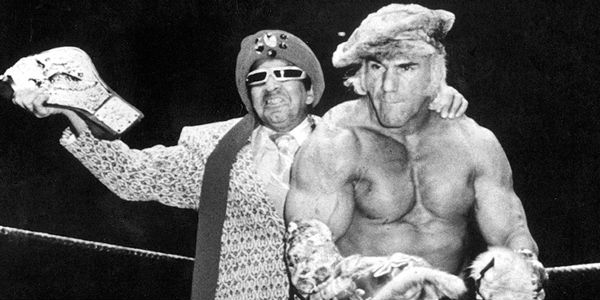
In some respects, there is a major division between what made a star in the old days of pro wrestling and what makes a star today. Therefore, in a very real sense, €˜Superstar€™ Billy Graham was the prototype for the modern WWE main eventer. By his own admission, Graham was very limited in the ring, at least in terms of technical ability. You aren€™t going to see a lot of amateur style takedowns and perfectly executed arm drags, hammerlocks or dropkicks in a Billy Graham match. Instead, you will be treated to a wonderful display of posing, preening and masterful heat seeking. Billy Graham was on top in wrestling not because of his in ring ability, in fact, he succeeded in spite of it. Graham, with the chiselled abs, enormous biceps and incandescent personality, was the sort of guy that people will always pay to watch. Whether he was an arrogant heel or a colourful babyface, the fans just wanted to see him. Even before he was famous, when he was scraping a living as a bouncer, patrons would regularly travel from neighbouring cities just to catch a glimpse of this truly larger than life figure. Besides, technical whiz or not, Graham was the one wrestler that could follow Bruno Sammartino€™s legendary run in the WWWF - and he has the highest percentage of Madison Square Garden sellouts in history to prove it. In today€™s WWE, the best wrestler on the card is not usually the champion. The top guy in the company no longer needs the skills to stretch an overzealous adversary. Can you honestly say that John Cena is a great technical wrestler? Could you say it about The Rock? Hulk Hogan? Even post-surgery Steve Austin? No, but you can€™t say that those guys haven€™t drawn a buck or two in their time. The WWE of the 21st century is about style, panache and drawing power. It is this approach which, love it or hate it, has led to wrestling€™s biggest boom periods since the early 20th century and it was, in large part, pioneered by the man they called Superstar. This makes him arguably the second most important architect of modern pro wrestling (after Vince McMahon Jr), be that for better or worse. Without Billy Graham€™s influence on the business, there is a very strong chance that you (yes, YOU) would not be a wrestling fan. Take that kindly or don€™t, but it is probably the truth. I don€™t know about you, but my thoughts will be with The Superstar over the next few months. I€™ll be hoping that this icon of pro wrestling gets a new liver and keeps going from strength to strength. Not only is he the most influential wrestler of the 1970€™s AND the most imitated wrestler of all time, he is also a fascinating and insightful Human being who still has a lot to offer the wrestling business, as well as the world in general. He is, unequivocally, one of the brightest and most fascinating icons of popular culture, then, now and indeed forever. If you€™d like to drop Superstar a line wishing him a speedy recovery, or just to say €˜thank you€™ for his contributions to the business we all love, his HYPERLINK "https://www.facebook.com/billy.graham.790256" official Facebook page can be found here. It€™s just too sweet to be sour.

Contributor
Contributor

I am a professional author and lifelong comic books/pro wrestling fan. I also work as a journalist as well as writing comic books (I also draw), screenplays, stage plays, songs and prose fiction. I don't generally read or reply to comments here on What Culture (too many trolls!), but if you follow my Twitter (@heyquicksilver), I'll talk to you all day long! If you are interested in reading more of my stuff, you can find it on http://quicksilverstories.weebly.com/ (my personal site, which has other wrestling/comics/pop culture stuff on it). I also write for FLiCK http://www.flickonline.co.uk/flicktion, which is the best place to read my fiction work. Oh yeah - I'm about to become a Dad for the first time, so if my stuff seems more sentimental than usual - blame it on that! Finally, I sincerely appreciate every single read I get. So if you're reading this, thank you, you've made me feel like Shakespeare for a day! (see what I mean?) Latcho Drom, - CQ