10 Things You Didn't Know About WCW In 1997

Eric Bischoff felt the nWo was way more valuable than WCW...

Being Eric Bischoff in 1997 must have been incredible. In 1995, Bischoff had helped World Championship Wrestling turn an annual profit for the first time in company history. In 1996, 'Easy E' had the brain wave of forming the New World Order faction, an idea which had transformed the promotion from also-ran to leader of the pack. 1997 would continue that trend, as WCW made more money than it knew what to do with. The very notion that anything could go wrong was preposterous. After all, WCW had the hottest heel group in wrestling (nWo) and a world class locker room that was the envy of every other company. The best was yet to come. Eric Bischoff must have felt like the king of the world, and WCW had an embarrassment of riches. Even so, 1997 would arguably be WCW's peak, at least creatively. Striving to push the brand as much as he could, Bischoff put a lot of faith in the power of the nWo name. Incredibly, this led to a situation where the WCW name was neglected, something which would cost the company in the long run. Yes, 1997 was a banner year, but not all was rosy in the WCW garden. This article explores 10 things wrestling fans may not know about WCW in 1997. From celebrated successes to hints of what was to come just a few short years later, World Championship Wrestling was sure one interesting place.


10. August 25th Nitro Rating Was Highest Of The Year

Definitely the biggest storyline running through WCW in 1997 was Sting's pursuit of the nWo. Scheduled to face Hollywood Hogan at Starrcade in December, Sting appeared many times through the year. Most of the segments involving Sting were either false-flag propaganda from the nWo, claiming Sting had joined them, or simply the real deal himself looking on from the rafters. On August 25th, Monday Nitro was coming from the Carolina Coliseum in Columbia, South Carolina. Ratings had been generally high for Nitro in 1997, but this particular episode would prove to be one of the highest weekly ratings in WCW history. On the show, Sting confronted the nWo and Eric Bischoff, who claimed he wouldn't book Hogan vs. Sting. Scaring the hell out of the boss, Sting unfolded a Hogan t-shirt and stuffed it down Eric's throat. Perhaps due to this happening early in the broadcast, wrestling fans continued to keep tuning in. Overall, the show posted a 5.0 rating. Also on the show, Yuji Nagata faced Chris Jericho for the WCW Cruiserweight Title, and Randy Savage faced Lex Luger in the main event.

9. WCW Was So Hot That Merchandise Was Rarely Kept On Inventory
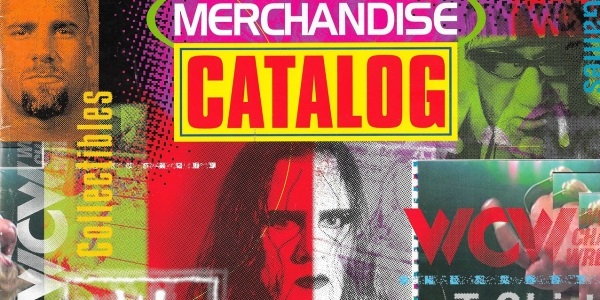
In the WWF of the 1980's and early-90's, Hulk Hogan's merchandise had been the big seller. Other performers had t-shirts and other items, but it was 'Hulkamania' that kept people busy at the merch stalls. By 1997, Hogan was a hot ticket again, this time due to his association with the nWo. Unlike the WWF, it wasn't only Hulk that shifted a ton of merchandise. Other wrestlers such as Sting, The Outsiders, Goldberg and The Four Horsemen were big sellers. Along with all the general stuff like t-shirts, foam fingers and posters, WCW also stocked key chains, teddy bears and even Halloween costumes. The company was on fire, and merchandise was flying out of warehouses quicker than WCW could get more in. According to Eric Bischoff, it wasn't uncommon for WCW to be out of stock on items, because they genuinely didn't realise how fast they'd sell. In particular, New World Order merchandise was the most popular. The trademark nWo t-shirt, featuring a simple logo, sold by the truck load. Once he started appearing as the 'Crow', Sting's black and white masks were also popular.

8. Goldberg's Streak Nearly Never Happened

When Bill Goldberg crashed onto WCW television in September, 1997, few could have predicted his success. By the time 1998 rolled around, Goldberg had grown into one of the most popular stars in the entire company. It's therefore fascinating to learn that one of the most remarkable parts of his character's rise nearly didn't happen. Defeating Hugh Morrus on Monday Nitro during his first match, Goldberg racked up an incredible winning streak of 173 victories before being defeated. His first televised loss came at Starrcade 1998 against Kevin Nash, more than a full year after he had first appeared. Every week from his debut right through to the end of 1997, Goldberg was booked to destroy his competition. Most of the matches were short, because of Goldberg's limitations as a pro wrestler. He was relatively new to the industry, so was protected by only featuring in squash-style bouts. Incredibly, there were tentative plans to have Goldberg lose on television or Pay-Per-View. The whole win streak thing was something that just happened, instead of being designed from the outset.

7. The nWO-themed Souled Out PPV Bombed Badly
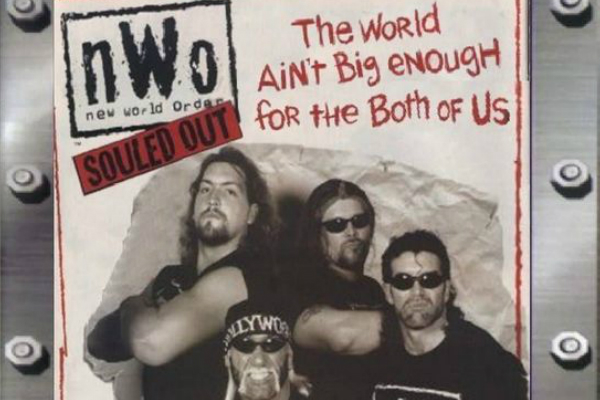
Even though the nWo gimmick had only been around for less than a year, Eric Bischoff and WCW management viewed it as the reason for the promotion's success. After all, nWo merchandise was the biggest seller, and fans saw the renegade group as cooler than their WCW counterparts. For this reason, Bischoff decided to promote a January Pay-Per-View dedicated to the faction. Starrcade 1996 had pulled a buyrate of 0.95. Hopes were high that an entire Pay-Per-View based around the infinite drawing power of the New World Order could top that. Sadly, nWo Souled Out on January 25th, 1997 was a miserable failure, and actually posted one of WCW's lower buyrates all year. Souled Out posted a 0.45 buyrate, the worst of 1997. From a commercial standpoint, the event hadn't been a success. Worse yet, fans were far from excited by the one-sided nature of the program, which made WCW look like idiots compared to the slick nWo. Bischoff had been trying to experiment with the possibility of running both WCW and nWo Pay-Per-View, but this failure nipped that idea in the bud.

6. Sean Waltman Made Cruiserweight Title History
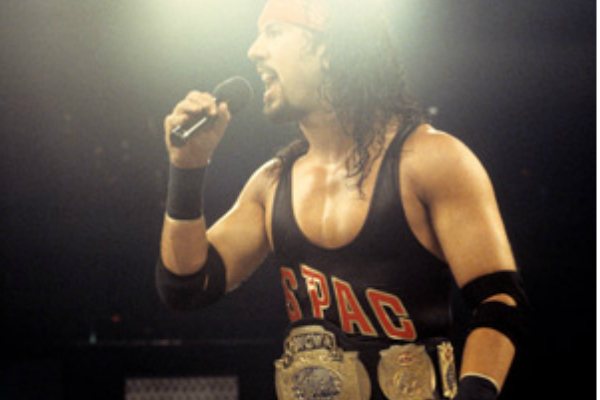
Previously known as the 1-2-3 Kid, Sean Waltman had jumped over to WCW in late-1996. Renamed 'Syxx', Waltman became a member of the nWo shortly after his arrival, and added a new dimension to the group. Not only did the heel stable now have heavyweights like Hollywood Hogan, and tag-team specialists like Kevin Nash and Scott Hall, they now had someone to represent them in the Cruiserweight division. At SuperBrawl VII on February 23rd, 1997, Syxx won the WCW Cruiserweight Title. Before his run as champion, the longest titleholder had been Brian Pillman, who held the belt for 112 days. Rey Mysterio Jr had come close to topping that, his reign lasting 111 days. Syxx would blow them both out of the water with his Cruiserweight Title run in 1997. Defeating Dean Malenko to bag the belt, Sean Waltman had a 125 day reign with the WCW Cruiserweight Title. In the history of the company, this would end up being the longest Cruiserweight Title run, obviously omitting combined reigns. In terms of an uninterrupted run with the gold, Syxx was the benchmark in WCW. He'd later lose the belt in June to Chris Jericho, on a unique ''Saturday Nitro' broadcast over the internet.

5. WCW Had No Plans Whatsoever For Bret Hart

Coming out of the infamous 'Montreal Screwjob' at the Survivor Series 1997, Bret Hart was the hottest free agent in wrestling. WCW had actually wanted Hart more than a year before, but the Canadian had stayed loyal to Vince McMahon, realising how much the WWF had done for him. By '97 however, Bret was ready to start winding down his career, and was intrigued by the money WCW were offering. Eric Bischoff gave Bret a 3-year contract, one worth around $3 million per year. Clearly, this was too much money for the man to turn down, and he eagerly signed on the dotted line. In typical WCW fashion, the company then proceeded to do absolutely nothing of note with him. His first Pay-Per-View appearance at Starrcade was to involve himself as 'Special Guest Referee' in the Bischoff vs. Larry Zbyszko bout, rather than wrestle. Rather blatantly, Bret had been signed by WCW because it was another attempt to strip Vince McMahon of money-making stars. There was no foresight for what the wrestler could do in the promotion, and he ended up taking a lot of money for doing very little. Bret Hart's entire WCW tenure was a waste of time, and a sorry end to his full-time active career.

4. ECW Stars Nearly Invaded Nitro

In the Spring of 1997, ECW stars - headed up by Paul Heyman - started showing up on WWF programming. Both companies had a deal, and it's become common knowledge that Vince McMahon was sending ECW money to keep them afloat. For that reason, Heyman was outraged when he learned of a similar deal brokered by Tod Gordon with WCW later the same year. Gordon's big idea was that ECW's top names would start 'invading' Monday Nitro. The feud would be treated as an extension of the nWo story, playing out in very much the same fashion. Stars such as Rob Van Dam, The Sandman and Tommy Dreamer were all ear-marked for the role, and Heyman's trusted friend Bill Alfonso was also in on the concept. The only problem was that the wrestlers weren't, and neither was Paul Heyman. Furious over the idea being thought up behind his back, Heyman fired Tod Gordon and Alfonso. The latter was later brought back into the mix, but the whole ECW invasion of WCW would never end up happening. Who knows how different wrestling history could have been had it occurred.

3. The 'nWo Takeover' In December Was Supposed To Be Permanent
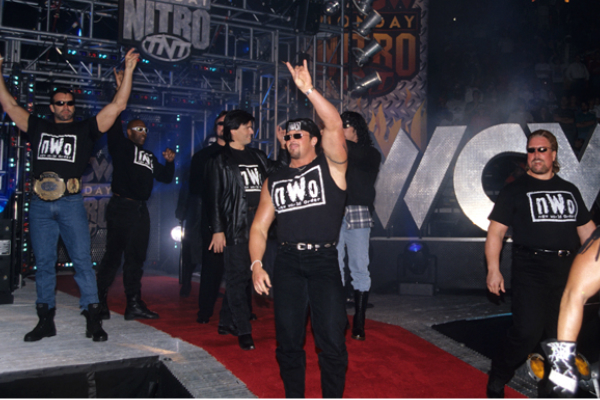
On the final episode of Monday Nitro before Starrcade 1997, WCW tried something drastically different. For quite some time, the company had viewed the New World Order as more marketable than World Championship Wrestling. That was clear by the fact the group was always booked more strongly, not to mention the organisation had tried to promote a Pay-Per-View in January solely about the nWo. Just days before Sting challenged the head of the nWo, Hollywood Hogan for the WCW World Title, Nitro was turned upside down. For most of the show, the nWo reigned supreme, and made it clear that the show was no longer WCW Monday Nitro. There was even a new set designed, new graphics paid for, and the grand plan was to rename the program 'nWo Monday Nitro'. There was one major problem with this idea, the nWo were still supposed to be heels. Sure, they were cool and hip, but that could only last so long. Perhaps Bischoff and crew were just trying to annoy fans enough before Starrcade, so that more people would tune in to see Sting destroy Hogan, but it all felt forced.

2. Starrcade Was Biggest Grossing Wrestling PPV Of The Year

Ever since the New World Order had formed at Bash At The Beach 1996, the group was positioned to look significantly superior to WCW. Longtime fans of the company had been conditioned to think that WCW sucked, whilst the nWo was where it was at. There was only one wrestler strong enough to combat this mind set, and he was surely going to set things right at Starrcade 1997. Eric Bischoff and his booking staff showed remarkable restraint by not throwing away Hogan vs. Sting earlier in the year. The plan had to be adhered to, Sting was going to put the nWo in their place at Starrcade in December. Due to this incredibly well-told story, Starrcade 1997 was the biggest wrestling Pay-Per-View of the year. Bigger than anything else WCW had presented, and even bigger than WrestleMania. The show would have a confusing ending, but that didn't stop it from being a box office smash. Sting would eventually walk away with the WCW World Title after being 'screwed' by corrupt official Nick Patrick. Bret Hart became involved, and millions watched at home. All in all, Starrcade 1997 pulled in a colossal 1.9 buyrate, the biggest in WCW history.

1. WCW Believed The WWF Would Go Out Of Business In 1998

As aforementioned, WCW snatched Bret Hart gleefully from the WWF. Having earlier taken names such as Hulk Hogan, Kevin Nash, Scott Hall and Lex Luger away, Bret was viewed as one of the final pieces of the puzzle by Eric Bischoff. In Bischoff's mind, there was no way Vince McMahon could recover from losing all these major stars, and the guy started telling people internally that the WWF was done. McMahon's company didn't have a successful 1997. WrestleMania had been a flop, and even the Royal Rumble was heavily papered by free tickets to fill out the monstrous Alamo Dome. 'Stone Cold' Steve Austin and The Rock had emerged as stars towards the end of the year, but there were major financial problems facing the WWF as they headed into 1998. In the mind of Eric Bischoff, this meant it was only a matter of time before McMahon went out of business. Names such as Bret Hart and Kevin Nash have previously stated in interviews that Bischoff was 100% certain WCW's only competition was the nWo. That shows the mindset prevalent in the company at the time. How wrong they would be, the WWF roared back in 1998 and the nWo started to look more than a little tired.

In this post: 
WCW Sting NWO
 
Posted On: 
Contributor

Lifelong wrestling, video game, music and sports obsessive who has been writing about his passions since childhood. Jamie started writing for WhatCulture in 2013, and has contributed thousands of articles and YouTube videos since then. He cut his teeth penning published pieces for top UK and European wrestling read Fighting Spirit Magazine (FSM), and also has extensive experience working within the wrestling biz as a manager and commentator for promotions like ICW on WWE Network and WCPW/Defiant since 2010. Further, Jamie also hosted the old Ministry Of Slam podcast, and has interviewed everyone from Steve Austin and Shawn Michaels to Bret Hart and Trish Stratus.