10 Things You Didn't Know About WCW In 1998

Imagine Shawn Michaels had joined the nWo Wolfpac?

1999 would be the year when things really started to go sour for World Championship Wrestling, but even though the then-WWF would catch the company up and reclaim top spot in the world of North American pro wrestling, 1998 would be a banner year for Ted Turner's grappling promotion. Pay-Per-View buyrates were high, merchandise sales were through the roof (mainly because the nWo concept was still hot in '98), and crucially, attendances at both televised and live events were incredibly high. For evidence of this, just look at the numbers WCW pulled for an episode of Monday Nitro at the massive Georgia Dome on July 6th, 1998. Attracting over 40,000 fans, the company trumpeted the event as a success, and rightly so. With all that in mind, it doesn't take a genius to realise that cracks were really starting to show in the WCW formula. Most notably, the promotion didn't really seem to have any ideas outside of pushing the New World Order as the focal point, something which came with several key problems. For one, the nWo were heels, villains who desperately required strong babyfaces, something WCW should have had with the likes of Sting and Goldberg, but refused to push over the heel squad. Sure, 1998 was still a good year, but things would change remarkably by mid-1999. Even so, back in '98, there was a lot happening, some even the most hardcore of fans might not really be aware of.

10. WCW Had 200+ Talent Under Contract In 1998

All in all, today's WWE has North of approximately 100 contracted performers, extending across the main roster and those toiling away in NXT trying to get noticed. That's a healthy number, especially considering it includes the likes of The Rock, Hulk Hogan, Paul Heyman and others who don't appear all that often. Compare that to the number of talent WCW employed towards the end of the 90's and things start getting interesting. In 1998, World Championship Wrestling had around double the amount of names WWE do today on their books. Obviously, that's a lot of wrestlers, and there's no way any company could feasibly fit them all into storylines, regardless of how many hours of TV and Pay-Per-View they need to fill. Shockingly, the likes of Lanny 'The Genius' Poffo, Barry 'Demolition Smash/Repo Man' Darsow and even Jim Powers were all under contract to WCW in 1998, with only Darsow appearing on television that year. Quite why these guys were given money to do absolutely nothing is mind-boggling, but the number of talent in WCW would rise the next year, for no real reason whatsoever. There was no room for that many names in the product, so it all boiled down to a colossal waste of money.

9. WCW Had Zero Plans For Bret Hart

Even for men WCW did have wrestle frequently, there weren't often a whole load of plans. That was certainly the case with Bret 'Hitman' Hart, who had become wrestling's hottest free agent following the incendiary events of the WWF's 1997 Survivor Series. Screwed over by Vince McMahon and Shawn Michaels, Hart should have entered WCW with something to prove, but he was scarcely given anything of any real note to do. Bret's first major appearance for WCW was as Special Guest Referee in bout between Eric Bischoff and Larry Zbyszko for control of the company. That's right, the so-called hottest name in the entire industry was a bit-part player on WCW's biggest show of the year, later getting involved in a confusing finish to the heavily-hyped Hollywood Hogan vs. Sting main event. Reading Bret's autobiography reveals something else of interest, the fact that WCW top brass had pretty much nothing for him after he made his debut. Instead of immediately becoming part of the ongoing nWo vs. WCW saga, Hart had a tepid match with Ric Flair at Souled Out in January, 1998, and didn't even have a bout at SuperBrawl VIII the next month. It's fascinating to think that WCW had nothing for Bret Hart, but according to the man himself, they didn't have any booking plans for him outside of random wrestling matches.

8. Warrior vs. Hogan Ran Over Allotted Time Badly
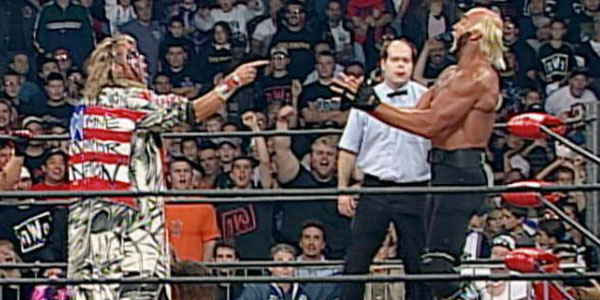
Towards the end of 1998, a familiar face started to appear on WCW broadcasts, looking to end the tyrannical reign of Hollywood Hogan and the New World Order once and for all. That face belonged to The Ultimate Warrior, only he wasn't allowed to use the 'Ultimate' part of his name, instead being referred to as The Warrior in the promotion. The re-ignition of the feud between Hogan and Warrior seemed to exist only so the former could defeat the latter, evening the score from their previous battle under the WWF banner at WrestleMania VI in 1990. On that night in Toronto, Warrior would emerge victorious, but the decision would be reversed at Halloween Havoc '98, in a bout many considered a complete disaster. Since showing up in WCW, Warrior had struggled to keep his promos short and sweet, meaning portions of Monday Nitro had to be rewritten quickly. At the Pay-Per-View, both he and Hogan over ran badly, meaning the PPV providers cut the stream to the show at the previously-agreed time, and fans missed out on the Goldberg vs. DDP main event. To placate fans, WCW were forced to show that match the next night on Nitro, further angering people who had actually paid to watch Halloween Havoc.

7. Booking Squad Wanted To Replicate Goldberg Success With Wrath

Smashing his way through the competition throughout the latter months of 1997, Bill Goldberg was a complete sensation to WCW fans, who were desperate for something to distract them from the ongoing WCW vs. nWo rivalry which seemed to dominate air time. There was no secret to Goldberg's success, the combination of natural charisma and a mega-push made it easy for people to get behind him. Bryan Clarke was a big guy who signed for the company in 1997, initially playing a masked character called Wrath who - along with the likes of Glacier and Mortis - was WCW's attempt to pedal on the back of the success of the Mortal Kombat video game series. After an injury kept him on the sidelines until 1998, Wrath returned in repackaged form, and seemed to be getting a pretty decent push as an upper card babyface. Stunningly, WCW officials really felt Clarke could replicate the success that Goldberg had experienced. The promotion were pretty desperate to create some new stars, certainly on the WCW side (as opposed to the top-heavy nWo group), and Wrath seemed to be a perfect fit. Of course, his major push and winning streak wouldn't last - after losing to Kevin Nash in a match ironically designed to prepare Nash for Goldberg, Wrath started to dwindle down the card.

6. Bam Bam Bigelow Was Scheduled For A Big Push

Another man who supposed to be benefit from a top line push in WCW was Bam Bam Bigelow, a man who had played a major role during his stay in the WWF. Intriguingly, Bigelow would depart the Vince McMahon-led juggernaut in 1995, after feeling he wasn't being given the fair shake he had been promised as a main event guy. Disagreements with Shawn Michaels and The Kliq weighed heavy on Bam Bam's mind, so he elected to make himself scarce and try his luck elsewhere. Following some time in ECW from 1996-1998 , Bigelow made his way to WCW in '98 and instantly transitioned into a feud with then-WCW World Champion Goldberg. This signified a show of faith in the star power and ability that Bam Bam possessed, but the push wouldn't last for any real length of time. It's been said that it was Kevin Nash who aborted Bigelow's top line push, booking him to be a major player in the Hardcore Title division instead. Rather than trading chair shots with the likes of Raven and Hardcore Hak, Bam Bam Bigelow was supposed to be in the main event of Pay-Per-Views against the very best that WCW had to offer, but he'd once again find office politics would get in his way.

5. WCW Tried To Do Internet Pay-Per-View

In the late-90's, both the WWF and WCW were experimenting with the internet, which had suddenly exploded into more homes than ever before. Suddenly, there was a new way for pro wrestling fans to follow their favourite companies, and WCW's top brass wanted in on the action. Enter the idea of running an internet-exclusive Pay-Per-View. Only, instead of fans paying to actually watch the matches take place, they'd pay to listen to WCW announcers describing them. It was an interesting concept, but one which was doomed to failure - the technology of the time was decidedly sketchy, and people struggled to tune into the show. Quality dipped throughout, and there were even periods of silence. The event, entitled, 'WCW Boston Brawl', took place on January 31st, 1998. In the main event, Sting would defeat Hollywood Hogan in a Steel Cage contest, bringing to a close one of the more curious shows in WCW history. The WWF had previously tried to run 'Radio WWF' commentary of Pay-Per-Views, but this was the first time a promotion had went with audio as the only way to cover a show. Needless to say, it was a one-time only experiment.

4. Hogan vs. Goldberg Was Never Planned For PPV

Even in the lead-up to the match, many grappling enthusiasts and industry critics wondered why WCW weren't promoting Goldberg vs. Hollywood Hogan on Pay-Per-View. Instead, management decided to put the match on an episode of Monday Nitro in July, 1998. The hook was that Goldberg was gunning for Hogan's WCW World Title, but surely millions of dollars in revenue were being thrown down the toilet? In truth, they were, but Eric Bischoff simply wanted to beat the WWF's Raw Is War program in the ongoing ratings war. 1998 had been the year during which - after a lengthy period in Nitro's favour - Raw had once again steered ahead of the WCW boys, and that didn't sit well with Bischoff. Many theorised that Goldberg vs. Hogan had originally been planned for PPV, but the truth is that it was concocted solely for Nitro. The match, taking place in the massive Georgia Dome, was a large draw, but it really should have made WCW millions more on the Pay-Per-View format. It's actually pretty stunning to think that Hogan vs. Goldberg never took place in a one-on-one match on PPV, Yes, the show drew close to $1 million at the live gate, but it could have been so much bigger. For Bischoff, Pay-Per-View never came into the equation, he just wanted to beat Vince McMahon once again and taste that ratings success.

3. Kevin Nash Had Idea To Turn Nitro Into Wrestling-Free Show

Upon assuming responsibility of the creative team in 1998, Kevin Nash had one huge idea to help keep ratings for Monday Nitro healthy. Just what could it be? More marquee matches? A stronger focus on cohesive, tight storylines? No, Nash's big concept for making WCW's flagship show must-see was to strip it of wrestling altogether, simply having it act as a non-wrestling vehicle to promote Pay-Per-Views. On one level, there's nothing wrong with that, but wrestling fans like to see some, y'know, wrestling when they tune into a wrestling show. The key is in the name, and this whole idea just reeks of everything that was wrong with WCW's mentality - in the promotion's race to be the WWF, they actually just ended up alienating their own core audience, many of which had been reared on a more wrestling-centric style than Vince McMahon traditionally offered. Going 3 hours for good early in 1998, Nitro suddenly became a chore to watch. There were still memorable moments, of course, but when the promotion started using the entire first hour (which was unopposed, the program started 60 minutes before Raw) for nothing but promos and hype packages, momentum was lost and shows were killed quickly. Thankfully, the idea to completely take matches out of the Nitro format didn't come to pass.

2. Booking Team Felt Goldberg's Streak Was Stale After Only A Few Months

In 1998, Bill Goldberg was one of the hottest name in the wrestling business. Fans loved chanting his name, and the fact people were guaranteed to see the guy cream some poor schmuck made tuning into WCW shows a genuine treat. Unfortunately, WCW's creative team didn't feel the same, and plans were being made to kill the man's winning streak as early as mid-Summer. It's shocking to think, but some in WCW actually felt that having Goldberg remain unbeaten was a bad thing, because it'd only hurt his stature with the fans in the long run. That kind of thinking was terribly short-sighted, there was far more wrong with the nWo angle than with Goldberg. If anything in WCW needed freshening up, it was the New World Order. Eventually, Kevin Nash would beat Goldberg at Starrcade 1998, bringing to a close an epic winning run that fans had really enjoyed following. In the humble opinion of Bobby Heenan - who was working for WCW as an announcer at the time - beating Goldberg was the biggest mistake the company would ever make, because there was so much more mileage to be gleaned from his unbeaten run.

1. Shawn Michaels Discussed Jumping To WCW

In 1996, Shawn Michaels watched in horror as two of his biggest friends in the business, Kevin Nash and Scott Hall, made the leap of faith from the WWF to WCW. Securing themselves bumper, guaranteed contracts, both Nash and Hall instantly became the talk of the town, going on to form the nWo with Hulk Hogan at the 1996 Bash At The Beach show. For HBK, this all became too much to take, and he started to enter into talks with Vince McMahon about approaching WCW. Some felt this was little more than a power play from Michaels, who was trying to squeeze more money from McMahon, but it was clear that he also missed his buddies. In 1998, Michaels suffered a nasty back injury at the Royal Rumble during a match opposite The Undertaker. It's a minor miracle that the man was able to see out his WWF Title bout against Steve Austin at WrestleMania just a few months later, but there was also a chance that match could have never taken place. Looking for a lighter schedule than ever before, Michaels again explored the option of moving sideways to WCW and hooking up with his friends. Speaking during an interview a few years ago, Kevin Nash hinted at several conversations between he and Shawn in early-1998, and it seems there was a good chance of Michaels being intrigued by working for WCW. Wrestling history could have been so different had this happened! What other facts do you know from WCW in 1998? Did you know about any of the ones featured on this list? Let us know down in the comments section below!

Contributor

Lifelong wrestling, video game, music and sports obsessive who has been writing about his passions since childhood. Jamie started writing for WhatCulture in 2013, and has contributed thousands of articles and YouTube videos since then. He cut his teeth penning published pieces for top UK and European wrestling read Fighting Spirit Magazine (FSM), and also has extensive experience working within the wrestling biz as a manager and commentator for promotions like ICW on WWE Network and WCPW/Defiant since 2010. Further, Jamie also hosted the old Ministry Of Slam podcast, and has interviewed everyone from Steve Austin and Shawn Michaels to Bret Hart and Trish Stratus.