10 Times Classical Music Was Used In Wrestling

From Bach-breakers to double-axe Handels.
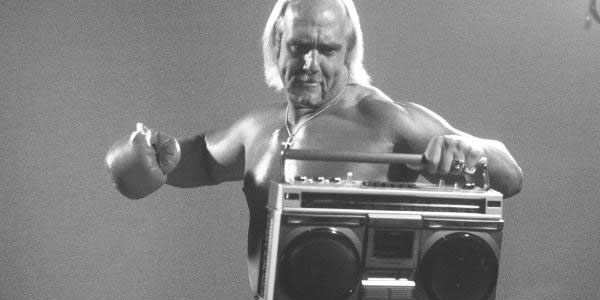
Let's be honest, as much as we love wrestling it is seldom acknowledged as an art-form, let alone an interest considered 'highbrow'. For the most part, the sport is derided by elements of the mainstream media as uncultured, banal nonsense with no artistic merit whatsoever. On the contrary, classical music is often viewed on the opposite end of the spectrum, an urbane and erudite pursuit whose seemingly pretentious nature can be as off-putting to some as wrestling's alleged trashiness is to others. Yet despite being such seemingly disparate pastimes, the two worlds have collided more often than one might suspect. Since theme music was first used by Gorgeous George as far back as the '60s, wrestling and classical music have been strange yet frequent bedfellows. As a result, the hidden sophistication of the grappling business has been laid bare, and at the same time a whole set of otherwise disinterested ears have been turned on to the classics. Here are some of the best examples of the most unlikely of marriages.

10. Shawn Michaels - Rhapsody In Blue (George Gershwin)

From the opening bass guitar riff to the off-key vocals, Shawn Michaels' 'Sexy Boy' is one of the most iconic pieces of entrance music in wrestling. Unchanged for over twenty years, save a switch of vocalist from Sensational Sherri's strained shrieks to Shawn's, the theme is an instantly recognisable, reassuring familiar sound whenever 'HBK' makes a rare appearance on WWE television. Yet there was the briefest of periods when the post-Rockers 'Heartbreak Kid' came out to a very different tune indeed. With his new cocky, narcissistic persona, the heel Michaels needed a similarly conceited piece of theme music. George Gerswhin's 'Rhapsody in Blue', a jazz suite designed to exude the "kaleidoscope of America", was precisely the opposite. Luckily, it was a short-term arrangement; just a month later, Jim Johnston penned 'The Showstopper's trademark tune, and Gershwin's unlikely involvement in the squared circle was over. https://www.youtube.com/watch?v=SA9W1A8fuqo

9. The British Bulldog - Rule, Britannia! (Thomas Arne)

Unlike Michaels, classical music was the perfect selection for the The British Bulldog. In a period where wrestling minds (read: Vince McMahon) could not conceive a gimmick for a foreign national besides an ultra-patriotic evil heel or an ultra-patriotic heroic babyface, Davey Boy Smith was bedecked in a Union Flag, and given a British flag. And regrettably, a dog. It worked; Bulldog sent the popularity of the WWF through the roof in the UK. As an ambassador for the product in ol' Blighty, there was only one suitable choice of entrance music for Smith: Thomas Arne's yearningly jingoistic 'Rule, Britannia!'. The song, a celebration of Britain's imperial might, was the perfect complement to the powerhouse, fully epitomising the Bulldog's bold, brave persona. https://www.youtube.com/watch?v=bd6sJMymYmo

8. Mr. Perfect - Theme Of Exodus (Ernest Gold)
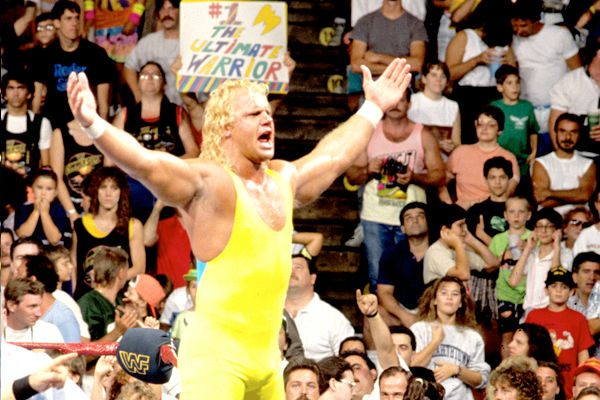
Curt Hennig's 'Mr. Perfect' gimmick did exactly what it said on the tin. Billed as a 'perfect' wrestler and a 'perfect' athlete. Mr. Perfect even had a perfect theme tune. Pompous and gladiatorial, the bombastic fanfare set a stage fit for the entrance of a Roman god. Oddly, the piece was also perfect for depicting Moses leading the Jews out of Israel; Hennig's new music was based on the theme of the 1960 movie Exodus, composed by Ernest Gold. Curt actually used Gold's original version as his first theme tune for a blink-and-you'll-miss-it TV taping in September 1989, before switching to the more familiar Jim Johnston variant. Most curiously, WCW tried to rip-off the Mr. Perfect gimmick in 2000 with the less-than-perfect Shawn Stasiak. Stasiak was given a Jimmy Hart version of Johnston's riff - itself the 'Jimmy Hart version' of Ernest Gold's classic. https://www.youtube.com/watch?v=nBOZQGa5nbQ

7. Hunter Hearst Helmsley - Ode To Joy (Ludwig van Beethoven)

'The Game's original WWF run as a snooty Connecticut blue-blood was a far cry from his current, sledge-hammer wielding, leather-jacket wearing persona of today. Sauntering to the ring with riding crop in hand whilst curtseying with the utmost civility, it is fair to say that Motörhead was not yet the most appropriate accompaniment. Instead, Hunter superciliously strutted his stuff to a Baroque harpsichord and string arrangement. Yet after ascending the throne as 'King of the Ring', the future 'King of Kings' needed something altogether more...celebratory. He didn't just get celebratory. He was given possibly the most bombastically triumphant piece of classical music ever written, the unceasingly jubilant 'Ode to Joy' from Beethoven's farewell symphony. A piece written to celebrate the brotherhood and unity of mankind, it arguably achieved its goal in bringing people together against Triple-H. https://www.youtube.com/watch?v=TaUyOwC9ltI Sadly, Beethoven and D-Generation-X were not an ideal combination, and when Triple-H went solo again, he dispensed with the maestro for an all new theme best described as sounding like a flock of squabbling seagulls.

6. Ric Flair - Also Sprach Zarathustra (Richard Strauss)

For a wrestler as timeless as 'The Nature Boy', a piece of music best known for depicting the dawn of humanity couldn't be more fitting. Popularised in Stanley Kubrick's sci-fi movie 2001: A Space Odyssey, Richard Strauss' tone poem became irrevocably linked with Flair when he became one of the earliest grapplers to use entrance music. After the wrestler was forced to reinvent himself following a near-fatal plane crash in 1975, The theme possessed all the requisite pageantry and glamour to add the finishing touches to Flair's new, cultured 'Nature Boy' gimmick,. A glittering, gold-laden career followed, and when the WWF snapped up Flair in 1991, his legacy was recognised as he was positioned opposite Hulk Hogan as wrestling's 'real' world champion. Yet he didn't have his 'real' theme music. WWF, always knowing better, produced a chintzy synthesised facsimile of Strauss' illustrious opener. It was of course, worse. Thankfully, Flair wasn't; he put in one of the all-time classic performances as he won the other 'real' world title at Royal Rumble 1992. If only he had had the proper fanfare to celebrate. https://www.youtube.com/watch?v=X6RoasSoLK0

5. Macho Man Randy Savage - Pomp And Circumstance March (Edward Elgar)

Edward Elgar's 'Land of Hope and Glory' trio from his Pomp and Circumstance was used at the coronation of Edward VII in 1902, and though the composer likely envisaged it being applied to future monarchs, he probably didn't have the 'Macho King' Randy Savage in mind. Whether face or heel, Savage used the patriotic piece - more immediately familiar in the United States as 'the graduation music' - and it received cheers and boos in equal measure. Savage actually used the theme in tribute to Gorgeous George, who pioneered the use of entrance music some forty years earlier. Wrestling's original showman, George's ostentatious entrances were a drawn-out, ceremonial affair, often more memorable than his bouts. Laden with valets, ostrich feathers, and dazzling lights, the spectacle precisely matched the 'Pomp and Circumstance' described by Elgar's march. https://www.youtube.com/watch?v=P9k1EvSX7W0

4. Daniel Bryan - Ride Of The Valkyries (Richard Wagner)

When Daniel Bryan returned to WWE, the company was unsure what to do with him. Despite Bryan's technical acumen and endearing personality, he just didn't fit the 'WWE mould'. Instead, he was seen as an internet darling who couldn't connect with a mainstream audience. In a sly dig at the 'smart' fans of the net, Bryan was presented as an archetypal nerd, with commentator Michael Cole repeatedly belittling the talented grappler at every cringe-worthy opportunity. Underestimating their audience, Bryan was also 'saddled' with a piece of classical theme music to further marginalise his character from the rest of the roster. What WWE didn't realise, was that Wagner's 'Ride of the Valkyries' was a more kick-ass theme than all of the generic, 'cool' rock themes given to the rest of the roster. Bryan was now armed with one of the most popular and transcendent pieces of music in the classical repertoire, and the enduringly heroic theme helped him on his way to superstardom as fans rebelled against WWE's prescribed wisdom. A little bit of history would have went a long way for WWE. Looking back, they'd have known that Yoshiaki Fujiwara became one of the biggest stars in Japan using the exact same music, chosen in tribute to his trainer Karl Gotch. https://www.youtube.com/watch?v=hB1zZ-fJvq4

3. The Undertaker - O Fortuna (Carl Orff)

The Undertaker is one of the most enduring characters in wrestling history. The Phenom's presence in the squared circle pantheon transcends the sport, as the character has constantly reinvented itself to remain relevant to each successive generation. From an undead mortician to a bandana wearing, leather-clad biker, The Phenom's regular revamps have helped the gimmick remain as popular today as it was when it debuted twenty-five years ago. At the height of the WWF's Attitude Era, The Undertaker matured in a way not dissimilar to many of the teenage boys the product was targeted at. As if it were possible, The Deadman altered his attire to become even moodier as he entered his 'Goth phase'. For his battle against troubled brother Kane at WrestleMania XIV, The Reaper adopted a new piece of appropriating demonic entrance music. Though unquestionably one of the most overused pieces of classical music since being popularised by the 1981 film Excalibur, 'O Fortuna' from Carl Orff's Carmina Burana created a level of pathos and spectacle that perfectly set the tone for the titanic clash of siblings. The piece's portentous Latin chorus combined with dramatic, frightening strings brought a whole new level of dread to The Undertaker's otherwise creepy yet oddly tranquil entrance. https://youtu.be/GXFSK0ogeg4

2. Jerry Lawler - The Great Gate At Kiev (Mussorgsky)

Wrestling royalty have often used classical music for their ring entrances, hoping to gain that extra bit of sophistication by association. On the whole, their reigns are short-lived, coronated with paper crowns before the next 'King of the Ring' comes along. Jerry Lawler is the exception. The veteran Memphis grappler's regime has lasted since the '70s, and he is the only man in wrestling unequivocally known as 'The King'. For almost three decades, Lawler has employed a theme more imperial than regal, yet one nevertheless sufficiently majestic. Written to accompany Viktor Hartmann's grand architectural scheme in honour of Tsar Alexander II, Mussorgsky's 'Pictures at the Exhibition' is an embodiment of Imperial Russia's illustrious power and importance. The same applies to Lawler, though with added connotations of smugness and superiority as the character would lord himself over the 'peons' in the crowd. https://youtu.be/FncXqa14ANE The theme was entirely suitable for Lawler, his King persona having been honed and refined across a tenured wrestling career. Yet the same could not be said of Lawler's previous incumbent Haku. The Pacific island hard-man previously used the music during his brief stint as WWF 'King'. After he was dethroned, the music was not used again until the real deal's arrival in the company. https://youtu.be/ws9hRYmArMA

1. The Undertaker - Marche Funebere (Frédéric Chopin)

The Undertaker character, very much a product of the early-90s WWF ethos, should never have succeeded. How could anyone take the concept of an undead Western mortician seriously in a legitimate sport? With any other performer, the persona would have fell flat on its face almost immediately. However, few would have committed themselves to the character as thoroughly as Mark Callaway. Every aspect of the gimmick, from his methodical movements to terrifying, dead-eyed expression made a plainly ludicrous concept utterly believable and entirely captivating. The Undertaker package was completed by having one of the most distinctive entrance themes of any wrestler before or since. For a wrestling funeral director, there was only choice. Chopin's sombre 'Marche Funebre' from his famed second sonata is unanimously recognised as the most funerary of all death marches, and Jim Johnston's organ rendition perfectly set the pace for The Undertaker's petrifying procession to ringside. As the character grew in popularity, the iconic knell was added to signal the entrance of The Deadman, a sound which sent chills of excitement through a fervent audience. https://www.youtube.com/watch?v=y0mAbw-niI8 The theme has been through many variations over the years, even being memorably performed on The Royal Albert Hall's grand pipe organ by an Andrew Lloyd-Webber inspired 'phantom' at UK-only event Battle Royal At The Albert Hall. Yet despite the many changes, the ominous effect of the classic theme remains the same. Never send to know for whom the bell tolls; it tolls for The Undertaker. https://www.youtube.com/watch?v=GGkEVUOuAak

Editorial Team
Editorial Team

Benjamin was born in 1987, and is still not dead. He variously enjoys classical music, old-school adventure games (they're not dead), and walks on the beach (albeit short - asthma, you know). He's currently trying to compile a comprehensive history of video game music, yet denies accusations that he purposefully targets niche audiences. He's often wrong about these things.