10 Times WWE World Title MADE The Wrestler

Moments when the belt made the man.
Vince McMahon's World Wrestling Entertainment has been home to some of the most recognizable stars in the history of the sport, their championship reigns the stuff of legend. As great as those stars were/are, though, many would not have achieved the legendary runs at the top of the company that they did without the WWE or World Heavyweight Championship lending credibility to them. As much as Triple H has been quoted as saying "the man makes the championship, not the other way around," he has been contradicted over the course of WWE history by several instances in which that was most certainly not the case. He, himself, has the top prize in sports-entertainment to thank for validating his main event push. Over the last five or six years, fans have witnessed more and more of WWE trying to get talent over by strapping a major championship around their waist, hoping fans accept them now that they have a reign on their resumes. There was Sheamus, then Jack Swagger and, finally, The Miz. Even Daniel Bryan in 2011. Rarely has it worked. With hopes high that doing the same will lead to Roman Reigns becoming the top dog in the industry, relive these 10 moments when it was effective, helping to ignite main event runs and create enduring legacies for the most respected Superstars in WWE history.

10. CM Punk

It was not until CM Punk's victory over John Cena for the WWE Championship at Money in the Bank 2011 that he was firmly entrenched as a main event star in WWE. Sure, he had been a three-time world champion before but it was that win, on that night, in front of his hometown fans that finally silenced any and all doubts about his ability to be a credible main event attraction. His victory over Cena for that title was not only a way to keep him happy and prevent him from leaving, it was also recognition of everything he had done to get to that point and make the main event of that July pay-per-view as hot as it was. Still, despite the support of the fans, it was not until Punk pinned Cena and escaped from the arena with the title that he was finally the main event star that he believed himself to be. He needed that title and that moment to convince even his harshest of critics that he deserved to be in that position. Punk's star elevated the moment he captured that title. He became one of the driving forces behind the WWE product, alongside John Cena. Winning the top prize made him a household name. He appeared on late night talk shows, was one of the most buzzed about celebrities on the Internet and the talk of the wrestling world. Suddenly, someone who had once been a culture favorite had now exploded into the pop culture conscious. And that was not even Punk's greatest reign with the title. His second run would last 434 days and put him on the level of John Cena and even The Rock, who he battled in two straight pay-per-view main events in early 2013. Without his reigns as WWE champion, Punk would have been remembered fondly by his legions of loyal fans as the alternative to the squeaky clean Superstars that dominated the top of the card. With those title reigns, though, he achieved unprecedented success inside the squared circle and stardom both in and out of the business that few could have imagined.

9. Bret "Hitman" Hart

Bret "Hitman" Hart was already the most respected technician in WWE by the October 1992 arrived. A two-time Intercontinental champion responsible for two classic matches, against Mr. Perfect at SummerSlam 1991 and British Bulldog at the following year's event, he was earning fans and dominating discussion as a face of WWE's future at a time when Vince McMahon was taking his company in a different direction. Despite the respect shown to him, and the strength of his in-ring work, he was still seen as a really solid wrestler who had carved out a nice niche for himself in the upper midcard. But he was too small to really succeed any higher up the rankings. Then, in a non-televised match against Ric Flair in Regina, Saskatchewan, Canada, he did the unthinkable by capturing the WWE Championship with the Sharpshooter. Perceptions of Hart changed overnight. He went from being a good hand to a credible champion and the face of WWE. He carried the title respect and it returned the favor, lending legitimacy to The Hitman. In his case, the championship made him a main event star. It convinced fans that he was capable of achieving success at that level. Even Hart himself has admitted (in his autobiography "Hitman") to never seeing himself as world champion, at least not until he actually won the title. Four more runs with the title, one of the most lucrative contracts ever signed and a Hall of Fame induction later and it is hard to argue that winning that championship did not make him one of the hottest stars, most beloved characters and most sought-after names in the sport.

8. The Rock

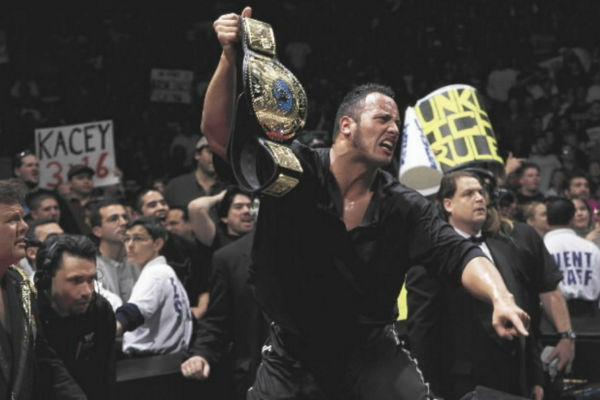
From the minute The Rock set foot in a WWE ring, he was destined for great things. Jim Ross repeatedly referred to him as a "blue chipper" and Vince McMahon constantly put over his status as a third-generation star. They both told fans watching at home, "this is gonna be the man one day." And it did not take look for young Rocky Maivia to win the Intercontinental Championship. There was only one problem: fans rejected the goody-two-shoes babyface. They hated the generic nature of him, not to mention his stupid haircut and obnoxious smile. When he returned as a heel and eventually took over as the leader of The Nation, he earned a following thanks to his catchphrases and sense of humor. Even as he turned the chants of "Die, Rocky, Die," to "Rocky! Rocky! Rocky," he still lacked that something that convinced fans of his Superstardom. That something was the WWE Championship, which he won at Survivor Series 1998 after swerving the audience and aligning himself with the hated Vince McMahon as the corporate champion. As the heavyweight champion chosen by McMahon, he was even cockier, more brash and unlikable than before. He also let his vicious, ruthless and violent side out during an epic rivalry with Mankind. That title reign convinced fans to invest in him as a main event star, the heel that the company's top programs could be built around. By the time he had created as many of his memorable catchphrases as he did, he became The People's Champion, the top babyface in the industry and a Superstar that transcended the industry. None of it, though, would have happened without the championship helping to make him the star he eventually became.

7. John Cena

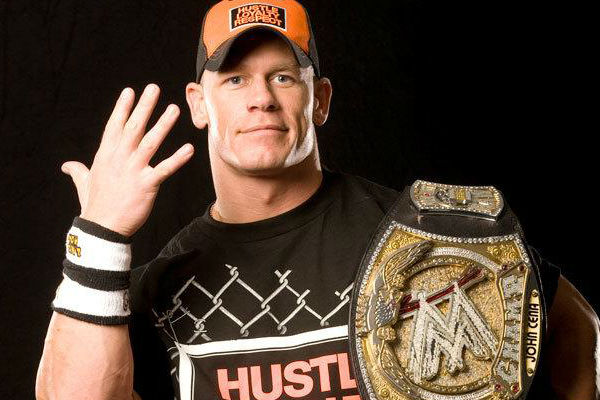
It is hard to remember a period of time before John Cena became a main event star but there it was, way back in the beginning of 2005, just prior to WrestleMania 21. He was a major fan-favorite, a white boy rapper whose raunchy lyrics had endeared him to fans holding onto the last few remnants of the Attitude Era. He was interesting, entertaining and unique at a time when there was not much to really root for. But he was not a main event performer. Not by any means. Cena had developed a nice little place on the roster as the popular midcard babyface who flirted with the main event through matches with Kurt Angle, Big Show, Eddie Guerrero and The Undertaker, but had never carved out a spot at the top of the card for himself. That is, until he defeated John Bradshaw Layfield (more on him in a bit) for the WWE Championship at on the grandest stage of them all. On that night, he catapulted himself into superstardom and onto a ride that has never stopped. Since that night 11 years ago, he has remained the measuring stick of WWE, but that never would have been the case had the championship not absolutely made him during his first reign. Over time he was mutually beneficial to it, increasing the credibility and prestige of the industry's most sought-after prize.

6. Edge

Remembered fondly as one of the best wrestlers of the 2000s, not to mention one of that decade's most decorated competitors, Edge more than deserved his 2012 induction into WWE's Hall of Fame. But that induction, as well as his run atop the industry during the last five years of his in-ring career may not have happened were it not for the moment he cashed in Money in the Bank and won the WWE Championship in January 2006. Prior to that, the Toronto-born Superstar had runs as both babyface and heel, had collected his fair share of midcard titles and even won the 2001 King of the Ring. But he was very much a guy plagued by the "P" word: potential. Many within the industry, and a fair amount fans in the stands, thought he was a guy who had every tool necessary to succeed at the next level but injuries and backstage political maneuvering against him preventing him from realizing his potential. Adding that title to his resume made him overnight. No longer a really talented guy forever stuck in the midcard or recognized for his tag team contributions, he was suddenly the hottest heel in the industry. Were it not for adding "WWE champion" before his name, though, there is no telling what Edge would, or could, have achieved. His main event run, his marquee WrestleMania matches and legacy as one of the premiere performers of his generation, is largely dependent on that first title reign that helped him get over the giant hurdle.

5. Batista

Without the World Heavyweight Championship, fans may not even recognize the name "Batista." It is very possible that he would have been another jacked up, flash-in-the-pain heavyweights that Vince McMahon has always had an infatuation with. His name could have lived forever alongside the likes of Gene Snitsky, Heidenreich, Mason Ryan, Nathan Jones and Luther Reigns as guys who looked like a million dollars but showed no substance between the ropes when it counted most. Instead, he channeled his quiet charisma and a groundswell of support into a babyface turn early in 2005 and a huge WrestleMania 21 main event against Triple H. Under the brightest lights and on the biggest stage, in front of Hollywood's finest, Batista defeated his real-life mentor to capture the World Heavyweight Championship and set off on an unpredictable run to the top of professional wrestling. The title gave Batista confidence he did not have before and it shined through in every performance. He was a locomotive of momentum heading into WrestleMania but that title validated him. It was a message from management to fans that it was okay to like him, to get behind him as a babyface. Get behind him they did. The audience accepted Batista in his role as the lead hero in WWE more than they ever did his counterpart, John Cena, largely because he was believable as the monster who never quite lost his edge. Whereas Cena was stripped of the gimmick he had risen to popularity with and turned into a corporate puppet, Batista was allowed to keep the aura of danger that originally defined him. And it worked, giving fans a real choice between the two heavyweight champions that they do not have to day.

4. Brock Lesnar

Today we know him as The Beast Incarnate, the biggest draw in professional wrestling thanks to his flirt with mainstream acceptance as the most recognizable face in UFC but in 2002, Lesnar was a budding young star tearing through the competition in WWE en route to a monumental showdown with The Rock at SummerSlam. Lesnar was a physical specimen whose size was supported by tremendous speed and agility. Professional wrestling had never seen someone who looked like him, who could move like him or whose aura commanded attention like his did. Add to that the fact that he was a former NCAA wrestling champion and you had a one-of-a-kind Superstar. But the fans of WWE at that point did not care about any of that. No, they wanted to see how he performed against the top names in the industry and, more importantly, if he could be champion. He answered them with an emphatic "yes" when he bulldozed The Rock, putting him away with an F5 that sent him packing to Hollywood. As intimidating as Lesnar was, and as much carnage as he caused early in his career, the title was as vital to his creation as a marquee star in sports-entertainment. It legitimized him as much as winning the King of the Ring tournament or beating Hulk Hogan did. As is the common theme with every man on this list, it the final step toward main event acceptance.

3. Triple H

Triple H may be one of the most powerful Superstars in WWE history but he was not always the industry icon he has become today. He was always a solid wrestler, at the very least, but even at his height of popularity was never considered on the level of Steve Austin, The Rock, Mankind or Undertaker. While the WWE Championship was bettered having been in the possession of those competitors, he needed the belt to vindicate him. He got it, in August 1999, when he defeated Mankind in the main event of Monday Night Raw. Overnight, he was entrenched in the midcard. Finally with that title on his resume, fans were willing to accept him as a leading man rather than a supporting actor. it would still take another run or two with the championship to really convince his strongest of doubters that he belonged but he made it. Had he not have captured that title, odds are he would have forever been recognized as a great wrestler who never could break through that proverbial glass ceiling. As time passed and The Game became an industry giant, he did a great deal to preserve the prestige of the title. His work in 2002 and '03 in particular helped legitimize the newly created World Heavyweight Championship, proving how important one title was to the development of the other.

2. John Bradshaw Layfield

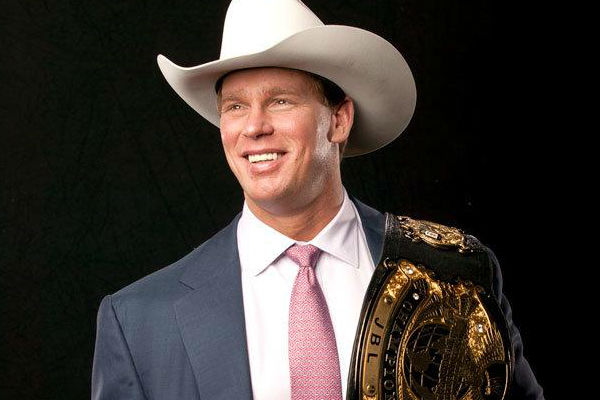
Prior to a drastic character makeover in 2004, Bradshaw was a tag team specialist, longtime partner of Ron Simmons as the APA. Together, they were beer-drinking ass kickers that popped crowds, demolished their opponents and moved onto the next city. With Simmons' in-ring career winding down, though, he was forced to go his own way. With a lack of depth on the SmackDown roster, he underwent a change that saw him adopt the John Bradshaw Layfield persona. A loudmouthed, Texas Republican millionaire whose views regarding Mexicans reflected those of Donald Trump some 13 years before he jumped into the Presidential race, JBL became the lead villain on the SmackDown brand as the top challenger to Eddie Guerrero's WWE Championship. The character felt like a midcard act, a modern day take on "Million Dollar Man" Ted DiBiase. He threw his money around, spoke his ignorant opinion and infuriated fans. If he was going to be taken seriously as a main event competitor, he was going to need significant wins and hardware. He got it in July at The Great American Bash when he defeated Guerrero in controversial fashion to become WWE champion. Suddenly, the lifelong midcard star was catapulted to the top of the card. Once referred to as a "good hand," the title allowed fans to take him seriously as a main event star and even reexamine exactly what Layfield's legacy in the industry would be. Once a fringe Hall of Fame candidate, he established himself as a sure thing. JBL would hold onto the title for eight months, becoming the backbone of the SmackDown brand at a time when injuries to Kurt Angle and Big Show left the brand without a lead heel. He carried the show and developed into one of the most unlikable bad guys the company had seen in years. His promos were on point, his in-ring abilities improved while working with top stars and his name value increased, all thanks to his status as champion and the spotlight, and confidence, it brought him.

1. Hulk Hogan

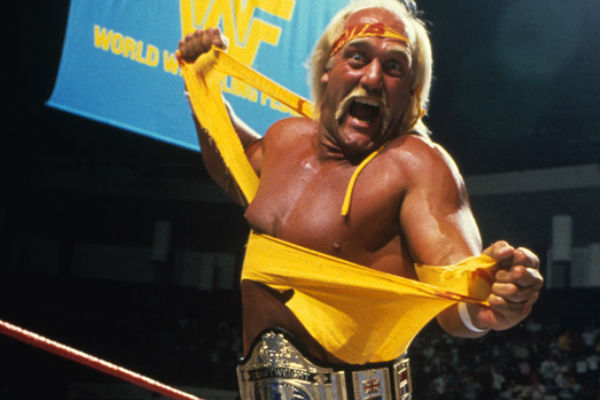
Hulk Hogan was already a hugely popular wrestler, both in the AWA and WWE, by the time January 23, 1984 arrived. He had made a name for himself as the top babyface on the national scene thanks to Hulkamania but needed the heavyweight championship of the world to really put him over the top. Verne Gagne, the legendary wrestler and promoter of the aforementioned AWA refused to book him to win the title, not believing that he could carry the promotion from an in-ring perspective. Vince McMahon, recognizing the money to be made off of the phenomenon that was Hulkamania, jumped on the opportunity to steal Hogan away from the Minnesota-based territory and push him to the top of the industry. He did just that, booking Hogan to go over The Iron Sheik on that January night in Madison Square Garden. "Hulkamania has arrived!" the great Gorilla Monsoon exclaimed on commentary, and it had. The WWE Championship catapulted Hogan into mainstream consciousness. He became a phenomenon thanks to his status as champion. Hogan was going to be a star. He was too charismatic, had too much of a connection with fans not to. What he would not have become was the transcendent star that he did. That title, along with the mass marketing machine that Vince McMahon threw behind his new champion, was key to the development of Hogan as an iconic figure in American pop culture.

Contributor
Contributor

Erik Beaston is a freelance pro wrestling writer who likes long walks in the park, dandelions and has not quite figured out that this introduction is not for Match.com. He resides in Parts Unknown, where he hosts weekly cookouts with Kane, The Ultimate Warrior, Papa Shango and The Boogeyman. Be jealous.