10 Ups & 10 Downs For AEW In 2019
AEW's product is exciting, though their first year presented plenty of problems.
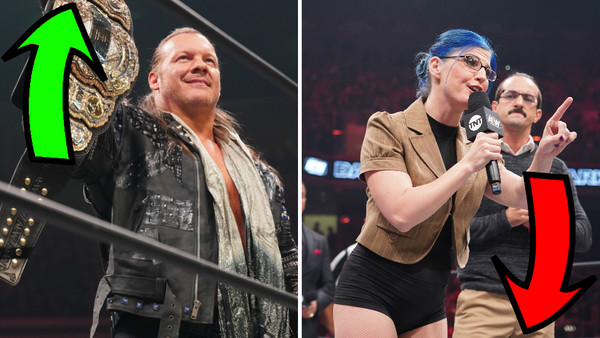
All Elite Wrestling has changed the game by bringing competition back to the once monopolised American market in 2019, but has the promotion been successful in achieving the goals outlined during their 8 January unveiling in Jacksonville, Florida?
This year-in-review column is an attempt at answering that question, and others.
Our breakdown of how AEW's first year has gone will look almost exclusively at big-picture topics. It'd be easy to populate this list with individual matches, segments, and storylines, but while there is always an element of subjectivity when it comes to Ups and Downs, attempted objectivity is of more importance here. This column aims to asses AEW's overall success as a viable professional wrestling organisation above identifying individual creative components its writer liked or disliked.
It's important to preface all of this by acknowledging that AEW is still an infant promotion, with Dynamite only 11 episodes old. Things were never going to be perfect right out the gate, so while there has been plenty to criticise, some issues were to be expected, and there's every chance they'll work towards solving these problems in 2020.
They'll certainly need to if Dynamite's ratings are going to improve...
Downs…
10. Lacklustre Entrance Music
While AEW’s entrance music situation isn’t as dire as harsher critics may profess (Kenny Omega, Cody, Hangman Page, Chris Jericho, and more all sport slick, professional-sounding joints), many of AEW’s stars walk out to lacklustre tracks.
Pride & Powerful’s music is too light and bouncy to fit a grimy heel tandem. The Lucha Brothers’ unimaginative trap farts around the dopy, dopy “Lucha Brothers, MexiKings / Cero Miedo, meet us in the ring” refrain. Jimmy Havoc’s track is a Jimmy Hart version of AFI’s “I Hope You Suffer” lacking in the original’s venom. Hybrid 2’s electronic beats sound like they were downloaded from a free production music website, as does Britt Baker’s synth-led butt rock. Brandon Cutler’s is way too imposing for someone whose appeal is that he’s an overmatched, unthreatening everyman who digs Dungeons and Dragons. The list goes on.
Entrance music is one of the most important parts of a wrestler’s presentation so while AEW’s isn’t as dire as it’s often made out to be, it’s a definite area for improvement. WWE remain the market leaders in this department. It’s up to AEW to catch up.
9. Early Commentary Woes
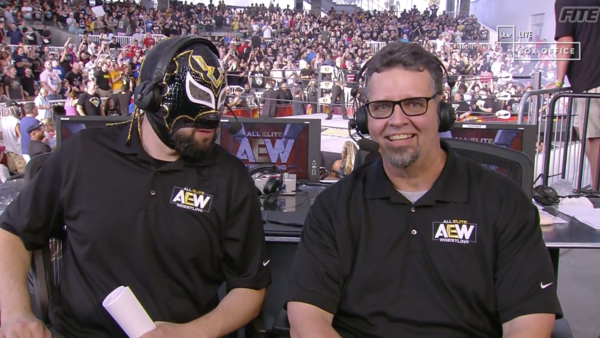
Alex Marvez is probably a great professional and a nice guy behind the scenes, but he isn’t suited to pro-wrestling commentary. This was abundantly clear on AEW’s maiden pay-per-view voyages, on which The Marv was found lacking with botched calls, ill-fitting inflexions, and forced, unnatural pitches and attempts at emotion. He had to go. Jim Ross, meanwhile, earned warranted criticism for frequently drawing attention to shoot problems (particularly in tag bouts - more on that later) when his role, as a paid company mouthpiece, is the opposite.
Much of this was fixed before Dynamite’s first episode, with Tony Schiavone and Goldenboy recruited, Marvez dumped, and Ross now considerably less grumpy than before. Excalibur has always been a tremendous asset to AEW as well, doing everything in his power to stop these issues from becoming a bigger blight to those early shows.
Thank the heavens that things improved; otherwise, this point would be higher up our list.
8. The UK TV Rollout
News that AEW’s still-to-be-named weekly show would air on the free-to-air ITV network (available in 27 million homes nationwide) broke in March, with Tony Khan calling their new broadcasters “the best partner we could have chosen.” Exciting stuff, but AEW were ultimately unable to deliver on the implied promise of a live ITV broadcast.
A disastrous UK TV rollout saw ITV announce that Dynamite would initially air as a highlight show five days after going on the air in the United States. A shambles, particularly compared to what was originally hinted at, and while AEW were quick to cover their backsides by announcing the show would also be available via monthly FITE.tv subscription, the response to this was understandably negative.
Dynamite is now available via ITV Player less than 24 hours after going live on TNT. A better compromise, but far from perfect. This Down cannot be negated until AEW hits the target of a live Wednesday night/Thursday morning broadcast in the United Kingdom.
7. Off The Boil

As hot as Cody became in the build to Full Gear, that AEW cooled him off as soon as he lost to Chris Jericho is disappointing and may have contributed to the ratings slip. The promotion effectively benched their top babyface. Beaten down by the Inner Circle one week then by The Butcher and the Blade the next, he feels significantly less important than he did when he cut that awesome “same silver spoon” promo on ‘Le Champion,’ and he isn’t the only hot face AEW has taken off the boil as they were gaining traction.
Darby Allin is another. The former EVOLVE standout built immense crowd support through do-or-die performances against Cody, and Jericho, getting over to such an extent that younger crowd members started appearing at shows in his face paint… then nothing. Allin wasn’t booked for Full Gear. He has since wrestled Jon Moxley in another bout designed to propel him up the card: again, though, no follow-up.
He isn’t a babyface, but Jake Hager is another example. ‘The Big Hurt’ had an awesome debut angle and has starred in a number of other beatdowns since then. Still, where at the promos? The matches? Was he brought in solely to play Jericho’s muscle, or are we going to see more from him?
Cycling wrestlers in and out works to prevent oversaturation. Unfortunately, these examples feel more like AEW failing to strike while something’s hot. It’s disheartening as a viewer.
6. Being The Elite’s Downfall

Once the most must-see web series in professional wrestling and the viral sensation that helped spur AEW into existence in the first place, Being The Elite went off a cliff almost as soon as the promotion was launched.
While still home to the odd laugh or two, the big hitters just aren’t hitting anymore. The Elite themselves struggle to conjure genuine belly-laughs these days and BTE really misses its old extended universe, from regulars like Marty Scurll and Flip Gordon to the occasional appearance from New Japan roster members. They have rotated several AEW personalities in, but the output isn’t the same, and the show is increasingly populated with alternative perspectives and behind-the-scenes snippets from the previous episode of Dynamite.
The Young Bucks’ crazy AEW schedule means the downturn is at least understandable, but no less disappointing. What used to be appointment viewing is now skimmable and/or skippable. It doesn’t work in conjunction with Dynamite, there’s a disconnect, and it’s a shame.
5. Cocaine Cowboys
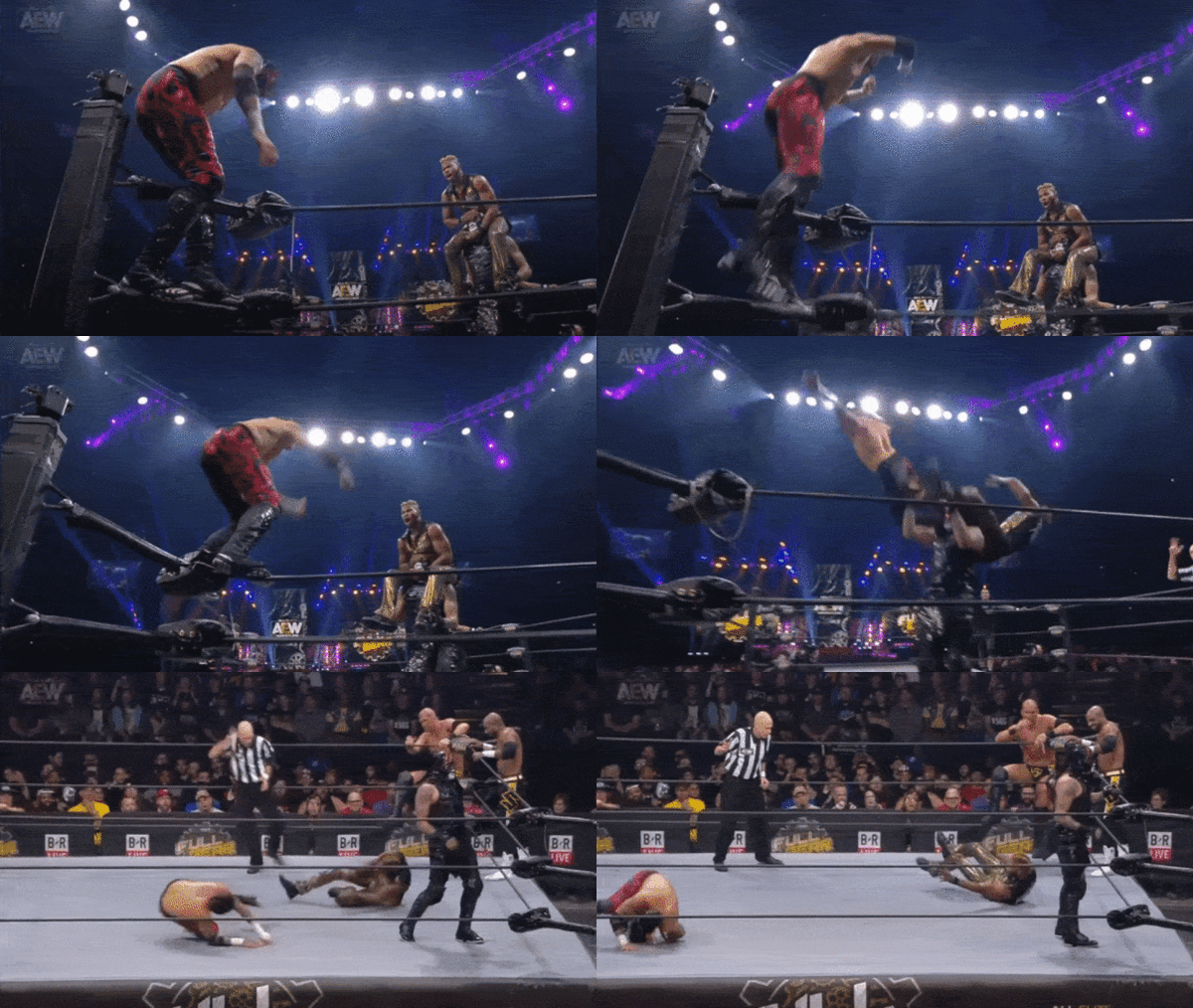
That AEW’s preferred form of tag team wrestling was becoming repetitive was clear by Dynamite’s fourth episode, as the show featured three similarly-paced bouts between The Lucha Brothers and Private Party, SCU and The Dark Order, and The Young Bucks and Best Friends.
You know the type: fast-moving, fluid, all-action, and cocaine-fuelled, designed to “woo” and “wow” with big spots and superhuman feats. The style itself wasn’t the problem, particularly as it almost always gets over in AEW, but there was a hunger for something different. Something a little more grounded.
Persisting down this route would’ve fatigued even AEW’s most ardent supporters. Yes, teams like Private Party can excel in this environment, but the tag division needed variety. It needed different layouts, different styles, and different flavours. It needed something else.
Matches like The Young Bucks vs. Pride & Powerful from Full Gear show this rich, diverse tag roster has so much more in their locker, and we’re now seeing this spread throughout the division as well. The promotion has acted. Spot-heavy bouts haven’t been consigned to the scrapheap (neither should they be), but the division is evolving for the better.
4. Foggy Tag Rules

As tedious and detrimental to the product as listening to Jim Ross audibly complaining about the inconsistencies in AEW’s tag team rules has been, the man has a point - though these grievances should probably be aired in private, not on live television.
The rules and their application remain all over the place. Tag ropes aren’t held, the legal man/woman often changes without a tag, bouts often play out in a manner similar to the Tornado stipulation without this being specified, and “referee’s discretion” gets pushed to its absolute limits, with officials conventionally ignoring these and other discrepancies. It’s confusing and frustrating, as the promotion has a couple of options available to rectify this:-
1. Clarify that AEW tag team matches are fought with lucha rules, meaning a new wrestler can enter the ring without a tag if their partner’s feet touch the floor on the outside.
2. Clarify that all AEW tag team matches are fought with Tornado rules.
3. Follow the bloody rulebook.
The division’s depth is wonderful and the standard of matches high, but these problems are a millstone weighing it down. It’s a weird discrepancy, given who’s in charge, and one that must be fixed.
3. The Women’s Division Hasn’t Taken Off
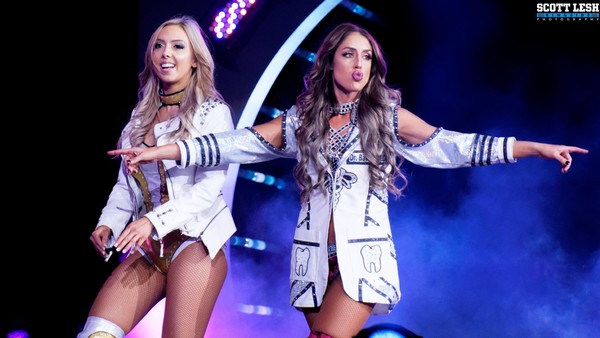
While Kenny Omega’s promise to augment AEW’s women’s division with new wrestlers, a tag scene, and increased screentime in 2020 wasn’t an outright admission that things hadn’t gone to plan, it may as well have been. ‘The Cleaner’s’ words show a tacit acknowledgement that AEW’s women haven’t soared as high as was promised when Brandi Rhodes beamed about the group’s prospects at the Jacksonville press conference.
Britt Baker, who was immediately promoted as a potential ace, has underwhelmed. Champion Riho has had next to no character development outside of what goes on between the ropes. The much-anticipated joshi connection has yielded only a handful of full-timers. Emi Sakura was thrown into a title programme with little-to-no build, despite her student/teacher connection with the champ. TV time is in short supply, with only a handful of slots made available each week and the likes of Shanna, Big Swole, and Sadie Gibbs largely restricted to Dark. These are but a handful of the scene’s problems.
The division hasn’t been without its successes (most of the biggest matches have been electric) and the likes of Shanna, Kris Statlander, Hikaru Shida, and potential signee Jamie Hayter signpost a bright future. Regardless, there’s no excuse for a subpar women’s scene in 2019. This is something that Omega and AEW must work tirelessly to turn around, even if the past few weeks have delivered marked improvements on the promotion’s early days.
2. Changing The Universe?

The Jacksonville press conference promised much and while AEW has largely succeeded in delivering a televised product in-line with what was stated, you can’t “change the universe” with a good wrestling show alone.
“Changing the universe” suggests something bigger than wrestling. It suggests more than great matches and logical week-by-week storytelling. It means more than pushing the envelope between the ropes, and more than huge, crowd-popping angles.
It means things like employee healthcare, bigger paycheques in an underpaid industry, and a clearly-defined, transparent concussion protocol. We’re still waiting for AEW to unevil such things.
Granted, AEW was never going to come through and completely reconfigure pro-wrestling in a single year and they’ve absolutely changed the game by bringing competition back to the American market. They never promised healthcare, either. It’s important to point that out.
But you can’t “change the universe” without actually changing the universe.