10 Victims Of Wrestling Millennials

New generation, new rules.

Recently blaming WWE's problem in creating fresh top guys on the "millenial" mentality on a live version of "Stone Cold" Steve Austin's podcast, Vince McMahon accidentally ushered in the "milennial" era of pro wrestling in full. Intriguingly, it was NXT head trainer Bill DeMott (and not McMahon, who was the first victim of this wildly progressive new era in WWE history. Eschewing a debased behavior approving, subterfuge-favoring, corporate and sanitized presentation, milennials want wrestling to be an industry where talent, honesty, decency and connectivity matter more than anything else. Is the "millenials" mentality the reason why Bill DeMott recently quit the company because of allegations about his training methods? These "barbaric" methods were part and parcel (and likely tame, in comparison) of what every wrestler grew up with in a prior era, but they apparently just don't fit in the presentation of the business that fans (and wrestlers) are willing to accept. Is DeMott the only wrestler or WWE personnel affected by this generational shift? No. From doctors to world champions and movie stars alike, "milennialmania" is running wild in WWE-at-present, leaving many negatively impacted in its wake.

10. Curtis Axel

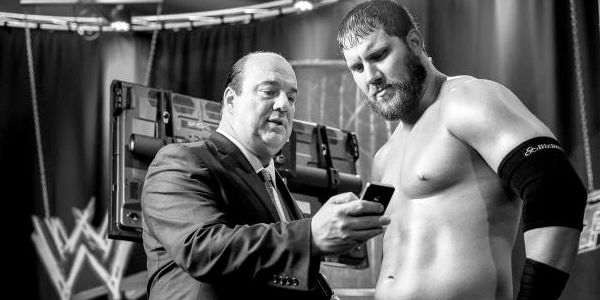
#AxelMania's not trending as much as WWE would lead us to believe, is it? As well, Rybaxel was a misfire, and that Intercontinental Title run wasn't really anything to write home about either, was it? Are millenials to blame for Curtis Axel not getting over? Of course. In May 2013, Paul Heyman announced that he was searching for a new "Paul Heyman Guy." Heyman's got roots in ECW, which is the godfather of indy wrestling's early 2000s resurgence, which is a father of Ring of Honor, the long-time indie home of the last "Paul Heyman Guy," CM Punk. Thus, with NXT teeming with independent wrestlers, to many millenial fans, he idea of Heyman working with someone similar to Punk became apparent. Curtis Axel, not even CM Punk. And, when in his in-ring debut against Triple H he was less than captivating, he was on the fast road to being hung out to dry by Heyman (and indy-loving) millennials.

9. The Rock

Millenial wrestling fans love Daniel Bryan. Bryan's driven and do-it yourself push to superstardom is inspirational, his individuality a shining beacon to a new generation of WWE fans. Of course, millenial wrestling fans also all grew up as wrestling fans watching The Rock in the Attitude Era, so the idea of the legend co-signing Roman Reigns' Royal Rumble win made sense...or did it. The Rock is a 6'4" 280 pound Hollywood action hero more than he is a captivating pro wrestler anymore. The Rock is heavily muscled and now very much fitting into a rather cookie-cutter version of what pro wrestling should be. Daniel Bryan, the harbinger of something more for wrestling, something unique, something wholly individual and in-step with the times. The WWE Universe's millenial population are the ones who turned on The Rock moreso than any other demographic because if he was going to co-sign any other person buy Daniel Bryan, then what was he doing there in the first place.

8. Roman Reigns

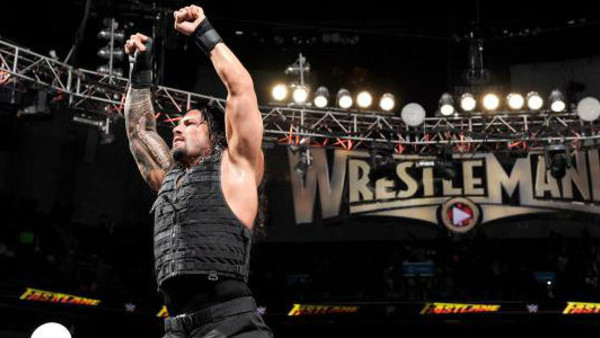
Millenial fans want a leader out of pro wrestling that can speak their language and walk the walk for them. This requires a sort of unrestrained aware-speak that was popularized by CM Punk mixed with the ring-generalship of Daniel Bryan and the rock-star charisma of Dolph Ziggler. Every time Roman Reigns speaks, he sounds like he's reading from a cue card written for him by Vince McMahon. As well, he lacks that certain swagger and confidence in the ring to make the impossible look flawless literally every single time. As well, the charisma is there - but when all else is lacking, it's just not enough to help him connect with the (all-important) WWE millenial demographic.

7. Batista

Let it officially be said that Dave Batista probably left WWE because he was asshurt that he was being booed by "catch-as-catch-can" and "highspot" wrestling-adoring millenial fans. Batista became Bootista and left as Bluetista all in the space of five months. Amazing. Is Batista a "bad wrestler?" No. Is Batista a grandfather who didn't necessarily come back in great ring shape who didn't bring his "A-game" in front of crowds who are now (as millenial and internet-savvy fans tend to be) hyper-aware of what "great wrestling" should look like? Definitely. In a case of being eaten alive by millenials constantly thirsting for more out of WWE, Batista was actually gone before he even arrived.

6. Ryback

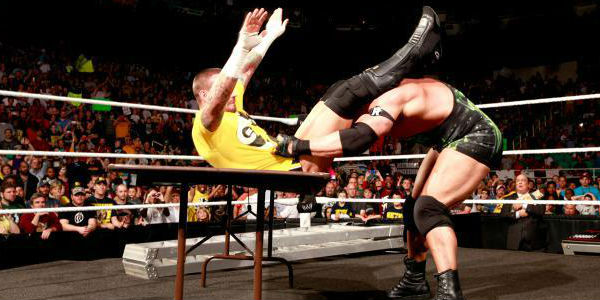
The second that CM Punk referred to Ryback as "steroid guy" during his infamous appearance on Colt Cabana's podcast, "The Big Guy" was the target of considerable derision from the millenial sector of the WWE Universe. "Steroid guy" cues off thoughts of Hulk Hogan, Ultimate Warrior and other stereotypically big, immobile and perceived-as-unintelligent carny-style 80s wrestlers. Ryback's snarling countenance, less-than-top notch wrestling skills and apparent multiple times that he actually injured Punk didn't do him any favors, either. Either on-purpose or inadvertently, Punk turned the internet-loving and highly vocal millenials in the WWE Universe off on a witchhunt-like and slanderous spree against Ryback. However, to his credit, Ryback's ability to keep his head down and work against the pressure has actually engendered him to many WWE fans, boos for "The Big Guy" slowly turning into chants of "Feed Me More."

5. Triple H

No matter how many times he throws up the Kliq "too sweet" with internet and millenial-friendly independent and Japanese wrestlers, Triple H is still growing in trust with that fanbase. Triple H is the guy who - in the eyes of most millenial fans - buried half of the business, is a selfish prick, married the boss' daughter and is an outright liar. All of the above may be true about Triple H, which, until proven otherwise makes him a victim (who may be desperately trying to change his perception) of this millenial-defined era of WWE history.

4. John Cena

There was once a time where the WWE Universe believed that John Cena was a battle-rap loving wiseacre from the suburbs of Boston who backed up his mouth with gritty performances. Somewhere along the way though, he became a 15-time World Champion and a guy who wears suits, dates women with surgically enhanced breasts, and even does commercials from children's cereal. Millenials have access to the internet, but if presented with someone they feel has no reason to lie to them, will take them at face value on most everything. However, when the person they think they know literally becomes the one thing that absolutely, positively never wanted them to be, it's an affront to their common sense, and to the disbelief they willfully suspend as wrestling fans. Cena broke the code in such an incredible way that he's likely to get that 50/50 millennial/non-millennial response forever, no matter what he does.

3. Dr. Chris Amann

CM Punk's interview with Colt Cabana was one of those never-to-be-forgotten wrestling moments because Punk literally shattered whatever was left of the "fourth wall" between the crowd and the backstage area when he buried the work of WWE staff physician Dr. Chris Amann. "Doc" Amman's persistent need to prescribe azithromycin for most infections incurred on the road by WWE performers is fairly standard procedure. Punk - arguably the "patron saint" of the millenial audience - calling out Amann was one of those moments when someone who likely didn't necessarily need to be a known WWE staff member by a vocal portion of the WWE Universe became known, and immediately vilified as being less than talented at his job. (Even if he doesn't win), Amann suing Punk and Cabana for defamation of talent is logical, sensible and necessary. He's a victim and certainly allowed retribution.

2. Vince McMahon

Vince McMahon is a 70-plus year old man booking a company largely watched by people who are officially either between one-quarter or one-half as old as he is. Contemplating the idea that he's possibly out of touch is okay. However, the moment when you believe yourself to be correct in your assertion is the moment that Vince McMahon becomes a victim. Vince McMahon is handling a lot these days, the opinions of his fans sometimes not as important as the opinions of his shareholders, Board of Directors, marketing department, global media team, and his financial bottom line. Note at no point were wrestlers, bookers or road agents even tossed into that mix, too. Vince "hating millenials" is kind of a misnomer in the sense that he doesn't so much hate millenials as much as he hates the fact that they're not even remotely aware of how difficult his job is these days as chairman of WWE. He's pleasing multiple people at multiple times in various ways that maybe won't put over Daniel Bryan or Cesaro, but also he's trying to keep his company financially solvent, too.

1. Bill DeMott

If the allegations of hazing via rope-snapping, sexual orientation-ribbing and verbal/physical assault are true, then Bill DeMott is the first pro wrestler to ever be fired from a pro wrestling company for merely being an "old school" pro wrestler. "Milennial Era" wrestling is more the "wrestling friends" than the cut-throat "wrestling business." The fans know that this is all a work at the end of the day, so it's okay for nobody to really get their feelings or their bodies unnecessarily hurt, and that legitimately beating people up without them defending themselves is okay because it makes them mentally strong enough to handle the rigors of the industry. To someone like Bill DeMott, an industry that didn't involve calling a homosexual wrestler "half a sissy" or a Middle Eastern wrestler a "terrorist" isn't the wrestling business. Bill DeMott broke in the business in 1990, arguably the worst part of the tail end of the territory era. Vince had purchased every territory in America save Memphis and World Class, plus the places where DeMott broke in, the startup AWF and ECW. As well, he wrestled in Puerto Rico and Japan, too. Thus, DeMott was hard on his trainees likely because he remembered what his time breaking into a major TV role was like, so he likely wanted to make it twice as hard. In a milennial era where technology and a revolutionary desire to be different makes things appear twice as easy, DeMott's antiquated ways earned him the axe.

In this post: 
Bill DeMott
 
Posted On: 
Contributor
Contributor

Besides having been an independent professional wrestling manager for a decade, Marcus Dowling is a Washington, DC-based writer who has contributed to a plethora of online and print magazines and newspapers writing about music and popular culture over the past 15 years.