10 Ways WWE Treats Its Fans Like Idiots
WWE is not technically a children's show... so why does it feel like one?

The bigger a company gets, the more disconnected it can feel from its audience. Especially the case if the people in charge have been in their positions for a long time. It's easy to overuse what was once a clever idea, but it guarantees it will become formulaic.
Therein lies the biggest issue: an unchallenged audience will feel embarrassed by how you talk to them.
According to reports, the average age of a WWE fan is in their 50s - so why does WWE programming talk down its audience like its a children's show? Shouldn't it strive to surprise, entertain and amaze? Instead fans are treated to the same tired dynamics and shortcuts.
This list is going to go hard on some of WWE's worst aspects in the way that it speaks to and interacts with its audience. From the stories it tells and how it tells them, to presentation details that leave the WWE universe unfulfilled. Hopefully, with changes coming in the future, we can all look back on this list and laugh.
All the same, these problems have been a part of WWE programming for a long time now and the company treating its audience like they all share a single brain cell is a part of WWE history.
10. Constant Recaps

Let’s start with the thing that almost certainly comes to mind when you think about WWE treating its audience like children. We’ve heard for years about Vince McMahon’s tendency to suddenly get bored of an idea or desire to tear up scripts on a whim hours before a show airs, but that shouldn’t mean that the company assumes its audience has a complete lack of attention span as well.
Doing things that imply as such, like the never ending recaps of moments that just happened, actually has a Pavlovian effect on your viewers. You’re telling them that it doesn’t matter if they pay that much attention because they’ll just be shown what happened again and again anyway.
Whether WWE fans get the luxury of a commercial break or a backstage segment before the recap shows or not, they’re obnoxious at the best of times and total tedium at worst. It’s become frustratingly common that a segment will finish, be recapped and then after coming back from commercial will be recapped again.
Filling a three hour episode of Raw is a challenging thing for any booker but cheap tricks like spending minutes of the program showing previous events is just tiring. Fans may as well go and watch the YouTube clips of the show as they’ll see all the major moments - but only see them once!
9. Fake Crowd Noise

Some episodes of Raw are a challenge to watch from home. At least if you’re there live you have the benefit of your fellow audience members and their energy to get you through it… unless the episode is so bad that everyone sits in silence, wondering why they came.
You’d think that if a story or character didn't get the desired response it would be time to change direction, but higher-ups in WWE seem to think they know best. If the crowd isn’t responding to something, don't replace the wrestler. Just replace the crowd.
Piped in audience sound effects cannot replicate the real thing, and when watching at home more often than not you can hear the difference. This is even more obvious when the reused audio contains things that it shouldn’t. Recently, following a fake crowd pop for Drew McIntyre, a piece of old commentary could be heard of Michael Cole enthusiastically describing “16-time world champion” John Cena.
It’s one of many examples of WWE telling its audience how to feel, as if hearing an outdated tape of fans cheering for an unrelated wrestler being played over Vince's latest pet project will change our minds.
Fake crowd noise has never helped anyone get over. In fact, it just makes the company look stupid and pisses off the fans who see through the transparent behaviour.
8. Everyone Talks The Same

These days, you can predict the large majority of WWE promos in the current era before they’ve ever begun because you’ve heard them all before. Every single time a wrestler picks up a microphone they are essentially going down a WWE approved flow-chart. If you’re a babyface, make sure to remind everyone it’s your dream. If you’re a heel, wear a suit and tell the WWE audience that you “don’t need these people”.
The real issue is that characters and storylines lose their nuance when everything has to fit the formula. WWE couldn’t care less though and everything needs to be spelled out as simply as possible.
When wrestlers are reading promos that have been written for them, typically by out of touch old men, how can they hope to connect with the material? And, to that end, how can the audience? WWE tells us exactly how to feel with its Xeroxed scripts, but the end result is creating a cast of identical characters. It's hard to care about a superstar and their motivations if they sound like everyone else has for the last 15 years.
Wrestlers work overtime to add nuances and inflections, doing the best with what they’re given, to make an impact. Why? Because the company thinks its fans will respond to cookie cutter promos.
7. The WWE Terminology

This year Cody Rhodes returned to WWE and said the “B word”. No, not the one all the women call each other all of the time (see: previous entry). He dared to refer to a WWE championship as a “belt”.
Every now and then over the last decade we would catch wind that Vince McMahon had banned another new set of words. After phasing the word “wrestling” out of their vocabulary with minimal fuss, it became normal that WWE had its own dictionary of terms that everyone needed to adhere to.
So much so that their verbiage is all burned into our minds. Just look at the image above of Michael Cole sat behind that desk and tell me you can’t hear the words “local medical facility” in your head.
There is no wrestling, there is only sports entertainment. Superstars don’t get title shots they get opportunities, and they get those opportunities in front of who they rather insistently call the WWE Universe. An appropriate term because the company seems to live completely in its own bubble.
No matter how adamant they are though, WWE will always be wrestling by very definition. You can’t just say “no” to something you’re doing and pretending you’re not doing it.
Oh wait, that’s exactly what WWE do.
6. Card Subject To Change

These days in WWE it’s rare for the company to start hyping up a segment for the following week during an episode of Raw or SmackDown, and it’s rarer that its audience really cares.
After all, a lot of segments that WWE promises don’t make it to air.
All that this kind of practice demonstrates is that the WWE doesn’t care about its own shows and in reality neither should we. There’s marketing tactics and then there’s the illusion of booking in advance. It makes it look as though WWE knows where each of their storylines is heading, at least in seven days' time, but in truth the façade is all the writers are interested in. As long as we tune in next week, that’s what matters.
That’s entirely what “card subject to change” is all about: the asterisk next to any booked match or angle that pretty much provides WWE with a get out-clause.
And it’s not just the weekly TV shows either, the company has even done it for premium live events. Just this year the poster for Money in the Bank featured the smiling face of ol’ Cowboy Brock Lesnar, implying that he was a significant part of the show. In reality, he was never booked and made no appearance.
5. Ignoring The History Of Other Companies
When the Monday Night Wars ended and Vince McMahon hoovered up the assets of WCW into the gaping maw of his own company, WWE became an island. The next two decades saw the promotion become the one true giant of the industry and everyone else wrestled in its shadow.
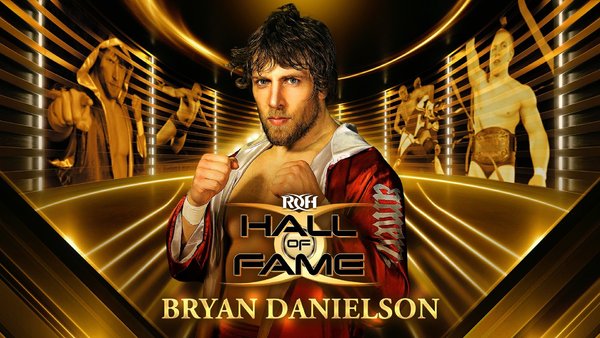
Props must go to places like Impact and ROH that formed during these years and fought valiantly for their own audience. Numerous incredible independent stars made their names in places like these who would eventually make their way to WWE: Daniel Bryan, Seth Rollins, Samoa Joe and so on.
Very sparingly, WWE will make reference to other companies and when they do it’s usually only tiny promotions that either pose no threat or have a working relationship with the sports entertainment giant. Despite big stars of the likes of Impact and ROH coming in with a huge boost of momentum, WWE wants to pretend that they just plucked them out of the ground one day.
WWE hires these men and women based on their experience and popularity and then does everything they can to distance themselves from it with name and gimmick changes galore. It is the Vince McMahon way to make sure that the Cesaro we see is not the Claudio Castagnoli who was lighting up the independent scene.
And if you were a world champion elsewhere? Forget about it. Didn't happen.
4. Ignoring Their Own History

Pretending there’s no other alternative out there is one thing, it’s a whole other ballgame to place fast and loose with your own canon.
This doesn’t just include essentially saying “I don’t know who you mean” about wrestlers no longer in their employ. That’s a stupid expected norm about the petty nature of the company’s top men.
Character motivations, relationships and attitudes just bend and turn in the winds of whatever is necessary for “the moment” within WWE programming. One random example, the storyline where Kane decided he was a horror movie monster again and decided to hunt down Daniel Bryan even though just a year prior they were a comedy babyface tag team. And this kind of thing happens constantly.
However, the most egregious things are when previous events are verbally altered to make them seem even more historic or convenient. DX did not invade WCW on a “tank” as much as the WWE might stretch the limits of the definition of the word. The “Get the F Out” campaign was followed by legal proceedings with the World Wildlife Fund charity and not a sign of the “changing of the times” as described in WWE in-house documentaries.
WWE may be closer to a scripted TV series than a sport in some respects, but you wouldn’t see Stranger Things claiming that there had never been a Mike if Finn Wolfhard went to work on another show.
3. Celebrity Involvement

In recent years, WWE and celebrity involvement have been a term with a lot more optimism to it. Bad Bunny, Pat McAffee and even Logan Paul have truly impressed wrestling fans and not just because they've been burned in the past by celebrity appearances.
It’s one thing for the cringeworthy but ultimately harmless cameos, where an actor or a musician might pop in to “host” an episode of the Monday Night Raw. It’s a whole other ballgame when things get physical.
Wrestling may be scripted but does it make sense to put your contracted workers, that you choose to enthusiastically call “superstars”, in positions where they look stupid compared to people who have never stepped foot in a wrestling ring? Men and women who have trained for years have been embarrassed by celebrities so many times over the years that fans had nearly become numb to the concept.
From Mickey Rourke punching out Jericho, to Snooki’s WrestleMania win, it’s embarrassing to see WWE bending over and kissing the ass of pop culture at the expense of their stars. After all, as the saying goes, "who’s gonna be here next week"? The stars who now have to work back to their spot after being punked by an untrained celeb who has already forgotten they even showed up.
2. Contrived Ref Bumps

If celebrities are as naturally powerful as seasoned wrestlers, maybe they should be officiating matches. Where are WWE hiring their referees? Are they deliberately seeking men whose bones are made of glass?
What makes this so downright confusing is how exactly you gauge the physical strength of a referee compared to a celebrity. Both are untrained in the art of pro wrestling, so why is there such a difference between a celeb no-selling and knocking out a wrestler, and a referee who crumbles into sand when someone looks at them funny?
Whenever a referee bump happens on TV, you just know that it’s the default answer to a “how do we get out of this situation?” booking issue. With no authority around to call the match, WWE writers are able to book themselves out of a corner with this easy-to-do, catch-all skin saver.
Does this particular gimmick happen in other wrestling promotions? Of course it does, but not nearly at the rate or level of absurdity as World Wrestling Entertainment. Watching WWE referees that have been knocked out by a simple shove for fifteen minutes count in slow motion very rarely adds to the drama, as the writers intend.
It's downright bland and, at the worst of times, completely illogicla.
1. Patting Themselves On The Back

When the women's revolution in WWE rolled around, as great as it was that the talented female superstars were being featured more and more, a question hung in the air: Why now?
"Historic" was a word thrown around a lot, especially about a lot of “firsts” that the company was quickly ticking off the list - first time that two women main evented a pay-per-view, first women's Hell in a Cell, first women’s Royal Rumble etc - but, as a show that is entirely based in fiction, all of this ranting and raving about how great it was just made it painfully obvious that, if WWE truly cared, they could’ve done this sooner.
The worst part came when Stephanie McMahon took ownership of the revolution. In truth, it was a culmination of fan demand and a growing trend in the entertainment industry. WWE were merely catching the wave and claiming they were benevolent and brave because of it.
WWE can choose when and what to write to craft their own history but it’s only worth celebrating if it’s cutting edge or at the very least genuine. By ramming down the fans’ throats how lovely and thoughtful they are, they’re only taking them for yes men and fools.