10 WWE Matches That Were Meant To Be Epic (But Failed Miserably)

Oh what should have been.

A couple of months ago, WhatCulture.com proudly presented an article entitled, €œ20 Most Epic Wrestling Matches That Weren't Supposed To Be Epic.€ These were matches that were, for all intents and purposes, given the sort of time to play out generally reserved for mid-card bouts, but wound up far exceeding the critical expectations set by their limited length. Stylistically, the participants involved were forced into the unenviable task of trying to pull off the equivalent of telling a Hollywood Oscar-winning performance in the length of a shoot 'em up, bang bang action flick. Yet, they are rightfully celebrated for somehow pulling it off. Today, we look at the opposite end of the spectrum at matches that carried with them expectations at a level that would have made Charles Dickens notice. Yet, instead of achieving a status set to be celebrated through the annals of wrestling lore, they were anything but €œgreat.€ The wrestlers had main-event quality television time to build their rivalries and ample opportunity to tell their stories from bell-to-bell without having to cut a blistering pace or over accentuate high spots, but they had the show stolen right out from under them, at best, or stunk out the joint, at worst. Their matches were supposed to be €œepic,€ but they turned out to be massive failures by comparison.

10. Chris Jericho vs. Bray Wyatt (Summerslam 2014)
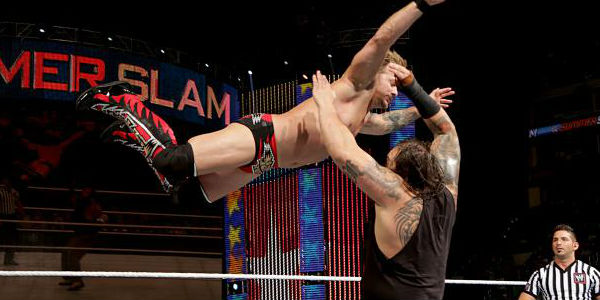
Beginning the list is the most modern example that has yet to get a chance to stand the test of time, but failing to achieve epic when epic is expected is not typically a situation that deserves to be given an opportunity to change perceptions when the original reality was so underwhelming. When Y2J returned in the early summer to be attacked by Bray Wyatt, fans around the world were buzzing with the potential for what might ensue. Jericho is one of the top 15 stars of the WrestleMania Era. Bray Wyatt is a fast-emerging star of tomorrow. Each is blessed with the gift of gab and immense storytelling ability that shames their peers. So, what in the world happened? There was no riveting story. The chemistry was never there in the ring or on the microphone. A year earlier, fans began to question how much Jericho had left in the tank. A return spent feuding with the likes of Fandango and Ryback could have given his 2013 a pass for being a by-product of the men he was working against, but the 2014 arc with Wyatt seemed to confirm that, perhaps, Y2J has little left to offer the modern product. By the time Jericho and Wyatt finally delivered in a Cage match on Raw as the seasons changed, the moment had come and gone; what started as a situation ripe with anticipation for €œMatch of the Year€ candidates and praiseworthy television segments had devolved through two months of mundane hype and average pay-per-view matches into a story of €œwhat might have been.€

9. Yokozuna vs. Lex Luger (Summerslam 1993)

Lex Luger in WWE vs. Lex Luger in NWA/WCW were two completely different talents. Luger in NWA had been an awesome talent on the brink of main-event greatness from 1988 to 1992. His failure to achieve all that he was capable of could easily have been construed as a failure of the people that ran WCW to capitalize on his abilities. WWE seemed poised to take full advantage of what Luger brought to the table, but he was severely injured in a career-altering accident during the year he spent riding out his non-compete clause. He recovered and made a splash in WWE during the summer of 1993, flying onto a battleship via helicopter to bodyslam then-WWE Champion, Yokozuna. With Yokozuna playing up his anti-American status to the nines, Luger€™s donning of the stars and stripes gave him a golden opportunity to become in WWE what nobody in WCW ever gave him the proper chance to do €“ be the conquering hero. The Total Package was an appropriate nickname. He certainly had the chops to be one of the defining superstars of the WWE New Generation. Unfortunately, Lex was not the same caliber of performer in 1993 that he had been before his accident. Summerslam €™93 in Detroit featured a decent outing from Luger and Yoko, but it failed to capture many imaginations. It was a critical and financial disappointment, fueled by Luger€™s diminished skills, the fact that Yoko was increasingly trying to eat his way through the calendar, and the changing times in society. Luger vs. Yokozuna peaked when Lex slammed the 500 (+++) pounder. It never progressed.

8. Batista vs. Randy Orton (Armageddon 2008)
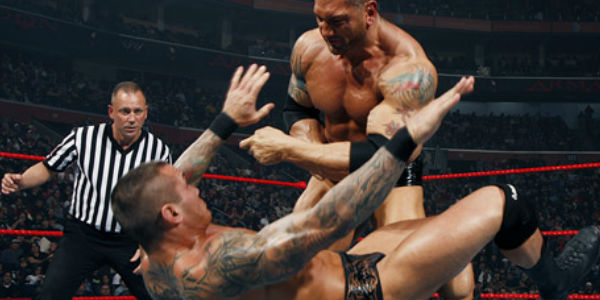
Who knows what Randy Orton and Dave Batista might have been able to accomplish together? Theirs was a situation in which it should have been epic but wasn€™t based on circumstances that were honestly beyond their control. Unlike the creative strike out offered by Jericho vs. Wyatt, Orton and Batista had a natural story ready to be told if the Animal had ever been able. Originally set for WrestleMania 22, Batista vs. Orton was scrapped because Big Dave got injured. It was going to be the battle of the former Evolution stablemates vying for supremacy. Three years later, WWE tried again in the fall of 2008. Orton returned from shoulder surgery and made Bats his target. They escalated their saga through the Survivor Series and were going to be one of the featured matches for the December PPV, Armageddon. Their match did take place, but in the weeks leading up to it, Batista got hurt again. He struggled through it, but shortly after was headed back under the knife, missing his second Mania in four years. They never did have a match befitting of their status or their history together. Timing was their enemy, it seemed. If you evaluate their respective timelines, Orton was injured for a chunk of 2005, Batista of 2006, Orton of 2008, and Batista of 2009. When Batista came back in 2014, WWE was apparently going to try it one last time, but the crowd took to the Animal€™s return like a long-tailed cat in a room full of rocking chairs, forcing an audible. It just was not in the cards.

7. The Rock vs. CM Punk (Royal Rumble 2013)
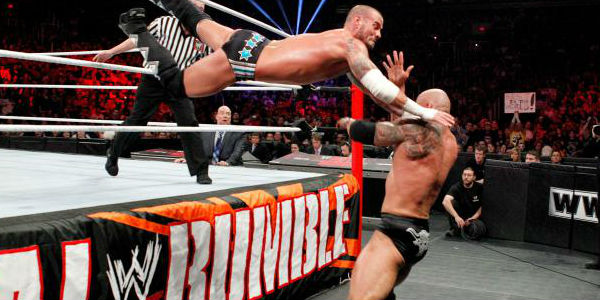
When The Rock wrestled John Cena at WrestleMania XXVIII in 2012, many were surprised by the sheer amount of time offered for them to tell their story. Though it can be argued that it was not epically executed, it cannot be disputed that it was epic in length. CM Punk defending the WWE Championship against Rock at the Royal Rumble nine months later was seemingly an opportunity for the Straight Edge Superstar to fully showcase his considerable grappling skills on a stage grander than any he had ever been afforded. Surely, if Rock could hold up his end of match timed similarly to his Mania efforts, Punk could carry him to a classic match. Punk was, after all, absolutely on fire during his modern record title reign. All the pieces were in place for one of the Royal Rumble€™s greatest matches. Both had delivered in the promo department, providing an added layer of storyline development to a match that already had a well-built foundation (Punk€™s 434 day title reign vs. one of if not the greatest superstar in history). History beckoned, but the format of the match was oddly structured to feature almost complete domination by the champion. It was a stark contrast to the back and forth test of wills that had been portrayed by Rock and Cena at Mania. Clearly, it was setting up Rock to €œovercome the odds€ and, as we would later discover, to make Punk look extra strong heading into a match at Mania 29 with Undertaker, but the quality of the match suffered from a case of €œexpectationitis.€ The finish was less than ideal, as well. The Shield interfered when the lights in the arena went out, Punk won the match, the match got restarted, and Rock won the title. Disappointing.

6. Randy Orton vs. Triple H (WrestleMania 25)

There were legitimate questions heading into WrestleMania 25 when it was made apparent that Triple H and Randy Orton would be renewing their rivalry. In the past, they had neither been able to put together an epic feud or an epic match, yet they were being given the chance to revisit what had, to that point, been very average on the grandest stage of all. Orton€™s sadistic Viper character helped take care of increasing the quality of the storyline. He was utterly outstanding in 2009, accentuating the details of the modern villain as well as any superstar in the last decade. Triple H, notoriously lousy in the role of the €œbadass€ babyface, found something within himself that played off of Orton quite well. It was RKO who carried the build-up, taking out each member of the McMahon family, but Trips was convincing as the hero. The match at Mania 25 was by no means as terrible as some have suggested. Yet, considering the heat on it throughout the months of February and March, the April payoff was incredibly underwhelming. To be the main-event of WrestleMania and lay a heatless egg was the sports entertainment equivalent to the 2014 NBA Finals rematch between the San Antonio Spurs and Miami Heat €“ a saga rich with juicy plot points and historical footnotes that ended with a resounding thud. Orton blamed it on the stipulation, which was a curious decision. Triple H (not for the first time) argued that he had an impossible match to follow, despite the fact that the other World title match in between it and Taker vs. HBK did just fine. Excuses aside, it just was not all it was cracked up to be.

5. Brock Lesnar vs. Undertaker (WrestleMania XXX)

If you are beginning to wonder about the modern flavor of this column to this point, then the explanation is simple: super cards as we know them were only born in 1983, so it took about 15 years for expectations to be set for what the biggest shows of the year could produce and the critical community that helps shape such expectations to grow accordingly. The last decade has had higher expectations because of the success of the first twenty years of the WrestleMania Era. During that time, nobody other than Shawn Michaels built up a greater standard for his performances on major stages than Undertaker. The Deadman€™s run of Mania matches, dubbed €œThe Streak within €˜The Streak,€™€ from 2007-2013 was arguably the best in modern pro wrestling lore. Timing is everything, though, and Taker vs. Brock Lesnar came across from the start as about three years too late. Nobody cared. The people did not respond during the hype and a pin drop could be heard in the Super Dome at Mania XXX. For almost a half hour, Taker and Brock put on a match full of the same caliber of high spots that had become hallmarks of the Phenom€™s previous seven classics, but there was so little interest that there was not the same response. The only thing noteworthy in the entire effort was the utterly shocking result €“ one of the most surprising finishes in WWE history. The Streak came to an end and so did the Streak within it. €œ21-1€ was merely the rainbow glitter sprinkled on a giant turd. Taker apparently got concussed early on, but there was not a single moment in that match prior to that had the crowd buzzing.

4. Goldberg vs. Brock Lesnar (WrestleMania XX)

Contrary to the lack of excitement generated by WWE for the Brock Lesnar vs. Undertaker match, there was, at least initially, a tremendous amount of enthusiasm from the fans for a match between Goldberg and Brock Lesnar a decade prior. Starting with their first interaction at the 2003 Survivor Series, Goldberg and Lesnar were set on a collision course that had wrestling enthusiasts of all types itching to see them come to blows. Through the Royal Rumble in 2004 and onward to Goldberg helping Eddie Guerrero win the WWE Championship from Lesnar at the No Way Out PPV, it looked like a clash of the titans was looming at Madison Square Garden for WrestleMania XX. Unfortunately, very little worked out from there. WWE mishandled Goldberg€™s dates, meaning that he was a virtual ghost for the last month of Mania hype. Goldberg was already wrapping up his one year WWE tenure at Mania; a fact that New York's smart fans were well aware of long before March 14, 2004. Lesnar, in a surprise twist of fate, decided that he did not like the travel schedule involved with being a pro wrestler and was going to quit WWE after Mania. In all likelihood, executives thought that they had that secret kept pretty well under wraps, but to their dismay and to the detriment of the match, the internet spread the news like a virus with the primary area affected being New York City. When the match started, the fans let Brock Lesnar have it. What did he think he was signing up for when he inked his WWE contract? A walk in the park? It is a hard life. WWE put him at the top of the mountain from day one and fans invested in him. They felt betrayed when they discovered that he was leaving. As a result, Goldberg and Lesnar had a match, structured quite well to accentuate their strengths, but unless you mute the TV while watching it, the crowd is so distracting that it is difficult to view the match, critically, as anything but an epic failure.

3. Brock Lesnar vs. Triple H (Summerslam 2012)

When Brock Lesnar came back to WWE in 2012 and worked one of the most aesthetically unique matches in modern pro wrestling history in his first match in eight years against John Cena, expectations grew for what he could do in his next match. His opponent was Triple H, another one of the greatest of all-time, so it should have been awesome. The Game, by that point in his career, was a beloved legend, having most recently proven his worth in a classic against Undertaker at WrestleMania XXVIII. Instead of asking, €œWhat do you get when you put two icons against each other for the first time,€ perhaps we should have been asking, €œWhat do you get when you put two icons that combined to make up 60% of the most epically disappointing matches in history against each other?€ Brock vs. HHH was not a bad match, but similar to many of the matches listed, it was so far from the quality that you would expect that it felt terrible by comparison. In reality, Triple H and Brock Lesnar had several good matches in their 2012-2013 rivalry, but there was not a classic in the lot. At Summerslam 2012, everything set up for them to put on a thrilling show. WWE barely built up any of the other matches, so there was nothing capable of stealing their spotlight. No other match on the card was given any considerable time to play out, meaning that all the time in the world was available for them to tell their story. Yet, the bell rang and it just did not click. Brock went for a Kimura Lock approximately every 30 seconds (exaggerated for emphasis) for twenty minutes and Triple H struggled to play the €œbadass€ babyface (it just never suited him). When €œworth a watch€ is all you can get from two future first ballot Hall of Famers, that is a problem.

2. Chris Jericho vs. Triple H (WrestleMania X-8)

It is clearly fair to place some of the blame for the lack of heat for the main-event of WrestleMania X8 on the exhausting response generated by The Rock vs. Hollywood Hulk Hogan match from earlier in the show. It is quite fair, as well, to place some of the blame on the creative team for pretty much the entire execution of the hype for 2002€™s €œGranddaddy of €˜em all,€ as that year featured (among other blunders) a fight over shampoo, Hogan running Rock€™s ambulance over with a semi-truck, and €“ the coup de grace for Y2J-HHH €“ the family dog. However, it is also fair to place some of that blame on Jericho and Triple H, themselves. Their peers all had lousy storylines, too, but were able to meet or far exceed expectations, whereas HHH and Jericho struggled, mistimed a spot, and were unable to wake up the crowd for the first Undisputed World Championship match in Mania history. Part of the problem was that Trips was out of his element, thrust into the role of the €œbadass€ babyface, which he proved in 2002 was the only role he was incapable of playing well. He could be the funny, hip, trendy babyface, he could be the best heel in the business, and he eventually showed he could be the legend who combined the best traits of each of his personas, but there is just something missing when he tries to act like the Incredible Hulk. He looks the part, but cannot act the part. Jericho, meanwhile, was booked about as strong as a gym sock during his first title reign. Historically, the weaselly heel works just fine, but not after an era of strongly booked heels preceded him. The feud was a dud and the match, while certainly not bad by any means, fell far below expectations. Two years prior, they tore the house down in a great storyline in 2000. That is what people wanted to see. It is tough to overlook a €œB-€ effort from €œA+€ players.

1. Bret Hart vs. Vince McMahon (WrestleMania XXVI)

First and foremost, let's state the obvious: nobody was expecting a classic match out of a 64 year old man and a Hall of Fame wrestler who could no longer take bumps because of suffering a stroke. Bret Hart's return to confront Vince McMahon was 13 years in the making. The Montreal Screwjob at the 1997 Survivor Series was a black eye on the industry's rich modern history, robbing fans for over a decade from seeing one of the most celebrated stars in WWE lore. To see Bret return to WWE was one of those rare wrestling moments that can be used to teach your kids a life lesson. Few of us are ever likely to be embarrassed and shamed to the degree that Hart was in Montreal, but he was able to forgive and move on. Bret Hart coming back should have been nothing less than a 3 month feel good story with two incredible moments. The first actually happened when Bret and HBK shook hands and embraced in the middle of the ring on RAW in January 2010. The second was supposed to happen at WrestleMania XXVI. WWE concocted a storyline that allowed Vince to get all of those old emotions riled up, only for Bret to turn the tables on him the week before Mania. The climax should have been easy: go out there in Phoenix, have Vince try to cheat, have it backfire, have Bret beat him up for a minute, slap on the Sharpshooter, the crowd goes wild, and then that's it - the second incredible moment achieved. Instead, Vince came out and tried to add an unnecessary layer to the story right before the match started by bringing out all of the Hart family members, turning the original situation into an impromptu Lumberjack match. People cared about three Hart family members in Bret's prime - Bret, Owen, and Stu (sort of). Fans never gave a monkey crap about the rest of them, with all due respect, and they certainly were not going to start caring on the night of the biggest show of the year. So, predictably, the crowd started to dose from the utter boredom created by the non-Bret/Owen/Stu members of the Hart family. Then, a painfully long match ensued. It went on and on and on and on. People in the crowd could be seen checking their watches, wondering how in the world something so simple had been contorted into something so awfully complicated. When Bret (finally) locked on the Sharpshooter, the crowd half politely applauded and half thanked God that it was (finally) over. It was never intended to be one of the greatest matches of all-time, but it had no business being one of the worst matches of all-time, either.

Contributor
Contributor

"The Doc" Chad Matthews has written wrestling columns for over a decade. A physician by trade, Matthews began writing about wrestling as a hobby, but it became a passion. After 30 years as a wrestling fan, "The Doc" gives an unmatched analytical perspective on pro wrestling in the modern era. He is a long-time columnist for Lordsofpain.net and hosts a weekly podcast on the LOP Radio Network called "The Doc Says." His first book - The WrestleMania Era: The Book of Sports Entertainment - ranks the Top 90 wrestlers from 1983 to present day, was originally published in December 2013, and is now in its third edition. Matthews lives in North Carolina with his wife, two kids, and two dogs.