10 WWE Stars Who Were Used Far Better In WCW

Superstars who WWE just couldn't figure out what to do with.
Any WWE fan exposed to the propaganda-laced documentaries about the fall of WCW, the NWO and the Monday Night Wars has a fairly warped sense of history, thanks to the very pro-WWE slant those productions tend to take. They talk up the failures to create new stars, the rampant abuse of power, the tremendous egos of those on top and the poor business decisions that ultimately doomed the company and brought about its demise. Less time is spent talking about the rise of the New World Order, the development of Diamond Dallas Page from undercard nobody to legitimate main event star and the unprecedented success of rookie Bill Goldberg. Never discussed is the fact that WCW utilized some wildly talented individuals far better than WWE when they got their hands on those same competitors. Men such as the aforementioned Goldberg and Page, Lance Storm, Scott Steiner and Raven all had much more success in the Ted Turner-owned organization than they did in Vince McMahon's promotion. For whatever reason, those competitors were able to thrive under the WCW banner in ways they were not while working for WWE. Perhaps it was McMahon's unwillingness to push stars that he did not help create or maybe it was the fact that there were so many established guys in WWE that there really was no room for upward or downward mobility and as a result, they became lost in the shuffle. Maybe it was backstage politicking, which has been part of the professional wrestling industry for years and is not something that is going to change anytime soon. Whatever the case may be, these are ten men who saw their greatest success working under Eric Bischoff and/or Vince Russo.

10. Sean O'Haire

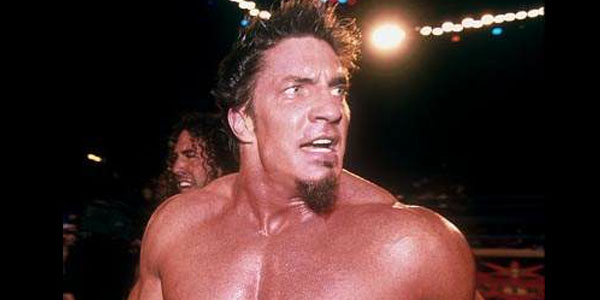
One of the bright spots during the dying days of WCW was its commitment to young talent. While it may have been too little, too late for the company to focus on building stars that could carry it into the future, its renewed efforts to present something outside of its tired old-timers was a breath of fresh air for fans disenfranchised with the pushing of Hulk Hogan and Ric Flair at a time when both were in their 50s. One of the brightest young stars to come out of the ordeal was Sean O'Haire. A WCW Power Plant graduate, O'Haire was a big, strong and athletic young star that utilized a jaw-dropping senton bomb as his finishing maneuver. With fellow Power Plant alum Mark Jindrack as his partner, the South Carolinian made his Nitro debut in June 2000 when the team knocked off Rey Mysterio and Juventud Guerrera. From there, O'Haire stockpiled momentum, rolling through the top teams in WCW en route to a tag title victory in September of the same year. O'Haire eventually split from Jindrack and partnered with Chuck Palumbo, forming a much better and more effective team. A three-time WCW Tag Team champion, O'Haire looked like a major singles star waiting to happen. He carried himself like a main event player and he showed great intensity and aggression between the ropes. His promos skills were underdeveloped but they were typically covered up by mouthpieces like Mike Sanders or Kevin Nash. With those men there to hide his major deficiency, he thrived. When O'Haire arrived in WWE, he fell victim to backstage politics. That management did not believe he was good enough to be on the main roster and demoted him to developmental did not help matters. When he was finally called back up, he debuted with an awesome character and some tremendous pre-taped promos. Like the devil sitting on your shoulder, giving you bad advice and steering you into unsavory situations, O'Haire acted as the anti-moral compass. As great as those promos were and as compelling a character as it was, O'Haire's inability to maintain those quality promos in front of a live audience that doomed any chance he had of enjoying a sustained push. After a few months as Roddy Piper's lackey, he disappeared from television. He was released from his contract with the company on April 3, 2004, leaving many to wonder what could have been.

9. Perry Saturn

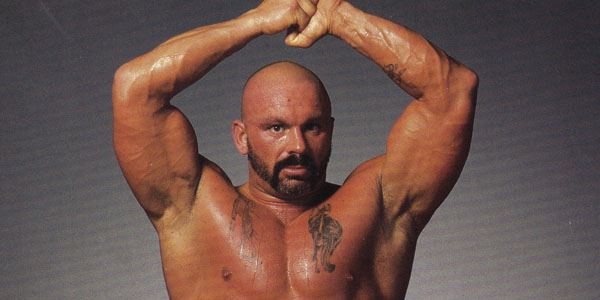
Perry Saturn was a very skilled professional wrestler during his time with WCW. As a member of Raven's Flock, he captured the WCW Television Championship. Upon splitting from the group and freeing the men under Raven's control, he feuded with Chris Jericho in a very entertaining program in which he lost a match to the talented Canadian and was forced to wear a dress. He wound up enjoying the dress and wore it longer than the contract stipulated but, you know, to each his own. He would partner with Raven in a quest to win tag team gold and joined Shane Douglas and Dean Malenko in the Revolution faction. While he may never have been able to break the proverbial glass ceiling in WCW, he at least remained a valued member of the midcard. When he jumped ship to WWE with Chris Benoit, Eddie Guerrero and Dean Malenko, he undoubtedly saw a situation where he could finally take that final step. At the very least, he would have an opportunity, something he never had in WCW as long as Hulk Hogan, Randy Savage, Lex Luger and Sting were at the top of the company. Unfortunately, opportunity was not enough. Saturn became the odd man out, doing nothing of note for months before capturing the European Championship. Upon dropping that title, he became lost in the undercard shuffle. By the time he roughed up Mike Bell, his career was already running on fumes. The concussion angle and Moppy were fun but only expedited the end of his run with the company. For whatever reason, Vince McMahon and his management team never saw in Saturn what Eric Bischoff and Paul Heyman did.

8. Raven

Raven Wwe1 Raven is an interesting case in that WCW never used him nearly as well as ECW did but WWE managed to use him even worse than their competitors. Despite having a character that helped Paul Heyman's ECW revolutionize the sport and was as original as any wrestling had seen, Bischoff never quite understood how to book the performer. He sat in the audience, staring aimlessly into the distance while his lackeys did the dirty work for him. That changed when he, Diamond Dallas Page and Chris Benoit began a three-way feud that produced some great brawls. His partnership with Perry Saturn and their wars with Benoit and Dean Malenko, as well as the Filthy Animals, injected the tag team division with some much-needed life. When he opted to sign with WWE in 2000 following a second brief stint with ECW, Raven became just another recognizable face in a crowd of them. He teamed with Tazz, became a fairly entertaining hardcore champion but became lost in the shuffle when the company purchased WCW. By 2003, he was almost exclusively a Sunday Night Heat competitor. There, he devised a storyline in which he punished his competition based on the seven deadly sins. Since none of the company's key power players paid any attention to the C-level show, no one new about the story and Raven was ultimately released.

7. Dean Malenko
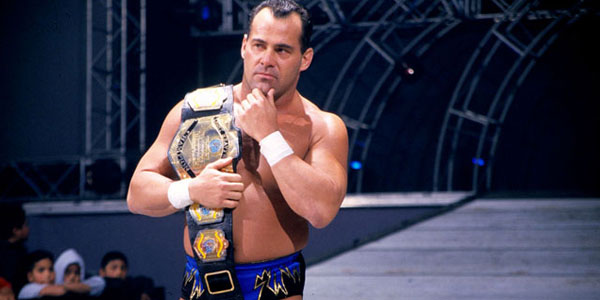
There are few wrestlers with the technical ability of a Dean Malenko. He can mat wrestle, chain wrestle, trade submission holds and pin opponents from any position. A former WCW Cruiserweight, United States and Tag Team champion, Malenko was the best at what he did and commentators such as Tony Schiavone, Mike Tenay and even Bobby Heenan made sure to put him over as such. They treated Malenko and his abilities with respect, even when the bookers were more concerned with what was going on with Hulk Hogan and Randy Savage to pay attention to the talented Floridian. That was not the case in World Wrestling Entertainment. As great as the company's track record of taking former WCW guys, pushing them to greater heights than they were ever allowed before and reaping the rewards may have been, WWE majorly misused Malenko upon his debut with the company. At first, they looked poised to focus attention back on the lightheavyweight division, doing so by making Malenko its centerpiece. They gave him the title shortly after his arrival but it suddenly lost all meaning and credibility when Malenko was cast aside, left out of storylines and off television. After doing little of note for most of the year, Malenko became involved in a storyline with the red hot Lita, who the James Bond-like Casanova had developed an infatuation with. Each week he would try to win her affection but she was not having it. At Armageddon in December 2000, he scored one of the biggest wins of his WWE career (which is saying something) when he locked Lita in the Texas Cloverleaf to win a mixed tag team elimination match. Lita would get revenge and pin Malenko after Matt Hardy interfered shortly thereafter. For all of his world class abilities between the ropes, Malenko had the misfortune of being short. At only 5'8", he was even shorter than Chris Benoit and Chris Jericho, who had to work hard for years to shed the size differential and become world champion. That he lacked a certain natural charisma did not help matters. Rather than letting him get over as he did in WCW by being a great wrestler, WWE tried to throw a gimmick on him to help him connect with audiences. It did not work and as a result, Malenko's stint with the company remains one of the most disappointing.

6. Scott Steiner

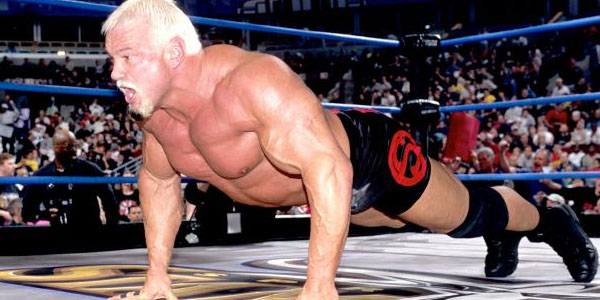
By the time Scott Steiner bleached his hair, grew a goatee and dubbed himself "Big Poppa Pump," it was clear that WCW recognized the singles potential in the former tag team specialist. When they put a microphone in front of his face, it only enhanced the appeal. Steiner was a loose cannon, a performer capable of saying or doing anything at the drop of a hat. He spewed venom and the censors always needed to have their fingers on the button, never knowing if he would curse or deliver an innuendo that went way over the line. As he continued getting over with the audience, it became more and more apparent that Steiner had the potential to become a main event star for a company desperately in need of something different, fresh and exciting at the top of the card. In November of 2000, Steiner defeated Booker T to captured the WCW Championship. He would hold the title all the way to the following March, when he dropped it back to Booker. When WCW went out of business the same month, Steiner opted to sit at home, heal some fairly major injuries and collect money still owed to him by Ted Turner. When he debuted with WWE in November of 2002, the belief was that Steiner would inject some star power into a company whose ratings were beginning to sag. Instead, a series of poor performances against Triple H in early 2003 led to Steiner becoming the butt of many jokes. By the summer, he was demoted to the midcard and shoved into a rivalry with Test over the lovely Stacy Keibler. Eventually, Steiner turned heel and teamed with Test but by that point, it was too late. Fans no longer cared about the "Big Bad Booty Daddy." A guy who had been one of the most must-watch stars in the sport thanks to the air of unpredictability that surrounded him suddenly was an afterthought in a company that was focused on pushing young stars such as Randy Orton, Batista and John Cena.

5. Billy Kidman

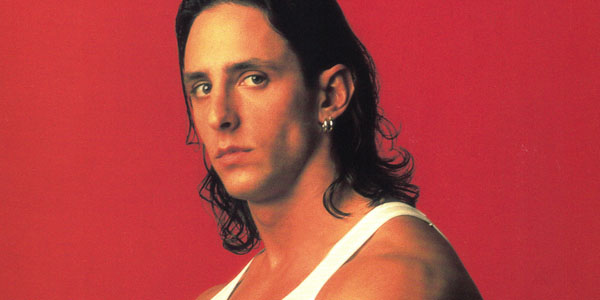
One of the real success stories to come out of WCW was Billy Kidman. A scrawny kid out of Allentown, Pennsylvania, Kidman was an enhancement talent for WCW for nearly a year before being chosen to join Raven's Flock. Scratching his face like a junkie and sporting a head of hair that looked as though it had not been washed in a decade, Kidman looked like the dirty, directionless young man that would turn to a cult leader like Raven for guidance. Though he enjoyed more television time and was far more meaningful than he had ever been to that point, he still lost more than he won. Then, in 1998, he left the Flock and almost immediately captured the WCW Cruiserweight Championship. From that point on, Kidman became the workhorse for WCW. Whether it was competing against fellow cruiserweight stars like Juventud Guerrera, teaming with Rey Mysterio in a championship-winning tag team or battling industry icons such as Hulk Hogan, Kidman became the go-to guy when management was relying on a good match to save a show. When he got to WWE, he was immediately lost in the shuffle. The Invasion storyline was a mess and despite winning the Cruiserweight title in one of his matches with the company, he did nothing of any real significance with it. It was not until the brand extension that Kidman was able to shine a bit. Again establishing himself as a workhorse, Kidman did some fine work as part of the SmackDown brand. It became quite clear, however, that WWE did not recognize his potential, nor did they really appreciate his resume of work from WCW. He was never elevated past the midcard. A few matches with Rey Mysterio as his partner and a tag title run with Paul London in 2004 stand out as his biggest highlights. At a time when SmackDown was a more wrestling-oriented show, it would have been nice to see a wrestler as good and as proficient as Kidman mix it up with the Angles, Guerreros and Benoits of the world on a more consistent basis.

4. Jeff Jarrett

This one is a bit tricky. In WWE, Jeff Jarrett was utilized as a midcard act. A solid wrestler with definite charisma, nothing about him screamed main event star. He was a utility player, a guy that the company could count on to deliver great wrestling matches, generate a reaction from the audience and make other stars look good when the time called for it. He was a valuable part of the roster during his numerous stints with the company but it was obvious he thought he was better. He believed he was heavyweight championship material and he was going to float between the top two companies in the business until he proved it. In 1999, Jarrett returned to WCW and immediately became the pet project of head writer Vince Russo. Longtime friends, Russo knew how good Jarrett was between the ropes and he was determined to push him as the top heel in the industry. Jarrett almost immediately ascended the ladder and by April of 2000, was WCW Champion. He drew great heat but attendance and ratings were another issue. That the company was dying a quick death only helped highlight the fact that Jarrett was not the guy to book Nitro, Thunder and pay-per-views around. Still, he was a main event talent, something he never was able to achieve in WWE. And that is where the tricky part comes in. Looking strictly at his success in the companies, Jarrett accomplished everything possible in WCW. He finally won the heavyweight title, he was a key player in the company and had some pretty good matches against Booker T. At the same time, that run with the Turner-owned company exposed the fact that Jarrett was not the main event draw that he and Russo believed him to be. In WWE, he worked for a boss who understood who his stars were and who his utility players were. It was a fine line but Vince McMahon walked it every night. Jarrett would recover from WCW going out of business in March 2001 just fine. In June 2002, he started up NWA: TNA, a new wrestling promotion based out of his hometown of Nashville. Like any booker with his financial livelihood at stake, Jarrett put himself in the top spot, apparently learning nothing from his WCW days. He would main event for the company for nearly seven years before stepping away amid a controversy involving Kurt Angle and his wife Karen.

3. Lance Storm

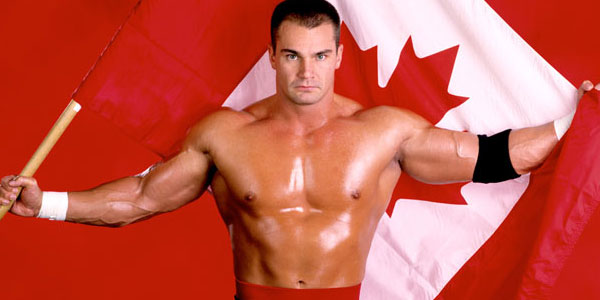
Say what you will about WCW but there is one thing they recognized almost immediately upon signing Lance Storm in 2000: he was good. Really good. Vince Russo, clearly a fan, immediately pushed the former ECW star, having him win the United States, Hardcore and Television titles all within months of making his debut. Storm became a featured act and his dryness helped him become one of the most hated villains in the industry. That he utilized fictional Canadian wrestling rules to constantly ensure that he and his fellow Team Canada mates were able to retain their titles only enhanced and intensified the crowd's hatred for the phenomenal technician. A wrestler's wrestler with unmatched skills between the ropes, Storm was a bright spot for WCW at a time when the company was in dire straights and nearing death. He delivered solid performances on a nightly basis and was treated with respect, for the most part. Sure, he was involved in some of the same ridiculous, asinine storylines that the rest of the WCW stars did but he seemed to make the most of them when others would not. He was an MVP candidate for the company at a time when it needed something, anything to convince fans to stick around. Storm debuted in WWE in 2001 after the purchase of WCW and for a brief moment in time, it looked like the company may wind up using him to his potential. He almost immediately captured the Intercontinental Championship, but lost it weeks later to Edge at SummerSlam. He led the Un-Americans in the fall of 2002 but that faction ultimately fell apart. He formed a solid tag team with William Regal and even won the division's championships but one could not help but notice that WWE seemed perfectly content to let him be just another face in the crowd. By the summer of 2003, Storm became largely irrelevant, despite being one of the company's better workers. He wrestled matches on Heat, partnered with Rico, became a dancer and had his lack of natural charisma called out by Steve Austin, who led the crowd in chanting "boring" during one of his matches. How he was ever supposed to get over when commentators and talent alike would go out of their way to bury him for his one deficiency remains a mystery. After everything that Storm accomplished in WCW, to see him so woefully misused when Vince McMahon's company got hold of him was truly disheartening.

2. Diamond Dallas Page

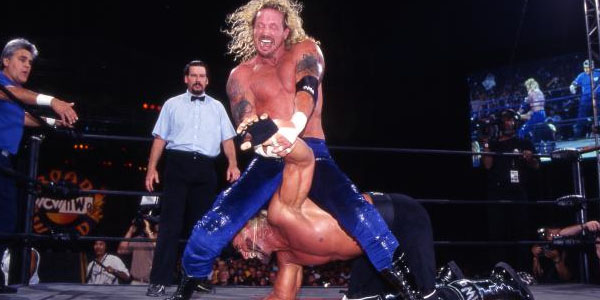
The master of the Diamond Cutter, DDP was never meant to be a major star in the industry. He got into the business late in life and was positioned as a manager early on. When he finally did step into the ring, he was pretty awful. But he worked hard, harder than anyone else, to learn from his mistakes and get better. By 1996, it was easy to see just how much improvement he had made. A close relationship with boss Eric Bischoff and a killer finishing maneuver only helped him achieve success he could never have imagined. The angle in which he denounced the New World Order and dropped Scott Hall with the Diamond Cutter remains one of the best segments of television WCW ever produced. The reaction of the fans immediately made Page and from that moment on, he was a main event player for the company. His feud with Randy Savage helped elevate him further while partnering with Karl Malone to take on Hulk Hogan and Dennis Rodman in July 1998 at the Bash at the Beach only strengthened his status as one of the marquee players in professional wrestling. In April 1999, he realized his dream when he captured the WCW Championship in a match involving industry icons Hulk Hogan, Sting and Ric Flair. It was a monumental moment and the climax of a three-year journey from obscurity to the top of the industry. Page would become of the most marketable and popular stars in WCW and one of the few guys who was relevant until the very end. He was also the first main event guy to not sit on his ass and collect millions owed to him by Turner. He signed with WWE in the spring of 2001, something that may have been a mistake in hindsight. Page debuted as the stalker of Undertaker's wife Sara. While the angle had potential, it immediately became clear that the only purpose DDP had in that role was to get beaten up and humbled by WWE's top dog. He was pummeled brutally at his first pay-per-view. He was further devalued at SummerSlam, when he took another violent beating from the Deadman and fictional brother Kane. By the time he was pinned by Sara the following night on Raw, any value he had was gone. He became a motivational speaker type with an obnoxious smile and a stupid catchphrase. His brief program with Christian was fun but it was ultimately meaningless. Upon being drafted to SmackDown during the brand extension, Page wrestled a match Bob Holly. During it, he injured his neck and was forced to retire from the industry prematurely. He would make comebacks for TNA and appear at various independent shows but his career as a full-time worker was over. A disappointing end to an improbable journey.

1. Goldberg

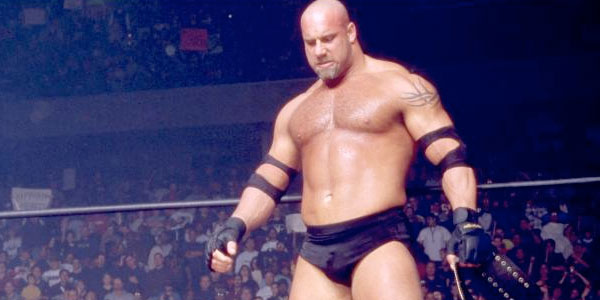
WWE never understood the mystique of Goldberg. When the explosive, intimidating former football star made his debut in WCW, he was incredibly green. So green, in fact, that booker Kevin Sullivan did not trust him to cut promos or work long matches. So he devised a strategy. Goldberg would be a ruthless competitor. He would walk to the ring, dispatch another opponent and move on. He would not talk when spoken to, he would not play to the crowd. When he finally did open his mouth, it was to say only, "who's next," which became his catchphrase and a hell of a marketing tool. In many ways, he was a machine-like ass kicker. When he started racking up wins and adding to his impressive winning streak, the fans finally had something to sink their teeth into. For well-over a year, Goldberg defeated every single star put in front of him. Scott Hall, The Giant, Raven, Scott Norton...all fell at the feet of the most impressive young star the company had ever produce. On July 6, 1998, Goldberg's nine month run was capped off with a WCW Championship win over Hulk Hogan. The moment, played out in front of the competitor's hometown fans in Atlanta, was one of the last truly defining moments for the company and was the start of what should have been great things. As history dictates, a number of major mistakes by selfish bookers ultimately cooled off the hottest act in WCW, but that is another story for another time. When Goldberg signed with WWE in 2003, many expected the company to use him as the driving force behind an effort to improve ratings. After all, Vince McMahon was the maker of stars. He would be able to fix what WCW did wrong and make Goldberg 10-times the attraction he was for Turner's company. Right? Wrong. McMahon failed to understand what made Goldberg the success he was. He took the character and tried desperately to mold him in the shape of his own stars and oftentimes, Goldberg came of as inadequate to guys like The Rock, Triple H and even Chris Jericho. His matches were more bad than good, his promo skills were unimpressive and his effort was called into question at times. That he was booked like every other babyface that ever starred for McMahon rather than the dominant force that he was in his prior place of employment did not help matters and by the time he left in 2004, his stint with the company was considered a failure.

Contributor
Contributor

Erik Beaston is a freelance pro wrestling writer who likes long walks in the park, dandelions and has not quite figured out that this introduction is not for Match.com. He resides in Parts Unknown, where he hosts weekly cookouts with Kane, The Ultimate Warrior, Papa Shango and The Boogeyman. Be jealous.