10 WWE Stars Who Peaked Too Early
It's a long, hard fall when you take the short road to the top in WWE.

Most WWE superstars follow the same booking cycle. There are plenty of exceptions, but the majority walk through the company's doors with an initial push, the success of which will usually determine their long-term prospects. If their first few storylines are well-received, they might find themselves in the main event within a year or two, but if they don't get over, they're likely doomed to the lower card.
The timing depends on the performer, and WWE have never been shy about throwing a mega-push at the right guy, regardless of tenure. While the likes of Shawn Michaels and Bret Hart waited years for their first WWE Title run, Brock Lesnar and Kurt Angle won the belt within a year of debuting, and built highly-successful careers from their early spotlight.
There are a handful of flops for every success story, however. Some superstars start their WWE runs with such a bang that they inevitably burn out, and history is littered with wrestlers whose career best moments came as part of their first major push. Regardless of whether it was their fault or not, these competitors shone too brightly, too soon, and have lived in the shadows ever since.
10. Fandango

Fandango's recent mini-revival on SmackDown comes at the end of a long drawn-out spell in the wilderness, having been little more than an enhancement talent since fading away from his promising debut, and an opening feud that looked to be positioning him for a big push.
Fandango debuted as a flamboyant salsa dancer in March 2013, and soon entered a rivalry with Chris Jericho, on the basis that 'Y2J' intentionally mispronounced his name. A flimsy set-up, but pitting a promising newcomer against an established veteran gatekeeper is a classic feud format, and Fandango defeated the Canadian at WrestleMania XXIX.
‘Dango became the flavor of the month in the aftermath. His wildly catchy theme song exploded in popularity, prompting the audience into song an dance every time it played. WWE dubbed the phrase “Fandango-ing”, and in the space of a single day, the song shot from #175 to #11 in the UK singles chart.
The buzz inevitably died down, however, and WWE’s follow-up on the ‘Mania victory was poor. Fandango remained in various title pictures, but he embarked on a losing streak in July, and rapidly slid down the card after dropping an Intercontinental Title bout in December.
9. Kerry Von Erich

Once one of America’s most promising wrestlers, Kerry Von Erich had the world at his feet in the 1980s. He shot to prominence through his run in World Class Championship Wrestling, where he feuded with the likes of Jerry Lawler and The Fabulous Freebirds, before eventually signing for WWE in 1990, at 30 years of age.
Having once bettered Ric Flair for the NWA World Heavyweight Championship in front of 45,000 fans, Kerry unfortunately entered WWE at a time when Vince McMahon liked to pretend his show was the only one in town. Thus, WWE completely ignored everything he’d accomplished in his career so far, and even forbid him from competing under his established name, setting him up for failure right away.
In fairness, a major motorcycle accident several years prior had greatly diminished his wrestling capabilities, and Kerry brought a serious drug addiction with him. Nonetheless, he still became Intercontinental Champion just two months after debuting, insinuating that WWE had at least some faith in ‘The Texas Tornado.’ His career soon spiralled into the abyss however, and by the time of his 1992 release, Von Erich was working opening matches with the likes of Barry Horowitz and Kato. His career never had chance to recover - tragically, he committed suicide just a year later.
8. Drew McIntyre

Few WWE Superstars have been mishandled like Drew McIntyre over the past decade. His recent NXT debut gives him a shot at redemption after rebuilding his reputation on the indie circuit, but the Scot’s career was systematically eviscerated by WWE creative throughout his first run, which peaked with a lengthy Intercontinental Title run.
Debuting in August 2009, Drew was quickly branded Vince McMahon’s 'Chosen One', with the Chairman personally introducing him as a "future world champion". This seemed to immediately set McIntyre up for a humongous push, and his IC Title victory in December compounded this impression. Unfortunately, Drew’s career was already on the downswing six months later, when he entered a needless feud with Teddy Long, during which he was made to beg for his job.
McIntyre slid down the ladder, and by 2012, he joined the equally listless Heath Slater and Jinder Mahal as one third of 3MB. The trio were always entertaining, but they were total jobbers, and McIntyre’s position in the group was particularly depressing given how strong he’d looked upon debuting. Drew was released from his WWE contract in June 2014, and soon become one of independent wrestling’s hottest commodities.
7. Alberto Del Rio

Though Alberto Del Rio was relatively successful for a number of years in WWE, his strongest push came soon after arriving. Overcoming Rey Mysterio in his debut match, the Mexican grappler was quickly surging up the card with his aristocrat character and personal ring announcer, Ricardo Rodriguez.
They made for an entertaining double act, and ADR’s push escalated through wins over Matt Hardy and Big Show. He competed in his first world title match six months after debuting, but didn’t win the belt. Major success was just around the corner however;ADR won the 2011 Royal Rumble (albeit to a lukewarm reception), and by April - less than a year after debuting - he fought for the World Heavyweight Championship at WrestleMania.
Del Rio wasn’t getting over as hoped, but WWE didn’t sway their course, and he eventually won the championship after cashing-in his Money In The Bank briefcase on CM Punk. His push endured over the following year, and WWE eventually tried to build him up as a babyface prior to WrestleMania XXIX, but their faith in him slowly wavered. ADR was a listless presence by the time of his first departure in 2014, and even more so when he returned in 2015.
6. Curtis Axel

A classic case of "too much, too fast," Curtis Axel’s initial main roster push was very poorly conceived. Having previously competed as Michael McGillicutty, Axel took on a new moniker inspired by his legendary father and grandfather (Curt and Larry 'The Axe' Hennig) in May 2013, and debuted alongside Paul Heyman.
It was a disappointing conclusion to several weeks of build that had seen Paul E. continually hyping a soon-to-debut prospect. Axel was a relative nobody, but he was thrust into a strong position early, technically defeating Triple H in his debut match, then scoring several count-out wins over WWE Champion John Cena.
An apparent push was underway, and in June, Curtis earned two screwjob victories over ‘The Game’ in one night. Axel then became Intercontinental Champion at Payback, but the crowd weren’t responding to him, and his 156-day reign failed to capture the imagination. Losing the belt in November, Axel then entered an ill-fated tag team with Ryback, before splitting from ‘The Big Guy,’ and becoming a comedic jobber with ‘AxelMania’ after the 2015 Royal Rumble. Today, Axel is rarely seen outside of Main Event and the house show circuit.
5. Mr. Kennedy

Mr. Kennedy grabbed attention from the moment he arrived. His trademark booming voice, promo ability, and performance of his own ring introduction made him stand out, and quickly establish a lasting connection with the fans. Though unfortunately forced to overcome a serious shoulder injury just a few months after debuting, Kennedy returned to action in June 2006, and won the United States Title a few months later.
Kennedy was surging, and so was his popularity. His reign lasted just 42 days, but it almost didn’t matter. Feuds with Batista and The Undertaker sent his stock through the roof, and all evidence pointed towards a major main event push. Capturing the Money In The Bank briefcase at WrestleMania 23 looked to have cemented this, and suddenly, Kennedy was on the cusp of becoming a world champion.
Instead of making him a star however, MITB marked Kennedy as a one hit wonder. An injury forced WWE to pass ownership of the briefcase to Edge instead, and a string of poor decisions followed. A Wellness Policy violation cost him his potential reveal as Vince McMahon’s legitimate son, and his star power was shot to pieces. Kennedy’s injury woes resurfaced, and he was released in May 2009.
4. Ryback

If you’re big, muscular, and in possession of at least rudimentary wrestling skills, there’s a great chance Vince McMahon will push you to the moon. That’s exactly what happened with the former Skip Sheffield, who was rebranded as Ryback in April 2012, and immediately started running through WWE’s jobber ranks.
The Goldberg comparisons were inevitable, and Ryback was plagued by mocking chants throughout his early run. Several months after debuting, Ryback’s push kicked into overdrive when he confronted WWE Champion CM Punk on a September episode of Raw. From there, ‘The Big Guy’ fought Punk for the title at Hell In A Cell, but lost to a screwy finish, and was attacked by the debuting Shield in his rematch at Survivor Series.
Ryback lost the feud with The Shield, and his career never recovered from being shot into the spotlight so soon. He quietly disappeared into the midcard, and RybAxel eventually killed what remained of his momentum. A mini-resurgence saw Ryback become Intercontinental Champion in 2015, but his run was entirely heat-less, and he was released following a pay dispute in May 2016.
3. Paige

Few wrestlers debut with the same impact as Paige, who reached the top of her division on her first night as a main roster competitor. On WWE's post-WrestleMania XXX Raw, the NXT Womens' Champion hit the ring to congratulate Divas Champion AJ Lee on a successful title defence at the PPV. AJ didn’t take kindly to the interruption however, and challenged Paige to a title bout, which Paige won quickly and decisively.
This electric debut proved to be the high point of Paige’s WWE career. At 21, she was the youngest Divas Champion in WWE history, but the wheels quickly fell off, as her credibility was diminished through a no contest with Brie Bella, and a loss to Alicia Fox. Paige was continually portrayed as a vulnerable champion throughout her run, particularly in non-title matches, and eventually dropped the belt back to AJ.
An awkward heel turn followed with a second title run, which lasted just a month. Paige hasn’t sniffed gold since then, and become lost in the shuffle as WWE embarked upon the Women’s Revolution in summer 2015. Having debuted as one of the division’s brightest stars, Paige had become an afterthought by 2016, and may never return from her current hiatus.
2. Jack Swagger
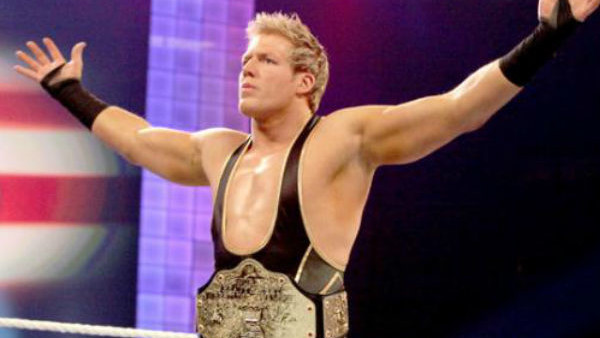
At one point, it looked like WWE had a major star on their hands in Jack Swagger. Debuting on the ECW brand, ‘The All-American American’ had the size and skill required to surge all the way up the card, and captured the ECW Championship within four months of debuting. It was a quick ascension, but Swagger coped with the pressure admirably, putting on decent-to-good matches against a number of different opponents before eventually dropping it to Christian.
Swagger’s career continued on an upward trajectory, but WWE threw the World Heavyweight Championship at him way too soon. Jack cashed-in his Money In The Bank briefcase in March 2010, and ultimately failed at the task of anchoring SmackDown as the brand’s champion, thanks partly to his own inexperience, but also WWE’s failure to build him up as a credible ace.
Jack fell off after losing the belt. His career dwindled away on the midcard, and while his alliance with Zeb Colter helped bring him back to life in 2013, he never matched the level of success he achieved in 2010 again. Directionless from 2014 onward, Swagger was granted his release earlier this year, with his last TV appearance coming in October 2016.
1. Wade Barrett

WWE were presented with the unique opportunity to mint a ready-made main event talent just a few months after his 2010 debut. The Nexus storyline was white hot, and as the group’s leader, Wade Barrett was at the heart of it. The winner of NXT’s first season immediately became one of WWE’s biggest villains when he led his group’s widespread assault on the WWE roster that summer, but their momentum was eventually demolished, and Barrett peaked remarkably quickly.
The group’s SummerSlam loss to a John Cena-led Team WWE hastened their decline, and the ensuing Cena vs. Barrett feud was disastrous. WWE wasted countless opportunities to legitimise him with a WWE Championship reign, but Cena cost him the belt on a number of occasions, and after a literal burial at TLC 2010, Barrett’s main event prospects were destroyed.
The Englishman went on to have a relatively successful WWE career in the aftermath, but he never looked like a true top-level threat again. Barrett left a shadow of his former self in 2016, almost six years removed from enjoying the biggest spotlight of his career, and marking him as one of WWE’s greatest recent cases of “what could have been.”