100 Best Wrestling Moves EVER
81. Power & Glory | Power-Plex
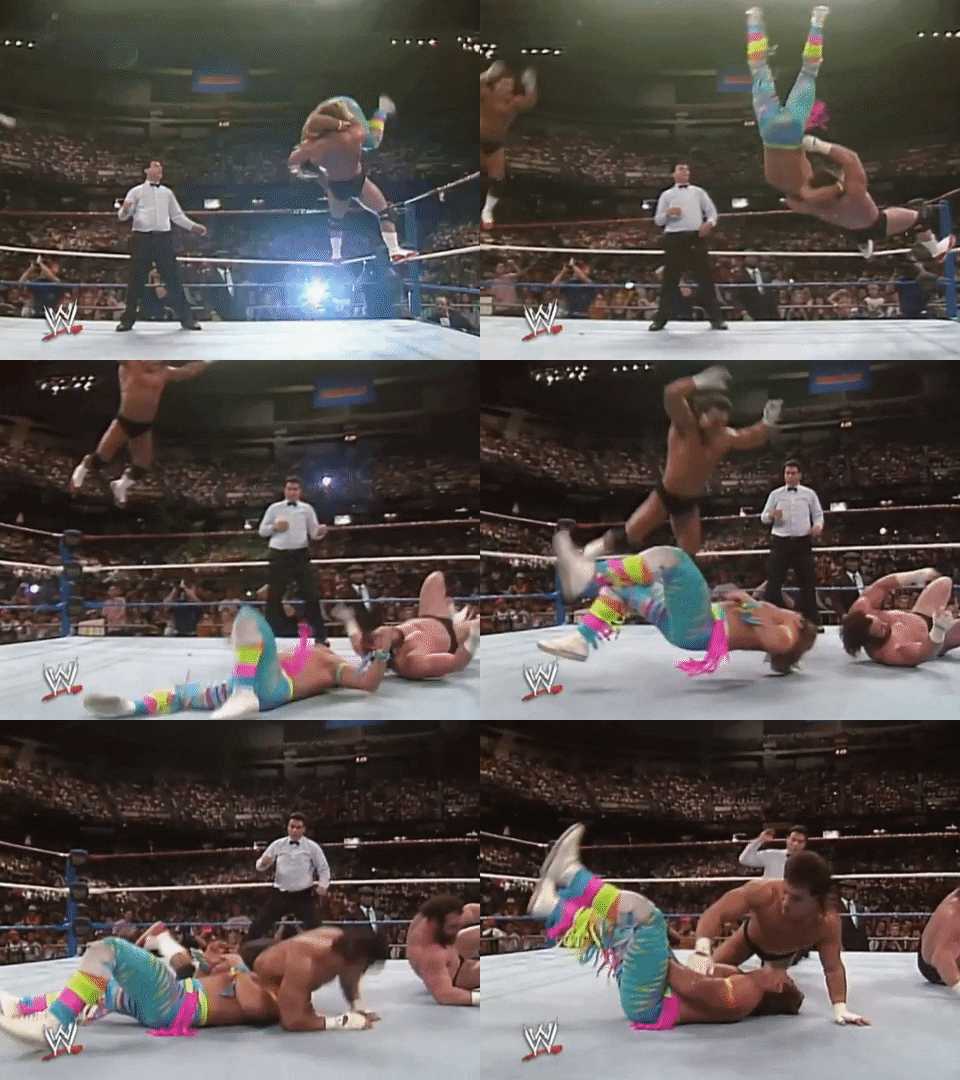
Like so many of the best moves, the Power-Plex is often imitated but never truly duplicated, even if the most loving contemporary tribute is delivered by the pair paying homage to the very genre of doubles wrestling as much as the finisher itself.
If anything, it’s FTR’s impressive ability to ape numerous tag finishers that puts over how incredible the original was that they can’t quite match Hercules and Paul Roma’s finesse on delivery.
A product of its time in all the best ways, the Power-Plex is the highspot microfeast that still slaps a 450 or shooting star press square in the face and tells it to grab a hold. Superplexes and splashes were two of the most impressive moves one was likely to see delivered from the top rope in North America in 1990, but seeing both back-to-back and beautifully in sync from two guys who traded as much on their hubris and looks as their in-ring prowess was all the more incredible.
Capturing the vibes of the kitsch street toughs from 80s action flicks and double-team devastation that meshed The Road Warriors with The Rockers, ‘Herc & Jerk’ lived up to their nicknames as much as their actual ones every time the Power-Plex did the business.
80. Shawn Michaels | Flying Forearm
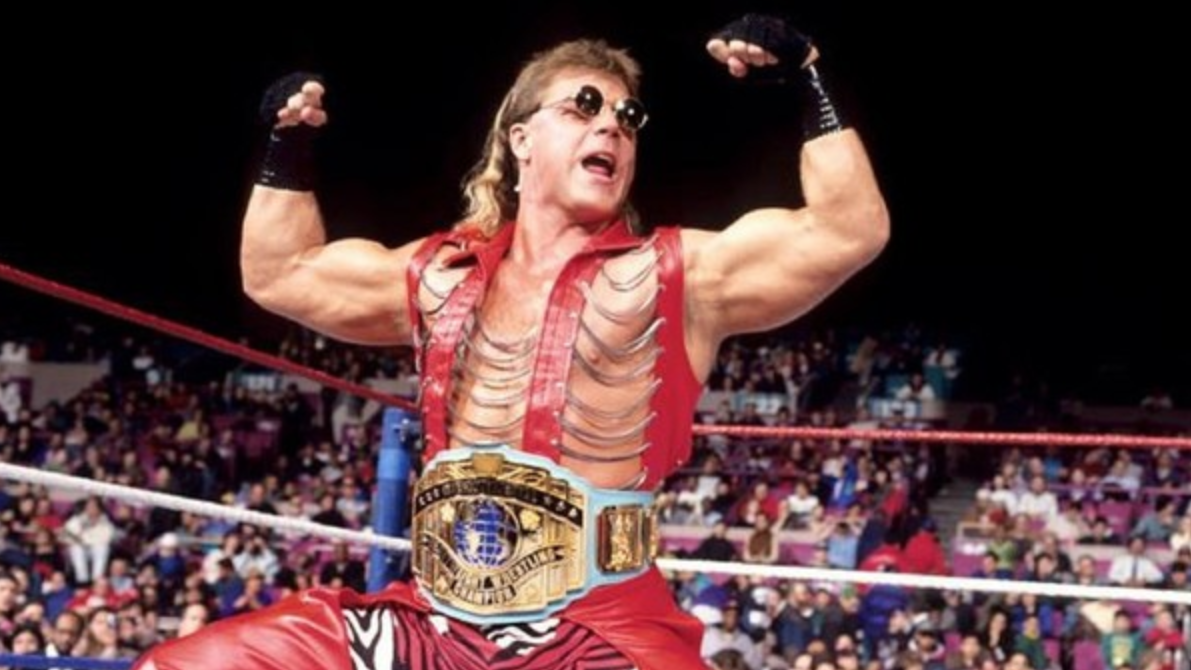
One of several moves Shawn Michaels re-inserted into his oeuvre when he turned babyface in 1995, the Flying Forearm was less about the impact of the move and more about what happened either side of it.
Michaels footwork and movement at the time was such that neither opponent nor fan saw the attack coming as he flew off the ropes. Though similar to any charging strike, ‘HBK’ was so springloaded from his heels that he’d do ten times more than his colleagues to sell the supposed bounce on the hard WWE ring ropes.
Upon nailing the forearm itself, Michaels added a kip-up that often came instantly after he’d landed squarely on his shoulders. A feat of remarkable athleticism and reserve, his ability to instantly propel himself so gracefully back to a vertical base was dragged out for drama in his latter years. The pops might have been louder, but the spot lost some of the peerless arrogance of the 90s vintage.
79. Monty Brown | Pounce
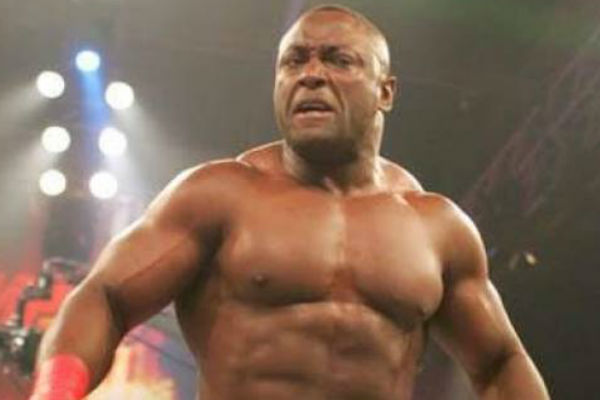
At its core, Monty Brown’s Pounce is deceptively simple. A high-impact shoulder tackle akin to a spear - the same spear that gets used (and overused) by numerous talents to set up and finish major matches. But it’s the way Brown executes it that makes it so devastatingly effective.
Combining raw power, explosive speed and peerless charisma, Brown made the move one of the most effective and visually thrilling versions of the tackle in wrestling history. His predatory pacing and his intense glare created a palpable sense of danger. Brown exploding diagonally across the ring with a level of speed and ferocity that few wrestlers can match. His full-body assault is a masterclass in controlled chaos, with every step adding to the momentum of the impending collision.
The impact is where the Pounce becomes truly iconic. Brown doesn’t simply hit his opponent; he obliterates them, all soundtracked by his own primal screams, and commentators and fans wailing the name of the move as he strikes.
78. The 1-2-3 Kid | Running Legdrop
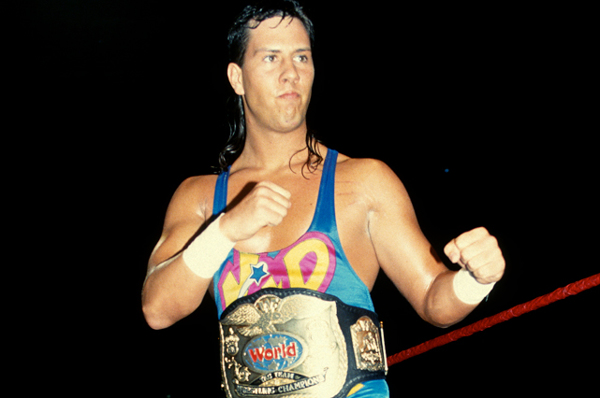
Sean Waltman was the WWE in-ring litmus test during a time where in-ring product meant more to the brand than any time during Vince McMahon’s ownership.
The mid-1990s represented the company’s commercial wasteland, but “New Generation” wasn’t just a marketing slogan designed to neg Hulk Hogan. Just about everything the 1-2-3 Kid and others like him were doing bell-to-bell raised the bar past the organisation’s “land of the giants” reputation, and Kid’s running legdrop might be the most beautifully-executed move from a laundry list of options.
A pneumatic drill of a move, Waltman’s ability to get between his opponent’s head and half the ring via a spring from the ropes over and over again was futuristic in the extreme. Playing to how smaller, quicker guys need to do things twice as hard, twice as fast or just literally twice, it’s the most in-character attack strategy and the most beautifully executed.
77. Kurt Angle | Moonsault
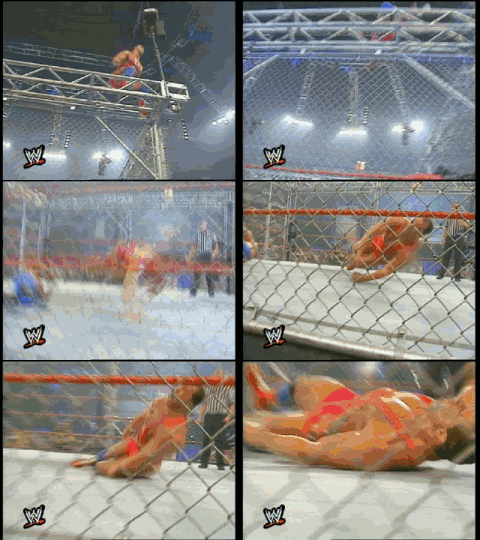
Kurt Angle’s moonsault is a breathtaking example of artistry meeting athleticism; a move that best exemplifies his almost-unparalleled ability to blend technical precision with dramatic flair.
Defying expectations, as usual, hitting the move with the grace he applies almost feels at odds with his rugged amateur wrestling approach, but the flawless execution speaks to his gold medal level. The rotation is jaw-dropping - Angle arcs his body into a picture-perfect backflip, his limbs tucked tight and his motion silky smooth. With balletic elegance, Angle makes time stand still long enough for you to appreciate the majesty before worrying if he’s even going to hit it.
Because Angle’s moonsault isn’t just about looking pretty. It’s a high-impact move that appears devastating should it nail its target. When he connects, his body crashes down with precision, with his weight and momentum driving into his opponent for maximum effect. When he misses, the visual impact of his body bouncing off the mat adds drama and danger, particularly when he makes the deranged choice to fly from the top of a steel cage or similar height.
76. Arn Anderson | Spinebuster
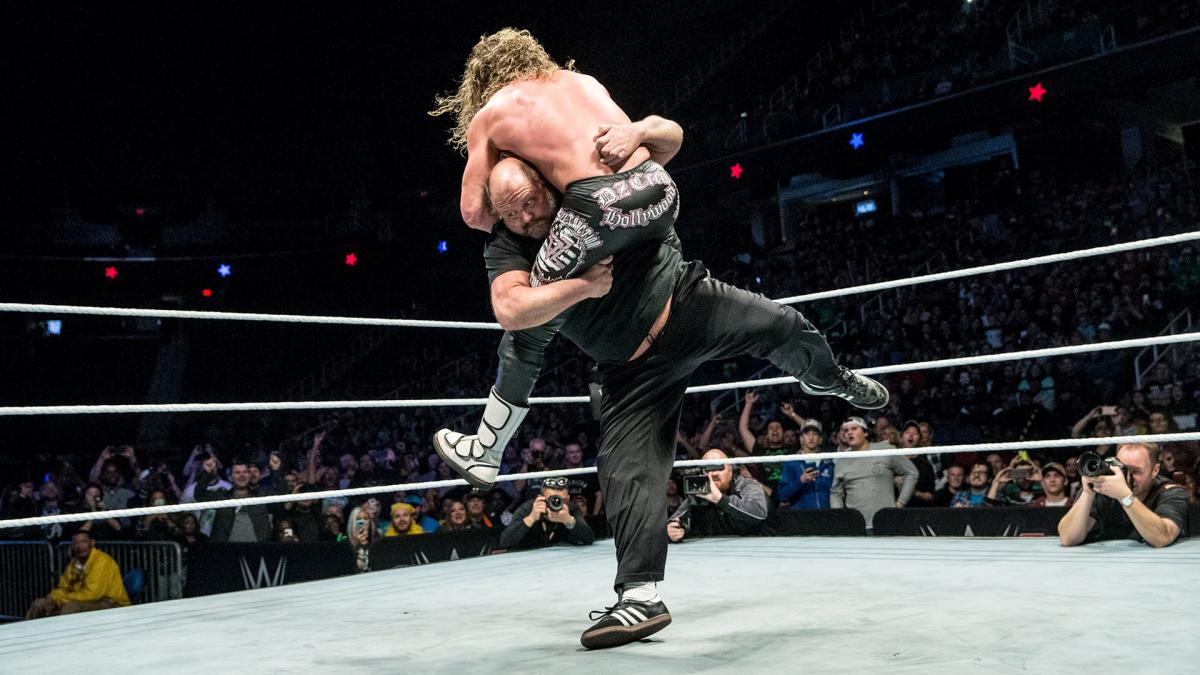
The magic of any spinebuster lies in its mechanics and snap, and there aren’t many wrestlers better suited to those descriptors full-stop than Arn Anderson.
Honed to perfection, Anderson liked to snatch his opponent mid-motion, capitalising on their momentum off the ropes to make the move feel sudden, inescapable and deadly. Rather than chaotic violence, ‘Double A’ chose control. With a firm grip, rock solid posture and perfectly precise footwork, every detail within the move is crisply executed and fiercely believable.
Added to all of that was of course, Anderson’s undeniable aura. No-nonsense from catch to pivot to the final devastating slam, the visual components always aligned with the ‘Enforcer’ himself - understated, but completely effective and absolutely essential.
75. Rikishi | Rikishi Driver
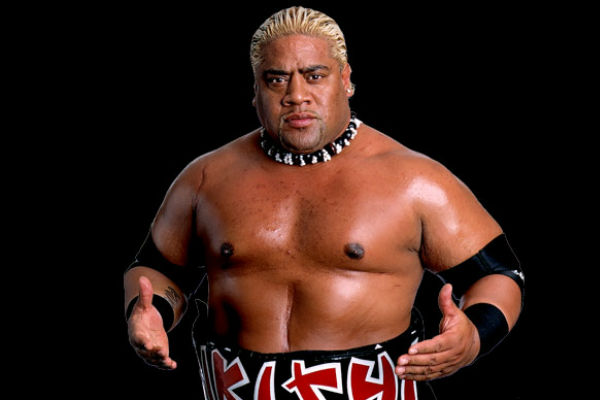
The piledriver - any variation of it - was on thin ice in WWE by 1999, thanks mostly to the damage done to Stone Cold Steve Austin’s neck in 1997, but also due to a series of other serious injuries from moves like it taking out talent for long and difficult rehab stretches.
By 2000 it was completely outlawed, and if The Undertaker wasn’t getting his Tombstone, his BSK brother Rikishi stood no chance of keeping the Rikishi Driver. More’s the pity - as total shock-and-awe head drops go, it's one of the most satisfying ever witnessed within the walls of the market leader.
Dropping to a seated position with remarkable control, the former Headshrinker knew how to make it look like he was taking a few inches off the top of his opposition. The compactness of the move amplified the visual impact, as the opponent appeared to be driven headfirst with no room to maneuver or absorb the blow. Confined more to video games than reality, if the social media feedback loop existed back when Rikishi was at the top of his game, the sheer drop bounce of it all might have generated the same discourse as a Canadian Destroyer.
74. Brock Lesnar | The Brock Lock
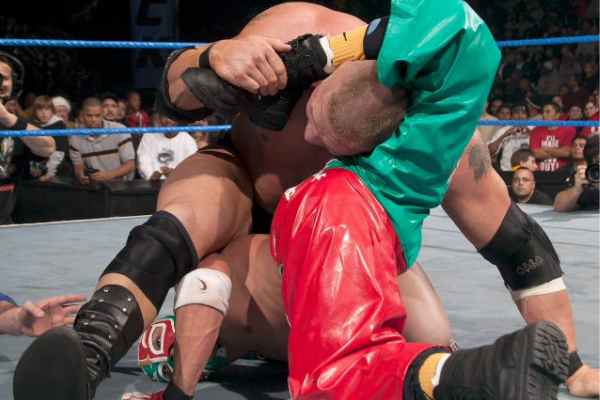
Brock Lesnar’s Brock Lock is a brutal submission hold that exemplifies the sheer dominance and unmatched physicality of ‘The Beast Incarnate.’ While Lesnar is best known for his German suplexes and the F5, the Brock Lock is a hidden gem in his arsenal that highlighted his versatility during his original run. It was both effective and terrifyingly believable.
With ease, Lesnar could seize his opponent’s leg, establishing total control with his raw power. From there, he lifts the leg high and drapes it over the back of his neck, creating an unnatural angle that immediately signals danger. The visual is striking: Lesnar, towering and menacing, stands as his opponent writhes in agony, their body contorted by the relentless torque he applies.
The effectiveness of the Brock Lock lies in its combination of leverage and obvious visible pain. The position stretches the hamstring and hyperextends the knee, while the neck placement creates a believable image of maximum pressure. Lesnar’s strength and intensity amplify the move’s credibility, as his typical body language - gritted teeth, flexed muscles, rage - sells the idea that he could follow all the way through and simply tear his opponent apart with ease.
73. CM Punk | The Pepsi Plunge
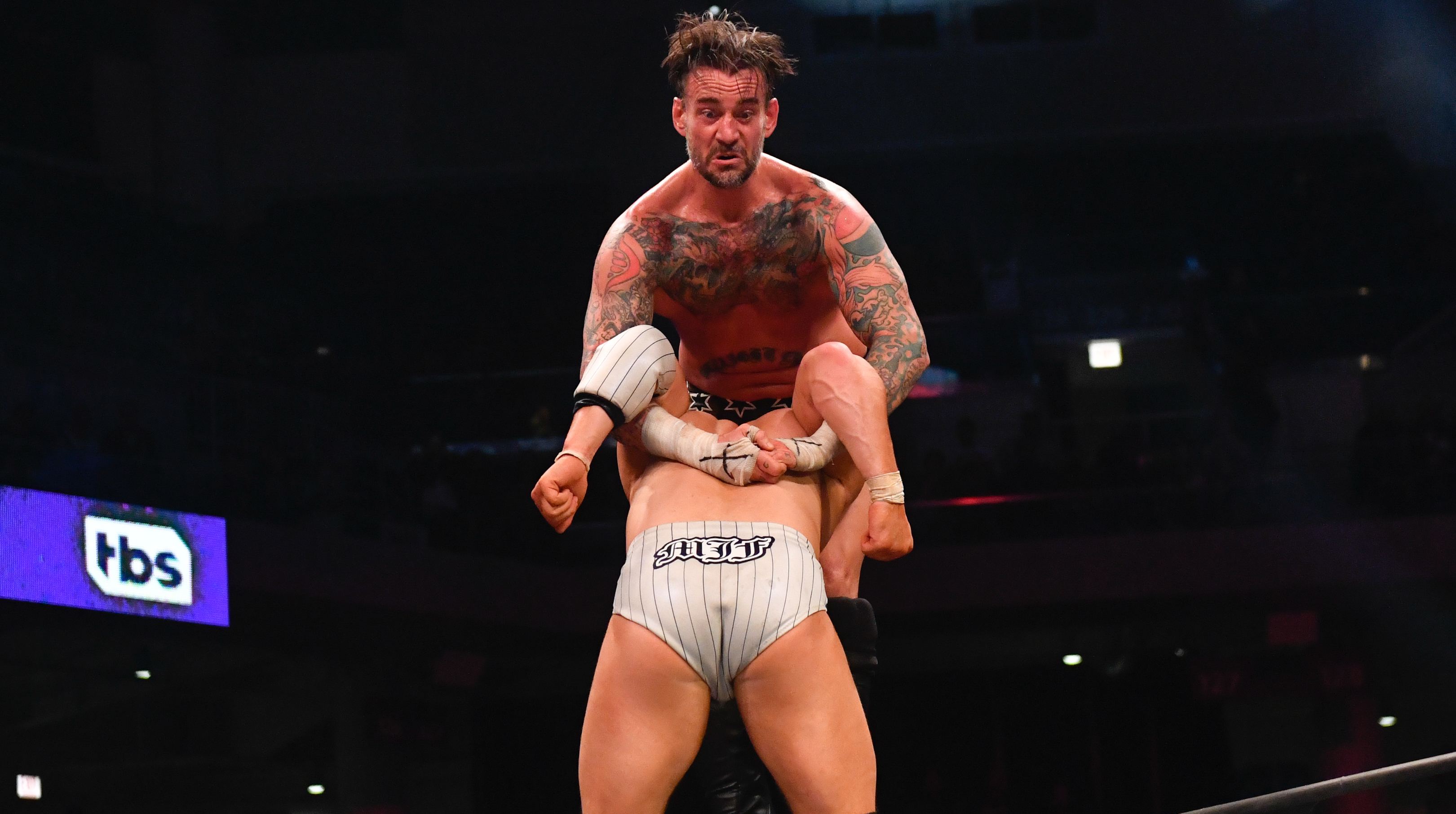
A top rope Pedigree, CM Punk’s early-career finisher defies the traditional aesthetics of high-flying moves and seamless techniques in that it can sometimes look terrible and takes ostensibly more hassle than its worth to even set up. Yet, despite the somewhat clunky appearance, it remains an incredibly effective and memorable finisher, largely due to the inherent danger it conveys and the storytelling it has repeatedly enabled.
When Punk finally drives his opponent head-first into the mat, the move’s impact acts as a certain killshot. The familiar finisher being hit from such a height feels catastrophic and decisive, and though it lacks the fluidity of more polished moves, the sheer visual of the plunge - both the literal drop and the metaphorical statement it makes from somebody who has the ego to even try it - commands attention.
Perfectly aligned with a Punk still working through his formative years in Ring Of Honor, it’s gritty, risky, and a little rough around the edges, but it’s not meant to be pretty - it’s meant to be a finisher in the truest sense of the word.
72. AJ Styles | Springboard Moonsault DDT
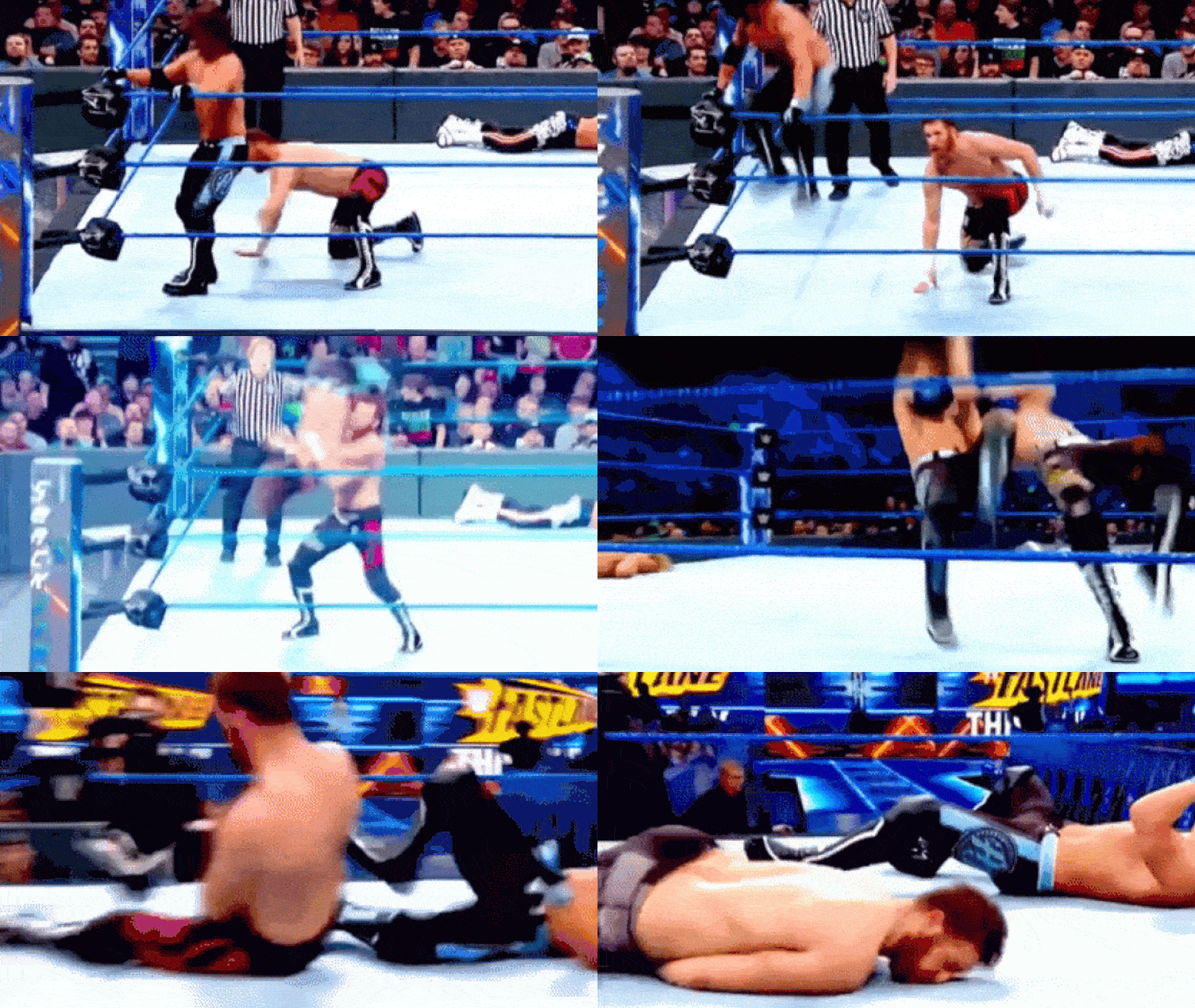
There was a time when watching AJ Styles was like watching a modest time traveller that had returned from 20 years in the future and brought with him every new athletic feat previously unexplored.
If you could think of something, ‘The Phenomenal One’ could do it. And better still, before you’d thought of a wrestler doing something else, he’d do that too. This was the case with his Springboard Moonsault DDT.
Starting with a springboard off the ropes, Styles instantly got fans and his opponents guessing. Transitioning that to a moonsault, it was at least ostensibly clear what to expect after that - until Styles once again flipped the script. Catching his opponent mid-air, he’d seamlessly transition into the reverse DDT, driving the back of their head into the mat with force.
This sudden shift from elegance to brutality was ultimately what made the move so devastating. The trajectory adds extra velocity to the impact, meanwhile visually, it’s flawless. Styles’ timing and the opponent’s cooperation always ensured the landing looked devastating without compromising safety too.