15 Things We Learned From Scott Hall On The Steve Austin Show

Two legends combine for one of the best Austin podcasts yet.
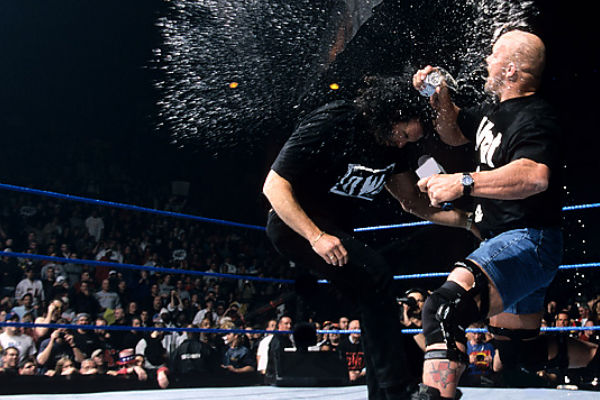
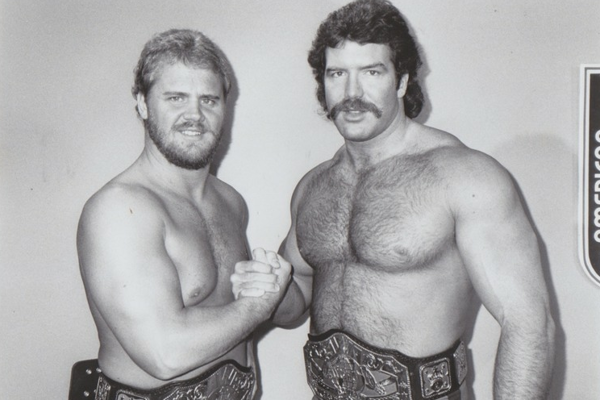
The best episodes of The Steve Austin Show are the ones where he connects with an old friend or colleague in the wrestling industry, engaging in free-flowing conversation without adhering to any set structure. Just two buddies shooting the breeze about the business they love. This week€™s edition of The Unleashed version of his podcast is a prime example of that. For all the negativity he€™s been attached to throughout his career €“ his struggles with substance abuse, political maneuvering behind the scenes, etc. €“ Scott Hall is first and foremost a huge wrestling fan at heart. He€™s always attributed the bond shared between he and his fellow Kliq members as stemming from their mutual love of the business, and that passion really comes to life in this interview. Hall met up with Stone Cold in beautiful Lake Hartwell, Georgia to talk about everything from his beginnings in the business, his various partners and gimmicks and his thoughts on the current product...

15. Getting In The Business

Steve begins by telling Scott that he looks to be in much better shape than the last time the two saw each other and Hall thanks him and then opens up by telling the story of how he broke into the wrestling business. He had been training down in Tampa with Hiro Matsuda - who also helped train Hulk Hogan and Lex Luger - and was doing nothing but spending his days grinding out hundreds of hindu squats and push-ups. Hall does credit Matsuda as being willing to so all the exercises he asked of his students. The goal wasn't so much to train Hall as it was to run him off and discourage him from breaking into wrestling. During this time Scott ran into Barry Windham at a grocery store and introduced himself, saying that he was a big fan and looking to get into the business. Windham asked him if he was training with anyone and when he responded that he was working with Matsuda, Barry said "Screw Hiro Matsuda, meet me down at the Hollywood Sportatorium tomorrow at noon." Hall says he didn't expect anything to actually happen, but Barry showed up with Mike Rotunda and they both worked him out in the ring, giving him his first bumps.

14. Hooking Up With Dusty Rhodes

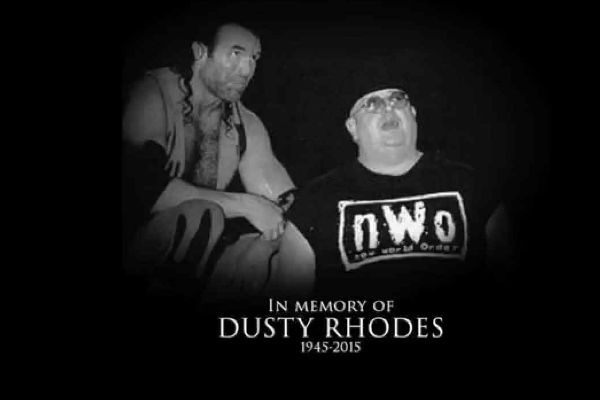
Hall had yet to even have a match before Dusty Rhodes told him that he was taking him with him to Charlotte, North Carolina where Jim Crockett Promotions was based. Dory Funk, Jr. had left and Rhodes was heading up there to take over the book and try to revive the territory. Austin asked how he got in with Dusty and Hall replies that Barry was his in, getting him free tickets and into the locker room. He says that he would ride with he and Rotunda on road trips and serve as the "beertender", listening and learning to the veterans. Hall says he never got to work because he was "too big to do jobs and too green to go over." He wasn't making any money and supplemented his income working on the grounds crew of the Charlotte Orioles minor league baseball team, which Jim Crockett also owned. Scott says he begged Dusty to send him to Kansas City, where he knew he'd only make $50 a night but he'd get to wrestle more often and learn the ropes.

13. Kansas City

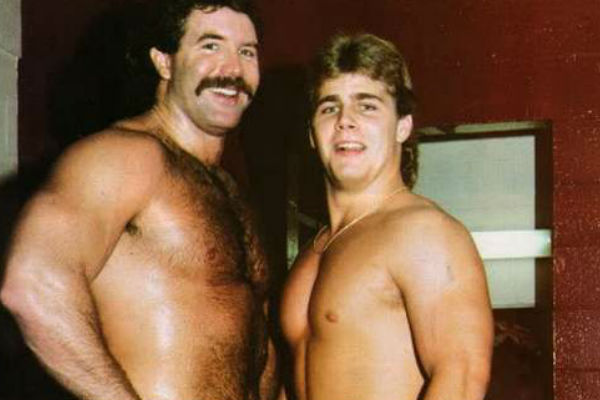
Austin asked what he learned during his time in Kansas City, asking what his approach to getting over was since he was still new to the sport. He replies that he feels like you only learn when you're around guys who know more than you and he wasn't around anyone who knew more than him while he was there. He adds that he crossed path with Shawn Michaels during his stay and made a road trip together. He said that Shawn was so good that even when he was working as a jobber in Dallas he used to call the matches for his more experienced opponents. Stone Cold asks Hall his impressions of Shawn, and he says he was excited to have a "little pretty boy" who would bump around for him and not have a problem with it, because in those days no one wanted to sell for him. He says they hit it off and had a lot in common even back then.

12. American Starship

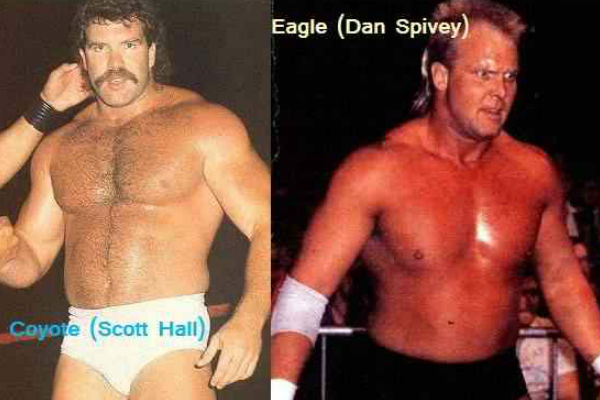
Steve next inquires about Hall's short-lived tag team with Dan Spivey, where the two men were known as American Starship. Hall was known as Starship Coyote and Spivey was Starship Eagle. It's interesting to note that Spivey has teamed with three guys who went on to much bigger success than him, The Undertaker, Scott Hall and even Mike Rotunda, while Spivey never really managed to break through. Hall said the two of them didn't know each other and never hung out before or since, and that despite Dan being a great guy they just didn't click. Austin asks what the concept for the team was and Hall responds "Ask Dusty." He says that had they all stayed in Florida they were going to be Dusty's version of The Road Warriors, and he often wonders what would have happened. Hall calls Spivey "a big bad*ss" who preferred the Japanese style and wasn't happy with Hall wanting to leave the territory because he was happy there.

11. Heading To The AWA

Next the two talk about Scott's time in the AWA and how that came about. He says that he crossed paths with Blackjack Lanza in St. Louis. Whenever the city would run big shows, they would bring in talent from the AWA, Charlotte and Dallas to fill out the cards. The opening match guys were usually workers from the Kansas City crew. Lanza approached Hall in the locker room and asked if he was ready to make a move. He replied that he wasn't and Lanza told him that "everybody is the sh*ts when they start" to which Hall then said "in that case, I'm ready." He says that if Lanza felt that way, it was cool with him and that was the beginning of his AWA run.

10. "Magnum" Scott Hall

When Scott first came to AWA he went with the gimmick of "Magnum" Scott Hall, which Austin asks about. He remarks that he got a ton of heat for it, and then says that Magnum TA was brought into Charlotte to replace Barry Windham who had left after getting mad over the amount of a payoff. At the same time TA was receiving his massive push in Charlotte, Hall was called Magum by the commentator Lord James Blears. He says that he had no idea it was going on, never called himself that in promos or claimed the character, but he still got heat with TA over it. Scott says years later when he tried to get a job in WCW, Magnum TA was working in the office and told him "we can probably give you a look but you're going to have to get your own identity."

9. The Freebirds

Discussion about the downfall of the AWA brings up the Freebirds. Hall says at the time, the AWA was still drawing some big houses - especially compared to any he'd ever worked before - and he was impressed. Michael Hayes was working there at the time along with his partners Terry Gordy and Buddy Roberts and told Hall "This place is dying, we're outta here." Austin asks if they're Hall of Fame material and Hall replies definitely and adds that it should happen this year in Dallas. He tells a story about a time they were doing a TV taping in Atlantic City for ESPN. Most of the other guys on the roster were resentful of him because he was big and green and getting pushed by the office. "But the 'birds aren't marks. They don't care." If their job was to make you look good they did it. He says he, Curt Hennig and Sgt. Slaughter were working The Freebirds in a six-man tag and Buddy was called a spot in the ring where all three of The Freebirds fed for him, giving him three straight slams. Hall says he's even marking out now thinking about it. Hennig got Hall's attention and told him to tag Slaughter, who had gotten down off the apron and was sitting in the front row sulking. He said that's when he started learning that not everybody was with the program and that it opened his eyes to the business.

8. Learning From Curt Hennig

Hall and Hennig were close, teaming together for quite a while in the AWA and Austin asked what he learned from the veteran. He responds that Curt was never selfish, saying that he would bump all over the ring and then bring in Hall for the hot tag. It was to the point that fans would yell that Hall needed to find a new partner because Curt was holding him back and he says they obviously had no idea because it was the other way around. Austin calls him one of the smartest guys in the business and one of the greatest workers of all-time. Steve says when he first came into WWE Curt took him to the production truck and introduced him to Kevin Dunn, saying it was important to get to know him. Hall concurs and says that he told him to treat the crew well because they can make you look like a star. He would always ask them if there was anything he could do so that they could shoot him better and it benefited his career. He says Curt was never a mark and got off on smartening people up about the business. He adds that Hennig told him early on to always be nice to everybody because you never know who they'll turn out to be, and that he would take the young guys and bring them on trips with him so he could take them under his wing. Scott mentions that Curt also crossed paths with Shawn Michaels during that time and influenced him as well, and thinks that's where Shawn learned to really put his opponents over strong.

7. Working In Japan

Hall says that he bounced around between working in Europe and Japan, and Austin asked him how he liked Japan, commenting that he doesn't seem like a guy who would be down with the Japanese strong style. He replies that everyone told him when he got over there to make sure to work strong, and that all the guys were working out hardcore. Meanwhile there's Dick Murdoch - who was one of the top talents in the country and a notorious hard partier - laying on a row of chairs relaxing. Murdoch called Hall over and told him the reason he'd stayed over in Japan for 20 years because he sold for them. He talks about how Dick would actually instruct him on the proper technique mid-match while working together as a tag team. He would shout instructions from the apron and when Hall wouldn't do it properly he'd call for a tag, get in the ring, do the spot correctly and then tag back out so Scott could do it himself. He says that when he was thinking up gimmicks to get him in the WWE he had an idea to come in as a dumb, musclehead country boy alongside Murdoch who would serve as his "uncle" and mentor. "I knew that he was so gifted and I was trying to squeeze it out of him."

6. A Lesson From Tully Blanchard

Stone Cold asks Scott to repeat a story he'd told him off-mic about Tully Blanchard. Hall says that he was working on the same card as the NWA legend and was booked in the second or third match. As he made his way back from the ring Blanchard pulled him aside and gave him some pointers. He named some things that he thought Scott did well and then criticized him for the things he didn't, telling it was horrible and to never do it again. Scott says he was excited because he was thinking Tully Blanchard was taking an interest in him and Tully said "Don't be confused. it's not like I care about you. I don't want you killing the crowd out before I go out, because The Horsemen drew this house, not you."

5. Working With His Son Cody

Scott talks about how he works with young guys and has advised them to go back to the basics such as top wristlocks because they're new to the modern audience. He says he feels relevant in the wrestling scene now that he has a son in the business. Cody Hall is 24 and is currently in the New Japan dojo. He says that when he attends shows with him he hangs out in the back so as not to distract from the workers on the card, and then he pulls them aside to offer advice. He adds that he learned that there's a division between being his wrestling coach and his dad. Cody is always defensive when being criticized and Hall said he understands it now. He's not Razor Ramon or that nWo guy to Cody, he's the guy who made him eat his vegetables. So now he doesn't say anything to him until he asks for advice, and always yields to him with the goal of letting Cody do what he feels.

4. Leaving The AWA

https://www.youtube.com/watch?v=IEPJgkB4zHU Austin asks what led to Hall leaving the AWA because he was earmarked to replace Hulk Hogan as their franchise big star. He says that he never forgot that comment from The Freebirds and he was always aware of the promotion's status being on the downslide. He was scheduled to get the AWA World championship but decided he didn't want to be the captain of a sinking ship. When he went to Verne Gagne and gave his notice, Verne was indignant and said that nobody leaves him - except pretty much every WWE star from the 1980s that had fled to Vince, of course - and that he could make Hall a star. Scott replied that it was too cold in Minnesota and he could sit on the beach and sell suntan lotion making two grand a week. Gagne told him he was rich, and Hall said he wanted to be rich too but that the AWA wasn't where he wanted it to happen. He also points out that the AWA style was very vanilla with no memorable characters, and he had grown up on the Florida style and wanted to be a prt of that. Mike Graham called him after Lex Luger left and he immediately went back to Tampa.

3. Joining WCW

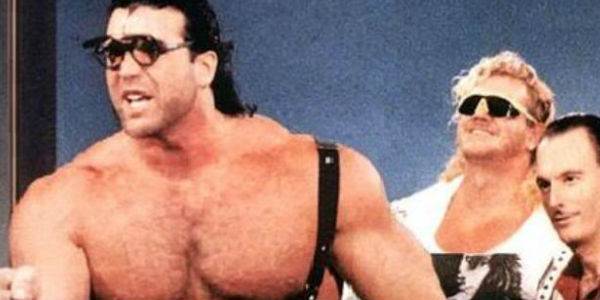
Scott talks about returning to America from an overseas tour with a pregnant wife and no health insurance, and he called his friend Dallas Page, who was managing The Freebirds at the time in WCW. He told DDP that he was too big to be managing The Freebirds. "You need someone standing next to you to make you look small. You need The Diamond Studd." After that, Page was off and running and started pressuring Dusty, who brought Hall in for a tryout. Austin asks if the gimmick was Hall's idea but he replies that Dallas originally wanted to pair him up with Al Perez and call them The Diamond Studs years prior but it never happened. DDP would call Hall at all hours of the night giving him ideas for the gimmick, telling him to dye his hair black, shave his moustache and go with "the Rob Lowe stubble".

2. The Toothpick

Hall says the he and Page were at a Waffle House in Fayetteville, North Carolina paying for a meal and DDP excitedly exclaimed "I got it! We'll both have toothpicks!" He says that he was so happy to have a job to support his family that he didn't care either way, stating that he had signed a one year deal so he was good to go. Page had browbeat Dusty Rhodes to get a hands-free microphone so that he could talk on the way to the ring, and while Page was talking Hall notices that his toothpick had fallen out of his mouth. He didn't speak but adds he'd been around a few years, so when he saw the red light on the camera he tossed his toothpick at it. After that he was known as "the guy with the toothpick" and the rest is history.

1. The Razor's Edge

Stone Cold asks Scott how he came up with his iconic finish, which was originally called The Diamond Death Drop. He says that he came up with the move himself, and adds that the first time he ever did it to someone was in Puerto Rico. He says the powerbomb was getting over huge at the time and modified it from to fit his own move. Austin asks if he ever had a hard time getting guys to take the move because it looked like a scary bump. Hall responds: "In the squash match era, if guys would deadweight me then I would let 'em have it. If guys would go up good then I'd put you down flat. You're going to make me hoist you up there then tuck your chin." Steve then asks if he ever took The Razor's Edge and Hall laughingly replies that he didn't but that he gave Austin The Stunner, and that's where we end part one. This interview is absolutely fantastic as there are few guys more fascinating to listen speak about the subject of pro wrestling than Scott Hall. He also sounds to be in great health and spirits and hearing these two friends spitball about a great career is a real treat for fans. Stay tuned for part two.

Contributor
Contributor

Brad Hamilton is a writer, musician and marketer/social media manager from Atlanta, Georgia. He's an undefeated freestyle rap battle champion, spends too little time being productive and defines himself as the literary version of Brock Lesnar.