15 Things We Learned From Triple H On The Steve Austin Show

Triple H talks about Chyna and CM Punk in a wide ranging interview.

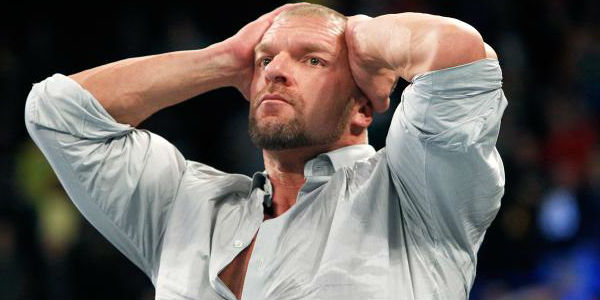
The first WWE Network-exclusive edition of The Steve Austin Show starring Vince McMahon had the wrestling world abuzz. The two former rivals sat across from each other for over an hour while "Stone Cold" hit the WWE boss with some tough questions, several of which had Mr. McMahon visibly uncomfortable. While we did get some insight into how Vince thinks, we were also subjected to a lot of platitudes and corporate speak. Nonetheless, the interview was a very big deal considering McMahon rarely grants them, and while not exactly hard-hitting journalism, Austin didn't let him off easy either. When it was announced that the next episode of The Steve Austin Show that would air exclusively on the Network was going to feature Triple H, the audience was justifiably excited. Triple H is a man in a unique position, still maintaining a prominent on-air role as the head of The Authority while also being one of the top three people in charge behind the scenes. He's earned a tremendous amount of praise for his work developing NXT and the many talents in that organisation and a sizeable portion of the fan base feels like if/when Vince finally relinquishes control of the WWE and hands the reigns to "The Game" that things will start to improve. Did this interview reinforce those thoughts and give the audience a reason to be optimistic? Let's find out...


15. Booking In The Modern Era

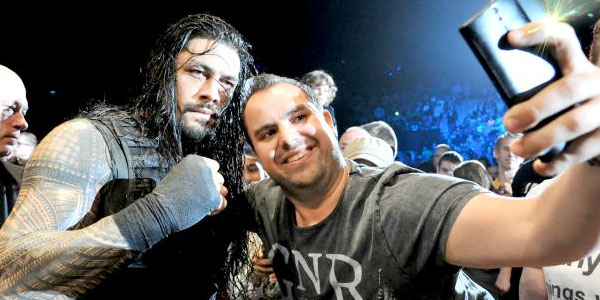
The interview opens with Austin asking a question regarding the difficulties of booking post-kayfabe and how you deal with the different climate. Triple H acknowledges that segment of the fan base who follow the inner workings of the business and says he hates to call them the "vocal minority", then compares them to working in towns that favored the heels. He says that times and people change, and the component of telling a story and just having people accept it for a storyline are gone. Hunter says you get to a point where that segment just wants to see what they believe works and mentions how Roman Reigns has been getting great reactions outside of the Rumble, so it's not always about what that fervent section of the audience calls for. Stone Cold compares Roman getting the word that he's getting the big push to when he was picked to win King of the Ring after the MSG Curtain Call, acknowledging that a portion the crowd feels like he hasn't earned it yet. He calls out the poor booking of the match, specifically the finish, and says the heat that should have been directed at the writing staff was transferred onto Reigns.

14. Changing The Direction

Triple H said the Royal Rumble was heavily debated and that the decision fell to one man, and Vince took all the suggestions and decided on the direction. He praises Vince as being the first guy to admit when he's made a mistake. Austin follows up by asking if the booking of Raw, featuring Daniel Bryan beating Seth Rollins for a shot at Roman Reigns and his WrestleMania title match was Vince's way of acknowledging that he screwed up. Hunter says the business is all about making audibles and changing directions based on the whims of the audience, noting they can change at the drop of a hat or they can work the fans just as easily. He points out that Vince read the reactions to Hulk Hogan and used that as the basis for creating Hulkamania, which wasn't an answer but more of a deflection.

13. John Cena

Triple H says that he gets asked all the time about whether or not they listen to the reaction to John Cena, and do they not understand that people are tired of him? He responds by saying "There's such a long period of time where half the people were booing John and half the people were cheering for him but he was packing arenas. Everything that we did, John was so far ahead of everyone else from a reaction standpoint...it doesn't matter if half the people hate him or half the people love him." He says that it's difficult to find the person that every member of the fan base will gravitate toward, pointing out that The Attitude Era was easier because they had a tighter demographic.

12. The Current Demographic

Austin asks what the demo for the company is now, and Triple H says that the crowd is comprised of young kids, young adults, parents, grandparents, etc. "We go across every single age group, we go across every single race and religion and everything else. You cross so many barriers that it's hard to say "Oh, this is the one guy...everybody's going to like this guy." He then jokingly adds that the worst thing you can do right now is make someone a good guy. The above statement, while somewhat true makes absolutely no sense if he really feels that way because they've taken their chosen star who they're seemingly all in on and stripped away all the edge that made him appeal to fans in the first place. It's frustrating to hear Triple H make comments like that because it's obvious he understands the mistakes being made yet is still a part of making them.

11. The Reality Era

Steve mentions The Attitude Era and how the shows had a sense of urgency that it feels like today's product lacks and asks Hunter how The Reality Era came about. He says that kayfabe is dead, but that fans will still believe to a degree, so they have to embrace the insider aspect of the business to keep fans involved. He points out that fans no longer have to seek out the behind-the-scenes info the way they did before - it's not just the Observer, it's Grantland and mainstream news - and the reality is the business now. There's such a crossover that you can't deny it anymore. Austin then follows with a question of if people are more concerned by what's going on backstage than in the ring and Hunter says "Sometimes". He said when they don't tell the story well that people are critical of the process more than the story itself, but that people want to go along for the ride.

10. Thoughts On Daniel Bryan & Roman Reigns Being Ready
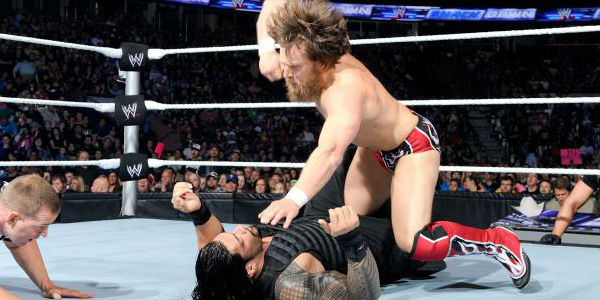
Triple H says that in years past fans would have reacted to Roman Reigns winning the Royal Rumble by viewing him as better, but now they look at it as he's being pushed while Daniel Bryan is being held back "for whatever reason they want to believe that we hold back Daniel Bryan." He mentions the point in time during the 10-month build to WrestleMania for Bryan and admits that where they ended up is not where they thought they were going when they started, and that Daniel was adding input saying it wasn't time for him to succeed yet. Triple H says he hears all the time that Roman isn't ready for the spot he's being given, and his response is that no one's ever ready. "You think you know what that spot is, and you think you know what it means to be that guy, and you think you know all those things and it's a totally different world when you get to that show the first time and it's on you...if that house sucked, that's on you and if it rocked, that's on you. You put a whole different world of pressure on yourself." Hunter says that once you're put in that position you start to get input from all sides telling you what you should and shouldn't be doing, and both he and Austin say that very few people offering that input are qualified to be doing so. He says it's hard to filter through that as a talent and learn how to apply input in the right way, and that it's hard to trust your gut instinct when you lack experience. Austin offers up a motto of "When you're thinking, you're stinking".

9. He Wasn't Ready For The Spot In 1996

Stone Cold reveals that Hunter told him that had he won the 1996 King of the Ring as planned, he can objectively say he wasn't ready at the time. If the Curtain Call that caused him to be punished hadn't happened and Vince had gone with him over Austin, he wasn't prepared. He tells Austin he was ready, mature as talent and knew who he was and where he wanted to go, but that he himself wasn't. He admits he would have failed if he'd been given the reigns and doesn't think he would have succeeded.

8. His Exit Strategy From The Business
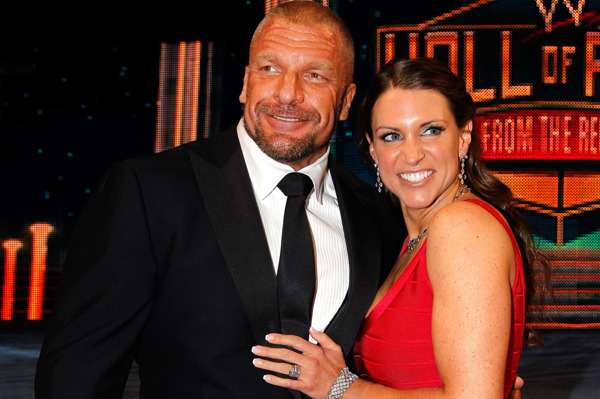
Austin mentions that he and Hunter have been friends since the early 1990s, and despite knowing him well he didn't know much about his background, but after watching his Thy Kingdom Come DVD he gained more insight into Hunter as a person. He asks what his exit strategy from the business was had he not married Stephanie McMahon. He reveals that the criticism he receives from those who think he didn't earn his position in the company and it was only handed to him due to his relationship used to really bother him. Undertaker told him he shouldn't care what anyone else thinks because he knows what he's done and who he is and that helped him get past it. He thinks that if he had never married her he'd still be behind the scenes in WWE doing the same type of work. He says that once he got into the other side of the business he fell as much in love with the creative side as the performing. Vince saw that fascination in him and gave him the opportunity to explore it.

7. Twitter Questions

Q: Do you think it's beneficial when talent goes to wrestling school then the performance center rather than the indies? A: He says it depends on the guy, citing Kurt Angle as an example of someone who picked up the business immediately, and says that some indie guys are hard to "knock the bad habits out of". Q: Do you see anyone on the current roster that has what it takes to be the next Cena/Austin/Hogan? A: He points out that he sees the "it" factor in a lot of people, saying that the business is different now and you need to be skilled in all facets to be a huge star. He uses Mark Callaway as an example saying that no one else could have ever turned The Undertaker character into such an icon. He puts it on the shoulders of the talent to get over that hump. It's worth noting that he doesn't actually name anyone here.

6. The Vision & Creative Process Of NXT
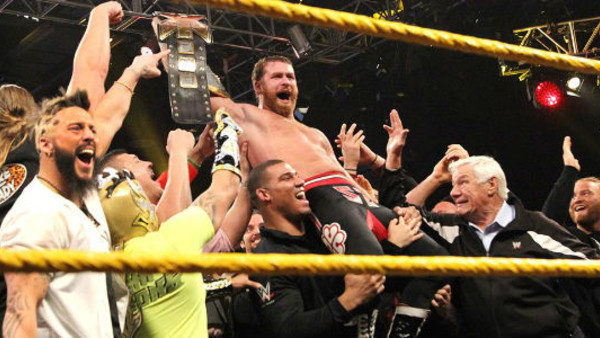
Stone Cold praises NXT as being an awesome show, saying he loves everything from the lighting to the wrestling and asks Triple H how he designed the show. Hunter shows some good insight here and says that he structures the show based not only on what he likes, but what the hardcore wrestling fan base likes as well, acknowledging that that's what the WWE Network's subscriber base mainly consists of. Hunter says he scripts less promos and lets the talent try to find their own voice, make mistakes and learn on the job, thanks to the much smaller microscope and the ability to be looser and a little more fun. He says that he's teaching the wrestlers how to wrestle for TV, with the cameras, angles and ramp all set up the same way to prepare them for the main roster. Austin asks if NXT is still strictly a developmental territory. Triple H says it is because the entire roster's goal is to make it to the main shows, but at the same time he does feel they've created a bit of an alternative brand, which was one of his goals. He wants to put NXT on the road and start doing live events to get them even more experience. He tells a story about Finn Balor being overwhelmed like he's in another world entirely from when he worked in Japan, saying he'd never been taught the kind of things he's learning in NXT. Steve talks about Hunter's early days in WWE as The Blue Blood Hunter Hearst Helmsley ("How did that not get over"?) that evolved into Triple H and asked what the process is for the NXT talent, if they're involved in the process and can pitch ideas. Hunter says that they're all very involved every step of the way. He says that he has Dusty Rhodes down there working on promos, they're learning how to run the cameras, etc. He also mentions that he has a live feed of the performance center in his office and can watch anything they do, giving the talent a direct line for feedback. Triple H says he wants talent who believe in themselves and aren't just there to play wrestler.

5. Chyna In The Hall Of Fame?

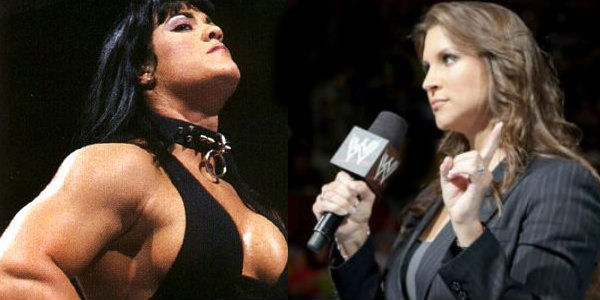
Austin asks Triple H if his ex-lover will ever be inducted into the WWE Hall of Fame and Hunter says she deserves it but there's more to it than that. He calls her a paradigm shifter and a phenomenal talent who should get in from a career standpoint, but it's a bit difficult due to her personal choices. He points out that inducting her might cause many kids to go online and look her up because they've never heard of her and you-know-what pops up. He makes a point to say he's not criticising her or her choices, but it's just a fact that it would be a difficult choice for the company to make. He points out that the WWE HOF is different than any other Hall in the world for reasons such as those.

4. Quick Questions

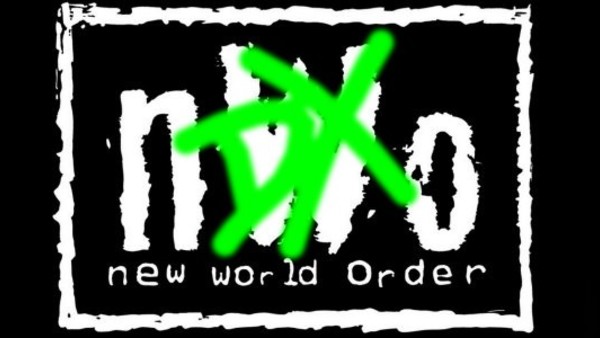
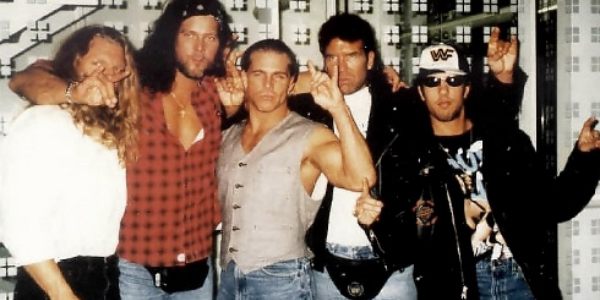
Stone Cold throws out an interesting question when he asks which faction was more influential to the business between the nWo and DX. Hunter answers by saying that the initial impact of the nWo was gigantic, but that it became watered down very quickly when so many people were added and the storyline became convoluted. He says that DX on the other hand probably did more things over a longer period of time to influence the way the business was presented. If Triple H could go back in time and have a match with anyone, who would it be and why? Buddy Rogers, because he was the first guy that transcended from being just a pure wrestler to an actual star with the total package. Austin asked what Brock Lesnar's contract status is. Hunter says it all comes down to Brock and what he wants to do. He says that he thinks Brock loves what he's doing there now and they have a great arrangement, but that it just comes down to whether or not he feels he has unfinished business. Should the streak have been broken? H says he can see it both ways and while he understands the thought that it shouldn't have ever ended, for a guy like Taker to be able to give back and let someone benefit from it was huge. Steve poses the question of what one thing would he change about Monday Night Raw if he could, and Triple H answers by saying he'd cut it to two hours, pointing out that it's really difficult to run a third hour of television. Austin asks if they could ever go back to two and he dodges it saying that's a Vince question. He says he wishes they had more time to develop stories and that wrestling fans had a longer attention span.

3. Thoughts On CM Punk

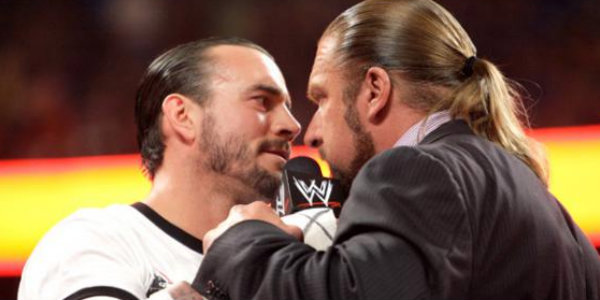
Stone Cold asks a question that many fans were hoping for when he probes Triple H on his opinion of the former WWE-star-turned-UFC-fighter. He said people always felt like he had a beef with Punk but he never did, acknowledging that people hated the way their feud was booked and puts it all on Vince, admitting that Punk held a grudge over it. He calls him a "weird cat" saying that his emotions were all over the place and he would hear all kinds of things about Punk threatening to quit or being ticked off but when Hunter would speak to him he'd just play it off and say everything was fine. Austin asks if he could ever come back to WWE and was met with the standard response of "never say never" and that if he and the fans wanted it and it was best for business they could make it happen.

2. Word Association

Shawn Michaels - "The greatest in-ring performer ever." Ric Flair - "Greatest all-around performer, character and all-around." Kevin Nash - "Very underrated mind for the business." Scott Hall - "Probably the guy I learned more from walking in the door here than anybody and one of the most underrated performers in-ring." Eddie Guerrero - "Awesome. I miss him." Goldberg - "A guy that I would credit a lot with changingt he intensity of the business." Brock Lesnar - "Freak." Paul Heyman - "There's a fine line between crazy and genius...he rides that line like a razorblade." Owen Hart - "One of the nicest guys I knew and one of the funniest guys I knew." Bret Hart - "Unbelievable technician. Maybe sometimes takes himself too seriously." Undertaker - "Respect." Kane - "Underrated. The constant." Pat Patterson - "Genius for the business." Michael Hayes - "So underrated for his contributions to the business across the board."

1. Scripted Promos

It's no secret that Steve Austin hates scripted promos, and he asks Triple H why it's so prevalent. Hunter says it's a product of the times and Austin says it still happens with advanced talent and asks if they don't trust them. Hunter responds by saying that some guys want to be scripted and some guys just take the bullet points and rework it to fit their style. He cites the usual excuses about sponsors and whatnot and says it's unavoidable in the current climate. He says that he's working to develop the NXT talent so that they can become the kind of performer who has the freedom to use their own voice in their promos. This was a great interview and better than Vince McMahon's appearance on The Steve Austin Show due to his willingness to be a little more open and free with his answers than his father-in-law. The dichotomy of the Vince and HHH interviews is intriguing. On one hand, you have the guy with the utmost power who's completely unaware of what the problems are, and then you have the guy who knows what the problems are but is in a position where he has to play nice and double talk, Triple H is an affable guy who gets a lot of undue hate from the wrestling fan base but he's clearly someone with a driving passion for the business and a future where the WWE rests in his hands is cause for hope. This podcast is highly recommended so check it out only on the WWE Network.

Contributor
Contributor

Brad Hamilton is a writer, musician and marketer/social media manager from Atlanta, Georgia. He's an undefeated freestyle rap battle champion, spends too little time being productive and defines himself as the literary version of Brock Lesnar.