17 Things You Didn't Know About Wade Barrett

Thought you knew everything there was to know about the King Of Bad News? Well, I’m afraid… you might not.

The rumour of the past week, if you€™re a fan of giant, gruff northern wrestlers with broken noses, is that King Wade €˜Bad News€™ Barrett of the Barrage, hero of the Battle Of Buda - to give him his full name and title - may not be on WWE television that much longer. Scuttlebutt (like gossip with a totally, 100% legit bare knuckle boxing background) says that Stuart Alexander €˜Stu€™ Bennett, BSc CertRP DipRM DipRL (to give him his full name and title) is probably not going to re-sign with the company when his contract comes up for renewal in a few months. Although these stories are nothing but hot air half the time, Bennett seemed to tacitly admit to the truth of them in recent tweets, clarifying that he€™ll go into more detail when it€™s appropriate, but that €œfor now I'm 100% focused on doing my job for @WWE.€ Barrett€™s one of those WWE Superstars who€™s always seemed to have more of an upside than WWE wanted to admit, or to exploit. He€™s a big lad with the gift of the gab on the mic, a classic technical brawler€™s style that suits WWE down to the ground, and currently a lean, piratical look that matches his wicked leer and ripped physique. More than that, Barrett has presence, real charisma. Whether cutting a promo or just lurking malignantly in the background, he draws the attention. But then most people know that Barrett hasn€™t been used effectively for his many talents in the biggest wrestling company on earth. The question is, what don€™t we know about this twelve year veteran of the squared circle? There are seventeen answers on the way. Let€™s see how many you knew about beforehand...

17. Mick Foley Inspired Him To Become A Wrestler

Stu Bennett was a wrestling fan ever since he was a kid, all the way through the ups (rock n€™ wrestling, Hulkamania, the Attitude Era) and the downs (most of the 1990s). He stayed a fan when his friends gave up watching, and remained a fan when they came back in droves: he was one of those English kids who€™d set his alarm to wake him up to sneak downstairs and watch the US pay-per-views at 1am. For as long as he can remember, professional wrestling has been his favourite form of entertainment€ but he never really thought about actually doing it himself, until he read Mick Foley€™s first memoir, Have A Nice Day!, while at the University Of Liverpool studying Marine Biology around 2001. Although tall, Bennett has a ectomorphic body type, meaning that his physique naturally veers more towards a lanky, skinny frame. At twenty or twenty-one, he was only about twelve stone (roughly 170 pounds), gangling at around six foot five, six foot six inches tall - meaning that he looked like a must have found it next to impossible to find clothes that fit him, poor kid. Foley wasn€™t your traditional kind of wrestling build either, a big but dumpy dude who€™d nonetheless managed to claw his way to the main event of the WWF through sheer testicular fortitude. Bennett felt inspired, and signed up to the university gym that day, hitting the weights for the first time ever.

16. He Was All About The Hart Family

Foley may have inspired him to go for it, but as a kid his childhood heroes were the extended Hart family: specifically, Davey Boy Smith, the British Bulldog, and Bret €˜The Hitman€™ Hart. Bennett had a poster of the Bulldog on his wall as a child, and idolised the man. He was from Wigan, only twenty-odd miles from where Bennett was born in Preston, and had made it to the big leagues despite his provincial upbringing. To young Stu, the jacked man in the Union Jack tights that spoke in his own accent was a real hero. Hart, on the other hand, was The Excellence Of Execution. It€™s difficult to overstate exactly how over Bret Hart was in the mid-nineties WWF. He may love to tell stories about how much of a star he was, and a hero to children, but he€™s not wrong for the most part. Bennett€™s first memory of anything wrestling related was being given a Bret Hart sticker by a friend at nine years old. Since then, the Hitman has been one of his all time favourite wrestlers. He names Hart as the exception to the rule that you should never meet your heroes, as they€™ll always disappoint you: he was even better as a person and as a mentor than he ever dreamed he€™d be. He€™s remained a Hart fanboy to this day, and has become good friends with Davey Boy Smith€™s family as a consequence: the closest he€™d get to Smith himself, who died a couple of years before Bennett entered the business.

15. He Came Up With Sheamus And Drew McIntyre

So an Englishman, an Irishman and a Scotsman walk into a pub... Bennett made his professional debut in June 2004 as a surprise entrant in a 30-man battle royal being held by the now-defunct NWA Hammerlock Wrestling in the United Kingdom. He debuted under the ring name The Pinnacle, feeling sure that this was the name that would make his career. That lasted about two matches, when it was pointed out to him that €˜The Pinnacle€™ was a sh*tbox name: after that he was plain old Stu Sanders, named after Mal Sanders, a highly-regarded veteran wrestler on the UK circuit. In 2004, the UK wrestling scene wasn€™t filled with giant, heavily muscled men. Many of the wrestlers Sanders found himself sharing a card with barely even lifted weights, and with his height and size he stuck out a mile. It was only natural that he, Andrew Galloway and Stephen Farrelly - better known later on as Drew McIntyre and Sheamus - gravitated towards one another and bonded. He€™d work with the pair of them for a large number of shows in the UK and Ireland from early 2006. For a crowd used to seeing huge, musclebound men on WWE television, the three of them looked like stars before they even locked up. The three men would try out for the WWE and get signed to developmental deals together, something Farrelly always claimed he knew would happen. Bennett was more pessimistic, recognising that the WWF/E hadn€™t historically wanted too many obviously foreign wrestlers on the roster at once, and considering that it was more likely that only one of them would be signed. That€™s got to be a good thing to be wrong about.

14. Third Time Was The Charm

That successful WWE tryout was actually Bennett€™s third attempt at getting noticed by the big leagues. His first was in late 2005: he€™d been wrestling for around eighteen months, which sounds okay until you realise that as a part-timer working on a small scene, he€™d only really had about twelve matches. Around a thousand hopefuls applied, but only fifteen were selected to try out. Bennett was the tallest man there. He was green as grass with no promo experience at all: but something must have stood out other than his height, as he was told to keep in touch and gain more experience. That€™s when he went to Brian Dixon, a legendary UK wrestling promoter who ran All Star Wrestling. Stu Sanders would be knocked back once more before scoring big on his third tryout. On the first day, wrestling Galloway in front of John Laurinaitis, Sanders got a tooth knocked out and had to find an emergency dentist to fix the problem. He was told to stay away from serious physical activity for six weeks, so naturally the next day he was back in Earl€™s Court for the second day of tryouts, this time in front of Fit Finlay. Along with four others, Bennett, Farrelly and Galloway were offered developmental contracts by John Laurinaitis at the end of that second day while they watched Smackdown on the monitors backstage.

13. These Are A Few Of His Favourite Things

Interviewed by broadcaster James Delow in March 2015, Bennett admitted that living in America had him missing some proper English bits and pieces - mainly a good curry. He might have stopped drinking in late 2014 (he credits knocking off the booze and eating more efficiently and smartly with his current ripped physique), but if you€™re going to deprive an English lad of beer, you should at least let him keep the curry. Apparently finding a decent Madras in Florida is next to impossible, however. He€™s not a fan of US comedy, admitting to never getting the appeal of television mainstays like Saturday Night Live. His favourite comedy of all time remains Bottom, the peerlessly vulgar UK TV hit starring the late Rik Mayall, who he cites as the funniest man in the world, alive or dead. I€™m hard pressed to disagree, myself. Bennett€™s also a huge fan of the Inbetweeners, which is kind of a no-brainer in more ways than one. He was also asked what his dream wrestling match would be: to include his opponent, the event, the stipulation and the venue. True to form for a man who idolised the British Bulldog as a kid, he named Davey Boy Smith, for the Intercontinental Championship in a straight singles match at Wembley Stadium - just like the Bulldog vs. Bret €˜the Hitman€™ Hart at SummerSlam 1992, which Bennett still maintains is his favourite match of all time.

12. He's The Manic Street Preachers' Biggest Fan
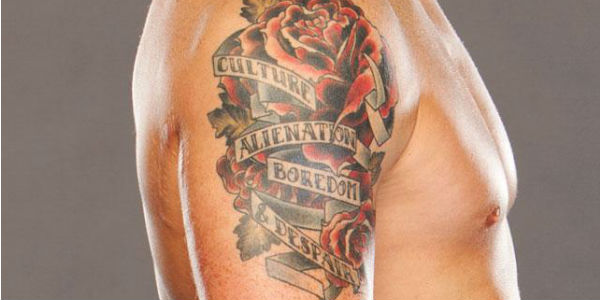
A devotee of the Britpop music scene from the mid-nineties since he was a teenager, Bennett has a particular soft spot for Welsh art punks and enfant terribles of the UK rock scene, the Manic Street Preachers. The band actually pre-dated Britpop by a few years, but Bennett found his way back through their discography to become properly hooked on their agitprop blend of intellectual, literate pop and snarling, revolutionary commando rock n€™ roll. You€™ve probably seen the large tattoo on his upper right arm: a rose with scrollwork reading Culture, Alienation, Boredom & Despair. That€™s a lyric from €˜Little Baby Nothing€™, which I believe is Bennett€™s favourite Manics song, from their debut album Generation Terrorists. The song, about the exploitation of women, features co-lead vocals from notorious ex porn star Traci Lords - they€™d originally wanted fresh-faced pop star Kylie Minogue, but she wasn€™t legally allowed to appear on the record. In interviews, Wade Barrett would enthusiastically lay out his shaky plans to get his favourite band to perform his WWE theme music, and in October 2012, singer James Dean Bradfield told Q magazine:
"Let's just put this out there - if you're listening Wade Barrett, we will do your f**king theme tune - just get in touch. That would be the ultimate Situationist, bizarrist spectacle wouldn't it? Us being played over the airwaves in some Enormodome in front of 20,000 mad Yanks in Colorado somewhere..."
When someone forwarded him a link to the interview, Barrett responded on Twitter: "That last link was JDB from The Manic Street Preachers offering to record my theme song. Mind: Blown." Over the next few years, both parties would make efforts to try to arrange something, but with their mutually hectic schedules they never managed to make it happen. Should have just asked to use €˜Revol€™... https://www.youtube.com/watch?v=vf91dTrLkgA

11. He Used To Be A Top Recruitment Consultant

Before taking the plunge and going full time as a professional wrestler, Bennett worked for Venn Group in London, managing a team of five staff. Venn are a top flight recruitment firm specialising in contract workers in the public and private sector. If you€™re a big corporation and one of your indispensable employees has headed out on maternity leave or been signed off on long term sickness leave, Venn are the people you contact to provide the perfect candidate to fulfill your temporary requirements. At least, that€™s the spiel they sell themselves under. Bennett€™s role was to lead a team engaged in persuading big business to made that call to Venn, rather than any one of a hundred other UK firms who might be able to assist them. Anyone who€™s ever worked in recruitment knows that, like the law, it€™s not a job for people who just want to work nine to give. Bennett would regularly find himself working a sixty or seventy hour week in the job, and the management aspect must have created its own kind of special hellish stress on top of that. To do a job like that, and do it well, when your real passion lies elsewhere and when you€™re engaging in that passion in what little free time you have outside of work and sleep€ that takes a special kind of commitment to excellence, and would stand him in excellent stead for the bludgeoning schedule of a WWE Superstar. But then no one could ever accuse pro wrestlers of being lazy people.

10. He Learned His Mic Skills On His Old Job, Not His New One

Although Barrett describes himself at university as a shy, quiet lab geek, it€™s clear that he has the gift of the gab naturally. You don€™t get a brash confidence like that on the mic if you€™re an introvert. Nonetheless, he credits his recruitment job with teaching him a lot of the techniques, flair and self-belief necessary for truly impressive public speaking:
"I think that it€™s definitely something that comes quite naturally to me, but it€™s mainly due to my background. I€™ve done a lot of work with recruitment, which involved me giving sales pitches and things like that and spending a lot of time on the phone selling my services to people. I think my skills on the mic come from that €“ just the fact that I basically had to pitch to some of the top directors at some of the biggest companies in the U.K. and try to win their business. I learned a speaking style from doing that for years €“ projecting confidence and being strongly spoken and being able to get my ideas across to a guy like a major director or a financial director of one of the biggest companies in England. You need to sound confident at all times, and I think the fact that I did that certainly helps my microphone style and my promo skills..." - Baltimore Sun, Nov 19 2010

9. He's Already Worked As An Announcer
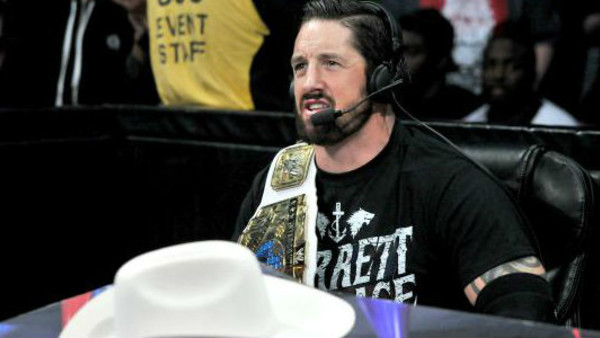
Scuttlebutt (like gossip with a desk job) says that post-WWE, Bennett may well be headed towards a less active job in sports/entertainment - as a football analyst. That's soccer, for those of you of an American persuasion. It's not hugely surprising: he's got the gift of the gab, he's a quality storyteller (as anyone who's ever seen him interviewed can attest) and he knows football inside out. Well, he's a northern lad. They're raised on mashed potato and football, and Bennett€™s been a Preston North End supporter since he was a twinkle in the milkman€™s eye. He's also done similar work before, when he worked as FCW's colour commentator. That was during the period in 2009 when he was on the shelf after injuring his latissimus dorsi muscle in his back and required surgery - reports at the time said that he tore the muscle right off the bone. He was out for eight months, during which time he sat in on commentary every week. Bennett doesn€™t have the visa problems that have plagued him in the past anymore: he finally got his green card in November 2014, meaning that he can now live and work in the US unconditionally (ie, without ongoing, full time employment with the WWE specifically). That means that he could, technically, utilise his considerable public speaking experience to his advantage in working for any sports broadcaster in the US or the UK.

8. He Was Named For An England Rugby Union Legend
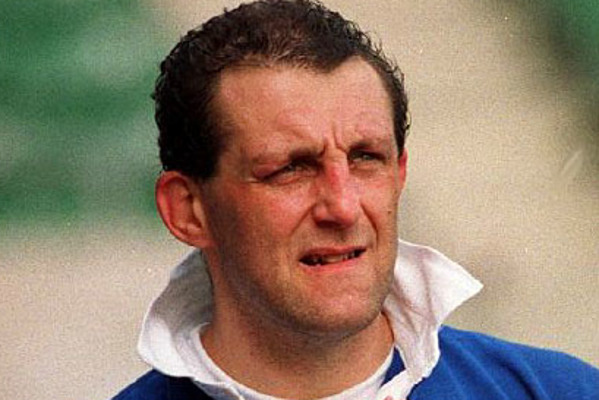
When he was discussing taking on a new character with €˜the American Dream€™ Dusty Rhodes, having decided that the name €˜Laurence Knight€™ wasn€™t cutting it, Bennett told him that he thought the name €˜Wade€™ was perfect for him. It€™s a popular name in the US, but practically unheard of in the UK€ and it€™s also the name of a rugby union icon, one Wade Dooley. A former England international, Dooley played for his country over fifty times, and had an uncompromising reputation on the pitch, having broken the cheekbone of an opposing player in a particularly rough game in Wales in 1987. More importantly to Bennett, the man was nicknamed €˜the Blackpool Tower€™ due to coming from Blackpool in the north of England, and being six foot eight inches tall - only a couple of inches taller than Bennett himself, who hailed from Preston, not far from Blackpool. Dusty liked the name, and added the surname €˜Garrett€™... however, when Bennett got home and googled his new name to be sure it had no untoward connotations, he found that €˜Wade Garrett€™ was the name of the Sam Elliott character in the eighties classic action flick Roadhouse€ which was a little too on the nose for him.

7. Jericho Was His Mentor In Real Life Too
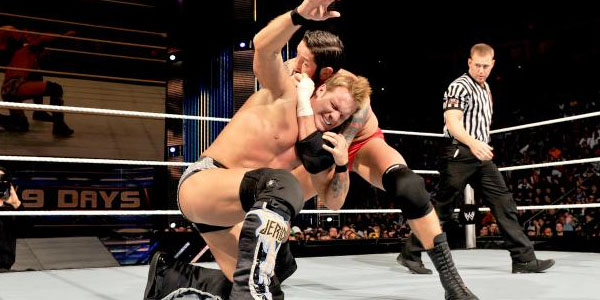
Initially, Chris Jericho and the other NXT €˜pros€™ weren€™t keen on the idea of the extra work involved, while their rookie protégés only found out live on TV along with everyone else who would be mentoring them. The Sunday after being named Barrett€™s NXT pro, Jericho won the world title in the Elimination Chamber and Bennett was ecstatic: the extra visibility from being on television with the world heavyweight champion would be worth its weight in gold. What he wasn€™t expecting was that Jericho would take his responsibilities seriously: it wasn€™t just a storyline to him. When asked if he€™d consider Jericho to be a formative influence on him as a WWE Superstar, Bennett is unequivocal:
"Yeah, definitely. I€™d say to this day he€™s probably my first point of contact if I€™ve got any questions or stuff that I want to know about in the company or if I want critiques on anything that I€™m doing. I€™ve got a few people I would go to, including William Regal and Goldust as well €“ he€™s been very helpful. But I€™d say Chris Jericho is my number one sort of influence and mentor to this day.€

6. The One-Off 'Night Of The Shoveler'
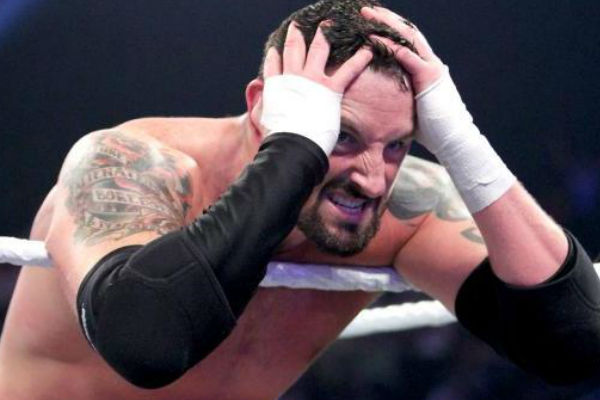
When legendary UK wrestling promoter Brian Dixon saw Stu Sanders, he saw pound signs at the same time - in the mid 2000s, English wrestlers simply didn€™t come in that size. At one All Star Wrestling show he was asked to make a run-in later in the show with a weapon: the young juggernaut, out to make a name for himself by flattening his opponents. There was just one problem: they couldn€™t find an appropriate international object. The venue was lacking in vicious weaponry, and of course Bennett hadn't brought one with him, as he hadn€™t realised he€™d be required to brutalise anyone that evening. Dixon ran around the building trying to find a proper weapon for him to wield, not just some heavy bit of tat or, god forbid, a chair, and eventually Stu Sanders found himself handed... a shovel. When the big rookie came enthusiastically bounding in, giant spade flailing above his head, the veterans in the middle of the ring were completely speechless. Sting may have had a baseball bat and Triple H a sledgehammer, but no one except William H. Macy has ever made a shovel work for him as a gamechanging weapon.

5. The Nexus Were Seen As Uber Villains
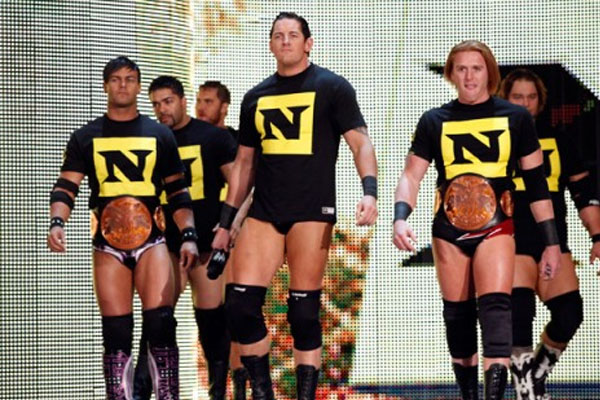
After Wade Barrett was booked to win season one of NXT so convincingly, the other seven men - and most of the fans watching - assumed that most if not all of them would be headed back to developmental. After all, WWE wouldn't dream of introducing eight new wrestlers to the main roster at once, would they? On the night that The Nexus debuted and wrecked the main event of Monday Night RAW, the eight men who€™d taken part in season one were all asked to come to RAW out of the blue, and then called in to a meeting with Vince McMahon and practically every agent that the company had. The group were given their game plan for the evening, and told that they weren€™t allowed to tell anybody what they€™d been booked to do. When asked, everyone pretended they€™d come in for one last NXT photoshoot. Barrett didn€™t even tell Jericho, and Daniel Bryan didn€™t tell William Regal, which both men admitted to feeling guilty about. More than that, going forward The Nexus wouldn€™t be allowed to interact in public with anyone on the roster that wasn€™t part of the faction. They€™d have to play the role of the villainous spoilers at all times, even to the extent of wearing their Nexus armbands in public. During the course of The Nexus angle, every man in the stable had death threats directed against them, but as the leader and mouthpiece Wade Barrett€™s stalkers and psychos were in a league of their own. One in particular threatened on Twitter to meet him at the airport with a chainsaw, which he found hilarious.

4. He€™s Bad News In Relationships

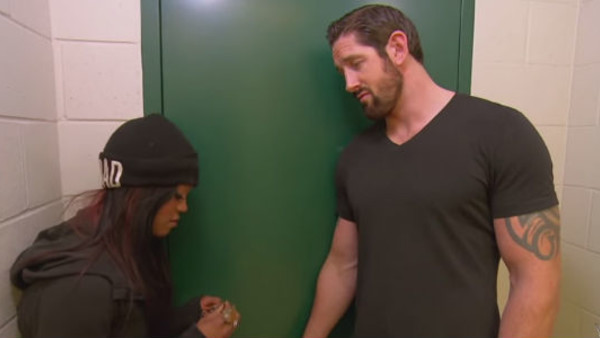
Bennett's most famous romantic relationship was with WWE co-worker Victoria 'Alicia Fox' Crawford. Details about their time together are sketchy, primarily because the two managed to keep the relationship under wraps for so long, and didn€™t speak about it in interviews or make it a part of storylines. Scuttlebutt (like gossip on the down low) is that, far from being a hook-up, the relationship lasted two years. After things ended and the fact of the romance leaked, Crawford and Bennett would find their break-up milked for a Total Divas storyline or two, with Foxy telling her ex that he'd broken her heart. True to form, Bennett delivered the Bad News and replied by telling her flat-out on camera that he'd dumped her because he didn't see the thing going anywhere, and didn't want to waste his - or her - time. Ouch... but it€™s worth remembering that Total Divas exists in its own little kayfabed bubble, and there's no guarantee that anything happening on that show has a basis in 'reality'. https://www.youtube.com/watch?v=GKfWQn43uYk In what seemed like much more of a shoot, Bennett's next girlfriend Rachel David (the Canadian TV host and broadcaster) cut a heartfelt YouTube video for fans at the end of August last year, admitting that she was having a terrible time due to having broken up with her partner two weeks beforehand, and had then been let go by her then employers. Eagle-eyed WWE obsessives had already spotted a certain Wade Barrett on her Instagram dating back to the previous December, and she'd had him on a YouTube cooking clip munching homemade cookies in May 2015. https://youtu.be/VQlvTfs77fM?t=5m5s I guess she stopped making the cookies. Damn those cookies. Anyhow, Barrett's very public bromance with Sheamus is still the best relationship of his that I know about. Those guys are adorable together.

3. Bad News Barrett Was Cody Rhodes' Idea... Kind Of

The way Bennett tells the story, Cody Rhodes is hilarious, and frequently holds court in the locker room, ribbing his peers. One night, Bennett€™s age was the target of his wit, despite the fact that he€™s only four years older than Cody. The joke was that when he was a kid, he'd seen this guy called €˜Bad News€™ on television, and how he'd just come on, delivered a promo giving someone some bad news... and then walked off. The implication was that this guy €˜back in the day€™ was the supposedly ancient Wade Barrett, and everyone laughed: because that's what it was, a friendly joke at Barrett's expense. On the JBL & Cole Show, a weekly internet only skit show featuring various WWE personalities mugging to camera and running comic bits on each other, Barrett had been introduced in episode 35 where JBL was engaged in a feud with none other than Cody Rhodes. The way the skit ran, Rhodes had won the duel between the two and been presented with JBL's Stetson as the prize - however, unbeknownst to Cody, JBL had glued it to his head as payback for embarrassing him. Barrett had his own payback plan in place (try saying that seven times fast). In episode 37, as Cody ran around backstage trying to find someone to get the hat off his head, he encountered Barrett, who delivered his first ever piece of Bad News: https://youtu.be/sIj1o-KGDm8?t=2m6s It was good, but it wasn't yet on the level it would be on WWE television proper. However, the debut was made by Cody Rhodes raising his eyes heavenwards and uneasily muttering to himself, "Bad News Barrett..." And so a gimmick was born, Bad News Barrett delivering his trademark gruff Bad News pretty much every week from then on, followed by that uneasy mutter from his victim and the hashtag stamp #BadNewsBarrett splashing across the screen. It wasn't long before the idea translated to the main roster. Every other comment on the show's YouTube uploads was someone cackling about how awesome Bad News Barrett was, and JBL showed it to Vince McMahon, who loved it. Vince brought it up in a RAW creative meeting, insisting that Barrett be repackaged as Bad News Barrett from then on, and that was that€ At least, until the villainous Barrett began to get babyface pops for the sheer sh*teating gusto that he brought to the supposedly obnoxious character, and the gimmick was shelved.

2. He Was Due To Deliver Bad News To Chicago

WWE's main problem with the Bad News gimmick, and the reason it was cut back, was that it was just too popular with the crowd. Barrett was supposed to be a heel: he couldn't have people cheering the thing that was intended to get him heat. Given this, there were two moments where fans were convinced that Bad News Barrett should have made a surprise appearance. The first was at the Royal Rumble in 2014. Barrett had debuted the Bad News persona eight weeks earlier, and it was catching on with the WWE Universe in a big way. When it became obvious that crowd favourite Daniel Bryan wasn't going to appear in the Royal Rumble itself, after having been defeated by Bray Wyatt earlier on in the card, the fans in attendance in Pittsburgh went nuts, roundly booing the #30 entrant, perennial sweetheart babyface Rey Mysterio. The crowd had been incredibly hot for Bryan the whole night, and WWE could easily have called an audible. Had Bad News Barrett come out to Daniel Bryan's music in the #30 spot and then announced that he had some Bad News for the fans - Daniel Bryan wasn't in the Royal Rumble... he would have had so much heat that you could have fried chorizo on his broken nose. For a change, the WWE learned from this missed opportunity. A few weeks later WWE were faced with a definite, gargantuan crowd hijacking in Chicago after their hometown hero CM Punk dramatically quit the company the night after the Rumble. The original plan for the opening segment of the March 3rd Monday Night RAW was for Punk's music to open the show... and then for Bad News Barrett to come out and do his thing, to instant nuclear heat. The moment was written into the script for that night's show and stayed there until about thirty minutes from the beginning of RAW, when It was decided to take the moment and give it to Paul Heyman, who was running the mic on the Lesnar side of the moneyspinning Undertaker/Lesnar feud heading into WrestleMania. It ended up being the best possible decision, as Heyman expertly played the crowd's emotions, telling and retelling the CM Punk story, until he somehow managed to spin his way around to plugging Brock Lesnar vs. the Undertaker at Wrestlemania XXX. It was a masterclass in the art of the promo - Bad News Barrett simply wasn€™t in a storyline position to even attempt doing anything like that.

1. He's Not Really A Bare Knuckle Boxing Champion
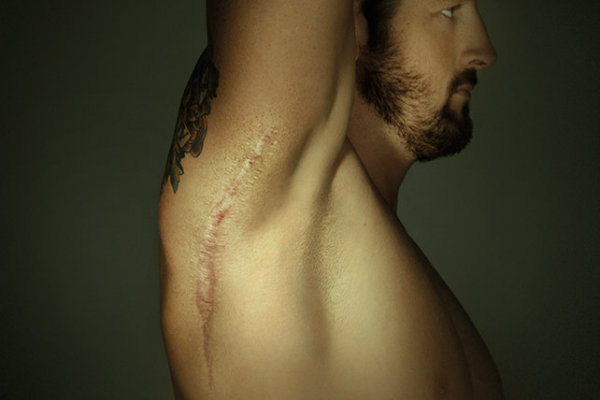
It€™s utterly bizarre to me, the incredible number of people that are still convinced that the man behind the Wade Barrett/Bad News Barrett/King Barrett character was genuinely a champion bare knuckle boxer in his twenties. Why on earth would fans of professional wrestling take it as read, on this one occasion, that it's not just a work? There€™s no information available on this supposed previous life as a legit scrapper except references to it in his media interviews, which are (as usual with WWE interviews) a weird mixture of shoot and work. Those people who inexplicably cling to this bit of backstory as being legit will loudly cite a lack of evidence as evidence of the truth of the matter: after all, the sport is illegal, and so are the tournaments surrounding it, so of course it€™s on the down low. Except that illegal things make it onto the internet all the time. Newspapers, magazines and television run features on bare knuckle boxing. There are interviews available online with some of the more infamous participants in England, like James €˜Gypsy Boy€™ McCrory and Decca €˜The Machine€™ Hedgie. People write books about them. More importantly, the fights are all over YouTube, some with millions of views. This isn€™t child pornography. Given all that, you€™re telling me that somehow, old, grainy phone-recorded footage of dodgy BKB fights involving Stuart Bennett hasn€™t been uploaded to YouTube to make money from Wade Barrett€™s current status as a world-famous WWE Superstar? Then there€™s the €˜Battle Of Buda€™ story he used to tell. These fights don€™t take place in stadia or arenas, aren€™t sponsored by big brands and broadcast across international lines on pay-per-view. Yet the supposed purse was twenty thousand pounds, meaning that the organisers of the fight must have made at least as much, if not far more. How? From the charge on the door? How much were these people paying to watch the fight?! Usually, BKB fights in the UK get the winner about £250, and the loser maybe a third of that. How do I know that? Because people talk about it! What about that vicious looking scar? Wasn€™t that a record of a failed attempt at a mugging when someone tried stabbing him and stealing that twenty grand from him in Budapest? It€™s funny, but that scar is more or less where a souvenir from surgery on the latissimus dorsi muscle might land. You know - the surgery that kept Stu Bennett out of action for eight months in FCW in 2009, and from which he€™d only just recovered when he starred in season one of NXT. The mashed nose? People break their noses in pro wrestling all the time: clearly Bennett just didn€™t get his straightened afterwards. The story is clearly a work: most tellingly, Chris Jericho had Wade Barrett, completely out of character, on the Talk Is Jericho podcast a couple of years ago and asked him all about his life story and how he broke into the business. Despite this, the only reference that either man made to the whole €˜bare knuckle€™ thing was when Jericho gently ribbed him over it in passing. The gimmicked backstory wasn€™t even worth ten seconds of their conversation.

In this post: 
Wade Barrett
 
Posted On: 
Contributor
Contributor

Professional writer, punk werewolf and nesting place for starfish. Obsessed with squid, spirals and story. I publish short weird fiction online at desincarne.com, and tweet nonsense under the name Jack The Bodiless. You can follow me all you like, just don't touch my stuff.