7 Incredibly Messed Up Allegations From WCW's Racial Discrimination Lawsuits

WCW was a magnet for these lawsuits, and apparent it was with good reason...
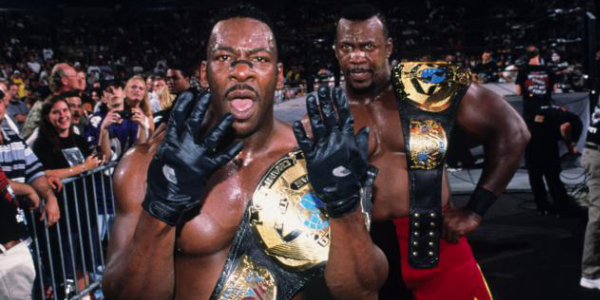
WCW was an odd duck in many ways. Forget about the wrestling product for a second: WCW's parent company was Turner Broadcasting, and with Ted Turner at the helm, their stated corporate ethos was very much about world peace, equality, racial harmony, protecting the environment, and so on. This is the company that gave us the Goodwill Games and Captain Planet, after all. On top of that, WCW was based out of Atlanta, a city with a large black population (and eventually a large Mexican population, as well), and the company drew a large number of black fans to its live events. WCW was never something that most of the people at Turner Broadcasting wanted. Look at how quickly they washed their hands of WCW once Ted Turner was out of power. With disdain came a lack of oversight, and while TBS controlled the purse strings, they didn't exercise much oversight over what went on day to day. WCW was hated by the rest of TBS, and so they didn't act like the rest of TBS. You're about to find out exactly what type of behavior that led to. From hiring discrimination to wrongful discrimination to offensive gimmicks to straight up abusive, racist language, lawyers had a ton of ammunition.

7. They Fired Most Of The Mexican Wrestlers For No Good Reason

If you were a WCW fan, especially of the cruiserweight division, you may have noticed that most of the Mexican luchadores that the company had hired disappeared over the course of a few months from late 1999 to early 2000. As the company was purging much of the roster to cut costs, that is indeed what happened. Even Psicosis (around as long as anyone) and the team of Silver King and El Dandy (getting a new push as a comedy tag team) weren't safe. As Konnan described in an affidavit: Konnan Affidavit On Firings The three remaining hispanic wrestlers were Konnan, Rey Mysterio, and Juventud Guerrera. Obviously the idea that all of the non-English speaking (and even that's inaccurate, as Silver King, Spyder, and others I'm sure I'm forgetting were fluent even though they didn't get interview time in WCW) luchadores were cut at the same time was...suspicious, at best. An email was uncovered during the discovery process in one of the lawsuits against WCW that likely confirmed some suspicions. Diana Myers was the lawyer in charge of contracts and I don't know what Georgia Davidson's job was, but they had this exchange: Diana Myers email about WCW firing Mexicans Yes, A LAWYER ACTUALLY WROTE THAT. For her part, Myers claimed in her deposition that it wasn't as bad as it looked: Diana Myers WCW Deposition 1 In a vacuum, that sort of makes sense if she's telling the truth about needing to contact them all at a central location, like the office of a wrestling promotion. However, if you look at that email again, take note: While Super Calo, Damien, and Ciclope were Mexican nationals, what do a Mexican-American from Texas (Spyder) and a WCW Power Plant trainee living in Atlanta (Davis) have to do with difficulty sending mail to Mexico?

6. Someone Put This Super Racist "Joke" Chinese Restaurant Menu On A Bulletin Board
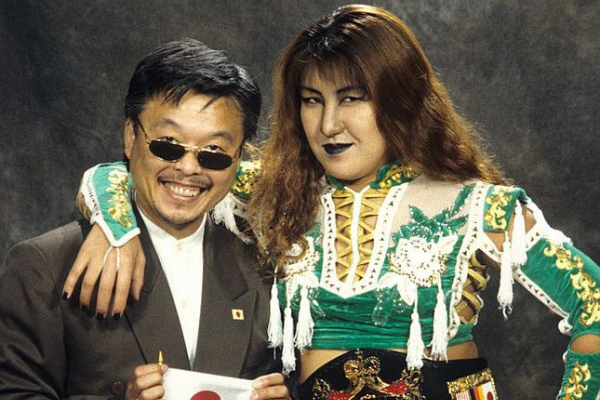
Japanese-American manager and foreign relations liason Sonny Onoo was the lead plaintiff in the most famous of the lawsuits, which was filed in 2000. One of the few allegations that surfaced publicly when WCW was still alive (even being quoted on wrestling news sites) was something was especially offensive to him: A mock Chinese restaurant menu with graphic sexual references and a number of stereotypical Asian/"Oriental" jokes that was posted to the office bulletin board. The language in these scans isn't necessarily safe for work and the failed attempts at humor will be offensive to just about anyone: Wcw offensive Menu 1 It gets worse: Wcw offensive Menu 2 And worse: Wcw offensive Menu 3 WCW's argument in the case that this didn't matter lacked effort, to say the least: "With regard to the Chinese menu, Onoo admits that he laughed at it and does not deny that he was showing it to people at WCW as a joke. These alleged incidents do not establish a racially hostile work environment." Yeah. You keep thinking that. For his part, Onoo said in an affidavit that "Although she and I both gave a laugh in disbelief, it was not a laugh that we found it humorous. The laugh was to show the hopelessness in changing the racial insensitivity at WCW and how racial bias was widespread."

5. WCW Made Harlem Heat Dress Up Like Slaves
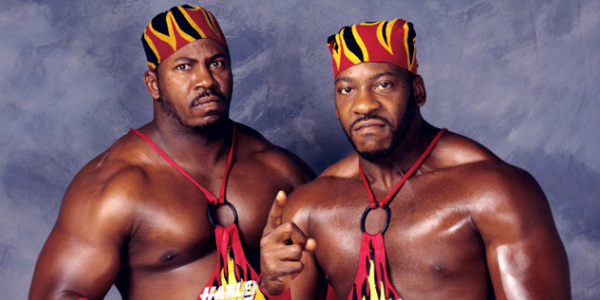
This was never a secret, but it's the only time it was acknowledged publicly by someone who was involved. In 1993, when WCW hired Booker T and Stevie Ray, they didn't start as Harlem Heat, The Ebony Experience (their team name in the GWF), or even G.I. Bro and Super Collider (their initial names as rookies in Houston independent promotions). No, they were The Posse, managed by Col. Robert Parker. http://www.youtube.com/watch?v=rRsZNxTpUl4 In case you weren't aware, Col. Robert Parker was Robert Fuller dressed as a plantation owner. And, well...The Posse came out chained together. From the complaint Stevie Ray filed against WCW: Stevie Ray Slave Comments A friend of mine who was there that night told me that the mood at Center Stage Theater in Atlanta was a combination of shock and tension. Remember, these tapings drew heavily black crowds, too. Thankfully, someone wised up and it never made air. http://www.youtube.com/watch?v=G9I9JJ0WY1k Well, mostly. When Harlem Heat debuted on TV, they had one match where they wore prison uniform tops along with their wrestling tights. The match never aired in the United States, only in Germany as far as anyone knows. Whether that was by design or just random WCW weirdness, that's best left undecided for now.

4. Konnan Was Punished For Trying To Leave When Billy Kidman Wasn't
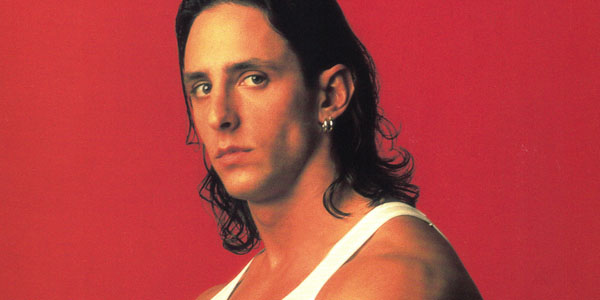
Konnan submitted an affidavit as part of the Onoo suit making a number of allegations. Among them were that WCW discriminated against him when the group that the WWF dubbed "The Radicals" left the company. At one point, the group was a lot bigger, but it eventually dwindled down to Eddie Guerrero, Chris Benoit, Dean Malenko, Perry Saturn, Shane Douglas, Billy Kidman, and Konnan. Douglas wasn't wanted by the WWF, but he quit anyway to go work for XPW, though he was hired back three months later by Eric Bischoff and Vince Russo. Kidman got cold feet and stayed without any repercussions. Konnan also stayed, but, well, this is what he alleged: Konnan Suspension Konnan disappeared for a few months and Kidman kept up a full schedule, so draw your own conclusions.

3. Complaints To Human Resources Were Largely Ignored

Recently, with the controversy over WWE firing Alberto Del Rio for slapping a social media manager who refused to apologize for making a racist joke, the proper procedure for what to do in such a situation has been discussed. In 2014 in a public company, there's no two ways about it: You have to go to human resources. It may not be the old-school or macho way to do things, but Mark Henry did that when he had similar problems, and are you going to question him? In WCW, all complaints about discrimination, harassment, etc. were to be directed to the human resources departments of Turner Sports and later Turner Entertainment Group. Onoo noted in a deposition that he and Stevie Ray brought up a number of issues to Tim Goodly in human resources after a diversity training class, mainly that there were no minorities on the booking committee/creative team. During the class, there was a lot of talk about how great it was that WCW's roster was so diverse, but Onoo wasn't impressed because the diversity wasn't there backstage. Wcw Diversity Analogy1 Onoo made it clear that he and Stevie Ray weren't asking to be appointed to the booking committee themselves: They just wanted it to have a more diverse makeup in general. This never really panned out, though; they did add gay indie rock legend Bob Mould to the team, but never any people of color. A complaint that Onoo and Ernest Miller made together didn't really go anywhere, either, this case being when Buff Bagwell donned blackface to parody Miller while another wrestler wore some kind of stereotypical "Oriental" Halloween mask to portray Onoo. Kevin Sullivan had given Onoo and Miller a heads up before the show about what was going to happen, but they were handcuffed by Goodly not being at the Nitro taping. Why? Goodly told them that he was the only person they could go to with that kind of complaint, and they obeyed, with Onoo not even asking his long-time friend Eric Bischoff to intervene. The segment made air and was widely criticized for the use of blackface and to a lesser extent, the mask on the Onoo impersonator.

2. WCW Never Had Any Asian Employees. At All.

Sonny Onoo Business Card One of Onoo's claims in his lawsuit was not strictly about discrimination. He claimed discrimination as a cause, but one of the issues was that he believed he should have been treated as an employee with benefits when he was an independent contractor. Not in the sense that he felt all wrestlers should be as much as he felt that it was warranted in his specific case. Much of that argument had to do with how Jimmy Hart was treated: Hart was, like Onoo, on-screen talent as a manager who had a number of backstage duties. Eventually, since Hart is so well-liked and he was doing so much, he was made an employee. Onoo, who had a TBS Inc. corporate credit card, a WCW business card, an office, a key card to WCW's headquarters, and so on, was never made an employee. Sonny Onoo Credit Card At one point, Onoo alleged that he couldn't think of WCW ever hiring any Asians in a position of power, much less as employeeees in any roles. There were numerous Asian independent contractors, mainly as wrestlers on the active roster, with Onoo being the only one in the office, even if he wasn't an actual employee. WCW did not answer this allegation in any of the documents we procured. Think about this for a second: It's one thing that there were never any Asians in power. Barring employees in the office who had nothing to do with the wrestling product, I can't think of anyone aside from Onoo who would have had a shot at the booking committee or anything like that. Most of the Asian performers in WCW were Japanese nationals with limited knowledge of English who were in for short stints since it wasn't their primary job. The only Japanese star with the requisite English language skills that comes to mind is The Great Muta, who was working full-time at home. Having said that, he said they had no Asian employees at all. Period. Ever. He was there for almost five years, worked at both the office and live events, and never saw a single Asian employee. Even the number of the black employees was very low, and this is an Atlanta-based company we're talking about. Think about that for a second. They didn't have the type of gigantic office staff WWE has had for years, but in 2000, the year the suit was filed, Asians made up 4.2% of the U.S. population and 3.3% of Atlanta's population, so there should have been someone, somewhere.

1. Lots Of People Said And Did Lots Of Really Racist Things
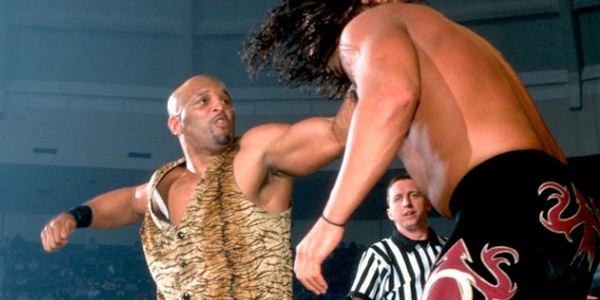
This is really what the suit came down to. Cary Ichter, who was the plaintiffs' lead attorney in both the Onoo and Stevie Ray cases, has dealt with his fair share of discrimination lawsuits in his practice (on the defendants' side, as well), to the point he estimated it made up about 10-20% of the cases he's handled. In terms of the racism and discrimination being pervasive, WCW was among the very worst companies he's seen. One of the strangest recurring themes in the comments cited is that WCW bookers and executives wouldn't push black wrestlers to cater to black fans because they thought black fans didn't watch WCW, and if they did, they didn't/wouldn't buy tickets. One look at WCW crowds compared to WWF crowds at the time shows this is completely ludicrous. WCW always had a higher percentage of black fans at TV tapings. Their strongest cities, both during the boom period and in down times, all had large black populations like their Atlanta home base, Baltimore (held the WCW live gate record from 1989 to 1996), Philadelphia, Houston, New Orleans, and St. Louis. Still, according to Ernest Miller (and supported by testimony from Jimmy Hart), at one point a certain member of the booking committee (who's still working in pro wrestling) told him that "we only have white fans and they're to look at you as a n****r ." Similarly, WCW production staffer Moses Williams added that he heard the same booker talking to another member of the committee about how "Blacks don't buy wrestling tickets" and "Black folks don't buy wrestling tickets anyway, wrestling fans are white." There's close to 50 pages of this stuff, but some of the "highlights" include Onoo alleging that a WWE Hall of Famer who worked as a road agent once stated that "n*****s" were responsible for "unemployment and rapes" as well as referee Randy Anderson recalling an executive describing Hardbody Harrison's hair and outfit as "too n****rish for my television" and a current WWE road agent regularly using the word "n****r," including to describe Teddy Long. And that just barely scratches the surface. Every single wrestler who was still a party to the Onoo lawsuit (some dropped out) when it was resolved in 2003 received a settlement. While Ichter is bound by the terms of the settlement and can't disclose the amount WCW paid out, the general belief in the wrestling business is that all of the plaintiffs got rich, with one eventually buying a large property with multiple houses on it.

Contributor
Contributor

Formerly the site manager of Cageside Seats and the WWE Team Leader at Bleacher Report, David Bixenspan has been writing professionally about WWE, UFC, and other pop culture since 2009. He's currently WhatCulture's U.S. Editor and also serves as the lead writer of Figure Four Weekly and a monthly contributor to Fighting Spirit Magazine.