7 Steps That Led To WWE European Title's Demise

Where did it all go wrong after such a heated start?
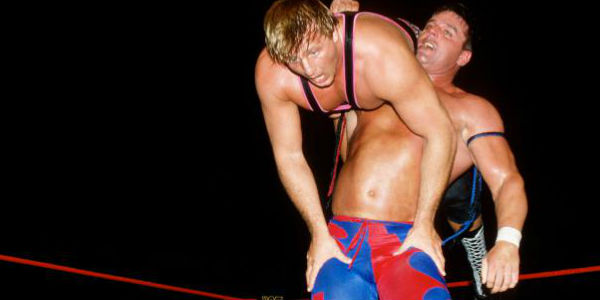
Over 17 years ago in Berlin, Germany, the WWE crowned its first ever European Champion. In the culmination of an eight-man tournament€”featuring no less than four future world champions€”the British Bulldog defeated Owen Hart in what is still considered one of the greatest matches in Monday Night Raw history. The prestige of a tournament format, the quality of the final bout and the novelty aspect of a continent-specific championship suggested that the European title could be a useful addition to WWE programming. But such promise was never fulfilled. Just five years and five months later, the belt was merged with the more respected Intercontinental Championship and thus has never been defended since. So where did it all go wrong? Having been held by the likes of Shawn Michaels, Triple H, Kurt Angle and Chris Jericho€”albeit prior to their monumental rises€”it€™s hard to believe that a title with such pedigree could have slipped so suddenly into the shadows. But with the benefit of hindsight on our side, this article takes an in-depth look at the history of the belt, pinpointing seven key developments that ultimately hastened the demise of the European Championship.

7. The First Reign

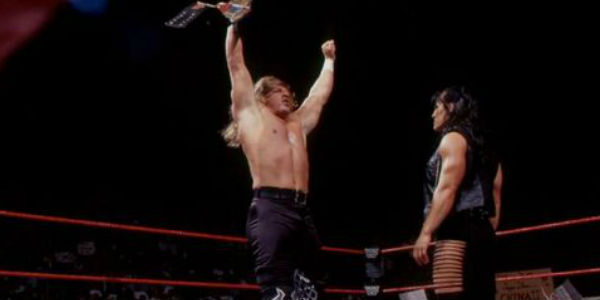
As previously mentioned, the inaugural European Champion was quite fittingly the British Bulldog. He went on to hold the strap for an admirable 206 days, which as it happens would turn out to be the longest reign in the title€™s brief history. Now there€™s nothing inherently wrong with the first tenure being the championship€™s longest, but it does suggest that the calibre and quality of European champions deteriorated from there on in. In the world of pro wrestling, strong champions have lengthy reigns (see Bruno Sammartino). Which, by that logic, assumes that weak champions have short reigns. And just one look at the list of champions does little to dispel this theory. The Bulldog, Shawn Michaels, Triple H and Owen Hart were the first four mean to hold the gold. Just two years later, the likes of X-Pac, Shane McMahon, D€™Lo Brown and Mideon were the new faces in the European title hunt. No disrespect to the latter quartet, but they€™re not quite in the same league as that former foursome. One could argue that this was all intentional of course. Having big names hold the belt before passing it on to the mid-to-lower carders could potentially help build new stars for the future. Either way though, it was quite the sudden and sharp fall from grace. Despite making a great start to life in the WWE, the European Championship may have peaked too soon. Looking back, it really was all downhill from there.

6. Defending The Title Outside Of Europe

Just as the British Bulldog€™s reign began in Europe, it ended there too. Sure, he defended the belt in North America a few times, but when he lost to Shawn Michaels in Birmingham, England, it helped to maintain the title€™s eponymous tradition. The next time the championship changed hands though was back on American soil. As was the next time. And the next time. And the next time and I€™ll stop there as I€™m you see where this is going. In the title€™s early days, defences in Europe may have been few and far between, but as time went on they became even scarcer still. In fact, the European title only changed hands in the continent that it was named after on one other occasion€”at Rebellion 2000 when Crash Holly beat William Regal in the champ€™s own back yard. More on that one later though. The point here is that with defences in Europe becoming almost non-existent, the title lost one of its key selling points. Without that novelty, it€™s little surprise that the championship soon fell to bottom of the company€™s hierarchy.

5. Michaels Laying Down For Triple H

One of the biggest slaps in the face of the European title came in December of 1997. With the champion, Shawn Michaels, running amok alongside Triple H in D-Generation X, Commissioner Sgt. Slaughter thought he€™d bring the trouble-makers into line by having them face of in a match against one another€”with the title on the line. In keeping with their unruly ways though, Michaels and Helmsley pulled off the ultimate troll in a contest that can only be described as farcical. After much hesitation, Triple H eventually pushed HBK to the ground, ran the ropes a few times and then pinned his €œadversary€ after the worst running splash in WWE history. The theatrics that followed€”and admittedly the match itself€”were rather entertaining and so typical of D-Generation X. But in the wider scheme of things, their shenanigans did considerable damage to the reputation of the European title at a time when the company should have been protecting the belt, not rendering it worthless. A better course of action might have been to strip Triple H of the title in light of his win; that way DX still get to pull of one of the best trolls in history, while the respect for the title is still maintained. Instead though, the title was made to look like a joke. Laying down for someone in a championship match is the ultimate insult and, as WCW would later find out, makes for a booking decision that is very difficult to recover from.

4. Billing American Champions As Europeans

http://www.dailymotion.com/video/xke8fn_al-snow-vs-william-regal-raw-10-16-2000_sport But the jokes didn€™t end there. Once Michaels and Triple H had moved on to bigger and better things, the likes of D€™Lo Brown and Al Snow€”among others€”were afforded European Championship reigns. As previously mentioned, there€™s nothing wrong with that if the intention was to use the title€™s initial credibility to elevate lesser stars and add significance to the lower echelons of the card. But it soon became clear that building stars for tomorrow was not what the WWE was going for here. Besides, that was essentially the role of the Intercontinental Championship. So instead, the company saw an opportunity to use European title as an outlet for their often-questionable attempts at comedy. And I€™m using the term opportunity lightly here. The aforementioned D€™Lo Brown soon began to be billed from various European countries€”not entirely in keeping with his background in the militant Nation of Domination. Yet Al Snow took it one further, playing up to poorly informed stereotypes of countries such as Germany, Spain and €œGrease€€”excellent punning skills there WWE, just excellent.
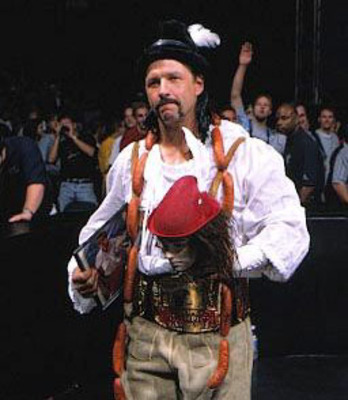
Don€™t get me wrong, I€™m a fan of the lighter side of wrestling. But there€™s certainly an art to it, and guys like Colt Cabana, Santino Marella and more recently Damien Mizdow have nailed it down to a tee. But these European gimmicks that the WWE started pushing? Not so much. If the company wanted the belt to retain any credibility whatsoever, they should have steered well clear of the €œcomedy€ angle.

3. Shane McMahon €œRetiring€ The Title

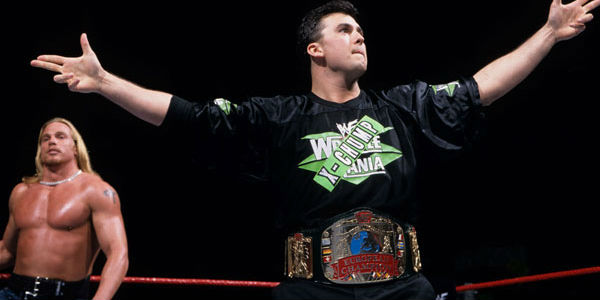
But perhaps the most damaging development for the European Championship came during Shane McMahon€™s reign of 1999. Having won the title from X-Pac in a feud that did much to restore an element of prestige to the title, all of that good work was then undone as Shane O€™Mac €œretired€ the belt in order to go down in history as an €œundefeated champion€. Having a Superstar show such disregard for the importance of the title is detrimental enough, but for the Superstar in question to be little more than a part-time talent is even worse still. Again, you can see what the idea was here. That kind of arrogance was a sure-fire way to give McMahon some heat, but the long-term impact inflicted on the title itself meant that this move undoubtedly did more bad than good. That wasn€™t the worst of it though. Just over a month down the line, McMahon simply let Mideon have the title after he found it in the retired champion€™s bag. While the nature of professional wrestling has sometimes brought into question the legitimacy of competing for championships, this was a whole new low. "Retiring" the title and then allowing it to change hands without even staging a match confirmed the European Championship as an essentially meaningless belt.

2. Regal Losing To Crash In Sheffield

Despite everything that the title had been through though, there was a great opportunity to begin something of a renaissance in the winter of the year 2000. With the WWE heading to Sheffield, England, for the Rebellion pay-per-view, William Regal was the European Champion at the time and had a match scheduled versus Crash Holly. Had the Englishman been portrayed as the homecoming hero and successfully defended on his home turf, this could have been the catalyst for a return to the belt€™s roots of staging European defences involving European wrestlers. But rather than staging a British Bulldog-like return, Regal couldn€™t have been a bigger heel if he tried. After receiving a great ovation when he appeared backstage with Michael Cole, a respectful promo soon went awry as the champ began slaying his fellow countrymen and their lack of €œsporting heroes€ and essentially buried his country of origin. https://www.youtube.com/watch?v=roSPifQHnUM Another derogatory in-ring segment followed, before a defeat to Crash Holly laid waste to the chance to restore the tradition that the European Championship was originally based upon. With Regal€™s defence in such stark contrast to the inaugural title bout back in Berlin in 1997, it was clear that the strap was a shadow of its former self and that we wouldn€™t be seeing a revival anytime soon. An opportunity for redemption was completely missed.

1. The Acquisition Of WCW

This proved to be the final nail in the coffin. Having put WCW out of business in March of 2001, the WWE began recruiting the organisation€™s free agents and building a roster of talent bigger than ever before. But it wasn€™t just wrestlers that the acquisition provided€”championships arrived as well. WCW€™s World Heavyweight Championship, Tag Team Championships, Cruiserweight Championship and United States Championship soon became part of WWE programming, meaning that for all the new talent that the company had recruited, the ratio of wrestlers-to-titles was arguably even lower than before. This prompted a series of quick-fire title reigns which truth be told did little to the value of any of the belts, until the WWE decided to begin unifying various championships. And though the European Championship survived the original unification process, by the time of the 2002 brand expansion the title€™s time was up. WWE chose to merge the strap with the Intercontinental title and resurrected the United States Championship for SmackDown€”presumably thanks to the latter€™s much lengthier history and tradition. https://www.youtube.com/watch?v=Xx-2PcAzTIM It€™s now been well over twelve years since we saw the European Championship defended in the WWE. And the chances of that hiatus ending appear slim to say the least, given that the US title has essentially taken the European€™s place. Perhaps it could be revived on the basis that it stays true to its name€”only being defended on the handful of occasions that the WWE visits Europe each year, or even being reserved exclusively for the company€™s expanding pool of talent from the continent. Either way, a return would have to be handled much better than the title€™s first run. In just a few short years the belt went from the waist of one of the greatest wrestlers of all time to a position of total irrelevance. In a world where today€™s stars could so easily be gone tomorrow, there are few who can match the demise of the European Championship.

Contributor
Contributor

Elliott Binks hasn't written a bio just yet, but if they had... it would appear here.