9 Early 2000s WWE Failures The Company Had Huge Plans For

From 'The Future' to future endeavoured - what went wrong?

WWE is ever ready and willing to tout the success of the OVW class of 2000 and rightfully so. After all, it did produce Brock Lesnar, John Cena, Randy Orton and Batista. Those are four genuine megastars and sure-fire future Hall of Famers. WWE had similar success in the early 2000s with the Kentucky-based feeder promotion, as well as with international signings. But that's only half the story, as for every prospective talent that became a big star, there were those that didn't quite manage to get there. Not that it wasn't through the want of trying or anything. See, there were a bunch of guys in the early part of the last decade that WWE had genuinely big plans, but something stopped those plans from being fully realised. Whether it was WWE creative getting cold feet, backstage politics, injuries or something else entirely, the following nine performers were pencilled in for WWE storylines and were the recipients of pushes varied in length and strength. In this article I will detail where these guys came from, what WWE had in store for them and why, ultimately, they failed despite the company's good intentions and effort.


9. Kenzo Suzuki

Fun fact: remember in 2004 when WWE started billing Chris Jericho and Chris Benoit as now residing in Manhasset, New York and Atlanta, Georgia, respectively? Well that's because they wanted them to feud with Kenzo Suzuki, who, billed as Hirohito (after the WWII Emporer) was going to be brought in as a main event player on Raw. Thankfully, Suzuki had a word with his employers and they dropped the Hirohito name/gimmick (despite airing vignettes for the character). That would have caused some serious damage to the Japan/WWE relationship, which was a very lucrative one back then. Suzuki was shipped off to Smackdown instead, debuting at the disastrous Great American Bash with a weak win over Billy Gunn. From there, Suzuki won the WWE Tag Team Titles with Rene Dupree and then began a feud with US Champ John Cena. However, by this point it was clear that Suzuki was beyond hope between-the-ropes and his promo and character work was notably shoddy, too. Suzuki didn't win the US Title and became something of a comedy jobber, before suffering a collapsed lung and taking time off to recover. He was drafted to Raw in the 2005 draft but never made an appearance for the red brand as WWE fired him in July. It's incredible to think that WWE were going to bring in Suzuki to immediately feud with World Heavyweight Champion Chris Benoit followed by Chris Jericho over the summer. Hell, it's amazing to think that they had him feud with the promising Cena, considering the talent at their disposal at the time.

8. A-Train

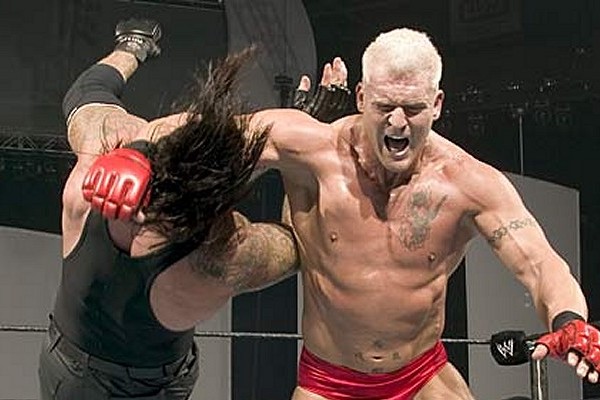
There was something very unsettling about WWE's insistence on pushing the former Albert in 2002/03. As a member of T&A or even as the 'Hip Hop Hippo' he was tolerable, if not exactly fun to watch. But as an upper midcarder feuding with the likes of The Undertaker and Chris Benoit? Please. It's as if WWE learned nothing from his failed Intercontinental Championship run in 2001. They turned him heel, gave him some not very flattering black trunks and had him go out and destroy stars with real potential, such as Edge and Rey Mysterio. Indeed, A-Train got the nod over Matt Hardy when it came to the 'who injures Rey and feuds with Edge' decision in late 2002 (thanks Johnny Ace for that one). Unsurprisingly, the Edge/A-Train programme was one of the most forgettable of Edge's career. Incredibly, the blame internally was being placed on Edge for not being able to carry the Train to great matches. And so WWE persisted, with A-Train getting WrestleMania and SummerSlam matches with The Phenom while being booked like a major threat. Look at any episode of Smackdown from 2003 and you will no doubt see A-Train mixing it up with the top stars on the blue brand. Why? It's hard to say, but somebody in power clearly liked him. The Train came off the tracks in early 2004 with the hairy-backed monster failing to make it onto the WrestleMania XX card. He was traded to Raw and only made one appearance before he was sidelined with a torn rotator cuff. He was released in November 2004. The experiment had failed.

7. Cade And Jindrak

Look at these two young studs. WWE.com may have recently featured Cade and Jindrak in an article looking at 50 teams you forgot existed, but in 2003 and 04, WWE were serious about pushing the ultra-bland tandem to the top. Cade and Jindrak both had the look, both were young and both needed some direction. So WWE did what it usually does and stuck them in a tag team together. Faces at first, Cade and Jindrak fought the likes of Evolution and La Resistance before turning heel and squaring off with The Dudley Boyz and The Hurricane & Rosey. They were firmly entrenched in the midcard ranks when WWE split them up in spring 2004. Jindrak moved over to Smackdown with a new gimmick ('The Reflection of Perfection' - a retread of Lex Luger's narcissist) while Cade formed a nothing partnership with Jonathan Coachman before being sent back to developmental. They had their ups and downs in WWE after that, but the company did have big plans for the pair at different points in their WWE careers. At one stage, Jindrak was going to be the fourth member of Evolution (the role went to Batista) while Cade was aligned with super-heel Chris Jericho against Shawn Michaels. In the early 2000s, WWE clearly thought that Cade and Jindrak could be huge singles stars. They couldn't.

6. Heidenreich

Heidenreich was a guy that WWE seemed to determine to make a huge star. Why, I do not know. They originally signed him to a developmental deal in 2001 but released him, then re-signed him in 2003. He showed up on Raw in November talking about 'Little Jonny' (no relation to Little Jimmy) before being sent back to OVW to learn how not to be so completely awful in every way. When he returned, it was with a big - Heidenreich, now managed by Paul Heyman and reciting hateful poetry, set his sights on The Undertaker, costing him the WWE Title in a match against JBL at No Mercy. This led to matches between the two at Survivor Series and Royal Rumble, both of which big Jonny lost. The original plan for WrestleMania 21 was for Heidenreich and Snitsky to team up to take on 'Taker and Kane, but the Dead Man vetoed that plan and fought Randy Orton instead. Unsure of what to do with Heidenreich, they inexplicably turned him face and teamed with up with Animal as a modern day incarnation of the LOD. A blatantly transparent way to promote the forthcoming Road Warriors DVD, the team was the pits. It ran its course and Heidenreich disappeared for a little while before being released in January 2006. According to his co-workers at the time, he was genuinely unstable, would show up late to events and one time even threatened to beat up Vince McMahon. Good thing he left then, really. Few people got to have the upper hand against Undertaker like Heidenreich did, especially back then. WWE clearly saw potential World Title material in the man. No one else did, mind.

5. Rodney Mack

Okay, so Rodney Mack wasn't being built up for a programme with Goldberg in 2003 (he was actually squashed by him in thirty seconds on the June 23rd Raw), but WWE clearly wanted Mack to become a solid midcard, perhaps upper midcard act. In fact, up until he was demolished by Goldberg, Mack was enjoying an undefeated streak. The undefeated streak comprised Mack's squash match victories over white wrestlers. See, Mack and managed Teddy Long felt they were being held down by 'The Man' and began the 'White Boy Challenge' in response. Mack also teamed with Chris Nowinski, until that was scrapped due to Nowinski's post-concussion syndrome. So Mack moved into a team with Mark Henry and they actually had some success. JR put Mack over strong on commentary and they got some big wins over some name teams. Unfortunately for Mack and Henry, Mack suffered a major knee injury in November. Had he been healthy, he might have been on Team Bischoff at the 2003 Survivor Series. Mack made one more appearance for WWE following his recovery from knee surgery, making up the numbers in a Raw battle royal. WWE had clearly lost interest at that point and Mack's absence had hurt him dearly. Out of sight, out of mind and all that. Mack (along with wife Jazz) was released in November 2004. According to a recent interview with Teddy Long, Mack and Jazz received heat for staying at home while Mack was injured. Only in wrestling, folks.

4. Nathan Jones

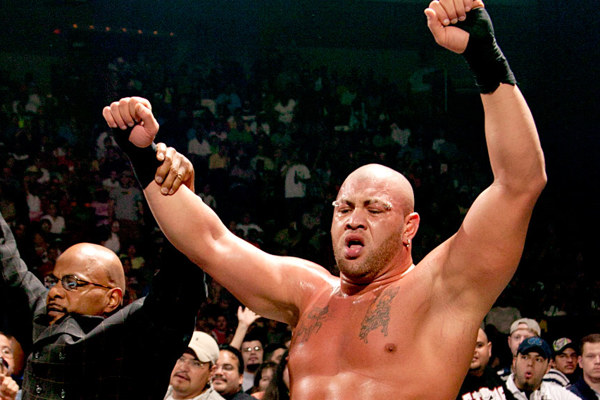
Look at that picture there. It's Nathan Jones. With his hand raised. At WrestleMania XIX. Yes, Nathan Jones has a perfect record of one match and one victory on the Grandest Stage of Them All. Not that he actually competed in said match or anything. Oh no: Jones was so bloody clueless inside the squared circle that WWE removed him from his tag match on the 'Mania pre-show and only permitted him to perform a two move run-in at the end of it. Following his 'Mania disappointment, Jones was sent to OVW to improve his skills. He re-emerged later in the year with the 'Colossus of Boggo Road' gimmick, aligned with Paul Heyman and Brock Lesnar. He mostly destroyed jobbers like Shannon Moore and interviewed in Lesnar's matches at the behest of Heyman. Considering his size, real-life reputation (he had spent time in an Australian prison) and his, erm, size, it's obvious why WWE persisted with Jones despite the fact that he was pretty rotten inside the ring and clearly never going to grasp the psychology of the business. Behind the scenes, Jones cracked due to the insane travel schedule as well as the constant ribbing and backstage politics, quitting the company during a December 2003 tour of Australia.

3. Maven

Like Mark Jindrak, Maven was also at one point in the running to become a member of Evolution. Why it never happened is something of a mystery, but Maven went from the winner of the first ever Tough Enough, feuding with The Undertaker and appearing on WrestleMania to bland babyface job boy in dishearteningly quick fashion. After a very promising first few months in WWE, the talented and likeable Maven broke his fibula during a May 2002 house show match with Christian, pinning him to the sidelines for a few months. When he came back he was mostly used on Heat and in an undercard role on Raw, before receiving an all-too-brief push in 2004. He began feuding with Evolution and even had a World Heavyweight Title match with Triple H in the main event of Raw, before turning heel and beginning a feud with IC Champ Shelton Benjamin. It was here that many hoped Maven would finally start showing how far he'd come on as a worker, since he'd clearly been working on his physique and changed his look, ditching the boring black shorts in favour of colourful trunks. Alas, his new body did not coincide with any substantial push and he was pinned by Benjamin (twice) in a matter of seconds on PPV. It was an embarrassment. Maven subsequently formed a team with fitness guru Simon Dean, although they were basically jobbers and the union didn't last long, with Dean drafted to Smackdown. Maven was released in July 2005. At one point, it looked like WWE had the youngster pegged for superstardom, but things just didn't work out like they were supposed to for one reason or another.

2. Mordecai

Opinion is divided on whether Mordecai was a gimmick with huge potential or whether it was utter dross, a cheesy leftover from a bygone era. One thing's for sure, though, and that's that WWE had big plans for the character and big plans for the man behind the character, Kevin Fertig. Fertig, who performed as Seven (based on the seven deadly sins) in OVW, began working dark matches in late 2003 and early 2004 and clearly impressed the right people, as he was given a heavily-pushed religious zealot character complete with expensive-looking vignettes and a big entrance. The Pale Rider's first televised match was a solid but unspectacular match with Scott 2 Hotty at Judgement Day. The following month at the Great American Bash, he was given a convincing win over tough vet Hardcore Holly, and continued to espouse his religious doctrine on TV while also beating up jobbers on a regular basis. The character, clad all in white, was clearly heading for a showdown with The Undertaker. But that showdown never happened, as Fertig was taken off TV and sent back to OVW for further seasoning. There were rumours that his involvement in a bar fight and a potential lawsuit may have had something to do with it. He was fired in July 2005 along with a host of other lower level talents.

1. Zach Gowen

Imagine you're a 19-year-old kid and you've been wrestling on the indie circuit for a year, then WWE signs you and, suddenly, you're sharing the ring with the likes of Hulk Hogan, Roddy Piper, Brock Lesnar and Mr. McMahon himself. That's exactly what happened to Zach Gowen, the one-legged wonderkid who had a cup of coffee with WWE stardom in 2003. Gowen debuted in WWE as a 'plant' who came to the aid of Mr. America as he was being attacked by Piper and Sean O'Haire. This led to Gowen accompanying Mr. America to ringside, a partnership that raised the ire of Vince McMahon. Vince then made it his mission to humiliate Gowen, trying to make him join the Kiss my Ass club and putting him a match with the Big Show. This ultimately led to a weird match at Vengeance between Gowen and McMahon, which Vince won. And then Gowen's momentum stalled. He lost a series of matches against Shannon Moore, John Cena and Nunzio, before he was completely annihilated by Brock Lesnar on back-to-back episodes of Smackdown. When Gowen returned from his storyline injury he scored a win over Matt Hardy on PPV but then suffered an injury and was off TV until his February 2004 release. Gowen reportedly didn't make many friends backstage with his supposedly cocky attitude. He was heavily featured on WWE TV in the summer of 2003 and WWE would have probably continued to feature him, had he remained humble and injury-free.

Contributor
Contributor

Student of film. Former professional wrestler. Supporter of Newcastle United. Don't cry for me, I'm already dead...