9 Reasons Wrestling Got So Big In The 90s

How two wrestling companies ruled the world (for a while, at least).

Comparing the 1990s wrestling landscape with the modern day is a thoroughly depressing exercise. As exciting as today's WWE would have you believe their current product is, it falls incredibly flat when compared to the fare churned out by the WWF and WCW twenty years ago. Back then, the industry benefited from a large and incredibly rabid fanbase - but it didn't merely inherit such enthusiasm as part of a boom/bust cycle. A large chunk of wrestling's 90s popularity was earned, either through smart decisions by the two major promotions, the actions of the wrestlers themselves, and even turning a few happy accidents into clear positives. There's no single reason for the industry boom shortly before the turn of the century, but several key factors certainly played a major part. Here are the nine biggest reasons wrestling got big in the 90s.

9. Moving With The Times

Wrestling thrived towards the end of the 20th century by moulding itself to fit the trends of the day, and the 90s was a distinctly grittier decade than its predecessor. The 80s was an incredibly ostentatious time for pop culture, which thrived on glitz, glamour and spectacle. The wrestling industry reflected this with larger-than-life characters such as the bombastic Hulk Hogan and colourful Randy Savage ruling the WWF roost. The 90s saw glitter give way to grime, hair metal move aside for grunge, and the business adopt a distinctly darker tone. Arenas started to look less like grand coliseums and more like rough-edged urban environments, while the top stars of the day began to dress (and act) in a manner befitting the era. Both the WWF and WCW were slow to cotton on, and early-90s footage of both companies is often an embarrassing hodgepodge of outdated gimmicks, but one they'd both got with the times, the rewards were great. Wrestling was cool again.

8. ECW

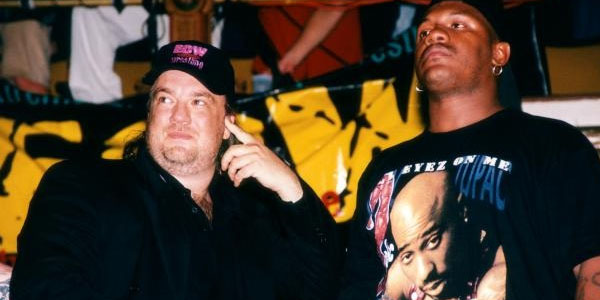
Credit must go to the WWF and WCW for adapting their style to fit with the 1990s, but it could be argued that without Extreme Championship Wrestling, there'd be no boom period - and certainly no Attitude Era. Nobody grasped the zeitgeist of the 90s quite like Paul Heyman, and his brand of outrageous ultra-violence was just what the era's fans craved. Although undone by ECW's relative lack of size (and his own lack of business sense), Heyman changed the game, greatly influencing the two major promotions. Not only did the WWF and WCW poach top talent from ECW - including the Dudleys, Tazz, and Mike Awesome - they also mimicked the promotion's distinctly rougher edge, introducing increasingly violent match types and controversial gimmicks. ECW wasn't just the catalyst for the industry's success in the 1990s; it was a major factor in in its own right.

7. Celebrity Involvement

A common reason for wrestling's success in the 80s and 90s was the involvement of mainstream celebrities. The first ever WrestleMania was partially built on the appearances of Cyndi Lauper and Mr. T, while Hulk Hogan was already a recognisable figure due to his cameo role in Rocky III. Wisely, the industry continued to involve stars of film, TV and professional sports in the 90s, with predictably attention-grabbing results. Although WCW's use of NBA players Karl Malone and Dennis Rodman can be seen as questionable, it achieved their aim of garnering further attention. For their part, the WWF pulled off a massive coup in convincing Mike Tyson to involve himself in the Austin/Michaels clash at WrestleMania 14. A celebrity actually headlined 'Mania three years prior, as NFL star Lawrence Taylor defeated Bam Bam Bigelow in a ten minute match - turning in a passable performance in the process.

6. More Pay Per Views

As the business began to gain momentum again in the mid-90s, both major promotions capitalised by offering far more wrestling on pay per view. The WWF upped their number of PPVs a year via their 'In Your House' series, allowing for cheaper shows in months without a WrestleMania, SummerSlam, Survivor Series or the Royal Rumble. WCW, for their part, aired 9 PPVs in 1995, 10 in 1996, and eventually embraced the monthly format in 1997. Today it may seem as though the amount of WWE pay per views in a calendar year is excessive, but in the 90s - with demand skyrocketing - the monthly format hit a sweet spot which helped the industry thrive even more.

5. Better Wrestling

General wrestling quality naturally improves over time, but the leap in in-ring action from the 80s to the 90s was nothing short of astounding. A focus on slightly smaller, nimbler, more technically-proficient workers resulted in the quality of matches skyrocketing. While the 80s had benefitted from well-schooled NWA types such as Ric Flair and Ricky 'The Dragon' Steamboat, now these figures were far more numerous. Shawn Michaels and Bret Hart helped transform the idea of a WWF Champion, steering the company away from power-based, musclebound giants such as Hulk Hogan and the Ultimate Warrior. Although WCW is largely remembered for holding down younger, better talent in order to fuel the egos of Hogan, Nash, et al., its roster included all-time greats such as Eddie Guerrero, Chris Jericho and Rey Mysterio. Although never really utilised to their full potential, such figures played their part in making wrestling a far better in-ring spectacle than it had been in the 80s.

4. Controversy

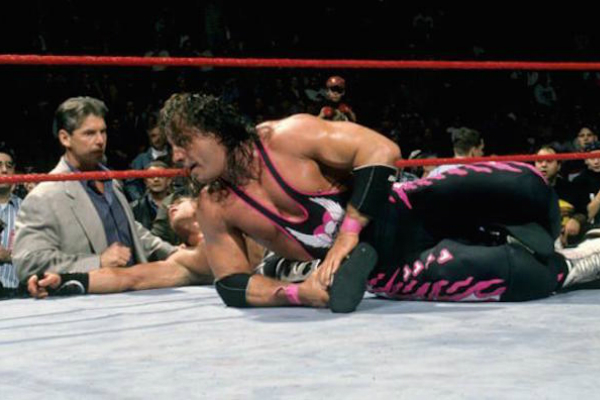
In the wise words of Eric Bischoff, 'controversy creates cash'. For all the positive aspects of wrestling in the 90s, controversy was never far around the corner - yet this only fuelled interest in the industry! The decade kicked off with twin steroid and sex scandals in the WWF, which threatened to wreck Vince McMahon's business in the short term, but generated a lot of publicity in the process. In 1997, the infamous Montreal Screwjob - as unsavoury an incident as it was - captured mainstream attention, and helped birth the wildly successful 'Mr. McMahon' heel authority figure. Over in WCW, the rise of the internet was fully exploited, and saw multiple worked-shoot angles designed with a new, ultra-savvy generation of fans in mind. They also took several controversial shots at the competition, basing the entire nWo stable around the concept of 'outsiders', implicitly invading from the WWF. Eventually, this blurring of kayfabe and reality would be come far too muddy, and grow into a major factor for the promotion's eventual death - but in the 90s such nods to the fourth wall were fresh and exciting.

3. New World Order

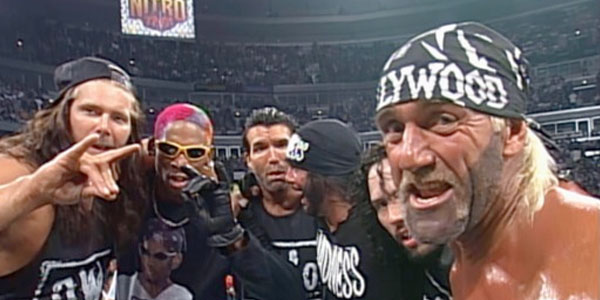
It may seem strange to include a specific angle on this list, alongside a host of more general, sweeping points, but the importance of the nWo can't be overstated. Hulk Hogan's heel turn at Bash At The Beach 1996 kickstarted a movement that would reshape the entire wrestling world, transforming WCW into a faction-based landscape and touching that coveted pop culture nerve. New World Order t-shirts are still visible today at wrestling events, but where absolutely everywhere in the 90s - on the streets as well as in arenas. The nWo didn't just change the mould of the typical main event heel; it also changed the fans' perception of heeldom itself. Hogan, Nash and Hall were cool. They wore all black, defied authority at every turn, and cut promos filled with obscure in-jokes and fourth wall-breaking references. They almost single-handedly propelled WCW past the WWF in the Monday Night Wars, rejuvenated the career of Sting, and turned Goldberg into one of the decade's biggest babyfaces.

2. Austin vs McMahon

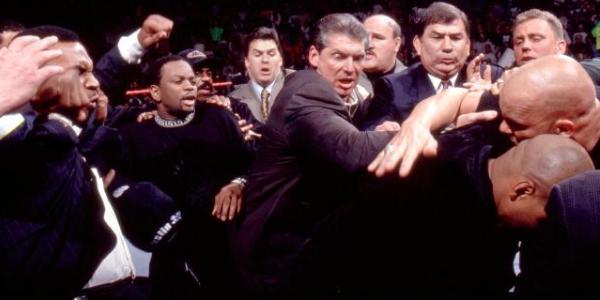
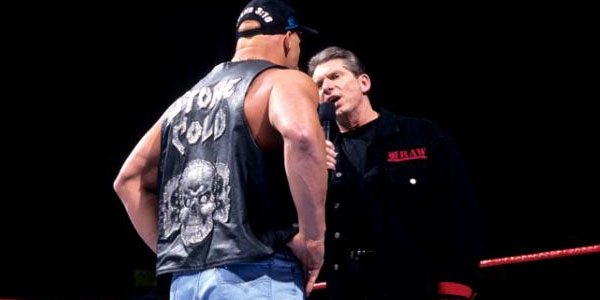
On the WWF side of things, their golden goose was unquestionably 'Stone Cold' Steve Austin. His ascent began in earnest at the 1996 King of the Ring, where his infamous "Austin 3:16" promo instantly made him the hottest commodity on the roster. His subsequent face turn (at the end of a fantastic WrestleMania match with Bret Hart) transformed him into a hero for the WWF's predominantly young, male demographic - an everyman champion for the masses. Austin was brash, blue-collar, and eager to kick his boss' as - and fortunately he had the most detestable boss in the business. Vince's 'Mr. McMahon' persona was spawned in the aftermath of the Montreal Screwjob, and quickly became just as crucial a component of the WWF's resurgence as Austin himself. Their overarching feud spoke perfectly to the audience, making Austin the biggest industry name since Hulk Hogan. Without Stone Cold's rise, it's difficult to see the WWF preventing WCW from running away with the Monday Night Wars. It's also difficult to imagine the Attitude Era existing, let alone propelling wrestling firmly back into the mainstream.

1. Competition

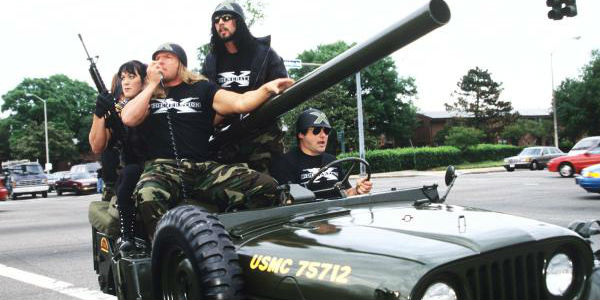
These days it seems alien to imagine two wrestling promotions vying with one another for the top spot, so long and monotonous has WWE's reign become. The 90s was such a comparatively exciting time because of the intense, often underhanded competition between the WWF and WCW. Wrestling was everywhere, and (for a few years at least) everybody raised their game as a result of the rivalry. The Monday Night Wars spawned more great matches, angles and characters in such a relatively short space of time than any other period in wrestling history - and the fact that two companies were battling it out at the time is no coincidence. The war was often more entertaining than the wrestling itself. Moments such as Tony Schiavone's "that'll put butts in seats" jibe, or DX's tank-led "invasion" of WCW have entered the industry's folklore alongside any in-ring action that occurred at the time. It's difficult to overstate the importance of competition as a reason for the 90s wrestling boom, but for further proof, just look at the timing (and severity) of the industry's decline following the end of the Monday Night Wars. As widely ridiculed as TNA is, every true wrestling fan should be rooting for it (or any other promotion) to survive and eventually rise to challenge the WWE's dominance. It's an unlikely prospect given Vince's 15-year stranglehold on the industry, but one which would transform wrestling for the better once more.

Content Producer
Content Producer

Highly overrated 23 year old from the North East of England. Hanging off of your gangster car.