How AEW Perfected Pro Wrestling Storytelling
World of Sport.

As JR is fond of saying, it’s all about the winner’s purse.
In AEW, wins and losses matter. This is the core of sport. It was once the core of wrestling. This sporting framework enables suspension of disbelief and gives everything purpose. In any sport—even this emulation of it—stories develop from that competitive framework: legacy rivalries between elite institutions; endearing underdog tales; the magic giant-killing form of a cup tournament; even controversial cheating from panto villains.
In-form wrestlers advance up the card. Cody’s pay-per-view winning streak saw him contend for the AEW World Championship at Full Gear. Darby Allin drew with Cody, for which he was rewarded with a chance to contend for it. The runners-up and bronze medallists of the World Tag Team Championship tournament were placed in a three-way match in Baltimore. There is an incentive to win, and this—the knowledge that everything is of consequence—in itself is a compelling wider story, a league, to use AEW’s own lexicon, that immerses fans into the fictional universe.
Equally, there is gravity to every loss.
Some have it that AEW have mishandled Hangman Page and Kenny Omega.
Page has experienced a mixed win/loss record, the failure of which is magnified by his inability to capture the AEW World Championship. This decline in form has informed his character arc. Shaken by his perception as a bust, he has left the Elite faction because he felt he isn’t living up to its very name.
As for Omega, he is plotting an interesting—if divisive—arc of his own.
CONT'D...(1 of 5)

He is not the man he was in Japan. As Jim Ross alluded to, he may have left his “wrestling heart” there. A series of high-profile losses have affected his confidence. He overcompensated by attempting to beat Jon Moxley in his own domain. Moxley, of course, had reframed his G1 Climax run in AEW canon as a scouting mission. Omega defeated Joey Janela in an unsanctioned Lights Out match, but failed to defeat the master.
AEW has neatly sidestepped a plot hole here. The promotion cannot book Kenny Omega as the best version of himself because he would move within Chris Jericho’s orbit. It’s too early to run that match back, and AEW has to present this version of Chris Jericho now. His recognisable star power and credibility has legitimised the AEW World Championship as prestigious. Instantly, it feels like a worthy prize. Jericho is a heel. He cannot chase; he must hold, and hold that belt with both desperation and gravitas. Omega must wait, and this crisis of his explains that wait.
AEW has mastered both the how—and more importantly, the when—of pro wrestling storytelling. Kenny Omega isn’t a geek. He is on a path to redemption that must, for now, be obscured by the fog of doubt.
Wins and losses don’t just matter in the context of AEW’s narrative universe; they mean everything to the presentation of the talent. AEW isn’t burying Kenny Omega because AEW isn’t burying the lede. If he and Page feel like losers, that is because they are. Every team and individual sportsperson suffers from a loss of form—and since AEW has fashioned itself as a league, perhaps we need to move away from the old, “buried” optics associated with wrestling critique.
Beyond the title pictures, AEW has informally marketed itself as a “buffet” of professional wrestling.
CONT'D...(2 of 5)
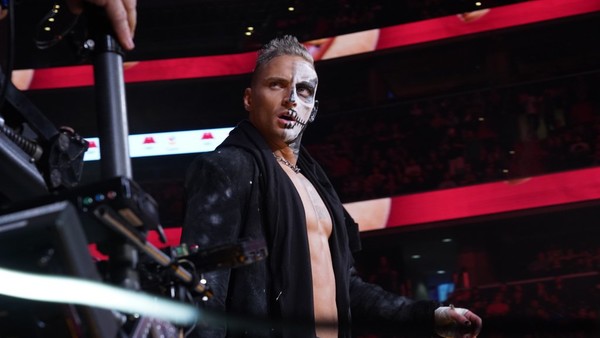
There is no set in-house style, though Dynamite is known at this point for its electric tag team sprints. The roster is diverse, and this diversity drives storytelling germane to professional wrestling. In real sport, a gung-ho attacking team leaves itself vulnerable to a counter-attack and heavy defeat. Youthful teams possess pace, but a lack of experience undoes them. Darby Allin fits into this archetype wonderfully. His performance in losses are so spirited and creative and resilient that he gets over.
Joey Janela Vs. Shawn Spears isn’t a terribly exciting programme, but it is a believable source of conflict that benefits from AEW’s drive to encourage expression. Janela is a so-called garbage wrestler; Shawn Spears and manager Tully Blanchard hate men of his ilk. This is storytelling that branches from character. This is the way ‘round it’s supposed to be; AEW isn’t imposing silly plots onto its talent, but rather using the talent and their personas to craft stories that are believable as a result.
The characters are drawn together naturally in AEW. Jon Moxley is the baddest man on the roster; Darby Allin, a disciple of his style, sought to challenge him last week. Similarly, Fénix and Nick Jackson are experts in their particular field of dazzling, rope-dancing deception. AEW weaves stories of styles clashes and battles that are consistent with the motivations of the characters. This, again, enables suspension of disbelief. In many cases, these wrestlers have spent years honing a specific craft. They want to preserve it; their opponents want to challenge it. Differences in philosophy drive conflict in drama; parallels in quality drive a quest for supremacy in sport. So much of the discourse in football has centred around that specific conversation, in regards to the Messi Vs. Ronaldo debate.
Factions breed matches, and that is the express purpose of pro wrestling storytelling. Chris Jericho's Inner Circle is a masterstroke.
CONT'D...(3 of 5)

The mere name makes it all about him, which will inevitably result in resentment, a year or so down the line, when Sammy Guevara tires of his role as the battered first line of defence in tag team matches. For now, the dynamic is harmonious—but symbiotic. Jericho requires his younger cohorts to protect his title and his status. Guevara, Santana and Ortiz need Jericho's profile to rise up to the top of the card. It's easy to believe in a faction—pro wrestling is a brotherhood—and the angles that have built the faction have been both tremendous and effective.
The Inner Circle formed on the first episode of Dynamite. The babyface alliance, a hybrid of the Elite and the Nightmare Family, fought back in week two. In week six, there was no separation, but a chaotic brawl with no winner. Amid all this, AEW foreshadowed, advanced, or booked countless matches: Cody Vs. Chris Jericho, Cody Vs, MJF, Jake Hager Vs. Dustin Rhodes, The Young Bucks Vs. Proud-N-Powerful, and, of course, the Match Beyond—AEW’s teased version of WarGames that will make full, bloody use of all moving parts at the epic conclusion. The final chapter of a grand story.
The mechanisms used to advance this core, logical storytelling meet the entertainment remit of pro wrestling, which is more theatre than sport, ultimately.
Every pro wrestling plot leads to the same destination: a match. The way AEW builds and plots those matches through segments has created, in under two months, so much excellent episodic television. Chris Jericho is a genius at promoting his matches because his unscripted promos capture the perfect heel balance of threat and fun. He knows how to pop a crowd, and AEW entrusts him to do that. AEW’s WCW trope revival also works to great effect; the limo ride shared between Cody and Schiavone put over the idea that Cody has an actual, interior life. He wasn’t a character, he was a person.
The detail of AEW’s storytelling is magnificent, too.
CONT'D...(4 of 5)

Of course vlogger Sammy Guevara led fans to the backstage attack of Dustin Rhodes. Matt Jackson disrupted the cinematic showdown of the go-home standoff because it wasn’t cinema. He wanted a fight, and there was no reason to stop fighting but a script.
You might love AEW’s approach. You might prefer a soapier, talk-heavy philosophy. But ultimately, to gauge the success of any fiction medium, you must consider the extent to which the consumer connects with the characters.
Chris Jericho is over because he is a charismatic and hilarious entertainment machine, but his silliness does not overwhelm the act because he has cleanly—decisively—defeated many top stars. Cody is over because he has leaned into his Executive role just enough to put himself over as an architect of much-needed change, but has distanced himself from the self-serving danger through the storyline stipulation of his Full Gear World Championship match. Jon Moxley is over because he delivered on a promise, as all good babyfaces should. MJF is over because he is the funniest, most despicable heel who has targeted the most beloved babyface.
Scorpio Sky is over because AEW has built him as a sympathetic, quick-witted winner in an attentive plot that rewarded the intelligence of the audience. He won a match wearing one shoe because his rage powered him through it, and he wore one shoe because he wasn’t match-ready. He wasn’t wearing his gear because that would be contrived. You are rewarded for investing.
AEW has perfected wrestling storytelling…in the men’s and tag team divisions.
The women’s division remains drastically underdeveloped. Kenny Omega has promised to correct this by 2020. Some fans are cynical about this, and rightly so. The division is undesirable.
Trust the process: what’s the next part of that catchphrase?