How WWE Could Creatively Flourish Under Fox Sports
SPORTS Entertainment.

WWE SmackDown debuts on Fox on Friday, 19 October, 2019. It could change everything.
WWE is the flagship brand of the USA Network. In May of this year, IndieWire published a list of the 100 most-watched shows across the United States. On that list, Fox shows appear 21 times. Of those 21 shows, Lucifer, The Last Man On Earth, New Girl, Brooklyn Nine Nine, and L.A. To Vegas were all cancelled by the network for failing to pull in acceptable Nielsen ratings—and advertising revenue—in proportion to production costs. Soberingly, two of those shows outperformed WWE, which snuck late into the list, in joint #93, as USA’s sole representative.
This is key to how SmackDown may operate from 2019 onwards. As the flagship of USA, its best-performing property by some distance, there is zero pressure on WWE to change an ailing formula. With WWE specifically targeting a core fanbase—“Just when we think we have given them every in-ring content possible, they continue to watch”, is WWE Co-President Michelle D. Wilson latest, chilling conference call content forecast—there’s no internal impetus to change, either, unless more of the same, but on different platforms! is considered change.
In 2018, anyway.
Aware of a paradigm shift in home content viewing habits, and the ratings slide across all genres of television, USA, simply, allows its top, bankable star to perform without a scripted promo. WWE needs only adhere to PG guidelines. Were this not the case, surely, USA would by now have ordered some sort of change to arrest a ratings slide that shows little sign of levelling out, much less improving. USA is content with the content content content status quo because the network needs WWE.
Fox does not.
CONT'D...(1 of 4)

If this all seems optimistic, that’s because it f*cking is: WWE’s traditional response to ratings woes is less full creative philosophical overhaul, more short-term part-time star injection.
Increasingly, finally, this stopgap approach isn’t working. Last night’s go-home RAW final segment was, and this isn’t snark-laced hyperbole, a disaster. Stained already by the wider Crown Jewel controversy, and the glacier-slow main event of Super Show-Down, DX and the Brothers of Destruction failed to create a sense of must-see urgency around their improbable match. If anything, they lessened bedrock-low expectations; Triple H attempted to raise laughs by interrupting an Undertaker and Kane promo littered with ill-advised death imagery. But he had forgotten Shawn Michaels! So, he played dumb, and ushered him from the backstage area. It was a trap. Michaels, still wearing that appalling bandana, entered the ring and dropped ‘Taker with a Superkick. ‘Taker bumped like a felled tree.
When he sat up, Hunter and Shawn acted frightened, failing to hit yet another story beat. After the initial nostalgia pop subsided, nobody reacted to the sit-up spot in the arena. It once conveyed ‘Taker’s indestructibility. As he sat there, his immaculate legacy in danger of destruction, the psychology was weightless.
This was all born from the whims and money of the Saudi Arabia General Sports Authority. Mercifully, per the Wrestling Observer and PWInsider, Fox is less interested in 1990s nostalgia, and more interested in aligning the WWE product with the wider sports-oriented vision of its existing programming.
This feels like a vital—and plausible—step forward for WWE SmackDown, a show that already is drastically superior to its Monday Night RAW counterpart. Paige is a benevolent authority figure who does not hand out opportunities to fellow baddies purely because they are bad; the roster is strong; the writing has serviced the likes of Randy Orton and Becky Lynch wonderfully in recent months; they haven’t totally botched Andrade ‘Cien’ Almas yet.
CONT'D...(2 of 4)

But the show is far from perfect, nor does it resemble a genuine sporting enterprise: the overwhelming laziness puts paid to that. AJ Styles Vs. Shinsuke Nakamura wrestled four matches in their series, only two of which yielded a conclusive result. AJ and Samoa Joe wrestled three, only one of which ended cleanly. We could go on. This practise surely needs to change when WWE moves house, and a sporting framework creates a platform on which to do just that. Tournaments, an informal ranking system that rewards wins and losses, thus making them mean something again (they used to call this a ‘“push”), and an end to the screwy finishes that nonsensically reward the cheats with further opportunities: all of this, as part of a disciplined overarching approach, would spell an end to the malaise. Fox won’t abide by repetition. They don’t have to.
WWE will make a concerted effort at launch, at least. Fox, in creating a platform for WWE to reach new fans, could, ironically, knock Vince McMahon off his f*cking perch.
It’s just as well; the DX and Brothers of Destruction stuff cannot possibly create anticipation for a further retread. Moreover, having dropped out of Crown Jewel in fear of his nascent Hollywood image, John Cena has temporarily disassociated himself from WWE. You’d expect The Rock to resist any immediate overtures on that basis. That leaves Batista and Goldberg as the only available part-time stars in any decent condition. One is 49, the other 50. The Nostalgia Era is growing as old as its key players. This, combined with sagging ratings, and the unanimous sentiment that f*ck finishes to 50/50 series are deadening to the process of star creation, leads us closer than ever to genuine change.
The argument that TV ratings mean less and less is not without merit—if anything, terrified of the rise of streaming services, traditional networks are rewarding those shows that fail the least with more money than ever before—but the ratings issue isn’t limited to itself. TV drives the success (failure) of house shows; the idea is that you get a taste of the action, live and in person. But if that action is awful, and it’s free, what is the impetus to pay?
CONT'D...(3 of 4)
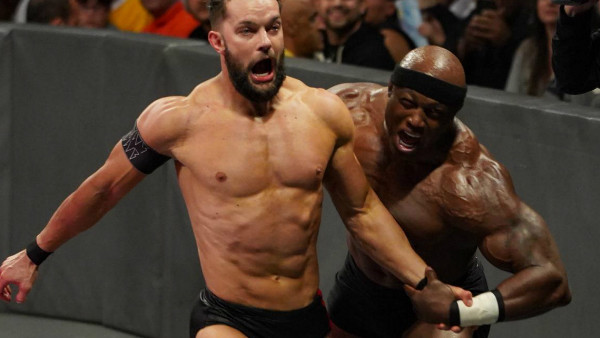
Increasingly, there isn’t any; per WWE’s third quarter financial report, Live Event revenue is in decline. Vince McMahon deems house shows “antiquated” and in need of “reimagining”, but it seems as if he needs to view the wider picture. Advising the most successful wrestling promoter on how to promote wrestling shows seems awfully arrogant, but then, reach the second hour of any given RAW episode, in particular last night’s, and it’s difficult to see why anybody would pay hard-earned money to watch an ostensibly popular act like Finn Bálor get battered, again, by a larger star with less value. Kane; Constable Corbin; Bobby Lashley: Bálor is the guy WWE uses to get heels over. This drives the weekly blue balls narrative, just about, but does not encourage support. WWE’s heat-centric approach has incinerated Bálor in the backdraft. That Bálor is a former Universal Champion adds a nihilistic streak of pure meaningless to the whole thing; what is already meaningless will mean nothing in future.
Say Ricochet gets the rocket strapped to him when he debuts. So f*ck.
House shows are fun; the performers enjoy them, this enjoyment is infectious, and nobody pokes fun at anybody else for dressing like an employee of TGI Fridays. House show business boomed in parallel with sky-high Attitude Era ratings. The relationship is symbiotic. Televising house shows, the latest rumoured experimental strategy, seems a niche, expensive move.
The part-timers are failing to live up to their legend. Under the modern framework, the idea of the full-time roster becoming legendary is laughable. All roads lead to fault. A new road is needed, and Fox may yet pave the way. Have the babyfaces win fresh matches we are conditioned to take seriously as milestones in their career. That’s not a novel approach, but somehow isn’t part of WWE’s “putting smiles on people’s faces” storytelling goal.
WWE once put a zombie on TV to appease SciFi. Is appeasing Fox with the pretence that wins and losses matter beyond the realm of possibility?