One MIND-BLOWING Secret From Every Year Of WWE History
You legitimately will NOT believe entry #33 - featuring John Cena, Roman Reigns, and more...

Researching this exhaustive list was a challenge and a pleasure. At times, though, “pleasure” was a grotesquely inaccurate description of the process.
Wrestling, as you’ll rediscover all over again, is a disgusting racket. The odds are heavily in favour of this “revelation” smashing you in the face on several more occasions throughout 2024.
The word ‘Secret’ here can mean precisely that. It also acts as a synonym for a little-known fact or an ultimately inconsequential - but very fascinating - slice of pro wrestling trivia. Hopefully, provided you haven’t spent every waking hour of your life online glued to the most in-the-weeds message boards, you’ll get taken aback.
However.
The name of the content game is to hook the reader with a slightly sensationalised title. A good writer with a degree of shame will make every effort imaginable to back that title up with an interesting read. Another part of the content game is to promise some truly shocking epiphany that, conveniently, the reader will only find buried halfway through the list after the requisite amount of impressions have been made.
The following actually applies here: you won’t believe one list entry in particular.
How it has escaped the lore of hilariously bad wrestling history is remarkable…
43. 1982 - Vince McMahon Played Along At First

Three months after purchasing the WWF from his father - with whose money, hmmm - Vince McMahon promoted an NWA World title match between Ric Flair and Playboy Buddy Rose on behalf of the Portland territory. This promo, which can be found on YouTube, is fascinating on multiple levels.
Firstly, it helps not to reduce and simplify history. Vince destroyed the territory system, of course he did, but he didn’t squat over the map and take a dump over it immediately. He took over the WWF with the pretence of upholding the old collaborative value system.
Also, his pained depression and stilted, insincere delivery is something to behold. It is as if, even when pretending to be nice, a team player, he is incapable of hiding his contempt and sinister motives. Further, it’s thoroughly bizarre for him to refer to Ric Flair as the “World’s champion”.
It wasn’t just that the WWF had for years booked its own World champion and wanted you to buy him as the undisputed real deal; “World’s”, with the possessive apostrophe, was very much the NWA way of putting it.
42. 1983 - The Real Reason Jimmy Snuka Was Demoted

Nobody with an investigative bone in their body ever bought the story that Nancy Argentino, the girlfriend of Jimmy Snuka, accidentally hit her head on a rock and died overnight on May 10, 1983. The prevailing belief was and is that Snuka murdered her. The coroner determined that her injuries resulted from domestic abuse, but no charges were ever filed and the Allentown, Pennsylvania police department dropped the case within weeks.
There was no significant public pressure on Snuka. Snuka can thank the perception of pro wrestling for that: since nobody cared about nor took it seriously, outside of local media, the story was only ever covered by a single New York paper spanning a few paragraphs. While more than one member of a May 23 Madison Square Garden crowd screamed that he was a murderer from the stands, Snuka - a genuine in-ring sensation and unreal physical specimen - was still over as the WWF’s top drawing card in 1983. Indeed, the famous moment - the one about which Mick Foley has crowed on many a retrospective documentary, the leap from the top of the steel cage - happened in October of that year.
After Nancy’s death, Snuka missed a single WWF date and wrestled in the exact same state just three days later on May 13.
So why was he not the face of Vince, Jr.’s WWF?
While the WWF did hold concerns over Snuka - he was a liability - of equal importance to McMahon was that Snuka had turned 40 just over a week after Nancy’s death.
Somebody that old on television, with the belt?
41. 1984 - Davey Boy Smith Wasn’t The First ‘Bulldog’

In wrestling circles, the word ‘Bulldog’ will be forever associated with Davey Boy Smith, who took on the moniker he once shared with tag team partner the Dynamite Kid for himself when launching a deeply uneven singles career that nonetheless peaked as high as anyone’s.
He wasn’t the first WWE wrestler to be promoted under that nickname.
Even if you only hold a slight interest in pro wrestling history, it’s likely that you’ve seen an MP4 of ‘Mad Dog’ Buzz Sawyer’s unreal power slam doing the rounds. It was awesome; he’d pick dudes up in midair and spike them to the mat in one gorgeous, fluid motion. Best known for losing the Last Battle of Atlanta - the precursor to WWE’s Hell In A Cell gimmick - Sawyer’s stints in Georgia and Texas were far more effective and memorable than his two-month WWF shot. He was a fantastic heel who while incredibly dynamic was too short for Vince McMahon to promote seriously.
During that ultra-brief stint, out of reverence towards Mad Dog Vachon, Sawyer was nicknamed ‘Bulldog’. When he was inducted into the short-lived ‘Legacy Wing’ of the WWE Hall of Fame in 2021, some older fans were furious when he was referred to as ‘Bulldog’ at the ceremony - but technically, even if it was for all of seven matches, that’s how he was billed when working for the promotion.
40. 1985 - The Famous WWE Commentator You’ve Never Heard Of
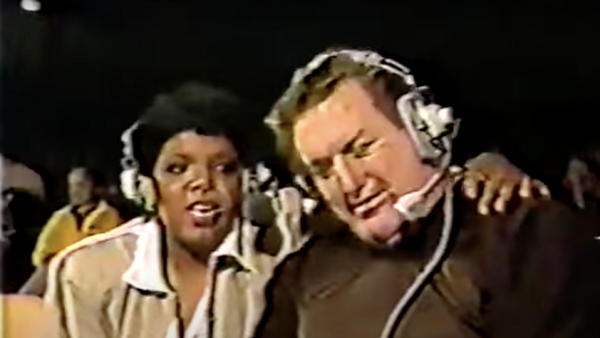
While her contributions to wrestling were nowhere near as famous as Mr. T’s nor Cyndi Lauper’s - she was a year away from breaking into the mainstream - Oprah Winfrey once called a couple of WWF matches.
Albeit for a WWF broadcast on the AM Chicago regional talk show.
Oprah was excellent at her day job, mirroring the WWF, funnily enough, by going national in the mid 1980s. She was not quite as good at pro wrestling commentary.
Her stint was mostly spent asking her co-commentator several questions or otherwise inferring what was going on out loud, about which she had little clue. She did grasp that tag wrestlers have an out if they get tired. She also observed that wrestlers secrete sweat in the throes of action. Midway through the broadcast, as the action spilled to the outside and the referee lost control, she wondered aloud if “anything goes” in wrestling. She wasn’t commentating on Dynamite, oddly. She did seem to have a grand old time, at least. Oprah was not educated, seemed lost at every turn, but gave it the old college try.
So Adnan Virk, basically.
39. 1986 - A Little-Known First-Time Meeting

At WrestleMania X, Owen Hart upset his own brother Bret in what remains the greatest ever opener in the history of the most famous wrestling show on earth. An incredibly plotted technical stunner, watching Bret’s temper slowly defeat his sense of obligation was a layered, absorbing tale - the brilliant use of nuance with which WWF fans clung onto wrestling after the fad died in the playground. Wrestling wasn’t real - but it was great.
“Wrestling wasn’t real” is right. WWE told a very effective lie with the story of that match.
Bret first wrestled Owen in a WWE ring all the way back in 1986 when, as Owen James, Owen Hart teamed with S.D. Jones to do a job for the Hart Foundation. It was the third match with which the WWF took a brief look at Owen when, just three years into his career, he had cultivated a reputation as a prodigy.
So - other than the size bias that existed at the time - why wasn’t Owen, every bit the natural as Jun Akiyma and Kurt Angle, signed to a deal?
Dave Meltzer in the February 15, 1988 Wrestling Observer Newsletter, reckoned he outshined everybody else in the entire company - “which is probably why he hasn’t been brought back”.
Perhaps Vince didn’t want his juiced monsters to be exposed…
38. 1987 - Demolition Had More Than Three Members

You’ll remember Demolition, if you’re a certain age. They were an unforgettable act: quite possibly the greatest rip-off in an industry plagued by imitators. Usually, this sort of thing is bad. Chyna had Asya, The Rock N’ Roll Express had the Rockers, Kenny Omega has Seth Rollins. The Road Warriors had Demolition, but Demolition were great.
They reigned with the World Tag Team titles for 478 days during their first run as champions. Played by Ax (Bill Eadie) and Smash (Barry Darsow), by 1990, they were joined by Crush, who shared the third title reign by default; he was drafted in to deputise for Ax, who was suffering from health problems and wasn’t medically cleared in May through July. Crush was known as the “third the worst” member of the team - but there was actually a fourth. Technically.
The role of Smash was originally played by the former Moondog Rex (Randy Colley). He was pulled from the team after just three matches because the fans recognised him under the leather and paint and refused to take the new act seriously as a result.
The WWF’s big plans for the team were too big to risk humiliation - if it worked, and it did, why wouldn’t they have wanted to draw Road Warriors money? - but poor Colley was at least put under a mask and given a chance for a second repackage.
37. 1988 - Look Who’s Jobbing
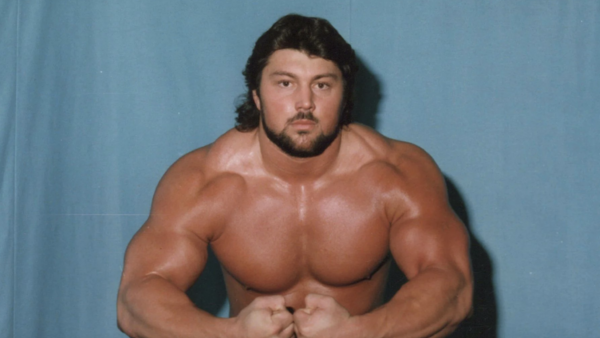
Remember in 2007, when Steve Blackman returned on Raw 15 and looked like he’d stepped into a cryogenic chamber in 1998 before simply thawing out?
He actually looked great a decade before gaining minor fame as the weirdly endearing karate guy from the Attitude Era. People seemed to gravitate towards him for whatever reason. He wasn’t exactly good nor charismatic, but he could have easily starred in a terrible but so-bad-it’s-good ‘80s martial arts flick. He was legitimate and perhaps fans sensed that about him. The doomy riff of his entrance theme was class too.
Blackman was just neat!
Blackman tried to break out in the ‘80s, and worked for the WWF during the Golden Era, but spent two years bedridden after contracting dysentery while touring South Africa in ‘89. After that, it took four years of physical therapy purely to resume his wrestling career.
If you scan his Cagematch listing, you’ll discover a quite bizarre encounter. Were it not for the fact that one of the members is, erm, dead, the team of Steve Blackman, Battle Kat and Outback Jack scans as a novelty CHIKARA King of Trios ‘Team WWF’ unit.
This is not the case; that three-man team did a job for Haku, High Chief Afi and Tama on a 1988 episode of Superstars.
36. 1989 - A Little-Known Racism Scandal

When you study WWE history and stretch back to a few decades ago, you’re likely to encounter two scandals: the steroids scandal that almost saw Vince McMahon imprisoned, and the ring boys scandal in which office employee Terry Garvin and ring announcer Mel Phillips were each accused of grooming and molesting underage boys.
Completing a rather less-than-ideal trifecta, these two national headlines have throttled, in retrospect, a racism scandal that erupted in 1989.
On a European tour, former wrestler Koko B. Ware had a bloody scrap with an executive named Jim Troy. The argument was originally a verbal one, but when Troy used racial slurs during it, it descended into the physical.
Bruce Prichard discussed the incident on his podcast and while he wouldn’t confirm if a racist remark escalated it, he did mention that Troy, as a former ice hockey pro in the minor leagues, bragged that he was tougher than “the boys”. Koko took exception to that and “more than held his own”. The resulting scene apparently looked like a slaughterhouse, that much blood was spilled.
Koko was originally fired before more details emerged, Troy resigned, and Koko was brought back.
35. 1990 - The Two Failed Tryouts That Would Have Changed Wrestling History
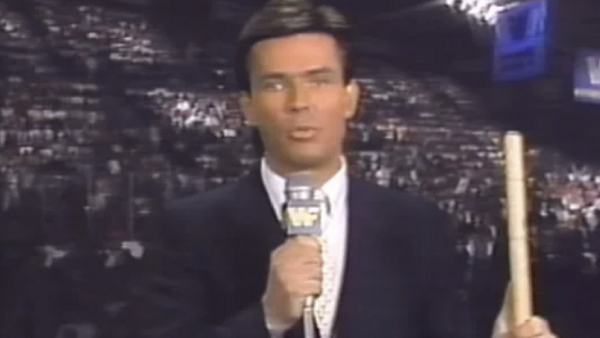
The professional wrestling landscape of the 1990s was transformed entirely and irrevocably by Eric Bischoff and Paul Heyman.
Bischoff, a magpie, drew inspiration from the NJPW Vs. UWF-i inter-promotional rivalry to create the nWo, an “interloping” cool heel act so effective that the WWF was forced into its survival. Vince McMahon didn’t merely survive; the WWF entered a second boom period in no small part as a result of subsuming Heyman’s counter-culture philosophy. If ECW was the self-styled Nirvana of the scene, by 1998, the WWF was every plaid shirt imitator with a more glossy sound that sold more records. In an alternate timeline, if Bischoff and Heyman don’t exist, pro wrestling in the United States is unrecognisable.
This actually almost happened: in 1990, Bischoff was handed a WWF tryout as an announcer. He didn’t get the gig. In his own book, he acknowledges that he didn’t deserve it and was nowhere near ready. He projected unreal smugness as a heel, which didn’t scan well at all in the impartial, welcoming role.
It’s also rumoured that the WWF took a look at Heyman in or around that same year.
Without Stone Cold Steve Austin, who discovered himself in WCW - or even the template for that character (the Sandman) - the WWF is potentially in serious trouble.
34. 1991 - A Secret, Abandoned Return

In early 1991, Brutus ‘the Barber’ Beefcake made his return to the WWF in very bleak - and involuntarily hilarious - fashion.
Just six months prior, his entire face had been destroyed in an impossibly brutal parasailing accident. Before undergoing facial reconstruction surgery, Brutus lost his jaw and the ability to breathe unassisted. As part of the surgery, he became more metal than man - think what Paul Levesque looks like in his own head, and you’re close.
Perhaps through pity, he was returned under a mask that afforded him the protection needed so that his face would not suffer a second full collapse. At various TV tapings, he interfered and beat up the heels who cheated in their squash matches - Earthquake, Rick Martel etc. - and blasted them with headbutts. The morbidly funny, tragedy + time = comedy element here is that the angles never aired because they looked awful, and even the undiscerning family crowd of the day rejected this dismal masked avenger character.
Imagine being Ed Leslie in those moments: in a six-month period, he had experienced a level of physical agony and mental rejection so intense that it could only be described as a level of hell.
Imagine finding the strength to return after 100 feet of wire was sewn into your exploded face, and everybody telling you to piss off!