Ranking The WORST Era Of Every Major Wrestling Show
Featuring something truly evil and abominable. And AEW's naff Devil.
The weekly episodic US TV pro wrestling model is fundamentally flawed. Wrestling can never make sense.
Consider the part of the show in which the heel executes the beat-down on the babyface.
The heel needs to get heat. The babyface also needs friends, or at least one peer who respects them, otherwise they're a loser and thus difficult to get behind. This in itself is a plot hole, since both events must occur at separate points. The friends can't care all the time. They should, if they were any kind of friend at all, but to contrive the plot, they can't. Compounding this, pay-per-view exists and wrestling never ends. A promoter can't give away every big singles match all the time. Often, that babyface will tag with others along the way - others who suddenly stop caring in about a month or so.
WWE's invisible camera approach is of course beyond stupid, but the very idea that a wrestler can simultaneously perform on and watch the same event creates yet more scope for stupidity. By watching the show, they'd be able to sniff out something like an imminent betrayal.
If the WWE fans who can't use Google can notice that the Rock is throwing up a "loser" gesture and not the Bloodline pose, for example, how stupid is Roman Reigns?
Combine this model with some frightfully moronic "creatives", and you will end up with complete dross - as you'll read.
Even the more intelligent bookers succumb to the flaws eventually...
7. TNA Impact

The question isn't "What killed TNA?"; the question is whether TNA ever stood a chance of becoming a respectable #2, one capable of touring live, attracting a decent fanbase and drawing talent that perceived the company as a destination unto itself.
Realistically, the promotion was stigmatised as a punchline upon launch. The best version of TNA was almost projected onto it by fans who were as desperate as they were genuinely enthused. Everything good or promising was invariably ruined by Vince Russo's dismal, hateful, nonsensical booking (which at timed was so bad it's good, granted).
In a bid to go big, owner Dixie Carter drafted in Hulk Hogan and Eric Bischoff ahead of the January 4, 2010 relaunch. Their creative vision forever annihilated the hope, that once surfaced now and again, of TNA ever developing its own identity.
This hope was killed almost instantly when fans, revolting against the four-sided ring, were told by Hogan that "six sides only got you so far". The message was clear: Hogan knows best.
Except he didn't, of course.
The first night of the Nu Monday Night War - a publicity stunt that only succeeded in further casting TNA as a small-fry outfit - was a disaster. A total botch-fest on which Hogan brought in all his mates, Hogan treated Jeff Hardy, a main eventer in WWE, as an X-Division act and the washed Val Venis as part of the division where the big boys play dude.
Hogan nor Bischoff hadn't watched anything in years and years. This "era" wasn't just sadly inevitable in how out of touch it was; it was a parody of what their booking could look like in the worst-case scenario.
Across the first six months of 2010, Abyss was powered by Hulk Hogan's WWE Hall of Fame ring. AJ Styles became the Dink to Ric Flair's Doink. Every week, the match results became more and more demented. Orlando Jordan beat Samoa Joe. The impressive Desmond Wolfe was 50/50'd into oblivion. The Nasty Boys went 50/50 with Team 3D. Get lost. The matches were short, incidental to the usual authority figure nonsense.
TNA, when it wasn't an animated shrine to WWE, was Vince Russo and Eric Bischoff booking Heroes of Wrestling.
6. WWE NXT

An...uneven history.
NXT, across its various incarnations, has ranged from the worst thing you'll ever see in your godforsaken life to a beautiful, stirring one-hour breeze that, between the pushes of Bayley and American Alpha, restored how joyful wrestling was meant to feel.
You could argue, very sensibly, that the original game show format was the worst of times. It was horrifically wrong in its stated aim. Here are your new stars, guys: a parade of complete geeks! was so inexplicable a premise that it evolved into something that was, at least, perversely entertaining. NXT 2.0 was also great for haters with a schadenfreude-shaped heart.
Every kick pad-clad wrestler was booted as Triple H's poor aesthetic choices were washed away with a technicolour hose pipe. The corporate demotion show was so baffling and searingly fake that it in effect rebooted the endearingly crappy LOLWCW/LOLTNA wrestling thought lost forever. #ThankYouShawn.
There was no entertainment to be had, ironically or otherwise, with the 'Capitol Wrestling Center' 'era'.
This was Triple H at his most dour and idealess. In a dank, off-putting pit, fans watched a relentless series of Good Matches. There was no joy, no theatre, no exhilaration. There was only a constant stream of hard-nosed mechanically proficient action worked, mostly, by tweener lads with abs in black trunks (oh, and in a bid to do something different, a 1,000 year-old dragon).
The CWC was Triple H's parodic and utterly loveless interpretation of star rating bait. Nobody will ever remember those long and painful matches. The CWC could not hope to leave a cultural imprint. The CWC was PWG = any semblance of fun whatsoever. Hell, it made late-period EVOLVE feel like a Sting party match.
The gritty reboot of a style that had just started to fall out of fashion: the timing was as bad as the vibe.
5. WCW Thunder

WCW Thunder was fairly awful from the jump.
The launch of the show coincided with WCW's decline. The first episode took place weeks after WCW completely bungled the Sting payoff at Starrcade '97, so you could, with no hyperbole whatsoever, state that Thunder died on its premiere date of January 8, 1998.
Eric Bischoff blames Thunder for WCW's death overall - as opposed to himself, shockingly enough - and the B-show was so bad that WWE SmackDown, AEW Rampage and AEW Collision were all received with a chill down the spine. Thunder set a precedent; a third and fourth hour of first-run programming was as a result nothing short of a harbinger of doom.
To be specific, Thunder was at its worst on May 3, 2000.
Vince Russo's creative was bad enough on Mondays; on Wednesdays, his already wrong brain was fried. On May 3, he booked the New York Rules episode. It was infamous.
It was infamous for making no sense, and for that to be specified about Vince Russo, it really had to make no sense whatsoever. And it didn't.
Russo decided that the battle between the New Blood and Millionaire's Club would be advanced on the night by a series of 'New York Rules' matches. These things were so hard-caw that they didn't need a referee even to ensure the safety of the competitors!
The wrestlers therefore counted their own pins, but because Vince Russo was so stupid that he never once stopped to consider the simplest of plot holes, not one of them fast-counted. Then they didn't need to count because New York Rules suddenly became Tables matches (with no explanation).
Read this next sentence a few times:
On May 3, 2000, Ric Flair defeated Billy Kidman when Kevin Nash hit a powerbomb on Mike Awesome.
In Russo's defence, you didn't see that coming.
4. WCW Nitro
While WCW 2000 was so legendarily and definitively terrible that it has become hyperbolic shorthand for a woeful string of shows, the rot set in a lot earlier. WCW in 2000 was terrible in an utterly hopeless and irrevocable way. There was no sense of waste. The promotion was already brain steam dead. Most numbed, right-minded people made peace with that. Some even found the gallows humour in it.
The first quarter of 1999 was worse, in a way, because the infuriating sense that WCW was pissing it all away still felt palpable. Raw. It was all tinged with a sense of creeping despair. It was gutting.
The January 4, 1999 'Fingerpoke of Doom' was of course abysmal: a wretched admission that WCW had nothing left. The proof that they had nothing left materialised on the February 15 Nitro.
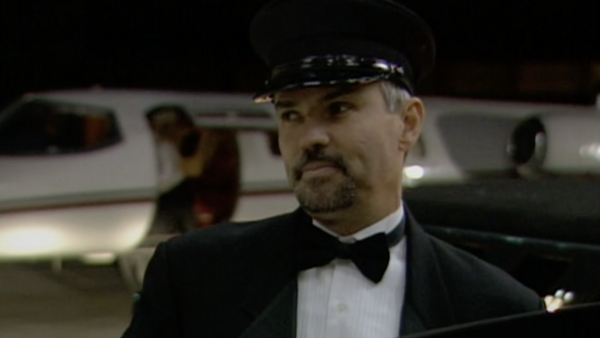
In an awful show-long storyline, Ric Flair was swerved by the nWo, removed from the limo that had been driven by his indentured butler (!) Eric Bischoff, and beaten down in the desert for ages and ages. Bischoff could not have looked more obviously, transparently suspicious here if he was criticising AEW on his podcast. Flair then returned to the arena only to get his ass kicked forever in the ring. Heat. Heat. Ironic, freezing cold heat.
The action wasn't very good, and what's worse is that it was de-emphasised and trivialised. WCW surrendered its USP - a dazzling undercard with immense range - in a bid to WWFify itself. Becoming a diet Fed was a stupid strategic choice. WCW fans didn't like it and the WWF was on fire (this will be echoed imminently).
Perry Saturn, who in a problematic precursor to Vince Russo's arrival wore a dress, did a job to the useless Jerry Flynn. There was some decent stuff, but only that, and Bret Hart suffered the 800th of his 1,000 cut death by winning a terrible comedy match over stand-up Will Sasso.
What?
A visibly uncomfortable Torrie Wilson, as part of WCW's initiative to be like the WWF, was filmed in a towel in a hotel room as fans were teased with the desperate idea that she'd take it off.
"WWF fans like Sable, so let's do that (in addition to the nWo, again)" was WCW's big pitch for a comeback.
WCW was officially dead in just over two years.
3. AEW Dynamite

The best weekly episodic TV wrestling show ever has experienced more than one lull, which underscores that the model is inherently flawed. It can never be a watertight and complete "thing"; that it never ends exposes it to creative burnout, and there's no refresher of a break between "seasons" that allows the booker to meticulously plot out and consider every last detail.
What was so bad about the autumn of 2023 is that it felt like a betrayal.
By hoovering up all the great talent, promoting virtually every genre, forming countless inter-promotional relationships, and generally completing the checklist of what the millennial fan had missed out on for years, Tony Khan practically declared himself the regulator of professional wrestling. His catch-all "buffet" approach, intentionally or otherwise, left no other promoter with a single selling point of their own. A sort of entitled responsibility coursed through his promotion. It was AEW or nothing.
To do all that and then take a sports entertainment approach was really an insult. What's worse is that Tony Khan once said that Eric Bischoff was useful in that he'd learned from him what not to do - and yet, by almost copying WWE's vignette-heavy format, he repeated WCW's grave mistake of 1999.
The Undisputed Kingdom was formed in secret; MJF was thrown off the scent when the Devil "ADAM!" Cole and Roderick Strong filmed short videos in which they pretended to fall out. They fell out, in these Borashian videos, with awful NXT-style soundtracks and slo-mo comedy, when Strong spat out the coffee Cole had made him because it was too hot.
What a bone-chilling evil masterplan, one so abominable that it could only be the work of Satan himself.
MJF unfairly took a lot of flak for the philosophical death of the promotion - his World title reign when uneven peaked at seminal - and while he himself acknowledged this and promised to do better on Twitter, the whole show was a mess.
Kenny Omega and Don Callis feuded but it never ended. Or really even began; Omega didn't appear to feel too betrayed. The Young Bucks became the #1 contenders for the Tag Team titles and never expressed a desire to win them. The Blackpool Combat Club just did stuff, moodily, with a totally all over the place character alignment.
The Devil thing was just awful, primarily. The "masked men" looked like Dark Order Creepers, they "hacked" the show as visualised by awful lighting effects, and every character had to pretend that they cared about their identity even more, in the case of Jay White, than the AEW title.
Quiet, bemused crowds; appalling special effects; sub-WWE storytelling: TNA Dynamite was a bleak time.
2. WWE SmackDown
WWE stopped giving a toss about the brand split in 2011 when Raw was temporarily renamed 'Raw Supershow'. This was a hollow marketing exercise along the lines of "All your favourite Superstars under ONE roof!"
The subtext being "...hardly any of them are over, but that's why we're bantering off SmackDown".
And banter off SmackDown WWE did. For around five years.
Yes, Mark Henry's Hall of Pain run was really, really good (and an effective ratings driver). Between 2011 and December 2013 (when the titles were unified) WWE did at least promote the World Heavyweight championship as something of an exclusive entity. And hey, you got the Randy Orton Vs. Christian feud out of that. Also, the Shield, inexplicably, lost their first match on SmackDown. There, Three things. Also Alberto Del Rio won the belt, but he doesn't count.
Elsewhere, SmackDown in effect became a Raw re-run. Imagine watching early 2010s Raw twice. A fourth and fifth hour of WWE Monday Night Raw. Well, you didn't have to do that. You lived through that hell.
Can you remember a single thing that happened on WWE SmackDown in 2012?
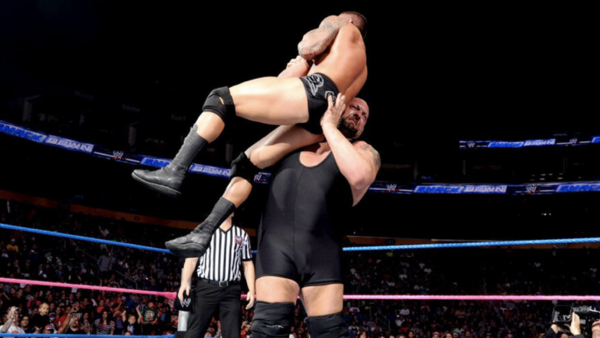
Consider something like the September 25 taping. The Big Show beat Randy Orton in the main event. Underneath that, Ryback beat Tensai. Underneath that, Chris Masters defeated Vladimir Kozlov and MVP beat Festus.
Except those last two matches didn't happen because none of the four worked for WWE at the time and you've no idea because that period of SmackDown was so utterly forgettable.
1. WWE Raw

Where to start?
1999 was shocking. The plotting was disastrous (but the ratings were immense). They killed the idea of competition in 2001, but at least the promotion was loud in spite of itself. 2002 and 2003, oh boy. Triple H have could have read the winning lottery numbers in his opening promos and millions of people would have still deserted the product.
"You see...12...in this very ring...35...the fact of the matter is...44...I am that damn good...3...uh..."
The 2000s was a bleak n' bland time overall. The WWE house style was at its most generic; the material steadily became more ugly as Vince McMahon attempted to chase the controversy that drove his second boom period. The Guest Host 'era' was just horrendous. Deeply unfunny material, hopeless pursuit. WWE's attempt to grow the base with disinterested celebs barely endorsing utter trash shockingly did not work. The 'Authority' era was awful as well. It was parody.
Triple H and Stephanie McMahon droned on obnoxiously about how they knew what was best for business, and said that Daniel Bryan wasn't good enough, and they were actually going to do the unhappy ending before they were forced not to do it. Imagine that.
"And Daniel Bryan...who did die!"
The 2020 pandemic output was astonishingly awful - Vince McMahon's decaying brain had been permanently Shibata'd by that point - but your winner is the 2019 post-WrestleMania season. Constant humiliation segments; the nonsensical Wild Card rule that WWE broke on night one; the capital idea to make every match Two Out of Three Falls in case you really missed that aimless slo-mo heat segment; Seth Rollins trying to be the Rock on top: WWE Raw was an atrocity that punished the wrestlers for wanting to wrestle and punishing you for wanting to watch them wrestle.
People surely only watched for the initials alone - brainwashed loyalty or, to be generous, the fading hope that it might get good again.
If WWE launched in 2019, it would not exist today.