The Rock Vs. Steve Austin | Wrestling Timelines
April 19, 1999 - Dearly Beloved
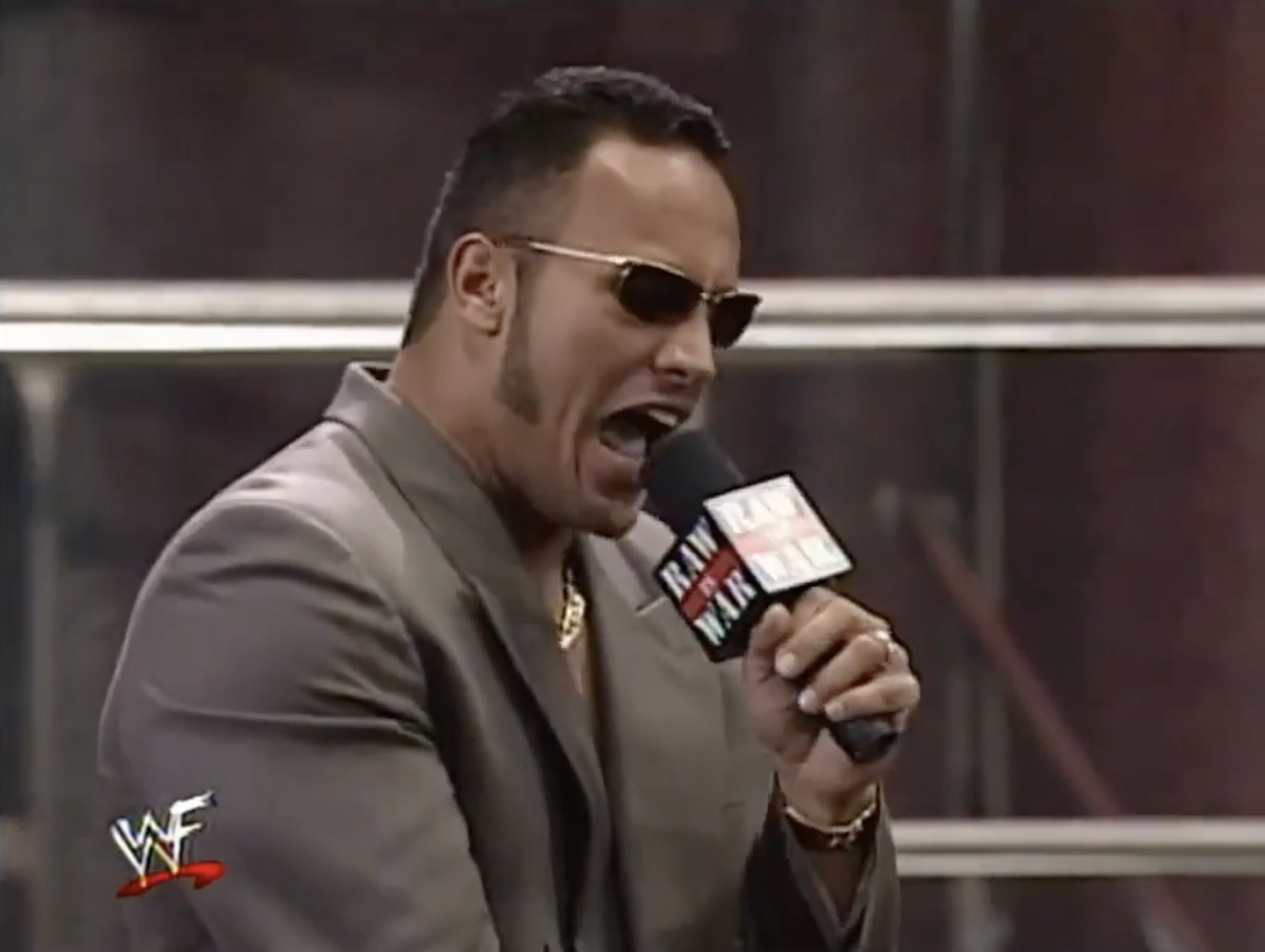
On Raw, the Rock speaks at the mock funeral he hosts for the ostensibly dead Steve Austin. With no body found, he instead threatens to bury the belt he has only pretended to throw away.
No expense is spared for Austin’s grand return from beyond the grave; the WWF bring out the Buried Alive set for the ceremony, and Austin somehow procures a custom-branded monster truck, which he uses to drive over and destroy the Rock’s new Lincoln Continental.
The scene is absurd, lavish, frenzied. It’s also silly. The obsession with vehicles and stunts, like the idea of Backlash itself, is a diminished return.
It’s not ineffective, this live action movie, but Austin and Rock will one day create magic with just two, significantly less expensive props: a pair of beer cans.
25 April, 1999 - Backlash
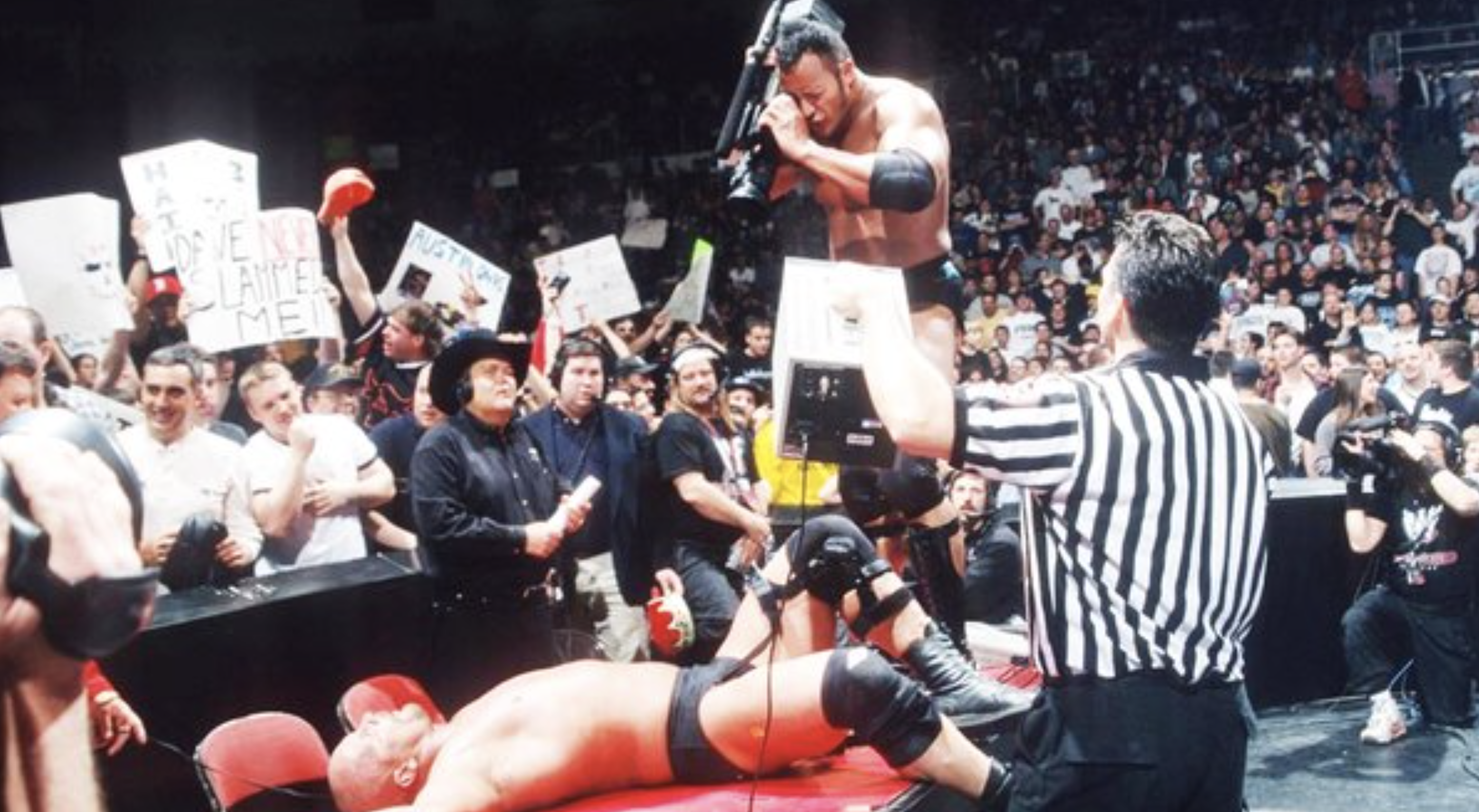
Austin retains the title in a superior rematch.
The Corporation’s Shane is the heel ref, and he’s a refreshingly smug little prick. The facial expressions he pulls after the inevitable fast counts turn up the heat in the building.
Austin and Rock bounce around the furnace, applying the rule of the sequel to tremendous effect. The bumps are much harder this time around, the pace more frenetic. The dramatic timing is sensational. Unlike at WrestleMania, Austin and Rock extract every gasp and palpitation from the crowd. Rock is sensational at mocking Austin, using a video camera to capture his agony in a great bit - it's as if he is so hubristic that he believes he's wrestler, director, everything.
The event draws 390,000, which is best described as a modest success. Perhaps this isn’t a blow-away awesome triumph because fans no longer perceive the Rock as a heel. This position is untenable - so much so that Rock is fired from the Corporation the very next night.
He is now a face alongside Steve Austin.
May 3, 1999 - Lumberjacks
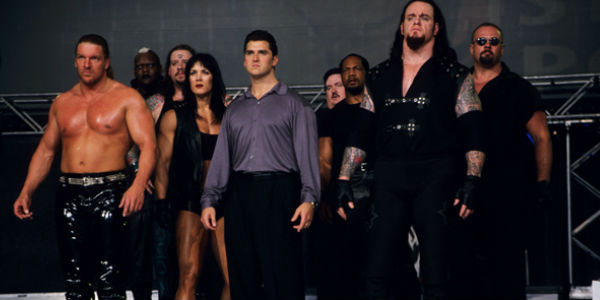
The Corporate Ministry act as lumberjacks for another round of flagrant false advertising. Not a lot makes sense in the World Wrestling Federation.
Here’s an attempt to sum it up: the two heels stables (the Corporation and the Ministry of Darkness) have merged in a bid to rid the WWF of McMahon, Austin and Rock. McMahon is in cahoots with the Undertaker “all along”, even though this means he was complicit in the kidnapping of his own daughter. Swerves happen for the sake of it; the idea is to bring everything back to Austin Vs. McMahon and pretend every week that something inconceivably amazing is going to happen.
The Rock Vs. Steve Austin is a schmozz and an ambush masquerading as a match; it lasts all of 22 seconds before they each attack the Corporate Ministry.
August 22, 2019 - SummerSlam
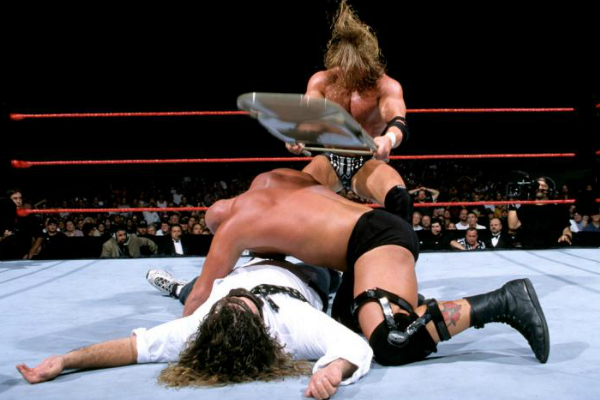
Austin and the Rock are babyfaces who are mostly kept apart and each tasked with elevating heels at SummerSlam. This does not go well.
The Rock can’t do anything with D-Generation X underling Billy ‘Mr. Ass’ Gunn, whose new persona is that he has a toned ass and enjoys doing various things to the asses of others. However.
“Is Rock better than Stone Cold?”
This question is echoed around dorm rooms and schoolyards. The answer might be “yes” when Rock verbally incinerates Gunn in the build. In the best gag of the Attitude Era, Rock pretends to be Billy praying to God. “Yes, Bob?” God answers.
“But my name’s Billy!”
“It doesn’t matter what your name is!”
Even the omniscient God doesn’t know poor Billy Gunn’s name. It’s among the best bits of trash talk ever spoken.
Austin, meanwhile, doesn’t seem to want to do anything with Billy’s old leader Triple H. Austin will only drop the WWF title to Triple H via transitional champion Mankind. Foley’s herculean exploits eventually help establish Triple H as the convincing top heel. He forms the new authoritarian heel faction alongside Stephanie: the McMahon Helmsley Era at the end of the year.
Russo is nearing his departure to WCW, and it’s considered a coup, bizarrely.
November 14, 1999 - Survivor Series
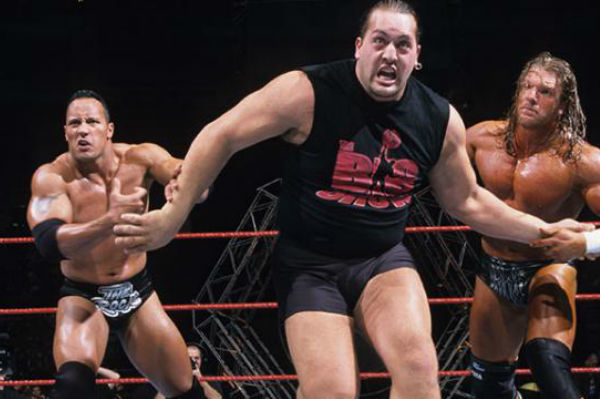
The advertised main event between Steve Austin, Triple H and the Rock does not happen. Austin’s neck issues have worsened. He requires surgery, but the WWF requires you to buy the PPV and give them money, so he’s written off on the show itself when he’s run over by a car. If this happens in 1998, the WWF is not in a good place. At all.
It happens in 1999, when the WWF, in an anomaly of history, boasts two megastar babyfaces.
April 30, 2000 - Backlash
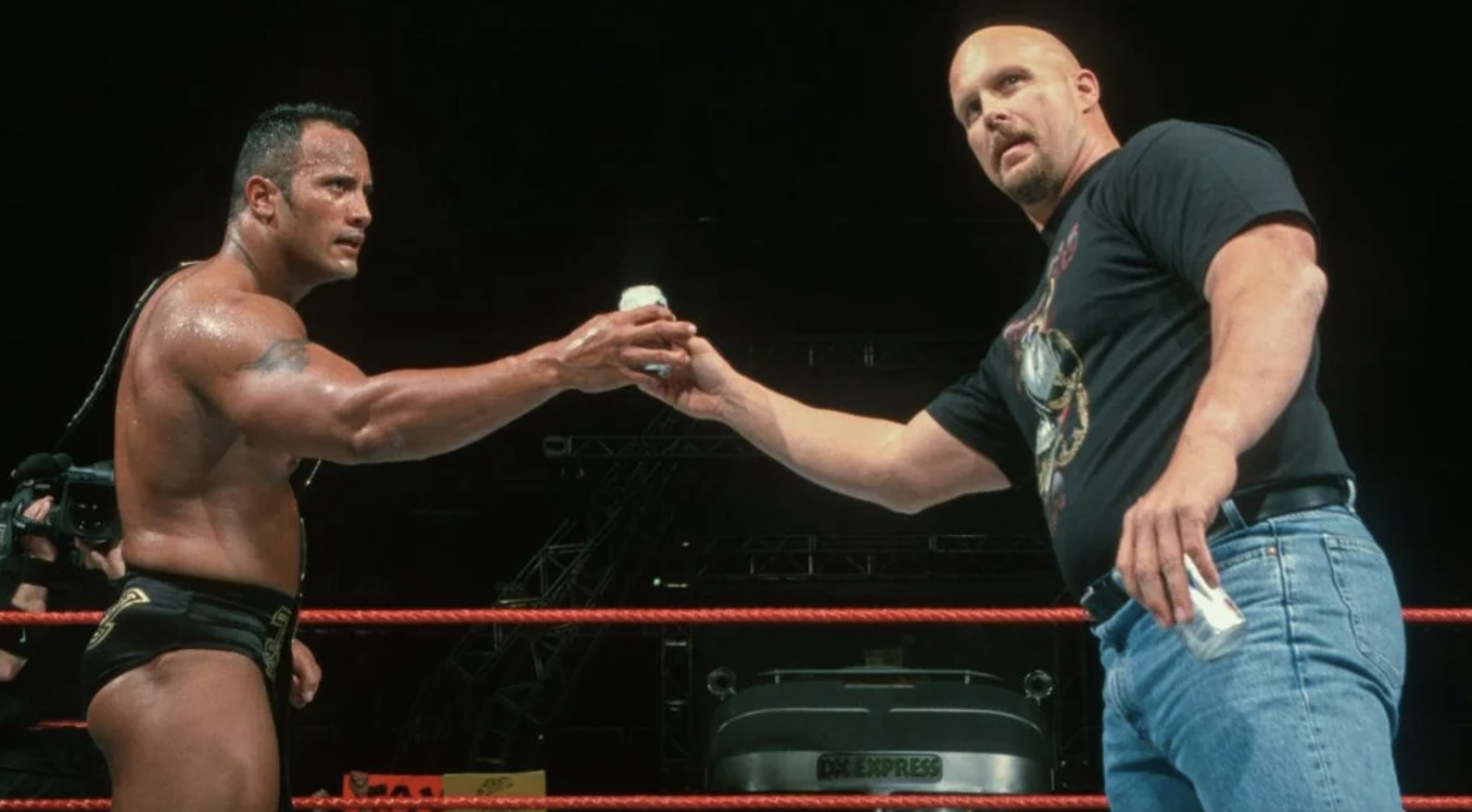
Austin isn’t missed, exactly - the Rock is closing in on achieving the record of most consecutive five-figure houses drawn - but he’s still such a huge star that he factors into the Backlash build in order to spike the buy rate.
Triple H is the first heel to retain the WWF title at WrestleMania, when Vince turns on the Rock and again sides with a man who has sought to corrupt his daughter. The delayed gratification model has persisted, post-Russo, and has even infected the happy ending show. Elsewhere, though, the WWF is reaching a creative peak.
At Backlash, the WWF sets a buy record (650,000) for a non-Big Four pay-per-view that will only get broken once.
The advertised Austin interferes to rid the ring of corporate pests. Rock beats Triple H to win the big one. Austin has not recovered and does not look good at all. He can’t manage a Stunner, and can only swing a chair around. It’s strange that his ego allows it, in one sense, but the pop is deafening. Does he crave that sound?
Or is he worried about his spot?
September 24, 2000 - The Mood Changes
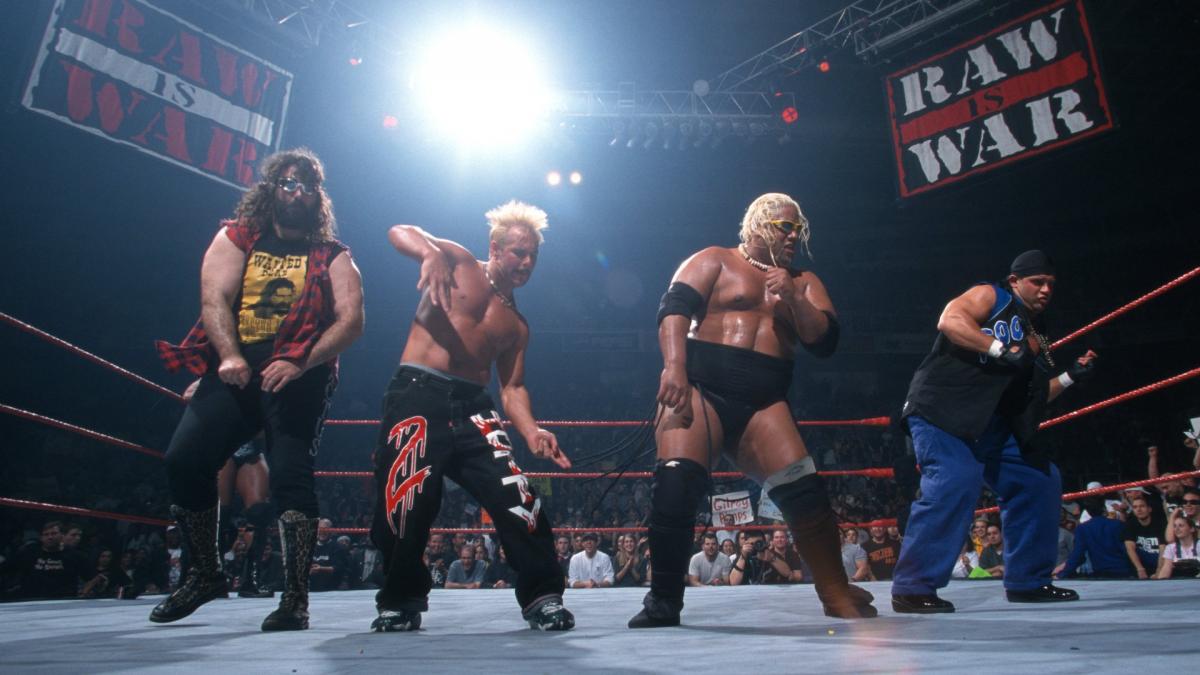
Steve Austin makes his permanent return, almost to a different place.
A lot of the isolated content is still rancid, but overall, the tone in the WWF is brighter, positively irreverent at times, and the post-Vince Russo narrative, shaped by lead writer Chris Kreski, is a lot more sophisticated. In a weird way, a year like 2004 was more Attitude Era-coded than this actual year in the Attitude Era.
The depleted roster is no longer abysmal. Kurt Angle, who debuted on the same show Austin was written off, is a prodigy, a phenomenal all-rounder, and bonafide headliner. There’s a sense Chris Benoit could ascend further up the card, driven by pure brilliance, if not undeniable star power. Eddie Guerrero, his Radicalz stablemate, has the lot, and the extent of his struggles with addiction are not yet known. Out of nowhere, Rikishi becomes a fun-loving killer who intersects endearing comedy and a wicked finisher. The fans, gauging by a legendary Dusty finish, buy Chris Jericho at the WWF title level.
The endearing Mick Foley makes things plain fun as the Commissioner. Edge and Christian are earnestly funny in a way that isn’t puerile nor mean-spirited. The tag team division is excellent. Triple H gets in his own way, when he’s anxious about appearing weak, but is otherwise enjoying an incredible year in the ring and as an episodic TV character. He’s the top heel - and his Backlash match against the Rock is very favourable to him, in a year-on-year comparison, against Austin’s.
The Rock is the Rock: the now-disputed number one babyface who sells tickets as effortlessly as he raises his eyebrow.
Does Austin fit in?
It seems like a silly question, because he’s Steve Austin, but it also isn’t. His character is on a mission to identify the person who ran him over, and because he doesn’t trust anybody as his modus operandi, he kicks a lot of ass. He indiscriminately beats up the people that fans have taken a liking to, whether they’re goodies or baddies.
In the fiction, this makes sense; in reality, it feels like a dour and paranoid Austin is reminding everybody who’s number one ‘round these parts.
November 2, 2000 - Face To Face
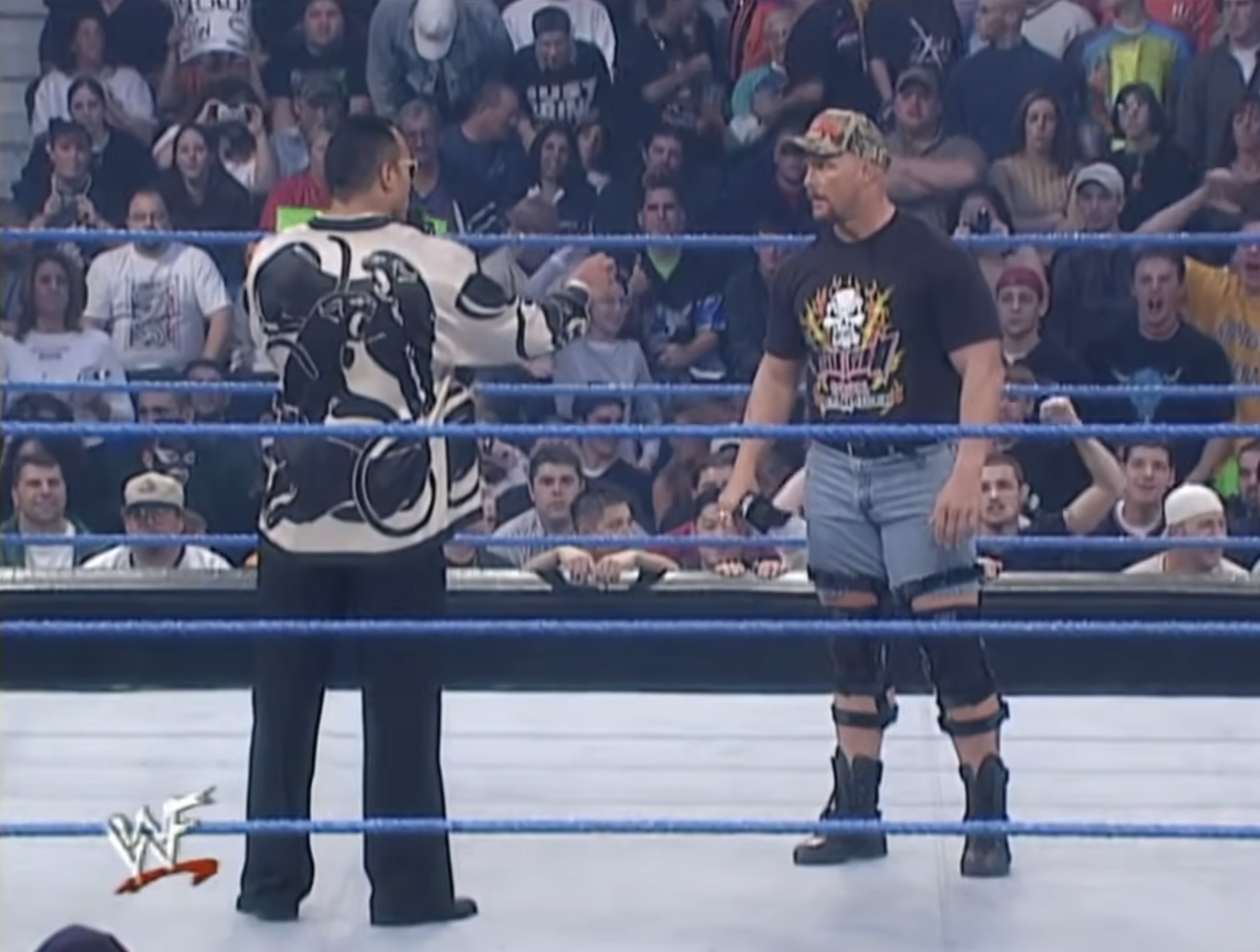
The Rock calls out Steve Austin on SmackDown. The Rock, out of a sense of respect he can’t quite bring himself to articulate, is adamant that he had nothing to do with the vehicular homicide attempt.
The segment is produced after Rikishi claimed he mowed Austin down to clear Rock’s pathway to the top. The ‘island boys” were held down for too long, is Rikishi’s motive; “I did it for the Rock” is his widely mocked way of putting it.
It is a continuation of a daft storyline, but the atmosphere, holy sh*t. The fans chant “Austin!” and “Rocky!”, but they don’t take turns to volley it in a performative way. It is the sound of a crowd divided right down the middle.
They are screaming over the top of one another.
December 2, 2000 - A Night Off
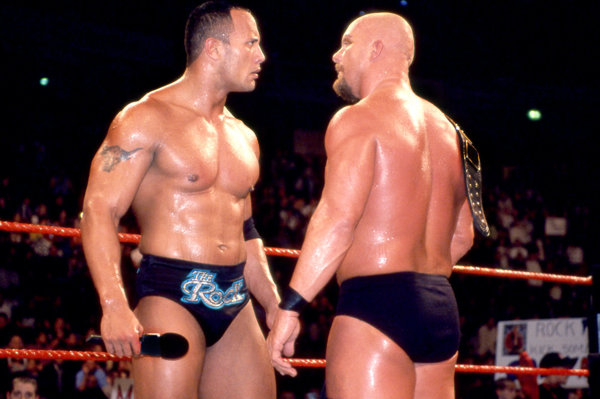
The Rock and Austin share the ring when they headline the UK exclusive Rebellion pay-per-view in a Fatal 4-Way match also involving Rikishi and the WWF champion Kurt Angle, who retains. The match, as ever, is barely canon, but at a brisk 08:50, it’s exhilarating for what it is.
December 10, 2000 - Armageddon
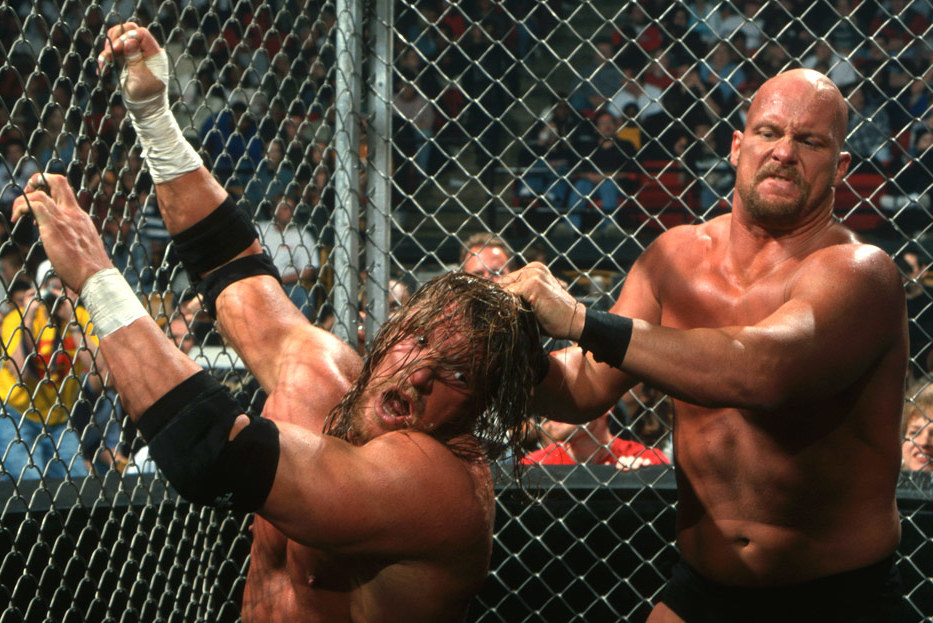
After another Fatal 4-Way teaser on the December 7 SmackDown - Rock Vs. Austin Vs. Undertaker Vs. Kurt Angle - ends in a DQ, those four men (and Rikishi and Triple H) do battle inside of Hell In A Cell at Armageddon.
The match is incredible. The match graphic alone is a flex of the WWF’s luminous star power, an excessive figure fed collage somehow made real, and it’s every bit as good as its brain-scrambling promise. Intense, blood-soaked, and chaotic, the fans never stop roaring at the crazed frequency of the near-falls. Austin and Rock build towards their big late interaction brilliantly amid the lunacy, and it’s a step above the counter sequence at WrestleMania XV. It really seems as though Austin is about to drill Rock with the Stunner before Rock desperately fires him off into the ropes. The intent behind everything is much more believable, the drama much more fraught.
As much as the wider creative is in decline - the WWF, in fact, has so much star power that they don’t quite know what to do with it - the good times are still here.
January 21, 2001 - Royal Rumble
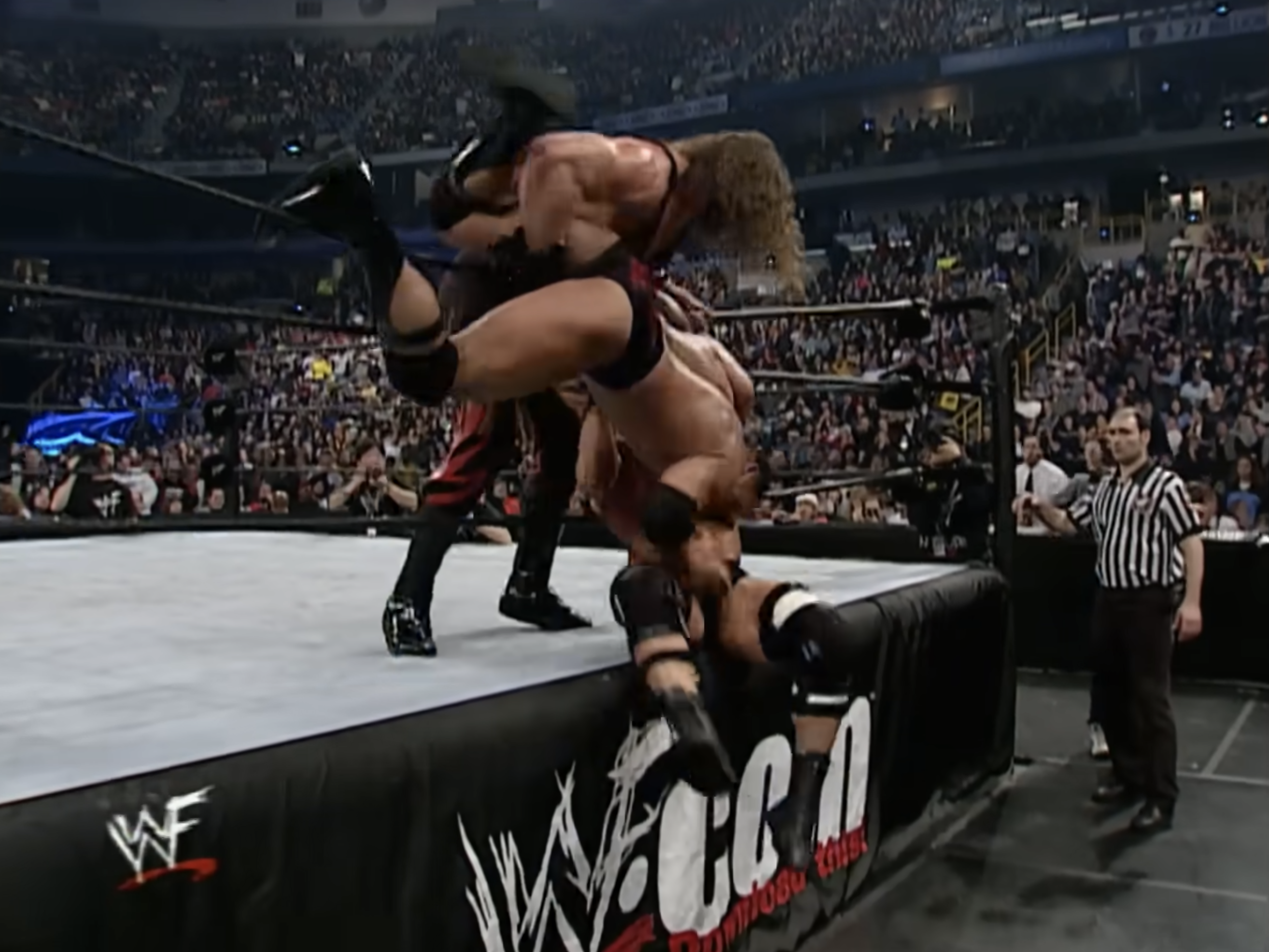
Austin wins one of the better Royal Rumble matches ever held.
The booking is so exceptional on the night that you wouldn’t know the boom is nearing its end. In a masterstroke, Kane - on his best ever night professionally - sets the record for most eliminations with 11. There is no direct reference to the 1997 Rumble match, but the contrast is staggering. The interaction between Kane, Austin and Rock is brilliant. Kane throws Rock out as Austin narrowly evades the same fate in a suspenseful sequence by the ropes.
Kane’s monster run idea is rewarded with a monster of a performance. When this version of the character is in such deadly form, there is no shame whatsoever when Rock is eliminated by him. Everybody is asking the same question. Who is the man, really?
Austin, or Rock?
Since neither man eliminates the other, the WWF, deftly, leaves it unanswered for another day.
February 5, 2001 - A Familiar Sight
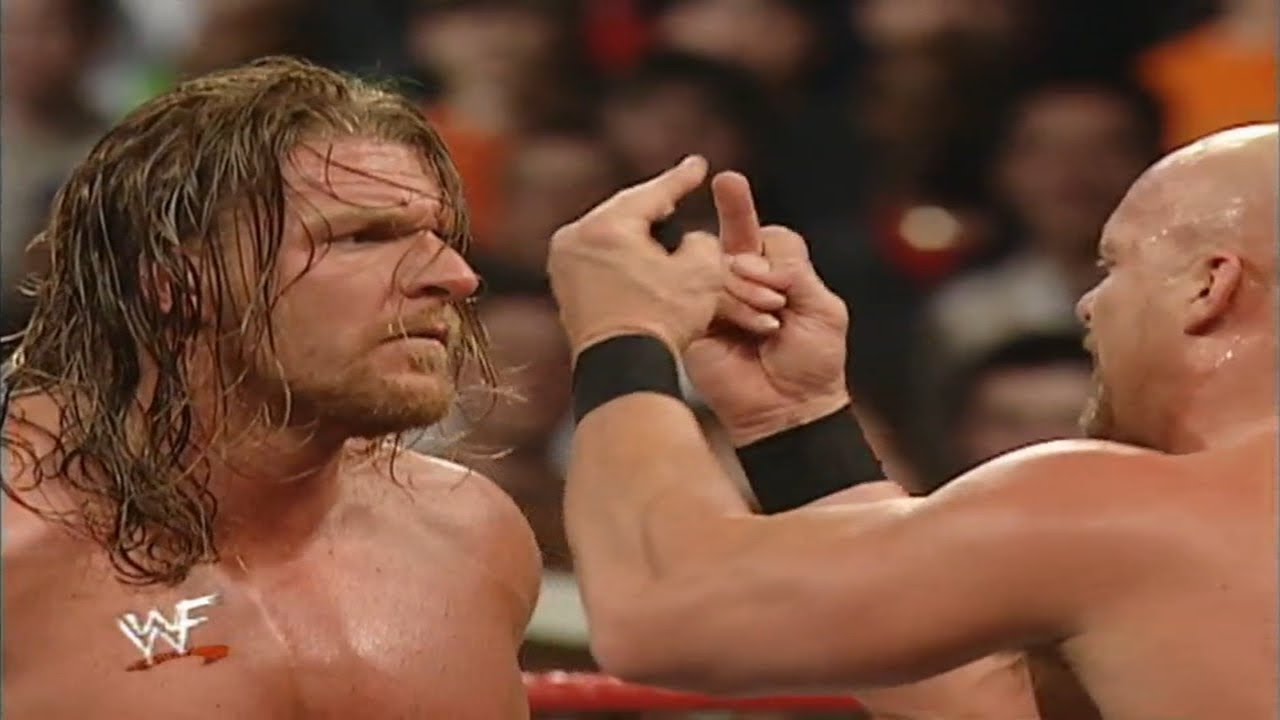
WWF creative is not quite bad enough for Austin to bury publicly yet, but on the road to WrestleMania X-Seven, a double can-they-co-exist match is booked. Upcoming No Way Out opponents The Rock and Kurt Angle team up to take on the wrestlers, Austin and Triple H, who are set to semi-main event the pay-per-view. Triple H is the perp behind the attempted murder, but Austin keeps up the pretence for eight Nielsen-friendly minutes before attacking his nemesis and throwing the match.
McMahon is meddling with the careers of his wrestlers for the sake of it now.
He’s no longer pretending that there’s some sacred image of the federation to uphold, which makes an upcoming development all the more pointless…
February 25, 2001 - No Way Out
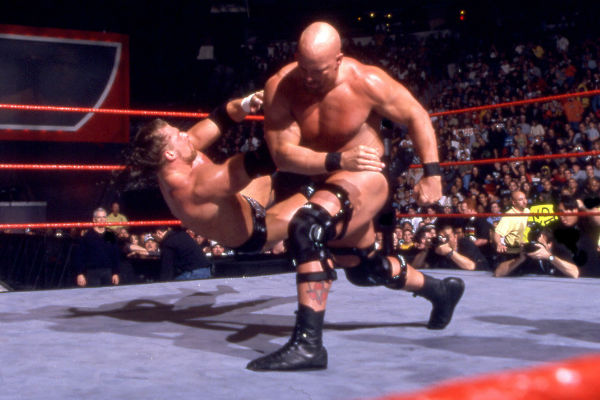
Stephanie McMahon has replaced Chris Kreski, the downgrade is risible, and in quite the coincidence, Austin loses to her partner Triple H in a Three Stages of Hell match as Rock regains the belt from Kurt Angle. While both matches are incredible, the action is mere distraction from the plot. The build to WrestleMania X-Seven is poor.