The True Story Behind WWE's Deal With Marvel
Hulk Hogan effectively funded the birth of the MCU.

Even about 900 movies deep into the multifarious phases of the MCU, the tendrilous franchise shows no signs of slowing down, perpetually appealing as a recontextualised nostalgia dose to the older generation, whilst eminently accessible and crucially cool to their descendants. In contrast, the spandexed superheroes of WWE have never been less important to the zeitgeist. It's an almost complete reversal of the situation some twenty years back, and the reason why Vince's lot will jump on any opportunity to latch their wagon onto the neverending comic book juggernaut - as infrequent as they may be.
When you think of WWE's association with Marvel Comics in 2019, your mind probably drifts in the direction of Dave 'Drax the Destroyer' Bautista, and in particular the company's often desperate, nakedly transparent attempts to cash in on the Guardians of the Galaxy star's mainstream success outwith their own limited scope.
Simple fact is, 'Big' Dave would still be 'Little' Dave in terms of widespread fame had he not abandoned the confines of WWE's specifically restrictive machine - his original split from Stamford came about when his employers embargoed outside projects. The cultural currency he's accrued under his own steam has proved a blessing so long as he's retained any interest in a sport he long since outgrew.
With defeat to Triple H at this year's WrestleMania seemingly dropping the curtain on the 50-year-old's in-ring career, WWE will henceforth have to rely on the legitimate relevance of some other wrestler-cum-comic crossover for their annual attempts to piggyback on the true pulse of popular culture.
This might be the reason why, if it's not sheer ignorance on the part of the owner, the likes of Johnny Gargano and Tommaso Ciampa are allowed to don the colours of opposing comic capers during their NXT rivalry, or why nobody stops Rey Mysterio paying frequent homage to his pen-and-ink heroes. That WWE haven't ordered against their stars promoting a rival brand of entertainment is not insignificant. It's an indirect way of the company saying, "hey, look, we're cool too. Honest!"
Article continued on next page...
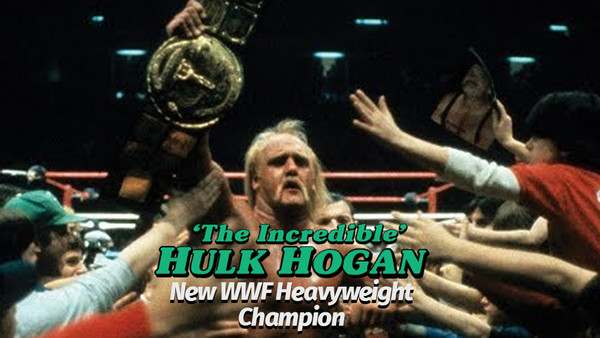
It's an almost direct reversal of the situation some three decades ago, when WWE were hitting the heights of their original 'Golden Era' pomp. Back then, the company wanted Marvel to have as little to do with their singularly popular product as possible - and for one extremely sound economical reason.
The night Hulk Hogan set Hulkamania loose in his history-making defeat of The Iron Sheik at MSG on 23 January 1984, the soon-to-be new champ was introduced to the ring under the guise 'The Incredible Hulk Hogan'. The nom de guerre would stick for the next few months, until a writ arrived in Stamford from lawyers representing Cadence Industries Corp. - the parent company of Marvel Comics.
This was three years before WWE's legal attack dog Jerry McDevitt earned himself a job for life in acquitting Jim Neidhart of assault, and a company just beginning to make a name for itself didn't yet have the brass balls to stare down the challenge. The company settled a convoluted licensing agreement with the cartoonists that stipulated the name 'Hulk Hogan' could never be used in conjunction with the adjective 'Incredible', that 'Hulk' wasn't to be promoted independently, and certainly not more prominently than Mr. Bollea's fictional surname. Furthermore, a green and purple scheme was entirely off-limits for the character, giving rise to the Hulkster's famous red and yellow combination - about as far away on the colour wheel as possible.
The amount of concessions Titan made to Marvel is stupefying in the context of a company which today rarely backs down from a legal fight. Even more galling are the financial forfeitures WWE yielded to their comic counterparts. For the length of the twenty-year licensing agreement, the company would cough up $100 to Marvel for every match Hulk Hogan featured in. In addition, between 0.9 - 1% of all the Hulkster's merchandising sales wound up in the licensee's coffers.
1% on a five dollar lunch box might only amount to a nickel, but given the sheer quantity of apples and oranges Hogan's face was about to guard in schoolkids' backpacks, it quickly added up. With virtually no effort on their part, Marvel turn litigation into a profit centre. According to some enterprising number-crunching by the assiduous folks at Pro Wrestling Stories, the Incredible Hulk coincinym raked in approximately $110,200 for Marvel based on the match condition alone. They further estimate that the iconic 'Hulkamania' shirts brought home about half a million dollars. In effect, WWE indirectly contributed to the gradual revival and ultimate explosion of Marvel - one which would see their own relevance supplanted.
Article continued on next page...

Those profits would have been even greater had WCW, in a notably rare example of business acuity, shrewdly began promoting Hulk Hogan as 'Hollywood' Hogan following his switch to the dark side in 1996. Whether this was chance or design isn't clear, but one way or another dropping the 'Hulk' forename relinquished the Atlanta company of the requirement to pony up on the nWo leader's matches.
WCW had reason to spite Marvel: in December 1991, Brad Armstrong's 'Arachnaman' gimmick was hastily canned when the Spider-man creators noticed some quite striking similarities between their wall-climber and WCW's. Mostly that they were entirely identical.
Oddly, just four months on, Ted Turner's organisation embarked on a partnership with the company resulting in the prosaic WCW: World Championship Wrestling comic. The run lasted just 12 issues. Two years earlier, putting enmity aside for the sake of cash - always the great equaliser - WWF joined the strip club, with the license extending to see the litigious fulcrum appear alongside his legitimate, green namesake for issue #45 of Marvel Comics Presents.
The same year, by some freak coincidence future Marvel artist Jim Jarmusch was commissioned with designing another of WWF's most iconic characters, asked to provide concept sketches for a new Western mortician gimmick trading under the name 'The Undertaker'. Fittingly, Jarmusch would also pen the wonderful illustration depicting WWF's own Captain America, their specific Not Incredible Hulk, promoting his patriotic tussle with Sergeant Slaughter at WrestleMania VII.
Hogan's flag-bearing poster and crossover into comics emphasised the striking similarities between the world of spandex-clad superstars and spandex-clad superheroes - a prevailing feeling which almost certainly encouraged Marvel into action in the first place. They couldn't afford to see WWF's larger-than-life characters take precedence beyond their own, especially when they had literally stepped out of the page.
It paid off. By the time the licensing arrangement finally ended in 2005 - with Hulk Hogan just about still active - Marvel were on the cusp of embarking on their own entertainment revolution. There'd be no reprisal on WWE's part; from that point forth, they'd have to feed on whatever Batista-shaped scraps fell their way.