What Really Happened When Vince McMahon Took Memphis
It takes a king to know a King.

"It was me, Austin! It was me all along!" bellowed Vince McMahon, comically pulling back a shimmering velvet hood, so literally and figuratively draped in insanity as he was at the time. It was the culmination of a head-scratching 1999 ‘Greater Power’ storyline, in which The Undertaker had been conducting various acts of evil as part of a hostile takeover alongside Shane McMahon. They’d ousted Vince by threatening his daughter Stephanie, removing him from the theatre of conflict so they could get on with successfully liberating the WWF Title from Stone Cold Steve Austin.
Their ‘Corporate Ministry’ had physical dominance, the belt, and the keys to the kingdom, but Undertaker spoke of ‘Greater Power’ that motivated his satanic leadership and Shane’s oedipal quest for rulership. Vince’s reveal as the mystery man was farcical. As it turned out, the whole idea was actually just a long-con for the Chairman to get at Austin, even if it meant logic gaps you could drive a truck through and a six-month campaign of physical and emotional torture for his daughter. The over-arching payoff highlighted that the company still had humongous faith in Austin vs. Vince as their top programme.
The unprecedented growth experienced under their stewardship had led WWF back to the summit of the industry. Austin was the generation’s Hulk Hogan, and Vince himself was on equal footing with just about any top heel he’d ever promoted. McMahon’s shift to from company commentator to authoritative administrator to malevolent megalomaniac between his first Stone Cold Stunner and his most recent had been remarkably subtle for a man not terribly committed to nuance in his work.
The ‘Mr. McMahon’ persona began life as a metropolitan boss, but was quickly drawn into violent histrionics and crude one-upmanship in a selfish quest for supremacy over the anti-hero World Champion. It was a persona he’d crafted six years earlier to a tiny audience based south of the Mason-Dixon Line. In 1993, he was still all pastel suits and pompadours, but to a select few, he was corporate villain alongside his spandex sidekicks.
[CON'T. P1/3]
Jerry ‘The King’ Lawler marched into the World Wrestling Federation in December 1992 as a similarly cartoonish outlaw, sporting a cape, crown and sneer for any babyface that crossed his path. He was iconic amongst wrestling fans in Tennessee as an unassailable champion of Memphis, knocking back the repeated challenges of outside invaders. Jerry would invariably run the marauders out of town and the locals would celebrate until the next menace arrived.
Lawler’s WWF signing represented the continuation of a loose working relationship with his USWA promotion. Their struggling houses had been boosted by Titan talent for years in an agreement that allowed McMahon to cherry-pick some of the best in the territory, as well as afford some of his performers invaluable experience. Appearances by Bret and Owen Hart in 1993 at the company’s regular Monday Night Mid-South Coliseum shows were a boon, but they became part of some canny gamesmanship that allowed Lawler to serve all masters in his dual role.
Whilst the heel Jerry was scathing on WWF television as part of his ongoing conflict with ‘The Hitman’, the Hart brothers took revenge as villains in Memphis. Bret was globally popular, but his chicanery in Memphis helped shore up Lawler’s seemingly irrational hatred on any given edition of Raw or Superstars. A tainted victory for Bret and Owen over Lawler and fellow babyface Jeff Jarrett thanks to corrupt referee Paul Neighbours lit the touch-paper for the biggest WWF appearance of all.
Neighbours was a used car salesman of a performer with a barrel chest and thinning skullet, but fit the mould of a traditional regional heel at the time. There was little reason to consider him any sort of threat, until one final pre-match promo in which he dropped a name as if it were an atomic bomb. He confirmed that Vince McMahon himself would be ringside to watch his match with Lawler. For their part, Vince and Jerry taped a ‘Kings Court’ segment exclusively for the Mid-South crowd in which they exaggerated their switched personalities. Both were exquisitely deft in their careful portrayals.
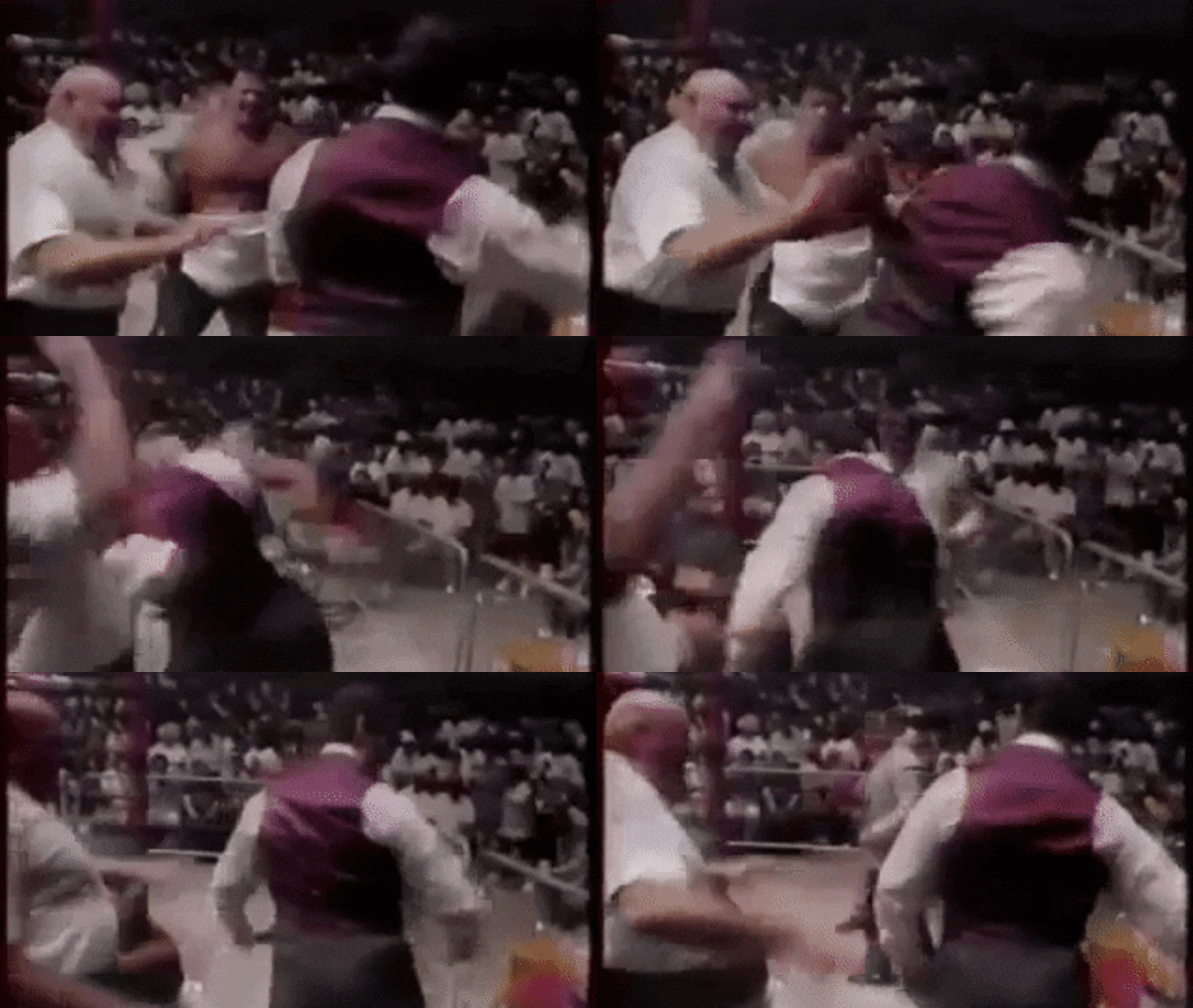
True to his word, Vince sat ringside with Pat Patterson acting as security for the nervous North Easterner. Feverishly booed by the Lawler loyalists, he cut a promo dripping with disdain for the crowd, before tripping ‘The King’ on the outside to provide a distraction in what was otherwise a one-sided affair. As the tension between the pair grew, Patterson held Lawler for McMahon to wallop him with a single right fist before indignantly storming out of the building.
[CON'T. P2/3]
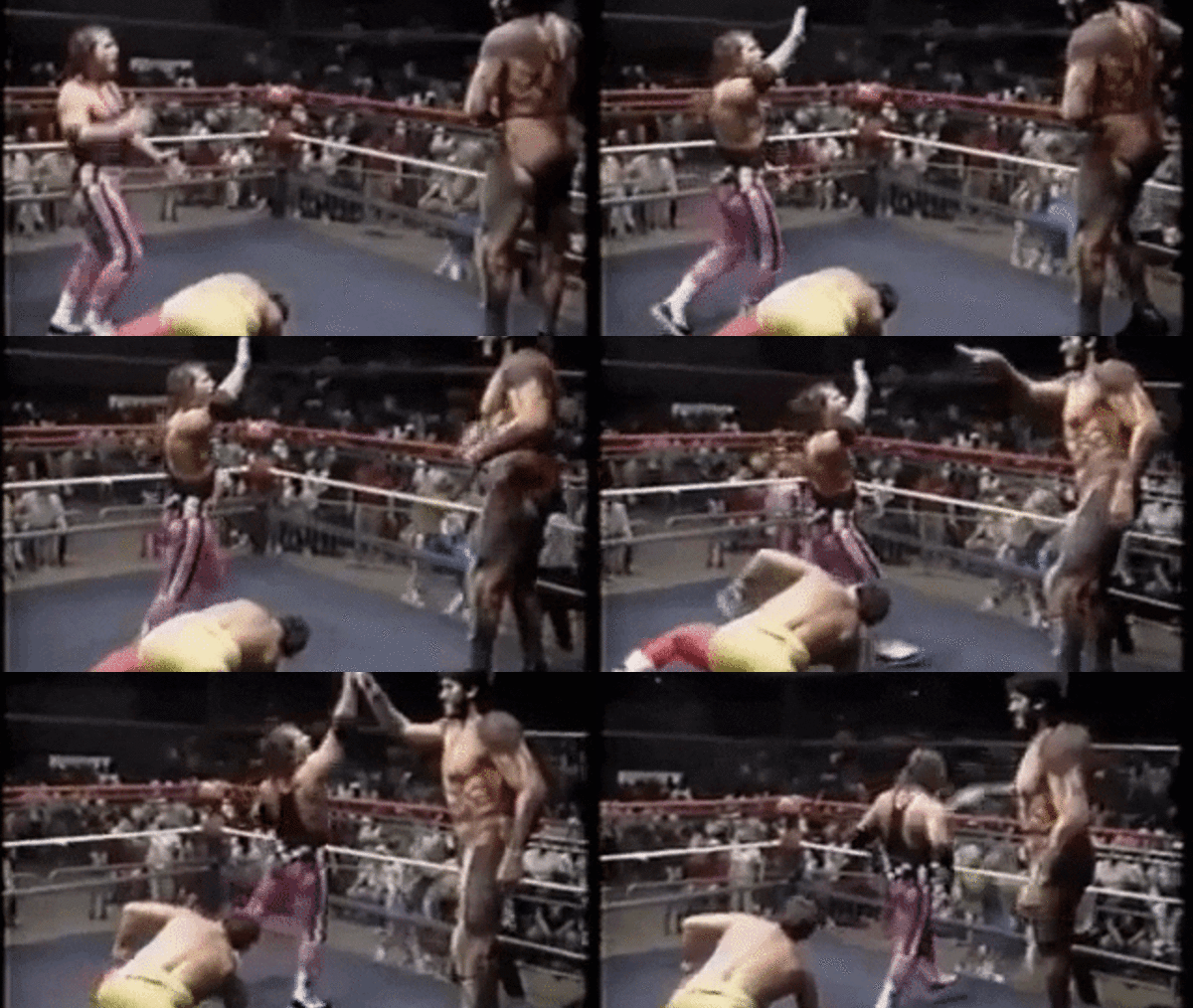
A week later, Lawler and Bret had a steel cage match in Memphis the night before their SummerSlam ’93 scrap, which prompted another sensational soliloquy from McMahon as Hart’s biggest cheerleader. As Lawler cut through WWF babyfaces on headsets during Vince’s broadcasts, the opposite occurred on the Memphis telecasts. "How gullible can you people get?" Vince asked, tacitly letting them in on the gag whilst peering down his nose. McMahon delivered a ‘big surprise’ from the WWF in the in the form of Giant González, but after sneaking by the eight-foot monster, Lawler was next tasked with defending his ‘Unified World Title’ against Tatanka.
The undefeated Native American shockingly dethroned Jerry in another dual purpose decision. He was credible enough to hold the gold, and it preserved an undefeated streak still cultivated on WWF television. Tatanka’s title victory triggered the most famous scene from the entire storyline, and foreshadowed how successful McMahon would be as the top antagonist in his own morality play years later.
Calmly but callously reducing USWA to a carnival sideshow, McMahon ripped through the pretence of their supposed ‘war’, positioning the WWF far above Lawler’s lowly Memphis operation. McMahon then unleashed the ultimate insult - he was wearing the World Title belt. Committing an atrocity he’d one day panic Eric Bischoff may do for real, Vince’s dramatic reveal was a symbolic desecration of everything Lawler stood for, and vindicated all of ‘The King’s on-screen needling. Such desecration was unheard-of at the time, and it was ultimately where the angle peaked.
McMahon later upped the stakes by involving Jerry’s former hated rival and WWF stalwart Randy Savage. In his last truly great contribution to the story, super-villain Vince discussed life’s only three certainties - death, taxes and the Macho Man. Vince was incredulous that the Southern fans believed their hero would even stand a chance against Savage. Their match ended cheaply, and Vince cut one more promo promising to return to Memphis alongside Savage for their feud-ender, but Lawler was indicted on charges of statutory rape and McMahon parked all association with him until the case was dropped in early 1994. It was an abrupt denouement for the angle, with Lawler’s lengthy programme with Bret Hart also shelved thanks to his immediate disappearance from WWF television.
Due to conflict over tape ownership impacting much of the Memphis library, the footage is not currently available on the WWE Network, but has been lovingly compiled as ‘McMemphis’ on YouTube. It is required viewing for any long-term fans, and a snapshot of a world still just about small enough to facilitate an entire mirror universe to the biggest wrestling company in the world.
And as Mr. McMahon’s training ground, it would prove the genesis of one of the industry’s most transcendent characters.