WWE: 10 Most Unoriginal Aspects Of The Fiend
He's The Eater of Worlds...and gimmicks.

After nearly a year away from WWE, Bray Wyatt returned to tremendous fanfare at SummerSlam 2019. The days of cult leader Wyatt were gone, and now the WWE Universe was treated to a mentally torn murder clown. The slow, methodic build of his new character brought fans in, and if merch sales were any indication, the new schtick was a hit.
Whether met with great reception or booed out of the building (oh, how the scars of Hell in a Cell 2019 never healed), there was no denying ‘The Fiend’ knew how to get fans talking. On one side, there were the surreal FireFly Funhouse segments to garner interests. And on the other, there was a cross between Pennywise and The Joker incapacitating his opponents in the ring.
And every time 'The Fiend's popularity tended to wane, a fresh creative direction brought him back into the fold. Fans have witnessed such as of late with the pairing of Wyatt and Alexa Bliss.
However, for as many original ideas Wyatt put into his new persona, he also borrowed quite a few from wrestling history to help ensure fans kept talking.
10. Puppets

Puppets have been a staple of 'The Fiend' persona, tracing back to Bray Wyatt’s teaser vignettes. But Wyatt wasn’t the only wrestler to ever incorporate puppets into an act. There have been multiple instances of puppetry in WWE alone.
In 1998, Mankind attempted to cheer up Mr McMahon at a local medical facility utilizing a sock puppet with a squeaky voice. Mr Socko would become a regular feature for Mick Foley, showing up in skits and serving as a gross glove for the Mandible Claw.
Paying homage to Foley, Santino Marella adopted a reptilian sock puppet of his own and wore it over his hands when he applied one of wrestling’s more ridiculous moves, The Cobra.
Another instance of bizarre ventriloquism in WWE came with the addition of Rocco to the Legion of Doom. It was a doll the group carried around as their mascot, and the concept bombed with the fans. Animal believed the idea came from Vince McMahon directly and might have been a rib related to Hawk returning from a Wellness Policy violation
The instances mentioned above all have humor in common (aside from Rocco, which was only funny to one CEO.), which has helped Wyatt stand out. Rather than restrict his cast to cheesy zingers on the Firefly Funhouse, the puppets maintain a sinister light with a dash of melancholy and brooding introspection. Original? No. Different. Yes.
9. Invincibility

By the time ‘The Fiend’ debuted at SummerSlam 2019, there was nothing anyone could do to stop him from hunting down his enemies. Several legends and Finn Balor quickly realized no amount of offense would affect the murder clown before them.
Such invulnerability wasn’t lost after months either if you cared to ignore the whole Goldberg thing. At Hell in a Cell (hold your jeers, please) 2019, Wyatt took hard kendo stick shots to the abdomen without flinching, as well as no-sold The Stomp eleven times and the Pedigree once. He went on to kick out of everything Rollins gave him at Crown Jewel and win the big belt. He was impervious to Yes Kicks.
When used sparsely, no-selling shocked fans and encouraged chants of “Holy Sh*t.” But it was far from an original concept. From Hulk Hogan to The Undertaker, too many wrestlers have kept the special card of invincibly in their deck to say it belongs to one of them in particular. Still, it certainly doesn’t belong to Wyatt. And only time will tell if he becomes more mortal over time, as seen with ‘The Deadman,’ Kane, and Braun Strowman.
8. Mind-Games

Defined by Oxford Languages as “a series of deliberate actions or responses planned for psychological effect on another, typically for amusement or competitive advantage,” mind games and wrestling feuds were an easy marriage. Mind games became so tightly associated with pro wrestling WWE even named In Your House 10 after them.
Some wrestlers, much like Bray Wyatt today, took the concept much further and into darker depths. Menacing performers such as The Undertaker became synonymous with mind games. They exceeded the normal boundaries of competitive one-upmanship by seizing control of arena lights, summoning druids, and beckoning paranormal forces.
‘The Deadman’ wasn’t alone. Kane often borrowed tactics from his half-brother. Away from the ‘Devils Favorite Demons,’ Triple H was often associated with cerebral attacks on his opponents’ psyches. Even Mr McMahon (“It was me, Austin! It was me all along!”) employed them on a regular basis.
Although heavily produced mind games were exhausted over the last few decades, Wyatt still managed to make the most of the trope thus far.
‘Firefly Funhouse’ Bray Wyatt preferred more whimsical brain teasers when competing with the likes of The Miz or John Cena, whereas ‘The Fiend’ added horrific spins to his mindflubs by sneaking up on his victims and sending them into a state of mental and physical torture.
Hopefully, his character will continue taking the concept of ominous mind games and turning them on their sides and stray away from acts recycled from that of monsters before him.
7. Split-Personality

The Firefly Funhouse generally had a positive response amongst its fanbase, and it also showed viewers the two distinct personalities of Bray Wyatt. On the one hand, you had a goofy, somehow loveable kid show host sporting a red sweater. And on the other, you had a demonic clown brandishing a mask gruesome enough to scare Johnny Gargano stiff during a watch along
However, the split-personality gimmick wasn’t exclusive to Wyatt.
Mick Foley was associated with having multiple personas, but he didn’t merely change his regalia. Cactus Jack, Mankind, and Dude Love all had distinct personalities, looks, and mannerisms. On a rare occasion, all of his characters gathered and deliberated as though ‘Mrs. Foley’s Baby Boy’ was having a mental dilemma before stepping into the ring.
Before being changed by ‘The Fiend,’ Finn Balor was known for his ‘Demon’ alter-ego, which generally was forced out of him during dire times. But perhaps more akin to Wyatt’s current act was that of Abyss in TNA. Following an assault at Genesis, Abyss’ brother Joseph Parks searched for him. As anyone would have guessed, they turned out to be the same person. Showing how much wrestling promotions love a good old split personality, both characters remained on television from 2012 to 2014.
Far from the first dual personality in wrestling, Wyatt did manage to keep things fresh. So far, his character has been given a certain gravitas, a relief from the past's split personalities such as Festus.
6. Evil Clown Gimmick

When ‘The Fiend’ Bray Wyatt arrived on the scene during SummerSlam 2019, fans treated him with much respect and adoration. In part, fans supported Wyatt because they felt he deserved a better shot at success than he received during his poorly booked cult leader act. The other part was how surreal his new act was. The clown character was a drastic turn for WWE. Not only did the gimmick give Wyatt a second chance, but it was also more sinsister than anything fans had witnessed during the PG Era.
Despite how vicious and gruesome ‘The Fiend’ was, numerous articles comparing him to Doink the Clown appeared over the web shortly after he arrived. WWE’s original famous clown was mainly remembered for his babyface persona, who gave candy to children and pulled hijinks on wrestlers such as Jerry ‘The King’ Lawler. However, he did have a much darker side. Another version of the same clown smoked cigars on the way to the ring, using the cherry to pop balloons.
Doink and ‘The Fiend’ were far from the only two clowns to appear in the squared circle. There have been many clown creatures in pro wrestling, including ‘Joker’ Sting, The Los Psycho Circus, ICP, and Kizarny (who was like half-clown or something).
5. Signature Maneuvers
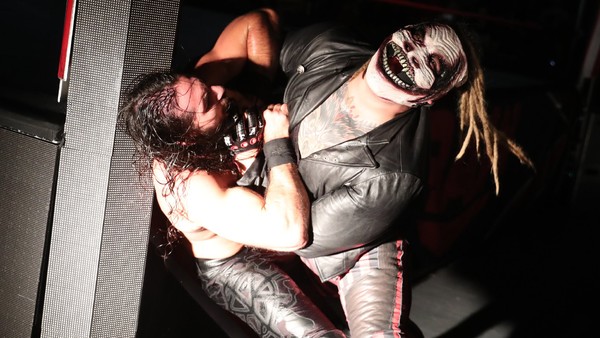
It hasn't been unusual in professional wrestling for a superstar to perform another wrestler's signature move from the past. Randy Orton's RKO was a variation of a jumping cutter similar to DDP's Diamond Cutter. The Rock Bottom, as explained by Dwayne himself, [was] a modified suplex he saw in Japan. Countless powerhouses have added moves like a spear to their arsenal over the years. And they were far from the only culprits. Rarely, though, did one superstar's move set embody several established signature moves as much as Bray Wyatt's did.
The most obvious move 'The Fiend' borrowed was the Mandible Claw, made famous by Mick Foley during the Attitude Era. Considering how Wyatt attacked Mick Foley to obtain the move, however, it could have been argued that the hold was stolen from Foley in the way Sylar used to steal superpowers in Heroes.
The use of the Mandible Claw was sweetened with Foley's involvement, but other signature moves like Sister Abigail have far less original origins. Sister Abigail is a reverse swinging STO, a variation of a maneuver used by many wrestlers of the years, even including Justin Gabriel and Shad Gaspard. Outside of WWE, the move has been popularized by Evil in ROH and NJPW.
Aside from adding a kiss to the STO, Wyatt has done little to give his moves a fresh look. Axel Mulligan's Stunner, Husky Harris' Running Senton - as history shows, the abovementioned weren't the only moves borrowed by Wyatt, and they weren't likely to be the last.
4. Swamp Match Finish

‘The Fiend’ persona was reminiscent of slasher villains such as Jason Voorhees, Michael Myers, and Pennywise from the start. He borrowed certain tropes such as slowly stalking victims before changing them forever and driving them mad with his maniacal clownish behavior. For all that Wyatt borrowed to construct ‘The Fiend,’ he also made sure to execute each idea with his personal touch. Aside from a few hiccups, this formula has made him a mainstay on WWE programming.
The same was not said of the Swamp Fight with Braun Strowman during The Horror Show at Extreme Rules.
The fight itself had little fighting in it. Instead, it was a cinematic bout leaning heavily on drama and suspense with mind-boggling oddities such as Strowman facing a handful of extras, ‘Wyatt Family’ Braun Strowman (the difference between the two being a shirt), and hallucinating about Alexa Bliss.
What the Swamp Fight had a lot of were ideas from other horror shows. The contest's entire closing segment was a WWE Studios version of Friday the 13th Part III down to the bits with the rowboat and ‘The Fiend’ emerging from the waters to drown ‘The Monster Among Men.’ There have been many callbacks to horror stories that influenced Wyatt. Still, the Swamp Fight went a step further by lifting direct moments from the Jason film.
3. Gimmick Changing

Although not everyone who crossed paths with ‘The
Fiend’ was ripped from their gimmicks (looking at you, Billy), many superstars
were scarred for life (or their careers, at least) and transformed into the
worst versions of themselves.
Balor dropped both his babyface and ‘Demon’ personas as he left the main roster for NXT. Seth Rollins became everything he detested and slowly morphed into his current Messiah shtick. Braun Strowman returned to his mean-spirited monster roots.
In fact, Alexa Bliss directly said ‘The Fiend’ had a way of changing people after her own run-ins with the bloodthirsty clown. She soon began to idolize him and carry herself in a Harley Quinn fashion.
For as much as gimmick transformation became associated with Bray Wyatt in WWE, it was also a vital storytelling device for Matt Hardy under his ‘Broken’ persona. However, the concept appeared on Impact Wrestling three years before ‘The Fiend’ debuted in the form of the Lake of Reincarnation.
Considering that Hardy and Wyatt worked closely together in WWE, a few of ‘Broken’ Matt’s ideas might have rubbed off on ‘The Eater of Worlds.’ And it wouldn’t have been the first time if you count the similarities between the cinematic matches at The Hardy and Wyatt Family Compounds. And interestingly enough, Wyatt was tossed into the Lake of Reincarnation not all too long before ‘The Fiend’ arrived.
2. Special Lighting

When the WWE Universe first glimpsed ‘The Fiend’ for the first time, there were no red lights. Aside from an army of strobes, his entrance was dark and simple. Then something changed as he prepared to face Seth Rollins for the WWE Championship inside Hell in a Cell.
His entrance at the pay-per-view had higher production values and bright red lasers. The entrance didn’t faze the live crowd, but when the red lights stayed on the entire match, the WWE Universe became vocal. For those in the arena, the red prevented them from seeing the action. Since then, the red glow remained associated with Wyatt. But he’s not the only one to ever have special lighting and to also have it fall flat.
Kane was primarily remembered for his Badd Blood debut and less for his first match. During the entire nine-minute bout against Mankind, bright red lights bathed the ring, agitating fans, much like Wyatt’s effects. Sin Cara was another performer given special lighting, and it did little to help legitimize him as a competitor.
The bask of a crimson glow might have been intended to help ‘The Fiend’ stand out from other acts, but the special lighting treatment was far from new and garnered the same negative response as its predecessors.
1. From Underneath The Ring

If someone who never watched professional wrestling before tuned in to see a sociopathic clown creep out through the ring canvas, they might have been surprised by what was on the screen. A traffic jam of questions such as “Why is Pennywise on WWE?” or “How long was that guy under the ring for?” surely ensued. Sidestepping them, the new viewer had an opportunity to be entertained.
Alas, wrestling promotions, primarily WWE, have always had a habit of recycling old tricks in times of creative drought.
In 2019 September, Wyatt claimed Kane as one of his victims and appeared to borrow a trick from ‘The Big Red Machine.’ The next month, ‘The Fiend’ emerged from underneath the ring and attempted to drag Seth Rollins down to… somewhere… with him. And he did the same thing again a month later, this time with Daniel Bryan. Wyatt alone repeated the parlour trick enough times to make a new viewer tired of it. For a longtime fan, the repetition was even more blatant.
Diehard wrestling fans had seen the likes of Kane and The Undertaker come up through the canvas to drag their rivals, and each other, to the depths of Hell countless times. Even The Big Show broke through the ring during his 1999 WWE debut at St. Valentine’s Day Massacre: In Your House to help Mr McMahon defeat Steve Austin (which failed in ironic fashion). While the spooky peek-a-boo entrance fits that of Wyatt’s dark character, it was clichéd long before ‘The Fiend’ ever arrived.
WWE Quiz: Bray Wyatt - How Much Do You Know About The Eater Of Worlds?
