WrestleMania is the grandest event in professional wrestling. A great match or a memorable moment can instantly immortalize a Superstar and catapult them into the main event stratosphere. Throughout the 30-year history of the event, that has been the case on several occasions. Competitors such as "Stone Cold" Steve Austin, The Rock and the Undertaker have seen their stars rise thanks to a single breakout performance at the biggest show of the year. They have each gone on to main event their own WrestleManias and become some of the most beloved and respected stars in the process. This year, Daniel Bryan has the opportunity to join some of the most celebrated stars in wrestling history when he takes on Triple H and, potentially, competes in the triple threat main event for the WWE World Heavyweight Championship. If everything goes the ways fans hope it does, Bryan could easily etch his name into the history books as one of those stars who rose to the occasion and left fans with a WrestleMania performance that will ultimately establish him as one of the top stars in the industry. In preparation for Bryan's big night, as well as what could be a monumental evening for Bray Wyatt, here is a look back at 10 Superstars who broke through on the biggest night of the year and became major stars as a result.
10. "Macho Man" Randy Savage
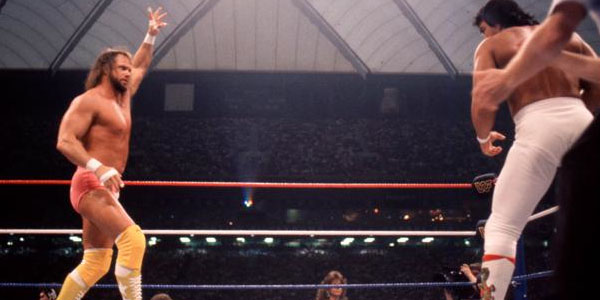
It would be easy to look at Randy Savage's career and mark WrestleMania IV as the night he really broke through the proverbial glass ceiling to become one of WWE's biggest stars but in actuality, his break came a year earlier, albeit in defeat. At WrestleMania III, Savage wrestled one of the greatest matches in WWE history when he defended his Intercontinental Championship against Ricky Steamboat. The match, full of nearfalls and counter wrestling, brought an new level of athleticism and drama to the event. Over 93,000 fans watched as two competitors in their prime thrilled them with moves that no one else on the card was capable of. Savage stood out, in particular, as he was able to mesh his showmanship with his superb in-ring skill. He set the pace for the match and his chemistry with Steamboat carried it the rest of the way. He would fall victim to a small package that ultimately ended his year-plus reign as champion but there was a notable buzz surrounding the Macho Man following the match. Savage and Steamboat stole the show right out from underneath the much-hyped, much-anticipated main event between Hulk Hogan and Andre the Giant. To this day, some 27 years later, the Intercontinental Championship match at WrestleMania is still looked back upon as one of the greatest matches to ever take place at the event. Some still argue that, despite legendary performances from Shawn Michaels, Undertaker, Bret Hart and Steve Austin in years that would follow, that match still sets the benchmark for WrestleMania bouts. The match instantly made Savage a much bigger star than he had been entering the event. He turned babyface shortly thereafter, becoming one of Vince McMahon's most popular babyface. By the time 1988's WrestleMania IV rolled around, he had earned McMahon's trust to the point that it was decided that he would be the company's next heavyweight champion. The rest, as they say, is history.
9. The Ultimate Warrior
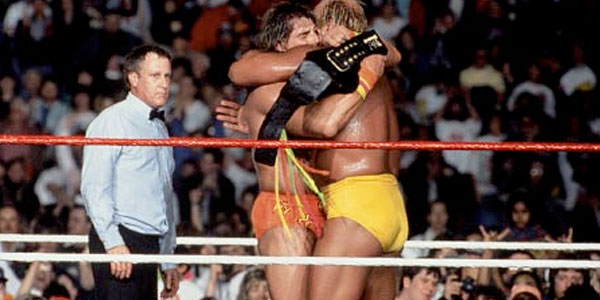
WrestleMania VI returned to a dome setting for the first time in three years and there was an aura and mystique surrounding the event. The darker setting made the show more intimate, despite one of the largest audiences the company had ever drawn to that point. There was an electricity in the air, a feeling that something big was going to happen. In the main event of the night, Intercontinental champion the Ultimate Warrior took on WWE champion Hulk Hogan in the first-ever title vs. title match at a WrestleMania event.Like a heavily advertised prize fight, the match became a must-see attraction. The two most popular stars in the company squared off in an epic encounter that split the audience and had fans in Toronto's SkyDome on the edge of their seats. By the time Hogan "hulked up" and had his opponent reeling, the fans were at a fever pitch. It looked like the Hulkster was going to put another challenger away and continue building his legacy as the greatest star the industry had ever seen. Then it happened. Hogan missed a leg drop, Warrior caught his with a big splash and covered. The referee slapped the mat three times and Warrior was declared the new WWE champion. Hogan showed great sportsmanship in handing Warrior the title and embracing him before riding off into the proverbial sunset. And with that, Warrior was a made man in WWE. His victory was made even more impressive by the fact that it came against Hogan, who had not lost cleanly in nearly six years. It was a big deal that this young, charismatic and enigmatic star had managed to do what other great Superstars could not and as a result, he became one of the iconic figures of the era. The match is a moment that will be replayed and relived on April 5 when he takes his place among the greatest stars of all-time in the WWE Hall of Fame, one night before WrestleMania XXX.
8. The Undertaker
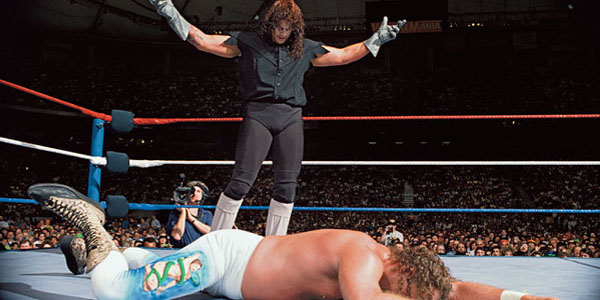
WrestleMania VIII was an interesting show in that it was the first time that fans got the impression that Vince McMahon was looking to move his company out of one era and into another. There was a more attention put on young stars such as Shawn Michaels, Bret Hart and a captivating character named The Undertaker. The man labeled "the Phenom" by the late, great Gorilla Monsoon had been around for a year-and-a-half by the time the event rolled around on April 5, 1992. He had captured the WWE championship a year after debuting but was more or less a means to an end as he would lose the title just days later to set up the critically acclaimed 1992 Royal Rumble. Shortly thereafter, he would turn babyface when he prevented Jake Roberts from using a steel chair on Miss Elizabeth and Randy Savage. It was that show of defiance that set up Undertaker's match with the man nicknamed "the Snake," a match that would not only legitimize the Dead Man in the eyes of the fans but also help him finally breakout as one of WWE's top stars and leaders of the new generation of competitors. At the time of WrestleMania VIII, Roberts was still perceived to be one of the top stars in WWE by fans. One of the most recognizable performers in the industry throughout the late-1980s and into the early-1990s, he had a way of captivating audiences with his superb promo skills. He also had one of the most deadly finishing maneuvers in all of wrestling in the DDT. No matter how flashy the finishers became over the years, that move was always protected and sold by commentators as a potentially deadly move. At WrestleMania, Undertaker demolished Roberts, whose offense had no real affect on the imposing competitor. The Phenom even survived two DDTs, sitting up after each before finishing Roberts off with a Tombstone on the arena floor. The win was not only met with the biggest pop of the Undertaker's career to that point, it also came at the expense of one of the greatest and most believable stars in WWE history. Roberts made him look like a world beater in one night and as a result, Undertaker became one of the top stars in the company and, eventually, the most respected star to ever grace a McMahon-owned ring.
7. Shawn Michaels
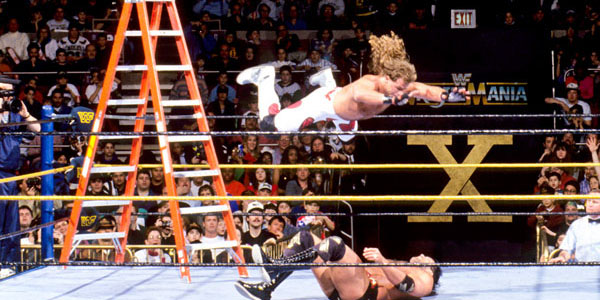
From the moment Shawn Michaels turned heel in late-1991 and adopted the "Heartbreak Kid" moniker shortly thereafter, it was clear that Vince McMahon had big plans for the San Antonio native. He watched as Michaels evolved into one of the best ring workers in the business and had no hesitations about rewarding his hard work with the Intercontinental Championship. Unfortunately, a failed drug test would lead to a suspension for Michaels, killing all of the momentum, he had garnered to that point. When he returned in late-1993, he immediately took exception with the idea that Razor Ramon was recognized as the Intercontinental champion when he, himself, had never actually lost the title. With two Superstars staking claim to the title, it was announced that they would compete in a ladder match in which both Michaels and Ramon's belts would be hung from the ceiling and the winner would be the competitor to retrieve both. The bout would take place on March 20, 1994 at WrestleMania X. Michaels thrilled the Madison Square Garden audience by bumping around the squared circle for Ramon and performing high risk maneuvers. While Ramon was very good, as he typically was, Michaels clearly outperformed him en route to stealing the show and revolutionizing the ladder match. Ramon would win the match when Michaels became trapped in the ropes but, like Randy Savage before him, Michaels gained more in a loss than he would have in a win. He instantly became on of WWE's marquee stars. He and friends Ramon, Diesel and 123 Kid became integral parts of WWE programming and gained tremendous political power behind the scenes. It would be two years before Michaels captured the WWE Championship and became the unrivaled star of the show but that title was merely confirmation of the fact that he became a major star in professional wrestling the instant his match with Ramon concluded at WrestleMania X.
6. Stone Cold Steve Austin
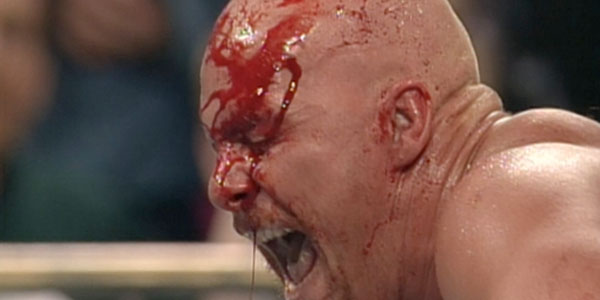
Perhaps the greatest breakout performance in WrestleMania history came on March 23, 1997 when Steve Austin squared off with Bret Hart in a submission match at the event's thirteenth installment. Austin had been riding a wave of momentum since his first match with Hart in November of 1996 at the Survivor Series. That bout was a five-star classic and cemented Austin as one of the best wrestlers on the planet. His foul mouth and take-no-prisoners attitude endeared him to a portion of the audience who was in their teen and young-adult years and had, quite frankly, grown bored with the traditional smiling babyface. So when Austin entered the Rosemont Horizon for his match against Hart at WrestleMania 13, he had already garnered a great deal of support from the audience. Austin and Hart tore the house down in Chicago as they delivered one of the greatest matches, and stories, in WWE history. It was a violent, vicious brawl that saw each competitor attempting to force a submission out of their opponent. At one point, Hart sent Austin face-first into the steel guardrail, busting him open in the process. With blood pouring from a laceration on his forehead, Austin continued to dish out punishment to his hated rival but Hart was able to take control and lock in the Sharpshooter. The camera panned in for a closeup of Austin's face, blood spilling over his eyes, down his cheeks and into his mouth as he screamed in pain. Summoning all of his remaining energy, Austin tried to break the hold but Hart held on and sat down deeper on the lower back of his opponent. With nothing left, Austin passed out and special referee Ken Shamrock called for the bell. The fans in Chicago booed Hart, who continued his attack after the bell, and cheered as Austin struggled to his feet, refusing help. As Stone Cold limped to the back, wiping blood from his eyes, it became clear that his performance, coupled with the response of the audience, had created a major star. Few could have imagined just how major a star Austin would become. By the following year's event, Austin would be the top babyface in the industry and the leader of an era that would result in the greatest financial success WWE ever experienced.
5. The Rock
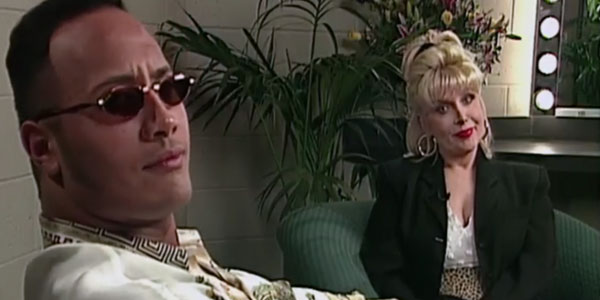
The first-ever third generation star in WWE history, Rocky Maivia had a very bumpy start to his WWE career. Pushed from the very beginning as a smiling babyface, he was turned on by the fans and routinely had chants of "die, Rocky, die" directed at him. An Intercontinental Championship victory over the hated Hunter Hearst Helmsley did little to help as many believed the young, athletic former college football standout was being shoved down their throats. For most competitors, an injury can be damning but for Maivia, it came at the right time. He was able to take time off, recover and try to figure out what he could do differently to change the reactions found himself on the receiving end of. The answer: return as a villain. He joined the Nation of Domination and called himself as "The Rock." The most important element of his improved character was the work he put in on the microphone. He showed natural charisma and set himself apart from other talkers by referred to himself in the third person. It made for a very entertaining act and entering WrestleMania XIV, really got over with the WWE fan base. Speaking of WrestleMania, the March 29, 1998 would see him breakout as more than just an entertaining midcard talent. On that night, he would showcase the talents that would lead to him becoming one of the greatest stars in professional wrestling history. Early in the event, he sat down with celebrity guest star Gennifer Flowers for an interview. It was during the segment that Rock first uttered the words, "if ya smell what I'm cookin'." That catchphrase would become one of the most iconic in WWE and would be chanted and cheered along with over the next decade by fans across the globe. Later in the night, he defended the Intercontinental Championship against Ken Shamrock in a match that saw him beaten from pillar to post. He tapped out, which should have led to Shamrock's first title reign. Unfortunately, the former UFC star let his emotions get the best of him. He took down officials and continued to brutalize Rock, which resulted in the self-proclaimed "People's Champion" being wheeled out of the arena on a stretcher. The decision was reverse and the title returned to The Rock who, never one to miss out on an opportunity to gloat, weakly held the title in the air as he was stretchered to the back. He may have taken another beating from Shamrock but that one moment of holding the title up, despite retaining in the weakest of ways possible, was such a great heel move that even his harshest of critics appreciated the gesture. Rock would parlay the momentum he gained at WrestleMania into a major push throughout the remainder of 1998 and by the time Survivor Series rolled around in November, he would be the WWE champion and the top heel in the sport.
4. Chris Benoit
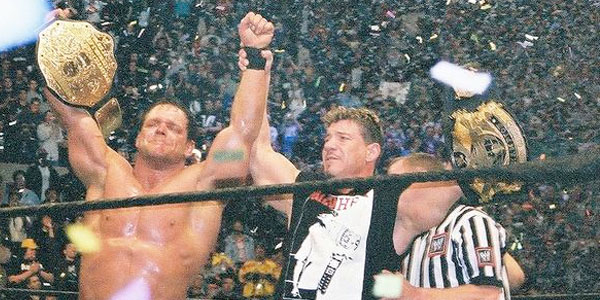
For nearly a decade, Chris Benoit had been recognized as one of the greatest in-ring workers in the world but, for whatever reason, could never quite breakthrough the glass ceiling and reign atop any of the promotions he competed for. His time in Extreme Championship Wrestling was too short, politics prevented him from rising to the main event scene in World Championship Wrestling and, for whatever reason, the time was never right in World Wrestling Entertainment. That changed when Benoit entered the 2004 Royal Rumble match at number one and outlasted 29 other Superstars to earn a guaranteed shot at either the WWE or World Heavyweight Championship at WrestleMania XX. He chose the World title, held by Triple H. Shawn Michaels, who had been embroiled in an intense rivalry with The Game, joined them and a triple threat match was booked for the main event of the show. With three of the best workers involved in the most important title match of the year, fans inside the historic Madison Square Garden in New York knew they could expect a classic bout. And that is exactly what they got as Benoit, Michaels and Triple H perfected the triple threat formula, delivering the best of that match type that WWE had or has ever seen. Despite being suplexed through an announce table, Benoit showed grit and determination as he fought back into the match, ducked under a Sweet Chin Music attempt from Michaels, dumped him over the top rope and locked Triple H in the Crippler Crossface. The Garden came unglued and chants of "tap" filled the air. To his credit, The Game fought for several moments but eventually had no choice but to tap. The referee awarded the World Heavyweight Championship to a clearly emotional Benoit, who was soon joined by real life best friend Eddie Guerrero. Their embrace in the center of the ring was the most emotional conclusion to a WrestleMania event ever. Benoit's death and the circumstances surrounding it, however, have caused it to essentially be erased from WWE history. Regardless of what would happen in the future, Benoit's victory over Triple H and Shawn Michaels cemented him as one of WWE's top stars and the centerpiece of Monday Night Raw for the entirety of his four month title reign.
3. Batista
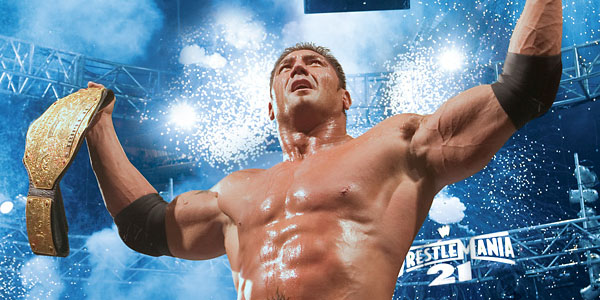
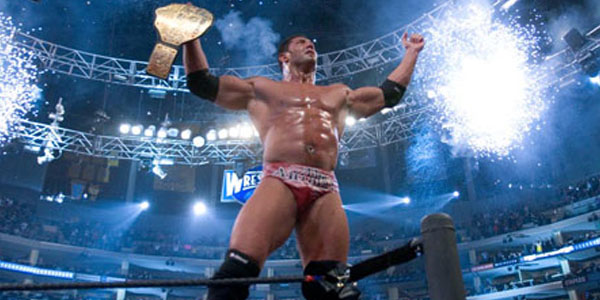
When the Evolution faction was devised, it was done so with the intention of creating new stars that could carry WWE into the future. Triple H and Ric Flair would handpick two bright young competitors to join them so that they could mentor and mold them into the performers WWE could lean in the years to come. One of those stars, Randy Orton, was clearly the guy the company had big plans for but it was the second star, the less-celebrated Batista, would way pay dividends for Vince McMahon's wrestling empire much sooner. In 2004, Evolution turned on Orton following his World Heavyweight Championship victory over Chris Benoit at August's SummerSlam. While Batista was invested in ending the self-proclaimed Legend Killer along with Triple H and Flair, he also began showing signs that he was far smarter than most gave him credit for. He sat back and watched as The Game's ego got in the way more times than not and realized that if Triple H was willing to drop Orton as soon as he became a threat, what was stopping him from doing the same to Batista? The man nicknamed "The Animal" by Jim Ross began to display more and more independence as each week passed and by the time the Royal Rumble approached in January, he was on the receiving end of a groundswell of support from fans who appreciated the subtleties of the character and the quiet charisma he exuded. He entered the Rumble match and won it after eliminating John Cena. The victory set him up for a guaranteed title opportunity at WrestleMania. Weeks later, Batista revealed that he would challenge Triple H for the World title, much to the shock of his Evolution mentor, and drove him through a table with a powerbomb. The segment provided Batista with the spark necessary to complete his babyface turn and set up one of the most anticipated matches on the WrestleMania 21 card. Batista and Triple H would have many better matches than their WrestleMania bout but the quality of the match, which was more mediocre than bad, was of little consequence. What mattered was that Triple H took a brutal beating at the hands of his former protege and put in great effort to make Batista look like a legitimate championship-worthy competitor. To his credit, Batista more than lived up to his end of the deal, delivering a solid performance in which he never looked lost or overwhelmed by the position he was in. The win, set up by a Batista Bomb to the bloody champion, signified the passing of the torch and the creation of a brand new main event talent for World Wrestling Entertainment.
2. John Cena
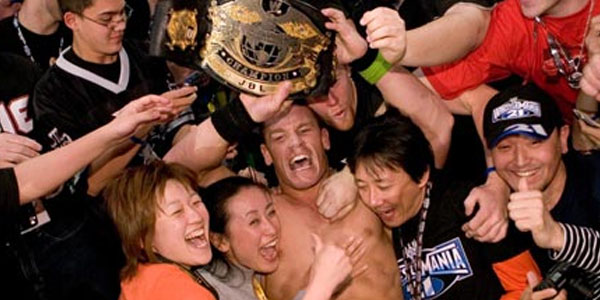
While Batista was gaining momentum and moving up the ranks on Monday Night Raw, John Cena was doing the same on SmackDown. A former standout with developmental company Ohio Valley Wrestling, Cena debuted on the blue brand in June of 2002, immediately making an impact by nearly knocking off Kurt Angle in an unexpectedly competitive match. Unfortunately, that momentum was not sustained by Cena or creative and suddenly, the West Newbury native found himself floating aimlessly around SmackDown, winning some and losing some but doing nothing of any real significance. Then came the Halloween episode in October of 2002. Cena, dressed as Vanilla Ice, exhibited an ability to freestyle rap and the act caught on. Donning throwback jerseys and spitting rhymes on the mic, Cena gained a following as the self-proclaimed "Doctor of Thuganomics." While the gimmick was treated as a joke at first, Cena's rhymes became more and more entertaining and, like the Rock before him, he used the rapping to direct pointed insults at his opponents. It caught on with the audience and soon, Cena made the transition from yapping heel to popular babyface. Like some of the great stars before him, Cena rose up the ranks gradually, capturing the secondary United States Championship and doing his time in the midcard before receiving his first main event push in early-2005. He was the last man eliminated from the Royal Rumble, then defeated Kurt Angle to earn a shot at the WWE Championship. The champion at the time was John Bradshaw Layfield, who was a wealthy, loudmouth Texan who showed an innate ability to escape with his title no matter the competition or the hellish match type he was forced to compete in. With the white collar vs. blue collar storyline supporting it, the championship bout occurred on April 3, 2005 at WrestleMania 21. Like the Batista-Triple H match that would proceed it, the bout between Cena and JBL was far from a wrestling classic. The regular singles match really hurt the intensity of the feud, which would better be on display at Judgment Day two months later when they met in a bloody I Quit match. Cena was energized and it showed late in the bout as he ducked a Clothesline From Hell attempt by the champion, hoisted him on his shoulders and planted him with the Attitude Adjustment (then known as the F-U). The match completed Cena's journey to the top of the company and, unbeknownst to fans at the time, created the biggest star of this generation.
1. Edge
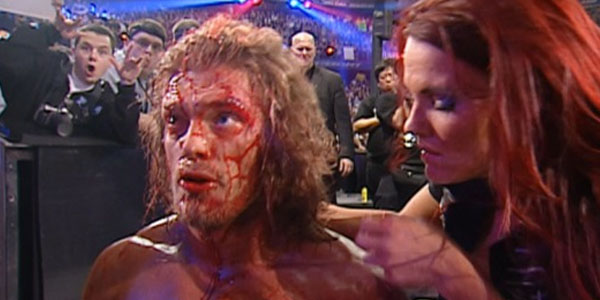
Edge was one of those Superstars that WWE knew it wanted to push dating all the way back to his debut in 1998 but every attempt they made to do so never quite worked out the way they would have liked. A singles push following the split of his team with Christian worked, to an extent, but a logjam of talent at and near the top of the card prevented him from making any real upward movement. A neck injury in 2002 and reluctance from fans to accept him as a top babyface upon his return in 2004 hurt later attempts to give him that major push. A heel turn in late-2004 allowed Edge to show some intensity and aggression that he had never really had the opportunity to display but it was not until news broke of a very real affair between he and Lita, the girlfriend of Matt Hardy, that Edge received the boost that he needed. With crowds chanting obscenities in Lita's direction on a weekly basis, she was turned heel, and paired with the former intercontinental and tag team champion. Together, they became the most hated act on WWE programming. Dubbed the Rated R Superstar and touting his penchant for sex and violence, Edge excelled. With Money in the Bank in his possession and a guaranteed title opportunity at his disposal, he became a must-see Superstar leading into 2006. At the January 8 New Year's Revolution pay-per-view, he cashed in his title shot and defeated John Cena to capture his first WWE Championship. The following night's "Live Sex Celebration" between he and Lita, as well as the TLC match between he and Flair for the title, led to increased ratings for Monday Night Raw. That fact did not seem to matter as Edge dropped the title back to Cena weeks later at the Royal Rumble. Frustrated and feeling slighted, Edge was determined to show management why he deserved a spot at the top of the card. Luckily for him, he would have a WrestleMania dance partner in Mick Foley, who wanted desperately to have a great match on the biggest show of the year and achieve that WrestleMania moment that eluded him throughout his legendary career. Edge and Foley provided fans with a masterfully crafted hardcore match that featured the use of thumbtacks, barbed wire, steel chairs, a wire-wrapped two-by-four and the steel ring steps. The finish instantly became a highlight in both men's careers and an unprecedented WrestleMania moment. After catching Foley low with a two-by-four, Lita saturated a table in lighter fluid and set it ablaze. Edge took off from one side of the ring and delivered a spear through the ropes, sending both he and Foley through the flaming table and to the arena floor. The crowd in Chicago erupted as the violent and chaotic scene they had just witnessed, then applauded both competitors following Edge's pinfall victory. It was a moment that proved to the entire world the lengths Edge would go to become a star in the industry. And he did. The following night, he shared the ring with Cena and Triple H and was immediately inserted into the WWE Championship picture. He would capture four WWE titles and seven World Heavyweight titles before prematurely retiring in 2011 due to a severe neck injury. He would be inducted into the WWE Hall of Fame in 2012.
Erik Beaston is a freelance pro wrestling writer who likes long walks in the park, dandelions and has not quite figured out that this introduction is not for Match.com. He resides in Parts Unknown, where he hosts weekly cookouts with Kane, The Ultimate Warrior, Papa Shango and The Boogeyman. Be jealous.