WWE: 16 Days That Changed Wrestling Forever

Those days when wrestling would never be the same again.
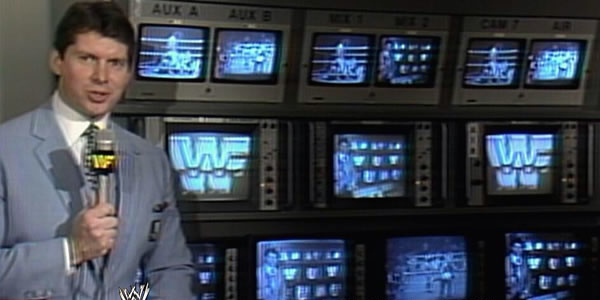
The history of the WWF / WWE is almost exciting as the wrestling matches. Vince McMahon took over a small regional promotion and transformed it into a global entertainment corporation. It's an extraordinary story which no one would have believed possible fifty years ago €” if an unawares person watched Vince's story in a movie they would no doubt describe it as far fetched fiction. But it really happened. The World Wide Wrestling Federation a 37 year old Vince bought in 1982 is now barely recognisable. Pro wrestling is still a fundamental, but in day to day business in 2014 there is so much more to WWE. Our story starts in 1979. An ambitious young man is trying to impress his father, helping him to promote wrestling matches in the New York area. Showing plucky entrepreneurial spirit, the self starter purchases the Cape Cod Coliseum. Vince McMahon Snr is impressed, as son Vince Jnr shows promotional flair in booking music, hockey and wrestling at the Coliseum. This as much as anything convinced the older Vince that the younger McMahon was a capable hand to take over the WWWF. By 1980 the first major moment in the future success of the WWF happens, McMahon Jnr is made Chairman as Vince Snr starts to suffer ill health. A promise is made between the McMahon pair, Vince will always respect and honour the relationships of the WWWF. The company will not impose itself outside the North East of the USA. It was almost mafia like in this era of wrestling. Promoters had their territory and everyone respected this. Much like Don Corleone wouldn't cross over an imaginary border, Vince Snr wouldn't either. The North East was McMahon territory and the rest of America belonged to other promoters. Jim Ross has stated that any disregard for this was unimaginable. Vince Jnr's imagination was running wild however. In 1982 he used what he describes as "smoke and mirrors" to buy the WWWF outright, and got to work with wife Linda in changing the industry ...

16. Vince Unites The Territories, Black Saturday, July 14, 1984

Vince Mcmahon Black Saturday Vince McMahon is a ballsy individual. He doesn't really do fear. He saw something which no other wrestling promoter could see, the potential for a national wrestling company. Lots of wrestling territories under one umbrella was an obvious way to create more lines of money coming in. Vince looked at the territory business model and realised nothing was stopping him. Why shouldn't he expand into new locations? Well, there was the promise he made to his father. In addition to this, there was also the threat of death. Jim Ross in 'WWE Unscripted' mentions that the regional promoters all met and discussed how to deal with Vince Jnr's agressive expansion into their areas of business. "Kill him," was one un-named promoter's response. J.R who was attending the meeting knew there and then that Vince would beat these guys. The regional heads had became old and lazy, they thought that killing Vince was the best idea rather than actually being creative and thinking how to make their own success. The old timers were blowing smoke and weren't going to kill anyone, Vince meanwhile was a young hungry force of nature. He snapped up region after region, syndicating WWF television shows in the process. Vince's more exciting events and better produced TV shows soon put the lazier promoters out of business. While at first the aggressive strategy was costly, almost putting Vince out of business, he soon started signing up rival promoter's talent with the additional lines of income he made from advertising and merchandise. Vince was changing the way a promoter made money. The biggest day in the expansion was Black Saturday, when McMahon went into the Southern territories in 1984. Vince bought the time slot for Georgia Championship Wrestling, effectively owning WCW, his future rival. Vince now had events and tv shows across the USA. He did however end up selling his Georgia slot to Jim Crockett, believing it lacked value. Crockett would end up snapping up the rest of the southern NWA regions and eventually sell what became modern day WCW to Ted Turner in 1988. Vince had established himself as a national business, but also set the vulnerability for a future North / South wrestling war. The seeds of WWF vs WCW had been planted.

15. Vince Signs Hulk Hogan And Makes Him A Star, December 27 1983

Six months before Vince entered the South, he had signed a wrestler who traded on the name Hulk Hogan. It was another bold move, basically pulling the rug from under Verne Gagne's AWA promotion. Hogan had a star name, the AWA at the time was a big rival to the WWF, Hogan's name was known and respected. His appearance in the Rocky franchise meant he was more than a wrestler, he was a superstar. His look and charisma also helped, and McMahon decided to bet his company on the man he termed the Hulkster. Right away Vince pushed the star as something massive. Hogan won his first WWF Championship within a month of signing, taking the belt on January 23rd when he pinned The Iron Sheik in Madison Square Garden. Gorilla Monsoon on commentary yelled "Hulkamania is here!" and a sensation was born. A sensation indeed. Hogan had a magnetic personality and drawn like no one ever had. Vince knew exactly how to get the most out of his star act, setting deals up with MTV and NBC to showcase the star. Hogan wasn't just a wrestling name, he was a pop culture name. The WWF was no longer a wrestling promotion, it was a full blown national entertainment company. McMahon and Hogan had changed things forever. Meanwhile in the southern states, wrestling fan Ted Turner looked on with interest. Vince had shown the way, but the surface had only just been scratched for the money that could be made in pro wrestling.

14. Wrestlemania 1, March 31, 1985

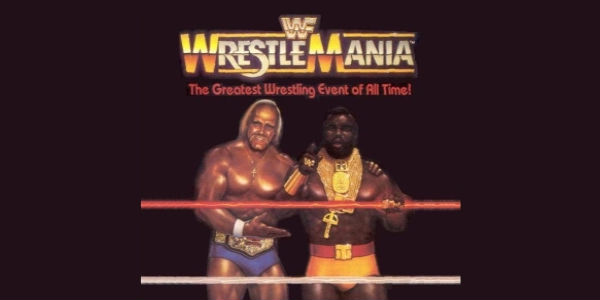
Many people might have been satisfied with the increased revenue and fame Hulkamania had brought. But Vince pushed further. Rather than play it safe with the fortune he was enjoying, he instead betted all his chips on an event he called Wrestlemania. His advisors thought he had gone mad. The WWF would enter uncharted waters by promoting a mega event featuring wrestlers and celebrities. Vince's bold strategy was to broadcast it on closed circuit television, essentially meaning the crowd attendance wouldn't be limited to seats in the arena. Vince smelled money. Jim Crockett had done something similar with Starrcade in 1983, but this was different, big production, big names and big money. Huge names like Muhammad Ali and Mr T were getting paid to come in. The old guard couldn't believe it, but Vince knew better, what worked in the past wouldn't work in the future €” Vince was innovating a new vision, creating the future. The financial risk paid off. Wrestlemania became the standard for wrestling events. Vince McMahon had created a new industry, selling events on a pay per view business model. The WWF took off massively, future events like Wrestlemania 3 filling entire stadiums. Success only emboldened Vince and his business grew and grew. His touring circus, pay per view business and merchandise aimed at kids all combined to make the WWF a money making machine. It was perfect, but a storm was gathering down south.

13. Eric Bischoff Becomes An Executive In WCW, 2nd April 1993
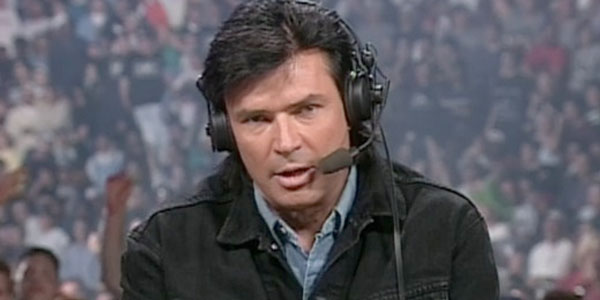
The WWF enjoyed continued success in the late 1980s and early 1990s, but was increasingly disturbed by the emergence of Ted Turner's WCW. The southern based wrestling company were trading on the same national basis, with the same business model. Turner had his own network and far more financial (and business) resources than McMahon. Gradually Vince started to see a decline in fortunes, but as much as anything, this was just the natural hangover after the 80s wrestling boom. WCW was on the radar, but wasn't a huge concern ... yet. In the spring of 1993 a man named Eric Bichoff was promoted to the position of Executive Producer. A year later he was made Executive Vice President, essentially meaning he ran WCW. He would prove to be McMahon's greatest ever nemesis, a creative visionary who had the guts to take risks and fight the WWF for dominance. Bischoff additionally had a blank cheque book and was able to sign up a string of acts who Vince McMahon had made famous in the WWF. Overnight, WCW seemingly transformed into the better perceived wrestling company. Bischoff's signing of Hulk Hogan was the biggest statement of intent. He now had the most famous star in the industry and had put Vince on the back foot, as the WWF chairman struggled to find the next big star to take his company forward. The industry had changed. The WWF had been the only player in town for a decade, but now they found themselves on the outside looking in as WCW set about establishing itself as the next wrestling sensation. Bischoff was the biggest factor in this. He knew he could beat Vince, he knew McMahon had turned into the old lazy promoter he had himself dispatched in 1983. Eric had revolutionary ideas, Vince instead turned to traditional ideas. Worse still, McMahon was starting to have problems outside the ring.

12. Vince McMahon Found "Not Guilty", July 22, 1994

One of the ways WCW managed to get ahead was because Vince took his eye off the ball. The WWF Chairman was indicted in 1993 on charges of distributing steroids to his wrestlers. Essentially he was being called a drug dealer. The scandal engulfed the WWF, leading to Vince stepping down temporarily while wife Linda ran the company. The other thing that had to go was muscle bound wrestlers - meaning as a result champions like Bret Hart and Shawn Michaels emerged. Was this a positive change for the business? In some ways yes. Michaels in particular was the best wrestler ever, but his look didn't draw. Muscular stars were marketable, WWF business fell off a cliff. The trial was a PR disaster. McMahon's image has never really recovered, with accusations of sleaziness and shallowness still following him around to this day. Casual fans still think WWE is a 'roided up freak show. Nevertheless, McMahon was acquitted of all charges. Officially he never provided steroids to his talent.

11. Raw Vs Nitro: The Monday Night Wars Begin, September 4th 1995
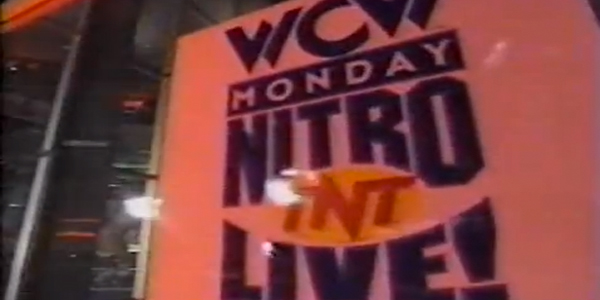
On Setember 4th 1995, WCW's flagship show Nitro went up against WWF Raw on Monday nights. It was the start of a brutal competition between Bischoff and McMahon for wrestling supremacy, in which both nearly went out of business ... with one of them eventually being killed off in 2001. The six year war started with WWF superstar Lex Luger showing up on Nitro as the newest WCW employee, a mark of the way this war was to be fought. McMahon would lose more of his big name stars to Turner, unable to compete with the big corporate chequebook down in Atlanta. Creatively Bischoff had the edge too. The two companies traded audience share early on, but WCW was the clear industry leader by late 1995. In 96, Bischoff really twisted the knife. He captured former WWF Champion Kevin Nash and Scott Hall. The creative idea that Bischoff had was to form a new faction of Hogan, Hall and Nash. The story was that they had come in from the WWF to take over the WCW, going into business for themselves as the New World Order. It was compelling storytelling and the Hogan heel turn was genius. WCW ratings started to trounce the WWF and the emergence of Bill Goldberg in the WCW Power Plant was another boon to Bischoff's hopes of killing his competition. Eric believed it was just a matter of time until his superior creative and financial clout put Vince out of a job. McMahon was despairing. Money was drying up. The WWF came close to going out of business on a few occasions from 95 to 97. Something needed to happen.

10. Austin And Rock Emerge As Vince Screws Bret, November 9th 1997
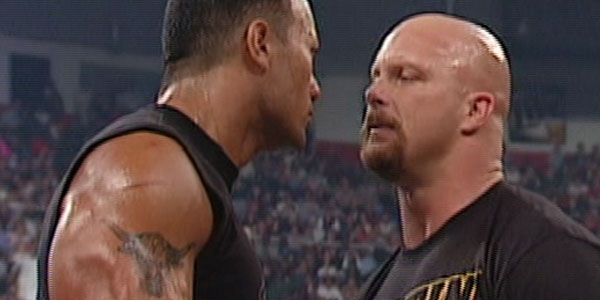
The re-emergence of the WWF came about in completely unplanned and unpredictable drama. The catalyst proved to be the infamous Montreal Screwjob. On the verge of defeat from WCW, Vince could no longer pay his WWF Champion Bret Hart. As a result, the Canadian signed with WCW. This caused a severe problem for McMahon, as Hart was still the Champion. He needed to get the belt off Hart but the next major WWF event was Survivor Series in Montreal Canada. Hart flat out refused to lose in Canada. What was McMahon to do? He envisioned a nightmare situation in which Hart took the belt to WCW and dumped the WWF Championship in a bin. WCW had form for this and McMahon's paranoia was in overdrive. On the suggestion of Triple H, Vince decided to have Shawn Michaels screw Bret Hart out of the title. The ref would call for the bell when Hart was in a submission spot, making him lose the belt. The real life incident changed the industry forever. It happened at the same time as the internet boom, creating a sensation as fans started following the WWF for the real life stories as much as the on screen stories. A new fascination with the industry was booming. In addition to this, McMahon was now a huge heel, hated by the fans for what he did to Bret. Showing his creative innovation of old, McMahon seized on the potential. He blurred the reality with fiction, creating a new story of a bad guy boss being tackled by a heroic good guy. The story became so successful that it still runs today (Hunter vs Bryan). All this happened at the same time as two extraordinary new characters were emerging. The Rock and StoneCold Steve Austin were a rare combination of charisma and wrestling skill. A new 'Attitude' was emerging in the WWF, a mean streak in the faces and even nastier streak in the heels. The old guys like Michaels and Hart were on the way out as the new sensations of Rock, Austin, Foley and HHH gained prominence. Austin in particular went massive, bigger than Hogan had ever been. His merchandise sales were through the roof. With Stonecold as WWF Champion and feuding with Vince McMahon, the WWF retook the initiative from WCW. A big transition had occurred. WWF was now the edgy company with young talent and WCW became the stuck in its ways land of the older talent. McMahon was back ... and bigger than ever.

9. WWF Buys WCW, March 23rd 2001

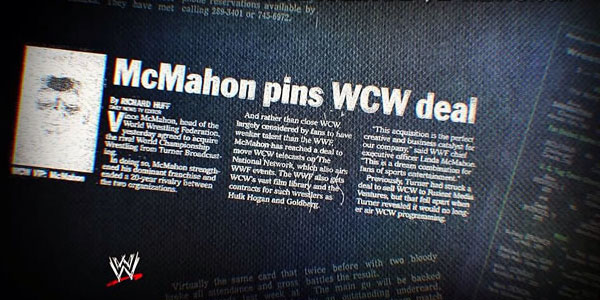
Such was the popularity of the WWF led by The Rock and Steve Austin, WCW died a few years later. A lot of this was down to McMahon's action in seizing upon the new wave of wrestling popularity. Vince was cutting merchandise and franchise deals across the world. WCW instead stagnated, old time wrestlers obsessed with protecting their spot ensuring that the company had little potential development for new stars. The WWF in contrast was bringing on numerous new talent, including The Hardy Boyz, Trish Stratus, Kurt Angle and various others. The entire WWF roster was packed with new athletic performers. The show became unmissable. WCW couldn't compete and ratings were non-existent towards the end, the vast majority of people choosing to watch Monday Night Raw. Eventually Vince acquired the WCW franchise for a few million dollars. It was a sad reflection of how little value the once national giant had at its end. McMahon was back as the main man in pro wrestling. He owned the industry again. Just like the 80's however, a peak had been hit. After enjoying such pop culture dominance from 98 to 2001, business was about to go downward once again. The difference was that the company had got so big in the late 90's it would never be vulnerable again. McMahon had sealed his status and fortune as an entertainment mogul. He owned the wrestling industry.

8. The Austin Heel Turn, April 1st 2001
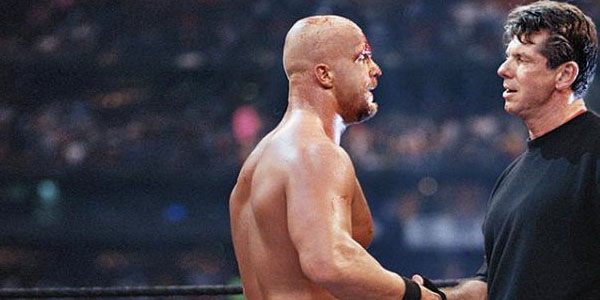
The Attitude Era had been a resounding three year success for Vince McMahon. The WWF was bigger than it ever had been, Austin and Rock had ensured the legacy and future of WWF would be secure forever. However, the stupendously huge level of growth couldn't go on forever. Ironically the WWF stagnation started to happen just as Vince monopolised the industry. When he should have been at his strongest, he suddenly had a creative wobble. It all went down at Wrestlemania 17. Fittingly enough, this was the best Wrestlemania ever, ensuring that the Attitude Era ended on a high note. By the end of the night, the company would never be the same again. In a stellar main event, the two biggest stars in wrestling, Austin and Rock, were battling it out for the championship. As the most over babyface ever, Austin was even more popular thanks to the event being in his home state of Texas. And then the unthinkable happened. Austin turned heel. Vince McMahon came to the ring and handed The Rattlesnake a steel chair to batter Rock. The logic was obviously to try and do what WCW did with Hogan, extend a top star's lifespan with an unthinkable heel turn. The problem was, Austin was too popular to ever be booed. The crowd instead cheered him. The turn was a symbolic end to the Attitude Era and the wave of popularity the WWF had enjoyed. Vince and Austin had ended the story, the Stonecold character never recovered. Ratings started to go down and the WCW Invasion storyline only complicated Vince's creative judgement further. He was losing control. Storylines lost the compelling aspect they used to have. A year later Steve Austin quit, citing "p*** poor creative" as the reason. The hot coals that fuelled the WWF engine had gone out.

7. Triple H Marries Stephanie McMahon, 25th October 2003

In 2002 the WWF renamed itself WWE due to a legal dispute from the World Wildlife Fund. It was another factor in the perception of the company as no longer "cool". Ratings fell and pretty much kept falling until hitting a steady status quo. For the first time ever, Vince was neither here nor there. He wasn't unsuccessful as he had been in the early 90's but he wasn't successful as he had been in the late 90's either. The industry had changed so much. Hogan and Austin had came and gone, with fans now as invested in the backstage real stories as the storylines on television. It was a different beast entirely from the 1980s vision that McMahon had built. I personally don't think he really knew what to do next. One man who did have the energy and ideas on how to take the business forward was Paul 'Triple H' Levesque. He had long been a creative cog in the WWF since forming a friendship with Vince as part of Shawn Michaels kliq. His influence only became bigger after he fell in love with and married Vince's daughter Stephanie McMahon. The couple were wildly ambitious, and fully confident in their ideas for the industry. Hunter set about dictating television content direction, identifying to Vince the next generation of WWF stars. His position became wholly controversial. Some people seen him as the guy who got with the boss's daughter in order to advance his own interests. True enough, Hunter suddenly became the most decorated Champion in the company around 2002-2005. He did however bring on a wave of future main eventers. Stephanie meanwhile helped to pioneer the WWE business toward new avenues of revenue. Despite the controversial transfer of power from Vince to Stephanie and Hunter, which began in 2003, there have been many positives. The corporation as a whole has really solidified its broader operations. The fact is that Levesque has brought on numerous top stars and instilled a history to pro wrestling at the same time as developing the future generations. Stephanie meanwhile is one of the most respected corporate businesswomen under the age of 40 in North America. For better or for worse, the WWE became the Vince, Hunter and Stephanie show in 2003.

6. The UFC Becomes The New King Of Monthly PPV, December 30th 2006
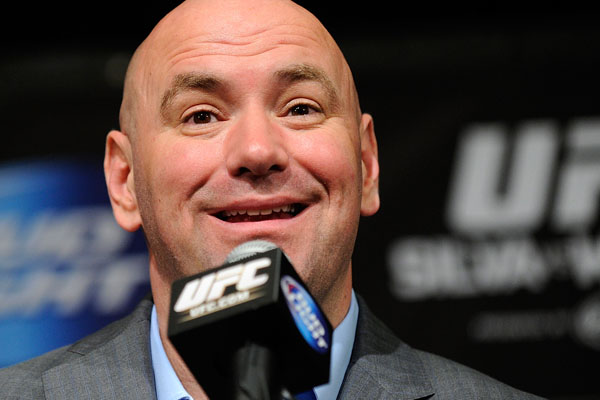
The history of monthly sports entertainment pay per views was defined by Vince McMahon. Next came Eric Bischoff before Vince seized control again in 1998, and it should now be Stephanie McMahon and Triple H alongside Vince ensuring the WWE remains the king of pay per view. That hasn't happened. Instead WWE's traditional PPV business has stagnated before declining severely. Lucrative TV deals have minimised the impact, but it has been hard for McMahon to take given how personally he takes the business. Ironically, as WWE declined, a new promoter by the name of Dana White emerged. Claiming to have borrowed Vince's business model, White took over the failing cage fighting promotion UFC and turned it into the biggest monthly pay per view business in America. Like it or not MMA fans, White achieved his success by marketing the UFC product in a way that appealed as sports entertainment. From entrances to encouraged storylines, the UFC has WWE hallmarks all over its product. Even their reality show The Ultimate Fighter is a rehash of WWF Tough Enough from 2001. The UFC and WWE maintain that they are not in competition but the emergence of UFC undoubtedly had an impact on the wrestling business. There have been weekends where I have only been able to buy one PPV and have opted for UFC over WWE. They are in competition for my money because I engage to the feuds in both content. Was Ortiz vs Shamrock or Silva vs Sonnen really that far removed from a WWE feud in its marketing and promotion? No. White's genius was to take MMA competition and give it a narrative edge. The business then skyrocketed. The signal that made Vince McMahon sit up and take notice was when UFC 66 Liddell Vs Ortiz popped over a million PPV buys in December 2006. Earlier that year UFC had also done over 600k buys and was establishing a patten of well bought events. WWE meanwhile were struggling to top 300k. UFC had became the hot pop culture sensation which WWE was in the late 90s. From 06 to 2011 the UFC dominated college dorms and water cooler conversation. Males 18 to 35 were obsessed with it, and when former WWE star Brock Lesnar debuted it was clear €” Dana White had made the UFC the new WWE.

5. John Cena Wins His First WWE Championship, April 3rd 2005
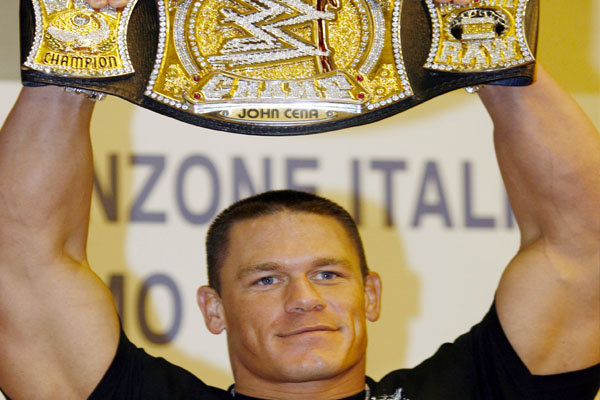
A year before UFC became the top dog on pay per view, WWE had bet its future on an enthusiastic hard working wrestler named John Cena. He won his first WWE championship at Wrestlemania 21 in 2005 and hasn't been out of the main event since, proving the only consistent draw that WWE has had in the UFC pay per view dominated era. Stephanie McMahon and Triple H were significant supporters of Cena and he proved a wise choice for the McMahon clan to choose as WWE's franchise star. Cena has displayed a work ethic which is unmatched in the business, in the modern era he has done more than anyone has ever came close to doing. Cena is WWE through and through, constantly on the job. He is so much more than a wrestler, seemingly always working at press events, media appearances, charity drives, merchandise launches and promotional spots. He has also shot films and recorded music. Basically he has been an act that WWE can count on to open numerous lines of additional revenue. His value as an employee is vastly more than any other man on the roster offers. When the WWE decided to build their company around Cena, the business changed forever. He is a favourite of women and children but often gets booed by fans who prefer edgier wrestling. His legacy is unquestionable however. Love him or loath him, John Cena has became the definition of WWE.

4. Eddie Guerrero Death, November 13th 2005
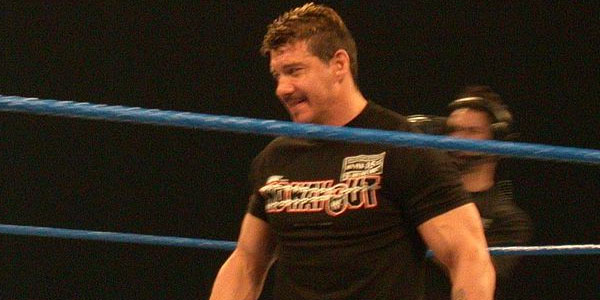
The death of Eddie Guerrero of heart failure aged just 38 in 2005 had huge ramifications for the wrestling industry. There had been other wrestling deaths in the past, notably Owen Hart, but the Eddie death really changed things. The 24 hour media and the internet were all over the story, discussing the tragic death of the major WWE star. He was legitimately in the top 5 main event acts of WWE in 2005. The company went into shock. Vince McMahon looked at the media hysteria and realised he needed to make industry changes. Eddie was the culmination of a frighteningly long list of wrestler deaths at an early age. While personal responsibility is a fair point, Vince had to take some of the blame. The industry he created was biased toward bigger bodies and demanded talent endure considerable physical pain in bumping during matches. The result was widespread steroid and pain killer abuse in the industry. Eddie was also an alcoholic, which had nothing to do with wrestling, but the WWE pretty much admitted there were errors in their industry. The result was the implication of a large Wellness Policy. This changed the course of WWE forever, effectively putting an end to large muscular bodies. Guys like Randy Orton seemed to shrink. Talents such as CM Punk were able to emerge. Steroid abuse and pain killer problems were finally being dealt with. It has been a great positive for the business. Attention to healthcare is drastically improved, and men who couldn't handle the rigours of WWE such as Kurt Angle had to leave the company. In my opinion, lives have undoubtedly been saved by WWE's hardline policy following the death of Eddie Guerrero.

3. Benoit Kills His Wife And Child, June 24th 2007
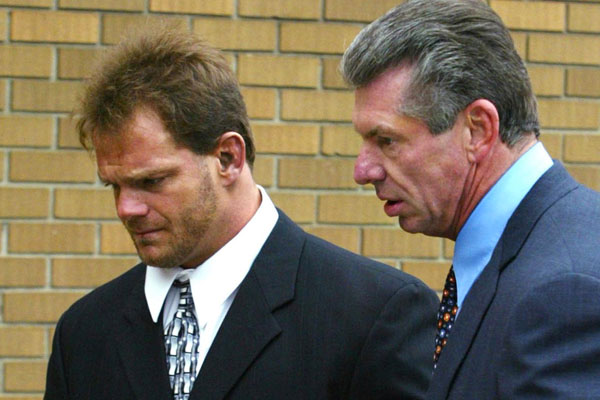
When prominent WWE superstar Chris Benoit murdered his wife and child in 2007 it may well have been the darkest day ever in pro wrestling. Benoit killed himself following the incident, so never had to answer for the murders. Instead Vince McMahon and WWE were put on trial by media. Was this fair? Probably not. Benoit may have had brain damage from years of pro wrestling, so some decided that the company was to blame. Again, Vince had to put his company in order. Stringent health checks were put in place to ensure wrestlers were mentally and physically fit. Concussion testing became a huge consideration, with any wrestler head injury being given the utmost importance. Steel chair shots to the head were banned completely despite being a staple in the history of pro wrestling. Creatively the company had to change as well. There was now a dark perception of WWE and its violent content. McMahon called for a overhaul, resulting in a less violent and more light hearted product. Vince's own story even had to be changed. Awkwardly he had scripted his own death the week before Benoit died, meaning he had to break kayfabe and admit WWE was fake again on the Raw that announced Benoit's death. Ironically, the Benoit and Guerrero deaths made WWE a much better place. The health considerations that have been put into place since these dark fatalities took place have transformed the industry. If only these tragedies could have been spared in the first place.

2. Linda McMahon Runs For Senate Leading To PG WWE, July 22nd 2008

As 2008 approached off the back of the Guerrero and Benoit deaths, WWE was a very dark place. Vince no doubt did considerable soul searching. Would this be his legacy in the entertainment business? Steroids and wrestler deaths? The chairman looked around his roster and knew he had to make a bigger change, the fundamentals of the product had to be transformed. Around this same time, Linda McMahon was starting to reach out to power brokers and fundraisers with a proposed 201o senate campaign in mind. Vince was hugely keen on this for obvious reasons, and backed his wife to the tune of $97 million. The only obvious thing holding the capable Linda back was ironically the WWE. The controversial broadcast entertainment was hardly in fitting with the family friendly politician Linda wanted to come across as. She was WWE to the core but if she was to make Washington she would need to either reject WWE or change WWE. The McMahon's chose change. The deaths of Guerrero and Benoit combined with the ambitions of the senate campaign meant that Vince had no reservations about changing his product to PG. Blood and swearing were out and kid friendly gimmicks were in. The change has been noticeable. Many older fans have expressed frustration, longing for the days of the blood and guts Attitude Era. WWE however has found the change to be very successful. Preying on the children and family audience they have been able to exploit sales in merchandise and tv deals. Sponsors and advertisers are a lot easier to attract when the product is open to everybody, and WWE have significantly developed their corporate profile in the last few years. New lines of business have opened up and the company is closer to its aim of being a Disney style entertainment empire. Wrestlers are looking healthier than ever and we have had a deluge of brilliant matches since the PG change came in. Michaels vs Taker was PG. Punk vs Cena was PG. Is this new era really that bad?

1. The Network Launch, February 24th 2014
It's amazing looking back on this list to see how the WWE has transformed. The plucky Vince Jnr who took over a New York business has came a hell of a distance, inventing an industry along the way. In 2014 however, he has had to reinvent the wheel. The PPV concept he first pioneered back in 1985 is no longer working. Buyrate numbers have declined for some time. Vince's answer is arguably his biggest gamble since Wrestlemania 1, a fundamental change of the business model he works with. The idea is to sell WWE content via a $9.99 6 month content subscription network, consumed by the now widespread ownership of digital devices. It's a bold strategy. On the one hand it locks people into paying for WWE events, on the other hand, if it doesn't work out then the WWE will be in real trouble because they will have killed off pay per view and devalued their product as a whole. PPV was $50 but will now be able for forty dollars less. As UFC President Dana White points out, Vince in some ways is saying his product is low value. Still, at $9.99 a month for WWE events and on-demand classic content, Vince has a good chance of making his targets. It will be interesting to see how this latest industry changer damages or improves business, but as this list proves, unpredictability is rampant in pro wrestling. Who in the 70's would have thought McMahon could make a national promotion? Who in the 80's saw pay per view wrestling taking off? Who ever believed that the WWF would recover from WCW's dominance? And who then seen the WWF blowing their success in declining fortunes 2001 to 2007, only to recover with the John Cena led PG era to now. It's been a hell of a ride and I can't wait to write about the new history of the Network era. Vince McMahon is far from finished just yet...

WWE Writer

Grahame Herbert hasn't written a bio just yet, but if they had... it would appear here.