WWE And UFC: 10 Shared Values Of Sports Entertainment
 When the Fertitta brothers parted with $2 million at the start of the century, they got little more than the UFC name which at the time stood for controversial cage fighting which had little business success. At the same time, Vince McMahon's WWF was breaking pay per view box office records for pro wrestling, enjoying a wave of popularity off of characters like The Rock and Stonecold Steve Austin. A savvy young promoter named Dana White looked at the WWF and realised something vital, as much as people paid to see a fight, they paid to see an emotional narrative. Taking a small stake in the UFC and the presidency, White set about to apply McMahon's business model on to a real sports setting. He encouraged characters such as Ken Shamrock and Tito Ortiz, implemented pro wrestling style feuds and documented them as narratives to sell fights. He also borrowed much of the same WWF production standards, taking note of how Kevin Dunn had made slick presentation work. Business took off. The UFC was transformed from unsophisticated cage fighting into the elite sport of Mixed Martial Arts. Pro Wrestling styled feuds helped to sell the contests, best demonstrated by the Sonnen vs Silva storied feud which popped a reported 1 million buys at UFC 148. White has made no qualms in admitting he copied Vince's promotion and pay per view model. It would have seemed unbelievable in 2000, but by the end of the decade, Vince was scraping PPV buys at 200k as White enjoyed months in the region of 700k. UFC had started doing sports entertainment better than its inventor. The matches were real, but everything around the UFC in its hottest period was pure McMahon levels of building characters and promoting feuds to sell a monthly card. I'm all for enjoying MMA from a purist sporting point, but there's no denying the mainstream popularity emerged from the more superficial storytelling point. MMA enthusiasts scoff at the relation, but there are more shared values of sports entertainment, 10 of which this feature will detail to illustrate UFC and WWE are operating sales in the same industry...
10. Success Of Ultimate Fighter Off The Back Of Raw
 The ignition of UFC's hottest period of business started off of the back of WWE's Monday Night Raw. Literally. In 2005 Spike TV and UFC launched 'The Ultimate Fighter' reality show in the time slot immediately after Raw, gaining a 57% retention rate of Vince's audience. The ratings for TUF grew and grew, proving a catalyst for the boom in UFC interest over 2006 and onward. In The Ultimate Fighter Tv show, White had finally found the story telling device he needed to apply meaningfulness to the UFC. It wasn't just about fights, it was about human stories. This is what Vince has been doing for two decades, and all of a sudden, sports entertainment fans found themselves preferring UFC's version of conflict narratives. The reason? Pretty clearly because UFC was real human stories against McMahon's increasingly far fetched narratives that involved boogeymen and lepreachauns. The new 2014 WWE Tv deal could see this shared evening scenario yet again. Why would the Network schedule them together? Because they're both sports entertainment with a shared fanbase.
9. Both Are Cyclical Businesses Who Rely On Creating New Stars
 What has emerged in the UFC in the last few years is a drop in fortunes. It isn't anything horrificly bad, but Ultimate Fighter tv ratings are nowhere near what they used to be. Pay per view is also down. The big characters of the peak MMA era such as Liddell, Ortiz, Lesnar and Couture are gone. Anderson Silva and Geoge St Pierre look pretty much done too. The impressive buy numbers and tv ratings have cooled off for the most part although still hot for specific stars like Silva. Dana White has found this problem because he copied Vince's way of doing business and this is exactly what Vince found after his stars such as Austin and Rock left. One of the biggest problems of the last decade for WWE has proved to be reversing the decline in PPV buys, which has ultimately led them to launching their own network. White's way of addressing his business decline is different, he's desperately trying to create new stars. The problem is, the likes of Chris Weidman are never going to replace an Anderson Silva. Jon Jones continues to emerge as the new face of UFC, as does Ronda Rousey. However, they are simply Cena and Batista to WWF's Rock and Austin. The fact is sports entertainment is cyclical and coming off a hot era it's almost impossible to have another big period. Fan perceptions are locked on to the past stars, the new generation are unfairly compared which diminishes their ability to emerge in their own right. As for Rousey, a few years ago White declared women would NEVER fight in his octagon. He's having to change all of his values as he looks for his next face of the company.
8. Athleticism

7. The Cult Of Personality

6. A Shared Digital Future
 When Dana White branded the WWE Network "ridiculous" he was basically admitting that he was in the same industry as Vince. He was peeved that Vince was shaking the PPV model they both worked on. White then went on the attack, stating that Vince had de-valued the WWE product by giving away everything for ten dollars a month. White sounded almost frustrated. Why did he care? Because he knows that his own business is essentially the same industry, he knows his own PPV model now looks expensive and outdated. If the WWE Network is success, White knows he will have to follow suit. For the first time in a long time, WWE are showing the UFC what will be the future. Granted UFC already offers the Fight Pass, but the Network is a wholly different concept. As a complete package it locks WWE fans into the sports entertainment world. Pay per view suddenly looks antiquated, the digital mode is the future and even the wider TV industry is taking notice. White said he wouldn't follow suit, but he also said a woman would never fight in UFC. If WWE Network is a success there'll be talks in Zuffa for sure about the future of PPV to digital.
5. Long Term Future
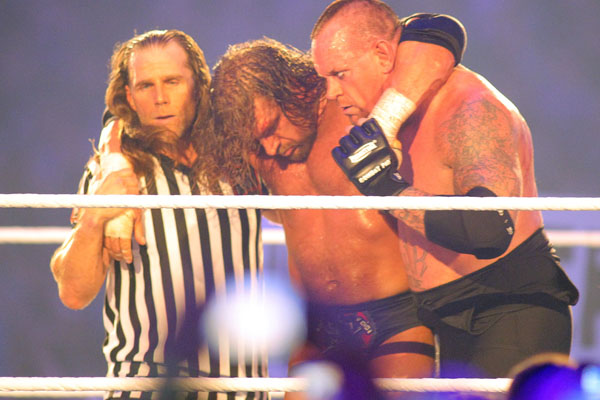
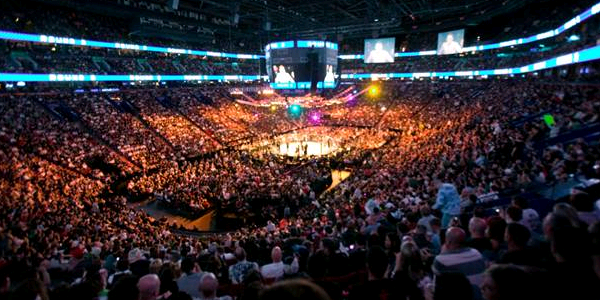 In addition to digital media, the long term future of both WWE and UFC is tied in other ways. If they end up on the same Network which they could do with the WWE TV rights discussions ongoing, then there'll inadvertently be cross promotion and audience sharing just like 2005. The fact is that both UFC and WWE are still locked on the same target market, 18 to 35 year old males. The future is built around who best engages that audience. WWE might target PG but their ratings reflect they're still an adult audience. As both companies look to the long term future they'll continue to learn and adapt from each other. We've already seen this happening with UFC learning the power of feuds from WWE. Likewise McMahon is learning from UFC the importance of fans wanting a more hard hitting product - which if you take a look at WWE ring style from the last few years it's increasingly the 'in' thing to use MMA influenced move sets with stars like Punk, Bryan, Lesnar and Undertaker. Going after the same fanbase, UFC and WWE constantly have their eyes on each other whether they want to admit it or not. The future of WWE will involve more MMA style realism, meanwhile the UFC will try to recreate WrestleMania when they eventually book a supershow at Cowboys Stadium or Madison Square Garden when New York finally allows MMA.
4. The Implementation Of MMA In WWE

3. Both Sell Their Product As Sports
2. Narratives
http://www.youtube.com/watch?v=EXakJf8-xaU The biggest thing WWE and UFC have in common is that they both tell stories in order to sell cards. Take a look at this video of Brock Lesnar, it could easily have been a WWE production. Lesnar talks about how he is going to beat Frank Mir up and then kicks a door down. It's almost like the way he said he was going to beat John Cena up or the way he gets aggravated in the ring in WWE promos. UFC applies these sort of vignettes for all their top stars. It builds anticipation and makes a fight seem even more compelling, a conflict between two guys who hate each other is way more dramatic than a fight between two guys who get along. Essentially UFC applies the exact same face / heel formula WWE made popular, casting their fights in this way whenever they can. If UFC want to re-ignite their hot period of business, more than ever they need to cast their fighters as defined characters who are fighting in a personally charged feud. Take a look at UFC's history of top drawing matches , characters and story fuelled the success as much as the sporting context did ... a pro wrestler in fact being MMA's top ever draw.1. The Choice Of What To Buy
