10 Reasons Why Batman Is The Most Overrated Character Of All Time
Of all that DC has to offer, what makes Bruce Wayne so special?!
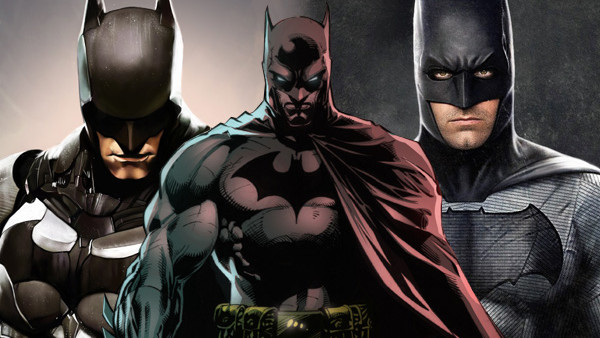
Batman as a hero has managed to endear the hearts and minds of geeks everywhere since his debut in Detective Comics #27, but has his popularity actually been detrimental to the character's ability to do so?
Bruce Wayne is many things to many people, but these appealing aspects have all contributed to the character becoming something of a non-entity. There isn't a clear sense of progression with The Dark Knight like there is with some of his comic book rivals, because no matter the interpretation or innovation the vigilante receives, the destination is always the same - the status-quo established in 1939. It's not an inability to deviate from this cyclical nature that's become the focus of why the Caped Crusader is overrated, however.
No, it's the fact that the character is so bankable, so guaranteed to find an audience, that has led to the perpetuating feeling of over-saturation and Bat-fatigue that has in turn worn out his welcome.
I more than understand why people love Batman. Heck, the character is only beaten out for shelf-space in my room by the amount of Daredevil I read, but given the character's constant status at the forefront of almost every entertainment medium imaginable, it becomes easier and indeed even natural to grow tired of his presence. I've always stood by the opinion that he's only as good as his supporting characters, and that's true, but the thing is - they've all managed to outgrow the brand.
Bruce Wayne may be an iconic character worthy of merit, but enough is enough. No hero warrants such an overbearing focus.
10. Bruce Wayne's Personality Is As Malleable As The Joker's

Drawing back to my opening remarks regarding Bruce's many interpretations, the character (at least in the various iterations of the DC Universe's main canon) has evolved sharply at different stages of his 75 year existence. This ragged and juxtaposing fluctuation that seems to occur every time a creator takes the reigns has led to Bruce becoming a complete enigma.
At one moment he's a carefree swashbuckler delighted by the company he keeps, the next, a cold-hearted man who has no qualms about brutalising criminals for his own pleasure. Whilst it's great that creative teams are able to offer their own interpretation and stamp on the character, there's no natural evolution to be seen. To draw a comparison with Daredevil, you can see a discernible progression of Matt Murdock from being a dashing adventurer to a sombre vigilante whose morals have been corrupted, which feels natural.
With Batman, you'll have a team who adores his supporting cast, then one that wishes to do away with them altogether, but in ways that don't feel progressive or indeed conducive to the character's growth. It is these constant tonal and personality shifts that make the character feel like DC's very own personification of an oxymoron. Of course it must be said that some of the best talent in the industry has gifted the character with some absolutely seminal works, but the disregard for the evolution of Bruce's personality leaves me asking just what exactly the character stands for anymore.
9. There Are Better Heroes Out There Who Don't Have Powers

One of the most common reasons cited for Batman's popularity is his status as 'the hero without superpowers'. It's a cool angle to explore when Batman's positioned along side other leaguers (that is, unless he's there solely for comic relief), but when you take the character and place him in the streets, what exactly makes him more endearing than some of DC's other non-powered entities?
Personally, I think that particular reason for liking him is a little lazy. He's not the first hero to lack laser eyes or super strength and he certainly won't be the last, but even then characters that have both preceded and succeeded the pointy-eared hero have illustrated far more compelling narratives and traits. My favourite example of a truly captivating non-powered DC hero would be The Question, also known as Vic Sage.
Sage rose to prominence with a universally acclaimed comic run in the '80s scripted by veteran Batman writer, Denny O'Neil, and even got a unique if not silly reinterpretation of the popularly lauded Justice League: Unlimited. The character lacks the money or the foolhardy doctrine that Batman worships, and occupies more of a moral grey area, yet this nuance is completely neglected by DC in favour of another Dark Knight series, TV show, or film. He's but one example of a wider facet of fantastically-written DC characters who lack sci-fi powers or an infinite source of wealth to pull from - definitely check it out if you can.
8. He's Completely Over-Saturated
Discounting other members of the Bat-family, Batman himself is currently enjoying close to 11 ongoing comic books, limited-series, or crossovers where he features a significant part of the story. That's 11 books, and that's not even counting the times he features in wider Bat-family events. Once you've dealt with his unnecessarily large breadth of titles, you then have to cope with the character's onscreen presence in film, TV, video games and animation.
In just over a decade's time, the character will have been the focus of four feature films, 19 animated original movies, three animated shows, seven video games and lastly, one live action TV show. Wow. I'm honestly amazed that the character hasn't faced some sort of giant backlash, considering that big ol' bat symbol is pretty much unavoidable no matter the medium you choose to invest your time in.
Whilst the critical quality of said projects all vary greatly, I think we can all agree that Warner and DC need to invest some time with some different characters, otherwise Bat-fatigue will become a very real and distinct consequence for them to deal with.
7. No, He Can't Beat Superman
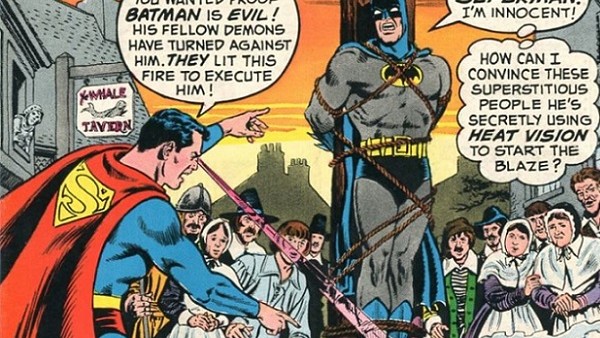
If DC's most diehard Batman fans had their way, The Dark Knight would be able to avert climate change, nuclear war, Adam Sandler getting a Netflix deal and of course, Superman - all with a little bit of 'prep time'. This argument has gotten so ridiculous that I actually refuse to believe that people are being serious when they pass it up for comment, solely because it makes no sense.
Sure, a story like Tower of Babel features Bruce's countermeasures all taking down the league in creative and genius ways, but these protocols were built up over years, if not decades - not 30 seconds before he's hurtling towards the sun thanks to an ill-advised comment disrespecting Ma Kent's cooking.
"B-but he beat Superman in The Dark Knight Returns!" No, not really. Frank Miller (himself not one to usually offer praise to the Big Blue Boy Scout) explicitly states in the text that Clark holds back for the entirety of the fight, simply because he doesn't have the resolve to commit to it. There's also the matter of the kryptonite Bruce keeps handy on him, but even that is avoidable when Supes can move at a speed nearly comparable to Flash's.
6. He's Altering Other Heroes In Pop-Culture

I don't think I've ever encountered a series quite as banal or unedifying as I have with The CW's take on Green Arrow, but the blame for its negative qualities (at least the non-soap opera ones) can rest squarely at the foot of Batman's success. The Oliver Queen of 'Arrow' is not the same left-wing, wise-cracking crusader of social justice that the Queen of the comics is, but a whinier version of Bruce Wayne who seems to confuse scowling relentlessly with emotive range.
Yes, Green Arrow did start out as a Batman rip-off of sorts, but years of creative talent and narrative flare ceased those comparisons right in their tracks as the character's story matured, though that memo has somehow eluded the CW. If you don't believe me, the show's third season quite literally rehashed the relationship between Bruce and R'as Al Ghul, yet substituted Bruce for Ollie. It doesn't even help that the programme's supporting cast all bare an incredible resemblance to the early stages of the Bat-family.
What the show has done is take a beloved comic character who is able to stand on his own two feet and made him the empty vessel to all the traits most identifiable with Batman. If that isn't a testament to the character's overrated nature, I don't know what is.
5. The Supporting Cast Is Much Better
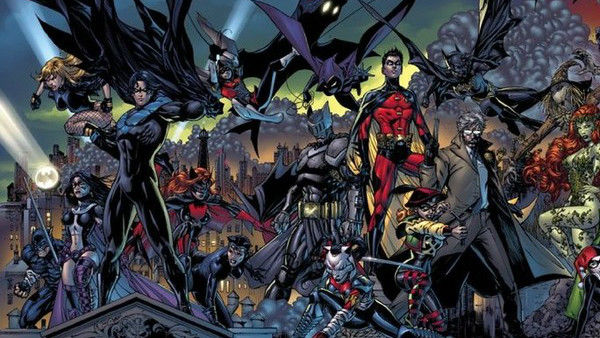
This may just be down to the material I've read and seen, but I've always found Batman's supporting cast to be more interesting than the eponymous hero himself. Dick Grayson, Barbara Gordon, Selina Kyle and Damian Wayne all occupy a space in Batman's story, but with the added bonus of having seen them grow over the years.
Audiences were first introduced to Dick Grayson when he was but a small teenager using the mantle of Robin, and then went on to see him grow and mature into Nightwing, proceed to leave Batman's shadow, re-embrace it, and abandon it altogether by becoming an agent for Spyral - a pretty spectacular journey if I do say so myself. This isn't to say that Bruce is devoid of his own compelling traits, because there's a lot to love about the character.
When he's written well you really get a sense for his internal struggle, but the overarching narrative just isn't nearly quite as absorbing as say, Dick's or Barbara's, as we don't witness the same evolution so closely-associated with those characters with him. I'd even go so far as to say that Dick was a Better Batman than Bruce, during the few years he took over the mantle that is. Don't take my word for it though, check out Grant Morrison's Reborn series as well as Scott Snyder's Black Mirror if you're still unconvinced.
4. He's Used To Unnecessarily Sell Characters

This point may appear a little more tenuous than others at a glance, but it's a recurring theme with DC Comics. One way the publisher introduces a new character or attempts to sell their personality is to have them initially operate in tandem or close proximity to Batman, even if there's no need for it in the first place. Bad Blood (no, not the song) is a prime example of this marketing tactic being employed, but it's by no means the first instance either.
Kate Kane was reintroduced to the DCU in the aftermath of Infinite Crisis, an event which saw the holy trinity of DC's heroes disappear by its end. For 52 weeks, Kate, (now Batwoman) The Question and Renee Montoya all took up the job of protecting Gotham in Batman's absence, with Kate gaining her own series by the end of it all. She went on to become one of DC's most fantastic LGBT characters, all thanks to an incredibly complex and character-driven run that saw great commercial and critical reaction - Batman himself rarely appeared, too.
Which brings us to Bad Blood, which feels like some weird pseudo-amalgamation of the Reborn, 52 and Inc. events all rolled into one. It has Batwoman in it too, which is odd considering she was never really a part of an ensemble series, and deserves a film of her own first and foremost. More to the point, her presence in the picture feels completely superfluous at this current moment. She may share a title, but she's more than capable of anchoring a film by herself, and doesn't need to be 'eased' into audiences by having a Batman accompaniment.
3. It's His Rogues Who Are The Real Bread And Butter Of Batman's Stories

This statement has been reiterated so much it's almost become a cliché, even if it does bear a great deal of truth. Joker, Bane, Mr Freeze, Catwoman, Riddler - all have featured in what are now deemed legendary story-arcs. Not because of a dependence on Batman, but because of their absorbing and at times alluring personalities. Some may say an antagonist is only as compelling as the protagonist they're facing, but these characters are so enjoyable that needn't be the case.
I must admit that there is a certain equilibrium to be shared between some of these rogues and the caped crusader however, particularly in relation to Joker, Riddler and Bane's rivalry with the character. There is a lot of joy to derive from Riddler being bested by Batman's withdrawn intelligence, as well as seeing Bruce overcome Bane as a sheer trial of fire, but it is the Clown Prince of Crime's constant psychological battles with Batman that garner the most praise, even if they are devolving into repeated plot lines now. It's ironic because most of the time the relationship is presented as a false-dichotomy of sorts, with Batman being the righteous symbol of justice and order, and Joker as the embodiment of chaos and destruction, when in fact the characters intersect on a multitude of issues - a fact that Joker aims to prove in his own sick way.
It's an incredible relationship to examine, but one not so rudimentarily black and white as has often been described. This is when the character is at his most gripping - when his rogues are testing him. It's easy to see the appeal in relation to this, but on his own Bruce isn't all that special.
2. The Character Is Detrimental To Variety
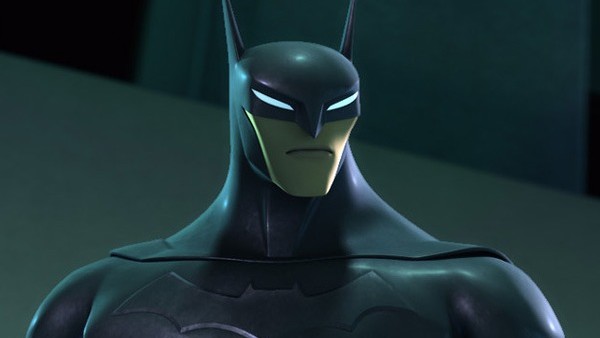
This is just symptomatic of his popularity, but I really can't emphasise enough just how big of a negative effect the character has on comic books as a whole. The more people consume Batman the more Warner Bros. feel compelled to push his presence further, the only consequence being that we're just going to see the same two heroes (Superman and Batman) over and over again - most likely until our eyes bleed from the sheer monotonous nature of the cycle.
Sure, we may now be seeing the resurgence of DC's other characters getting a crack at the big screen, but they're only the filling to a Batman/Superman sandwich. Even then, wider complaints of the superhero genre water-logging cinema as a result of Marvel's current stranglehold are starting to become more prevalent, so by the time we see Flash and Aquaman in a film of their own, audiences could have long grown tired of seeing costumes and capes each year.
1. All Character-Development Gets Squandered For The Status-Quo
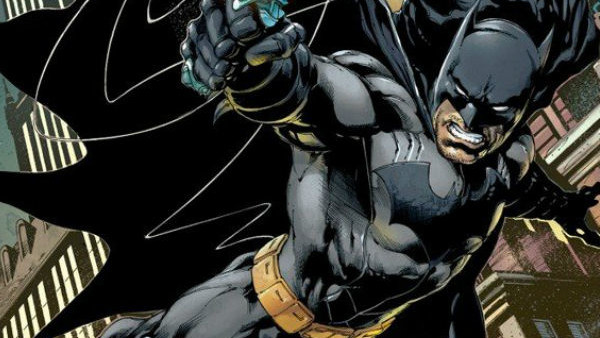
Symptomatic of comic books as a whole, but especially Batman, no matter how many advancements are made, the character just seems to rehash the same old tropes we've seen traversed time and time again, be that in comic books or the other mediums Bruce occupies.
The primary example of the reinforcement of the status-quo is Wayne's attitude towards his allies, which has alternated back and forth more times than The Joker has had visits in Arkham. This fluctuating predisposition has been dealt with countless times before, from Death in the Family to Knightfall and most recently Death of the Family and Arkham Knight. With the exception to Rocksteady's finale, the conclusion to the process is always the same, in that it involves a reluctant Bruce accepting help from his allies in the face of a new threat, only to then question why he doesn't work alone in the first place. And thus the cycle repeats.
It's so un-gratifying to see genuine periods of change reversed, or worse still just dismissed entirely, because the aforementioned plot threads end up becoming the norm for the character. It all builds up to give off the impression that Wayne is a non-entity entirely at the disposal of writers who can quite literally do whatever they want with him, even if it means erasing character development. Taking this along with the fact that Batman is everywhere only amplifies the argument for his overrated nature, as even when the character is at his best, the development to be had is ultimately forgotten. In this age of over-saturation, one can only hope that the character is due a hiatus.
Do you have an aversion to all things Batman? Or do you think he's the best thing ever? Let us know in the comments below!