Mass Effect 4: 10 Core Gameplay Tweaks That Would Improve Everything
Bioware's premiere franchise is agonisingly close to perfection.
With a slew of awesome rumours alluding to Commander Shepard's child being the hero alongside the return of the Mako, it's safe to say gamers are pretty excited for Mass Effect 4. To be honest, following the end of ME3 although it was a cataclysmic failure of Star Destroyer-felling proportions, Bioware's sci-fi opus had built up enough goodwill in the previous 100-odd hours that it shouldn't be thrown away quite so easily. So hop aboard the hype train - you'll find it to be quite comfortable, as although some key members of the team have departed, the developers are pulling out all the stops to make sure they deliver a solid sequel this time. And that's not to mention the overwhelming amount of community feedback they're working with that will surely be applied to all areas of their most ambitious project yet. However, to get a good idea of where the series should go, you need only replay the previous titles in sequence, as that's when you'll start noticing just where things went a bit sour. Starting essentially as an RPG with enough shooter elements thrown in to get you through - that direction was completely reversed by part three, as Shepard now had a dedicated charging melee attack and access to Gears of War-style combat-rolls. Looking at both Dragon Age: Inquisition and Shadow Realms it seems Bioware are focussing on world-building and atmosphere, which is something that ties perfectly into the fact that they're apparently constructing an entire galaxy to explore. However, fans are only going to spend hundreds of hours doing so if the core foundations of gameplay are rock solid.
10. Numbered Visualisation Of Damage

9. Custom Character Face-Quality Matches The Actors
Take away the fact that in ME3 it made no sense you could fully customise Shepard's face again despite no world-altering event or ME2-style resurrection. Instead, there's been a problem with the Commander's customisation since day one. Put simply, it's because only the default 'box art-version' of Shep is based off a real-world actor, who's been scanned in; the model, Mark Vanderloo. This makes for every other 'custom Shep' look that little bit 'off' by comparison. Going forward Bioware need to either move away from having a definitive Shepard appear on their promotional materials, or make sure everything from hairstyles to mouth shapes looks as natural and laboured over as an actor who's been scanned in and modelled for days on end.8. Different Enemy Types That Force You To Adapt

7. Make Teammate Roles Essential
6. Refine And Polish The Cutscene Animation
5. More Fluid Combat Movement
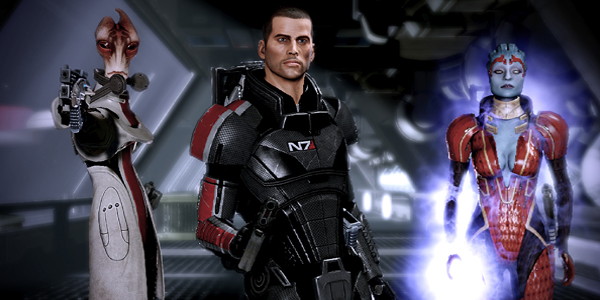
ME3 clearly took a few pages out of Gears of War's book of third person stop n' pop cover system shooting, as aside from the obvious visual difference, the two titles played near-identically. This wasn't anything new as ME2 also embraced this style of play, and it's no bad thing when done well. The tipping point was when you embarked on a mission to retrieve some Reaper artefacts, only to find it was a boxed-in arena-style level, where you'd be darting from checkpoint to checkpoint, blasting everything in sight. It couldn't have felt more 'un-Mass Effect' if it tried, and only served to show how limiting this very basic third-person combat feels when the pressure is cranked up. The elements are in place for an experience that'll let you dominate the battlefield - you're free to dive out from corner-cover or pull guys over something you're hiding behind - it's just a case of making the player feel confident when deploying them, without the cumbersome unresponsive feeling of moving, shooting and evading that's evolved from the first game.4. Dialogue Options For Everything

3. Player Class Impacts The World
Essentially, the only thing choosing whether you were a Soldier, Infiltrator, Adept etc. dictated was what one button's action then became. Some of the abilities were immensely fun - like the Vanguard's zip across the battlefield before ramming full-force into an enemy and following up with a finishing shotgun-blast - whereas others like the Infiltrator's cloaking abilities were ultimately pointless. When every showdown is comprised of trading fire, the idea of sneaking behind enemy lines is tantamount to suicide. One game that took the idea of class-based play and iterated on it perfectly was Deus Ex, with latest instalment Human Revolution still upholding series' traditions in that you'd be journeying through a level only to notice another path and note that if you had a certain ability, that's a direction you could go. Outside of combat and world-exploration there should be scope for your class to impact dialogue options, reassuring certain quest-givers that you can rescue a hostage safely if you're a soldier, attempt a stealthier approach if you're not, and have NPCs be more wary of your reputation in the field if you've become known for blasting the ear lobes off everything in sight.2. Narrative Branching And Impactful Choices

1. No Turret/Action-Heavy Sequences