10 Most Compelling Pieces Of Evidence That Prove Alternate Realities Are Real

In one reality, you're already reading this. In another you're a bear.
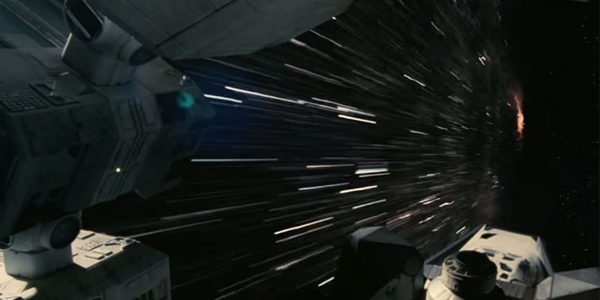
In one universe you are reading an article on WhatCulture. On another, WhatCulture doesn't exist, and neither does this article. In another the article does, but the internet doesn't, and it's being published on stone tablets. If you live in that universe, you should probably be paying attention to the eight-legged dino-spiders that are roaming the scorched Earth you call home.

The concept of alternate realities s one that's appeared in science fiction throughout history, but it's one of those sci-fi concepts that might actually have some basis in reality. Human technology is bringing about the likes of robots and AI like you see in film and books, but apparently we're already living out this particular trope.

Scientific theories about multiple universes have been floating about for decades, and people actually take them seriously! It's difficult to get people on board with "rational" investigations into other fringe and supernatural phenomena, but no less than Brian Cox has chatted about this thing. Brian Cox. Quantum mechanics, different planes of existence, and a hammer that nobody can identify a time for are all compelling pieces of evidence that prove alternate realities are real. In this universe, anyway.

Note: Portions of this article are courtesy Stranger Dimensions and their post "4 Weird 'Clues' That Parallel Universes Exist".


10. The Many Worlds Theory

All the way back in 1957, the physicist Hugh Everett provided a theory of multiple realities that took in quantum mechanics, suggesting all possible alternate histories and futures are real within their own worlds. It could be a lot more complicated than that, but the version that most will understand is that there are a large - possibly infinite - number of universes, and everything that could possibly have happened in our past occurred in some other reality. The formula was expanded upon and popularised by the many worlds theory of Bryce Seligman DeWitt, and is just one of many multiverse hypotheses in physics and philosophy. It's the best known, however, and the one with the most scientific basis backing it up, built as it is on existing accepted theories. As much as a sci-fi concept as alternate realities are, the many worlds theory is actually one of the more mainstream ideas in science, despite seeming weird and fringe.

9. Weird Artefacts

Here's some more science for you. There are actually a significant number of artefacts, found through archaeological digs or otherwise, that nobody can explain the origins of. The sort of dusty leftovers from old civilisations that usually crop up at such occasions, except experts can't pin point where they actually came from. Carbon dating doesn't work, they're unfamiliar to any particular period of history, whatever. There's the London hammer, found in the thirties but dated back to 500 million years ago €“ before human life began, so far as scientists have been able to ascertain. Or the infamous Antikythera mechanism, a sort of stone computer found near a Greek island that nobody can explain. So what's with all these weird things? Are they simply artefacts from eras and civilisations that were never recorded, and thus fell down the cracks of the annals of history? Are they some sort of leftover from time travellers? Are they forgeries? Or could they (and you might see where this is going) be some sort of object from an alternate reality that somehow slipped through into ours?

8. The Story Of Lerina García

You take these stories with a pinch of salt, but in the case of alternate realities, there are enough of them knocking about to give them a degree of legitimacy. That's why the tabloid story of Lerina García is such a compelling piecing of evidence when it comes to proving the existence of multiple worlds, having been picked up by news agencies around the world and being seemingly beyond any sort of rational explanation. The young woman awoke one day to realise that nothing around was familiar €“ her home, her job, her friends €“ like she'd landed on another planet. Lerina wasn't an alien, obviously. That's a whole other kettle of fish. For Ms Garcia, the truth was far more terrifying: the reason that her morning routine seemed so completely off, that she didn't recognise her co-workers or the things that cluttered her home, was because she'd slipped into an alternate dimension. All the small incongruities added up to make not other explanation seem possible. That's if it isn't a hoax, and she didn't just suffer from memory loss. But that'd spoil the fun, wouldn't it?

7. Deja Vu

It's one of the most singularly peculiar experiences you can have as a human being, and yet, it's happened to nearly everyone: the uncanny sensation of deja vu, where you enter a situation or do an action or see something, and get the feeling that it's happened before. Usually it's put down to some misfiring of the brain, perhaps retrofitting the memory to think that something's more familiar than it really is (for whatever reason). Even more strange is deja vecu, which is the feeling that you know what's going to happen next, too. Then there's alter vu, which is when someone remembers their history differently. Even freakier in this case is that they realise the world around them is unfamiliar, because they recognise both the history they recall, and the one that's unfolding around them at the same time. It's like a more extreme version of deja vu, and there's been a dozen or so examples of it happening, with the implication from some being that the feelings are perhaps actually €œmemories€ from other versions of ourselves, in other universes. Freaky.

Portions of this article are courtesy Stranger Dimensions and their post "4 Weird 'Clues' That Parallel Universes Exist"


6. Dreams And Other Unexplained Stuff

Our brains are full of such inexplicable guff. Even with the great leaps forwards in neuroscience, research techniques and the like, human beings are still no closer to really understanding how our minds work. The brain is almost a complete mystery, at least as far as getting our heads around human consciousness is concerned. All we have are psychological and physiological theories on why personalities are a thing, why we laugh, what love is. The craziest part of our everyday lives nobody can explain, though are dreams. What the heck are dreams? Nobody knows. They could be the brain, as it rests, sorting through thoughts, memories and anxieties; they could just be the random firings of synapses; they could be some sort of mix of the two, the sleeping brain trying to put an assortment of images into a working narrative. The fourth option, meanwhile, is that entering REM sleep is the closest we can get to viewing the alternate worlds that are usually beyond our comprehension, like windows into other worlds. Which would make Inception even cooler.

5. The Visitor From Taured

If you thought that Lerina García story was mind-boggling, well, just you wait. Those sort of stories do tend to proliferate in the internet age, with anybody able to come up with crazy stories about time travel and alternate realities on a message board or newsgroup which gets picked up by a media hungry for such offbeat stories. It happens a lot. It was a lot more rare back in the fifties, when the news tended to be a little more grounded, and faking such stories took a lot more effort than they were worth. Which is when humanity was visited by a man from Taured. In 1954 a man arrived into Tokyo airport with a passport from a country that didn't exist. Customs officials detained the man, on the charge of carrying fake papers to try and get into Japan, but he was adamant: Taured was a real place, a European country with thousands of years of history, and that he held other papers (bank statements and the like) with the name on. After several hours, they put him up in a hotel, and then he vanished. Never to be found.

4. Supernatural Activity

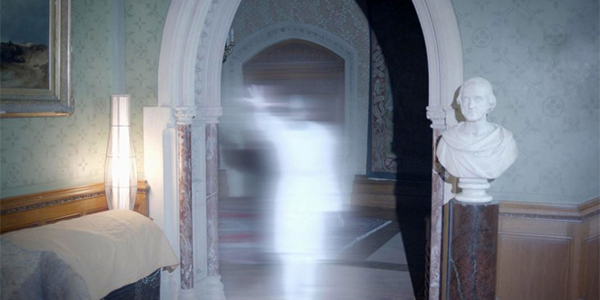
There's plenty of evidence out there to prove that ghosts exist. That's not the same as saying that there's plenty of evidence out there to prove that the souls of the dead roam the Earth, haunting particular locations because they have some unfinished business or suffered a violent demise, with a propensity for wearing white sheets and clanking chains. It seems rather ignorant and naïve to totally discount the centuries of stories about spirits and ghouls, that have existed for about as long as recorded history €“ it'd be similarly foolish to immediately assume they're dead people. One of the more (sort of) scientific explanations for the appearance of spectral, ghostly figures is that they're something beyond the usual realm of human understanding, beings that we're not usually attuned to, or who don't usually make their presence known. In which case, they could be some bleed through from an alternate world or reality, a bunch of misfiring electrons that have landed on the wrong plane of existence. Or there could be an alternate universe populated by the deceased. Like in Doctor Who!

3. Dimensions In Time

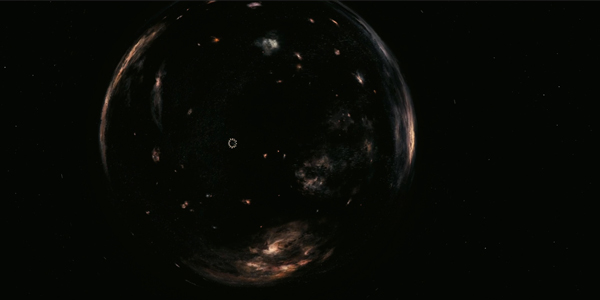
Christopher Nolan's Interstellar is the latest in a long line of films that dealt with parallel worlds, but it's also one of the first to actually go about it realistically. Or, y'know, "realistically" - its science isn't totally sound, but it's rooted in some actual hard theory. Specifically (and spoilers for Interstellar, soz), the sequence towards the end of the film when Matthew McConaughey's heroic astronaut Cooper flies through a black hole and enters the fifth dimension, previously thought to be beyond human comprehension. Which is something that actually exists. Well, theoretically, at least. It probably wouldn't look like it does in the film, because it doesn't really look like anything. Our understanding of the universe exists across a 3D vector. In actuality there's a fourth dimension, and humans are only capable of viewing static slices of that 4D system. Beyond that there might also be the fifth dimension, which is really the preserve of mathematicians and physicists, but it's known to exist: that's basically a parallel world, right?

2. The Double Slit Experiment

Okay, so if you want to get into the hard science of how multiple dimensions would work, here it is. According to quantum mechanics, which describes the motions and interactions of particles at a fundamental sub-atomic level, we have a good idea of how the universe works by observing the behaviours of electrons and photons. Which, apparently, can be in multiple places or multiple states of existence simultaneously. This is called superposition. That's kind of like the idea of alternate realities, right? It's a pretty simple test, provided you have the right materials. All you do is shoot a individual electrons through a sheet of a material with two vertical slits in it, and onto a blank white screen. There is a 50/50 chance the electron will go through each slit. You'll also get to see the electronic interacting, interfering each others...except only one is around at the time. So what's the deal? It's because the electron is existing in multiple places at the same time. Take that to a wider view, and you've got the many world theory in action.

1. CERN And The Large Hadron Collider
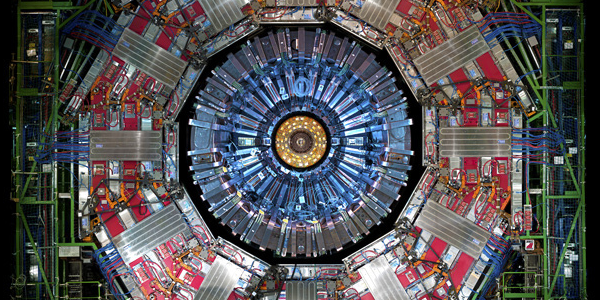
"The multiverse is no longer a model, it is a consequence of our models.€ That's a quote straight from Aurelien Barrau, particle physicist at CERN. The large hadron collider has been subjected to endless amounts of urban legends and pseudoscientific understandings of what all those brainy researchers were actually doing down there in deepest, darkest Switzerland. Sure, they said they were searching for the Higgs boson particle, but what does that really mean? More likely they were going to create a black hole and undo all of reality. In fact that wouldn't have been a problem, because the CERN probing into the origins of the cosmos might have stumbled across the most compelling evidence for the existence of alternate realities so far. By flinging a bunch of particles around at huge speeds for ages, the large hadron collider was supposed to give us some understanding of the 96% of the universe we've yet to full understand. It's basically a summation of everything else on this list. They measured how long particles disappeared, presumably to other dimensions or planes of existence, superposition, and generally built up the biggest stack of evidence yet.

 
First Posted On: 
Contributor
Contributor

Tom Baker is the Comics Editor at WhatCulture! He's heard all the Doctor Who jokes, but not many about Randall and Hopkirk. He also blogs at http://communibearsilostate.wordpress.com/