10 Futuristic Smartphone Features That Will Appear Soon
Enough talk about octa-core processors and screen resolutions...
Smartphone technology is advancing at a relentless pace, but do you really care for the speed difference between a quad-core or octa-core processor? Do you even have the 20/20 vision to spot the extra pixels in a Quad HD over a Full HD display? In fact, you'd be justified in saying that every phone looks 'kind of like an iPhone' (if you're over 40), and that no smartphone has really blown you away since the original iPhone back in 2007.
Today, the zenith of phone design is the Galaxy S6 Edge, with its 'edge' spilling over the sides of the phone like love handles over an undersized pair of jeans. Pretty though the S6 Edge may be, its sidebars function as little more than extra storage space for your apps or a contacts list, which doesn't exactly announce to us that we've arrived in the future.
But don't fret, because there is phone technology on the way that will make the S6 Edge look as outdated as a candlestick phone from Mary Poppins; technology that will make phones wafer-thin, see-through and indestructible, help them save lives, and turn them into gateways into other dimensions. If you think you spend too much time on your smartphone now, then these near-future features will all but confirm the inseparability of humankind from its handheld little life assistants.
10. Virtual Reality
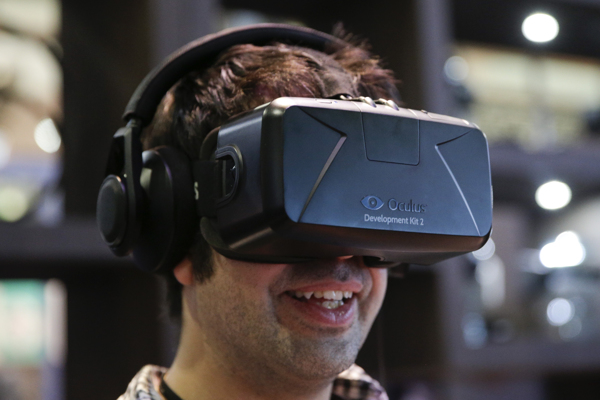
In themselves, 4k smartphone displays are just another bit of ball-swinging by manufacturers. The human eye can barely make out a QHD (or 2K) resolution on smartphones, so what's the point of a 4k display apart from gloating that it's physically possible? The simple answer is Virtual Reality.
While VR headsets like Oculus Rift, Project Morpheus and Vive should be storming PCs and games consoles by the end of this year, not much attention has been paid to the technology on smartphones. But all the major manufacturers are already working on VR headsets that will utilise 4k smartphone displays, which are likely to start appearing later in 2016. Because the phone itself will act as the display in the headset, and be pressed right up against your eyeballs, a 4K resolution will be crucial to an immersive, non-pixellated experience. It's incredibly cool, in a dystopian sort of way.
If phones have a distancing, blinker-like effect on reality, then VR headsets will be full-on blindfolds, leaving us isolated in our own worlds of private pleasures. Huxley's Brave New World is just around the corner, but with smartphones instead of soma. Smartphones? More like Soma-rtphones...
9. Graphene To make Phones Flexible, Indestructible And See-Through
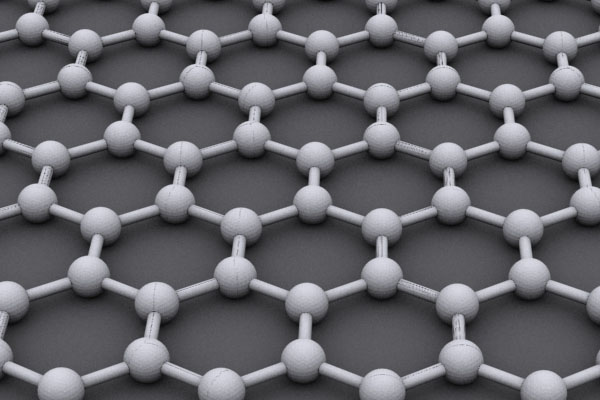
A relatively new addition to the world of carbon compounds, graphene has been hailed as a wonder material by scientists since it was first produced in 2004. It's flexible, transparent, 200 times stronger than steel, and one of the best materials in the world for conducting heat and electricity. In other words, it's perfect for a smartphone.
The technology, which could allow for wafer-thin, transparent, flexible, and virtually indestructible phone screens, has had a few crucial breakthroughs recently. First, Samsung's Advanced Institute of Technology (SAIT) produced graphene in a way that retained its outstanding electrical qualities, which proved to be a problem up to that point. More recently, Kostya Novoselov, one of the two scientists who discovered graphene, used it to develop a transparent, LED device essentially a paper-thin rectangle of bendy, indestructible plastic that could one day contain a smartphone.
Samsung has already dabbled in flexible displays, as the picture above illustrates, but graphene has the potential to make these commercially viable in the next few years. If only the humans in Avatar had known about graphene, then the whole mess on Pandora over unobtainium would've been avoided... Take a look at the TED Talk below to find out more about this miracle material.
https://www.youtube.com/embed/675eM-V8t08
8. Nanotechnology To Charge Your Phone In 30 Seconds
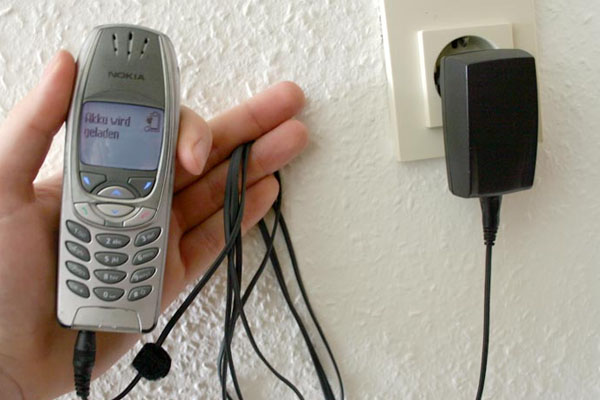
In many of last year's top phones, much has been made of their ability to quick-charge in half an hour. Half an hour?! What are you supposed to do with yourself when you don't have a phone for half an hour? It's just no way to live. Israeli tech company StoreDot seems to agree. At MWC 2015, they revealed a customised Samsung Galaxy S5 whose nano-tech battery high-striked from 0-100% in one minute.
The technology emerged as a side-effect of research into Alzheimer's disease, when it was discovered that peptide molecules which cause the disease have incredibly high capacitance, making them great at storing electrical charge. The catch is that for now the StoreDot battery only lasts about two-thirds of the time of a normal Li-ion smartphone battery. On the bright side, this is only going to improve, and already StoreDot's battery-charger combo is charging certain phones in 30 seconds (and an electric car in five minutes!).
StoreDot has already received investments from Samsung, and is in discussions with manufacturers about integrating its battery into future phones. This one could happen sooner than you think.
7. Hidden Liquid Buttons That Rise Out Of The Screen
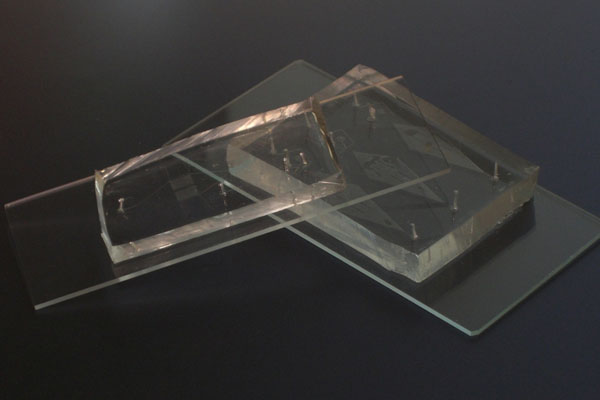
It feels like a lifetime ago now that I said I would never buy a smartphone which doesn't have a physical keyboard built into it. A few years on, and I find myself instinctively tapping the display on my (non-touchscreen) PC monitor rather than reaching for the keyboard and mouse. But even though I've now been indoctrinated into the touchscreen cult, there is still something to be said for the tactility of physical buttons.
While a mechanical slide-out keyboard now feels like it belongs more in a steampunk novel than today's slick reality, Tactus Technology has created a keyboard that looks and works like something extra-terrestrial. It uses a technology called microfluidics, which channels small amounts of liquid into invisible pockets that rest over the keyboard on your device. When you bring up your touchscreen keyboard, these pockets instantaneously fill with liquid, turning into raised physical buttons.
This otherworldy-looking technology has just been released as a pricey case for the iPad Mini called the Phorm, but we'd love to see it integrated into devices in the future. This tech could definitely play a role in turning your smartphone into a true buttoned-up gaming controller.
https://www.youtube.com/embed/7tcawBX41VU
6. Medical Apps To Fight Cancer, Malaria And Ebola
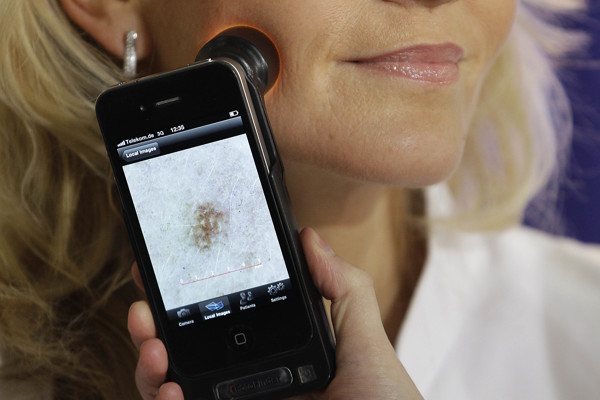
Medical apps already exist for sufferers of rheumatoid arthritis and Parkinson's disease to precisely track when they're experiencing pain or shakiness. More recently, scientists developed an app called Athelas, which with a lens attachment can track malaria and cancerous cells in your blood in seconds.
On a bigger scale, scientists have suggested that phones should be used to track highly infectious diseases like Ebola to get a more precise picture of how they spread. Using a cheap, simple phone add-on called a PCR, which tags pathogens in the blood using a dye, a diagnosis of the disease could be made by anyone within a couple of hours, then automatically uploaded from a person's phone to an online database.
Combine such simple technologies with the growing presence of heart-rate, blood pressure, and other health-tracking features on phones, and its little wonder that scientists are hailing smartphones as having the potential to trigger a medical revolution. Big data is changing the world, and smartphones are its foot-soldiers.
5. Photonic Crystal Displays
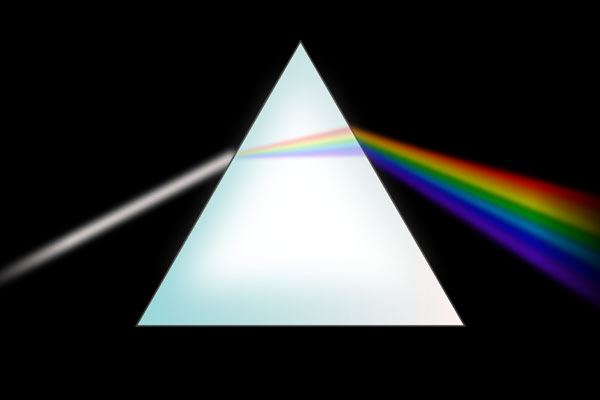
Smartphone displays are incredibly crisp, with colours so over-saturated that they make 30s Technicolor films look like bleak documentaries about urban decay in 70s New York. For all their lucidity, today's displays don't adapt well to varying light conditions; they're an eye-sore when you're looking at them in the dark, and virtually invisible in bright daylight. That's where photonic crystals come in.
Rather than giving off their own eye-searing light like today's LCD or OLED displays, a photonic crystal display adapts and modifies its nanostructures depending on the ambient light in its environment sort of like an e-ink display. To be visible, the photonic screen requires an external light source, but this could easily be built into the chassis like in a Kindle PaperWhite.
How close is this to happening? Google and Apple have already made big investments in photonics, while Samsung teased a concept video of of a flexible phone with a photonic crystal display back in 2013. While we shouldn't expect this in the next year or two, it's definitely one to keep an eye on in the future.
4. Seamless Voice Interaction and AI

After years of attempting to make voice controls a viable means of using your phone, Apple finally made the breakthrough a couple of years ago with Siri. Now, Google and Microsoft have their own variants of voice control, making their respective voice assistants vital life companions. But this is just the tip of the tech iceberg. Voice interaction with your phone is becoming increasingly contextual and Artificially Intelligent.
In iOS 7, for example, Siri will talk to you and remind you of things depending on your email content, the time of day, and other factors. In Android M, meanwhile, you'll be able to do things like listen to music and ask what's his/her real name? - your phone will know who you're talking about and tell you. The algorithms used in voice-assisted AI are progressing at a scary rate. As the tech improves, the AI will become familiar with your movements, emails, friends, diet and web searches (all through your phone), giving you advice that will eventually pre-empt your very thoughts, thereby manipulating them.
Eventually, these AI algorithms will come to define us, making us subservient to the very devices that we built to serve us. Until that happens though, let's just admire how useful and clever voice-assisted AI is becoming!
3. Gamepad-like Shoulder Sensors

It looks like Samsung has realised that the technology used in its Galaxy S6 Edge display is destined for bigger things than being a colour-coded contacts list. In fact, curved touchscreen technology can be used without a display altogether, as seen in this recent Samsung patent for a phone with six sensors along the sides of the chassis.
The first thing that springs to mind with these sensor shoulder buttons is gaming. For years, gamers have had to suffer slippery touch-screens while playing fiddly first-person shooters and racers. Shoulder buttons are a core feature of any serious games controller, and for phones to have them built-in will earn them kudos among the hardcore gaming crowd.
The sensors also facilitate off-screen photography controls, act as buttons and indicators when using GPS navigation, and would surely have plenty of other functions. Of course, the patent office is a place where many great ideas go to die, but we think this one deserves a chance at life.
2. No More SIM Cards!
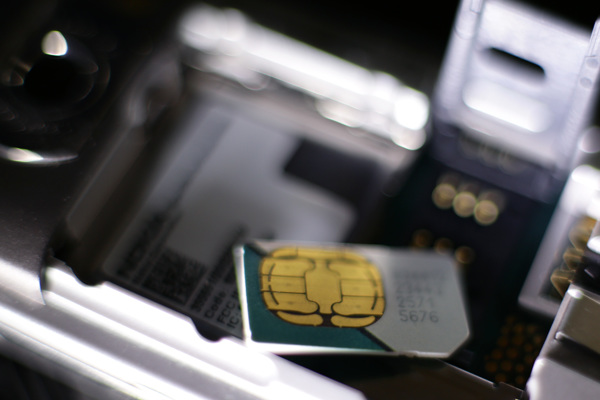
Don't SIM cards feel like relics from the 90s? They may be coming out in 'Micro' and 'Nano' varieties, but decreasing the amount of plastic around the chip doesn't scream 'Progress', considering it's something you can do yourself using a scalpel.
Enough of these Micro SIM and Nano SIM cards, we want NoSIM cards. Yes, that's right, none. It looks like our protests have been heard, because both Apple and Samsung are reportedly working together to abolish plastic SIM cards, and replace them with electronic SIMs.
How will it work? By having an 'embedded' SIM card, you'll essentially be able to switch between network providers in a matter of seconds without having to request a new SIM card; particularly handy if you're abroad, and want to quickly nab yourself a local number. E-SIM cards could be arriving as early as next year.
1. Pressure-sensitive Screens
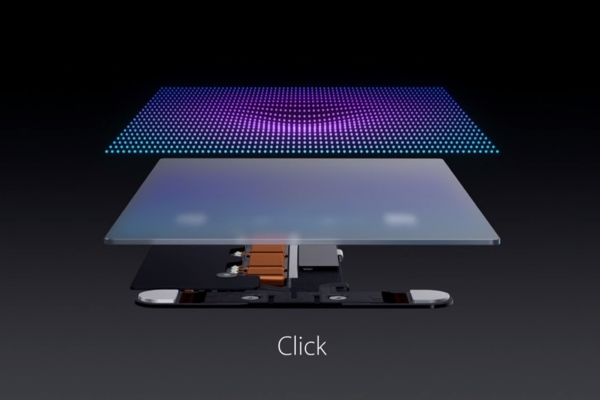
There have been a few attempts at pressure-sensitive smartphone displays in the past, but - a bit like 3D and hologram displays the concept was too ambitious for the technology available. Now, however, Apple is leading the charge with Force Touch. For now, Force Touch is a seemingly simple Apple Watch feature which distinguishes between a light tap and a firm press of the screen, offering additional ways to control your device.
If evolved however, it could prove great for gaming - making jumping more precise in platformers, and driving controls more realistic in racing games. And wouldn't it be satisfying to force-close an app by giving the screen a solid thump, kind of like Alt-F4 on a PC? Apple's not the only company pushing pressure-sensitive displays, as Samsung filed a patent for its own one a couple of years ago, albeit under the clunky moniker Touch Display Apparatus Sensing Touch Force - hopefully a working title.
Chinese manufacturer ZTE also revealed the ZTE Axon Mini in July 2015, which also includes the intriguing tech. Have these technologies piqued your interested in smartphones, or do you think that they're moving us towards a future where humanity's enslaved by technology?