10 Most Controversial WCW Firings Ever

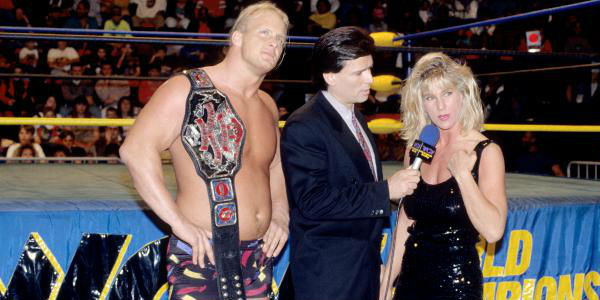
Looks like Eric Bischoff was keeping Fed Ex in business in the late nineties...

At the height of its fantastic success €“ shortly before the fastest downhill slide in professional wrestling history €“ World Championship Wrestling employed in the region of two hundred and sixty wrestlers, a fair few of whom never received the opportunity to perform for the company despite their contracts and often ridiculously high guaranteed salaries. With so many on contract, there were bound to be some casualties, even with the legendarily deep pockets that paid for everything: and erstwhile WCW executive producer and (later) president Eric Bischoff has always been very open concerning his belief that controversy creates cash. Keeping this in mind, we€™ve ransacked the annals of WCW€™s history to find the most controversial firings in the company€™s chequered past. Some began controversially, others achieved controversy, while still more had controversy thrust upon them. The other thing that controversy creates is a good story. Here€™s a few of the very best.

Honourable Mention: Blood On The Rhodes
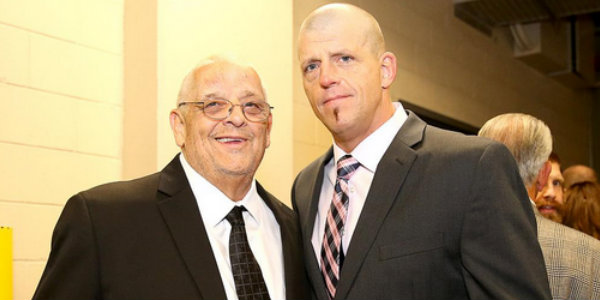
Before Bischoff, there was the Dream. Dusty Rhodes, also known as the American Dream, was WCW booker from 1985 to 1989, and no stranger to controversy himself. His rapid exit from the company, however, was in an effort to actually remove controversy from the equation. Following their purchase of the company, the Turner Broadcasting System laid down a number of guidelines for the management to follow, one of the most important of which was NO BLOOD. Dusty was incensed at this: the most old school of old school, the Dream a) genuinely believed that blood could often be vital to sell the story of a proper grudge match, and b) hated to be told how to book the promotion. To illustrate his contempt for both the message and the messenger, Rhodes booked an angle whereby Road Warrior Animal would jam a spike into his (Dusty€™s) eye, causing display of the legit crimson mask. TBS would have Rhodes fired immediately afterwards. Weirdly, six years later Dusty Rhodes€™ son Dustin (the future Goldust in WWF/WWE) would also be sacked from WCW for bleeding when he wasn€™t supposed to. In a match with Barry €˜The Blacktop Bully€™ Darsow at the Uncensored pay-per-view in March 1995, both men agreed to blade to heighten the drama of the match, despite the edict from on high. It was enough to lose both Dustin and Barry their jobs in one fell swoop.

10. The Juice And The Dust

Unlike his contemporaries in WCW, Rey Misterio Jnr., Psicosis and Konnan, Guerrera was €“ and, from all reports, still is €“ a volatile and unreliable performer, inside and outside the ring. A fixture of WCW€™s cruiserweight and tag team divisions from 1996, €˜The Juice€™ was notorious for his inflated opinion of himself and his own fame. Around the turn of the millennium, he would mimic WWF megastar The Rock€™s mannerisms and catchphrases, and was so infamous for his pretensions to greatness that people genuinely wondered whether he was portraying a gimmick, or was just three chips short of a butty. In October 2000 they had an answer of sorts: during a tour of Australia, set to be a highly lucrative kickstart to the ailing promotion€™s finances, Guerrera was found at the hotel restaurant practically frothing at the mouth, tearing off his clothes and screaming that he was going to kill himself. Several of his colleagues (all of whom were much larger than the pint-sized luchador) tried and failed to calm the situation, and it took the arrival of the police with pepper spray and handcuffs to restrain him. Guerrera was found to have been under the influence of PCP, otherwise known as angel dust, a dissociative narcotic that can mimic the effects of a nasty schizophrenic episode. Guerrera was lucky that he was only fined and sent home €“ after all, he was a foreign national, dependent on a lack of travel restrictions for his livelihood, who€™d just assaulted police officers while naked and wasted on illegal drugs. Only his assertion that he€™d been spiked the evening before saved him from more serious censure from the Australian authorities. It didn€™t save his job, though. In typical WCW fashion, no one bothered to let him know he€™d been fired: €˜The Juice€™ found out that he was unemployed when his friends read about it in the dirtsheets.

9. Steven Regal Is Next

In early 1998, WWF/WWE€™s William Regal was WCW€™s Lord Steven Regal: same ferociously talented Darren Matthews, same midcard lifer gimmick, just working for the opposition. On February 9th 1998 at Nitro, Matthews was scheduled to lose to Bill Goldberg, then only a few months into his legendary undefeated streak angle, and take his place as the thirty-fifth man on the upstart behemoth€™s list. As the heel (and a worldwide veteran of fifteen years), Regal was responsible for running the action in the ring. At the time, Goldberg would normally work slight variations on the same two to three minute squash match, so it was a surprise when the match took on an entirely different structure, Regal aggressively taking it to the big man. Goldberg appeared nonplussed throughout their patchy, uncoordinated near six minutes in the ring, before finally taking the win with the Jackhammer. https://www.youtube.com/watch?v=Y4IdelJfk2k Scuttlebutt (like gossip going into business for itself) has whispered for years that the veteran Lord Steven Regal, narked at Goldberg€™s huge push, had taken it upon himself to teach the rookie a lesson. Those rumours seemed borne out by the fact that Matthews was fired by WCW only a short time later. Regal himself insists it€™s nonsense: that the agent in charge of producing the match had instructed them both to work a competitive six minutes, and that Goldberg simply froze when he got out there, having being taken out of his comfort zone. Regal claims that Goldberg copped to all of this backstage after the match, and that any heat he had with Bischoff and management was only ever due to his drug and alcohol problem and correspondingly lacklustre performances. He says he€™d just gotten back from a seven-week suspension without pay (punishment for being arrested while wasted and unruly on a plane back from Japan) and thus was on his best behaviour that night at Nitro. Regal€™s recollection of that time is a little hazy though€ the truth may be somewhere a little in between.

8. 1-2-3 For Fired Syxx

WWF€™s 1-2-3 Kid, the real life Sean Waltman, jumped to WCW in September 1996, and immediately joined the New World Order to hook up with his former buddies from the Kliq, Kevin Nash and Scott Hall. The heel stable was still huge at the time, only two months after its formation when Hulk Hogan had infamously turned heel: as the sixth member of the group, Waltman was rechristened Syxx. A year later, the NWO was a bloated beast, the angle having become blown out of all proportion into a massive ego trip for the main event wrestlers who formed the core of the group. Hall and Nash had become difficult to handle, but they were too high up the pecking order to be wrangled in the normal manner. The story goes that Syxx had been sidelined with a neck injury, and had been unable to perform for the company for some time. It was written into all WCW contracts that, past a certain period, incapacity would be sufficient grounds for the company to terminate a wrestler€™s contract: accordingly, Waltman received a Fed Ex package with that termination notice in October 1997. Waltman would claim that Eric Bischoff€™s issue with the Outsiders had fallen onto him: that, since Bischoff couldn't take it out on Nash and Hall, he€™d punished their best mate, who was lower on the totem pole and vulnerable, by having him sacked in the most humiliating way possible. Bischoff has countered by saying that it wasn€™t some political gamesmanship: that Waltman was only a good worker when he was sober, with his sober moments increasingly further and further apart, and that with his substance abuse issues the man had been lucky to have a job at all. Bischoff points out that Fed Ex, like it or not, was WCW€™s go-to method of parting company with their talent, and also mentions that Waltman's agent had recently tried to renegotiate his contract by playing hardball, which Bischoff took issue with. This was his way of making a statement.

7. And The Hits Just Keep On Coming For The Hitman

After leaving the WWF November 1997, Bret €˜The Hitman€™ Hart arrived in WCW to find that WCW didn't really have much of a plan for him: it looked very much as though they just wanted to have him on their roster, and off the WWF's. Add to that the 60-day non-compete clause he'd signed when coming to terms on his release from WWF, and Hart couldn't even wrestle for WCW until January 1998. What€™s more, he had history with almost all of the top dogs at WCW, none of whom wanted to share their spot. The end result was that the hottest property in wrestling simply fizzled out: having worked a good but not great 1998 in midcard feuds and matches, Hart would be signed off with a groin injury through April and May of 1999. And then shortly before his return, his younger brother Owen died in a WWF ring, and in passing sucked the last of the life from the Hitman. Hart took a further four months off to be with the family. Upon returning, he'd finally win the WCW world title for the first time in December 1999, but it was shortly afterwards that Goldberg kicked him in the head, causing the initial concussion that would signal the beginning of the end of his career. Severely injured in the line of duty and unable to wrestle, Hart was sent a letter in spring 1999 informing him that they were exercising their contractual right to cut his pay in half. Not only that, but as of April 15, they could legally fire him€ yet they didn€™t. WCW kept him on for a further six months, cutting his pay in half yet again but keeping him on as a figurehead for nonsensical angles, cutting promos despite his slurred voice. In August 28th 2000, the Hitman was told what everyone had suspected for months €“ he couldn't ever wrestle again. A week later, WCW had Hart flown in to take the real events of Goldberg€™s inadvertent stiff kick and Hart€™s heartbreaking career-ending post-concussion syndrome€ and turn it into a heelish angle to crank up the crowd reaction for Goldberg, who€™d just endured one of WCW€™s heat-killing heel/face pirouettes over the previous two months.
€œI was slurring my words for real, following the script to whine about how he hurt me, when a wave of emotion came over me as I realized that nobody was getting it: Everyone, including all the fans, thought I was just acting like I was concussed. Then the big screen played the definitive camera angle of Goldberg€™s foot plowing into my head, one that I€™d never seen before. The crowd laughed and jeered me as Goldberg dressed me down verbally. Afterwards, I felt like a whore as I remembered the devastating impact of Goldberg€™s foot connecting with my head, reinforced by what I€™d seen up on the big screen. And I€™d let them exploit it for ratings.€
WCW would fire The Hitman for good only a few weeks later.

6. The British Bulldog Is Nearly Put To Sleep
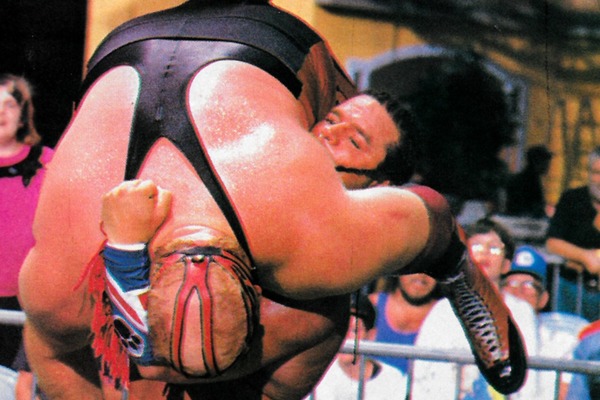
Think that€™s callous? WCW did worse to Davey Boy Smith, €˜the British Bulldog€™. Smith had been hospitalised for some months after seriously injuring his back taking an otherwise perfectly normal bump in a match with Alex Wright. He€™d landed hard on the trapdoor in the ring that Warrior used for his mysterious appearances, crushing the C-9 and C-10 vertebrae in his back and fracturing four other vertebrae. To make matters worse, he€™d contracted a serious staph infection, and was in a body cast. Scuttlebutt (like gossip in intensive care) said that his career might be over, that he might be confined to a wheelchair: the other whispers were that his life was in danger. None of that stopped WCW from exercising their contractual right to end the Bulldog€™s employment after a certain number of days had expired without a performance. To add insult to injury, the Fed Ex envelope with his termination notice was sent directly to Smith€™s hospital bed. Bischoff claimed later that he€™d had no idea of the worsening of Smith€™s medical condition when he made the decision to fire him, and that it was an administrative mistake to send the notice to the hospital. However, to make matters even worse, WCW elected to try and spin the PR disaster as part of an angle: it was all so that the nefarious company could prove they€™ll mess with the babyface€™s friends and family if necessary, a craven way to try and cover up their legit lack of compassion for a man at death€™s door as a consequence of an injury sustained on their watch.

5. The Cowboy And The Gambler

€˜Cowboy€™ Bill Watts, the executive vice president of WCW from 1992 to 1993, is the oldest of the old school, in attitude if not actually in age. That made him very popular amongst other proponents of the old school, and very unpopular amongst more forward thinking people in the company€ people like Paul Heyman, then known as Paul E. Dangerously, of the Dangerous Alliance. In the old days, there was a fair amount of creative accounting going on behind the scenes, not the least of which was fiddling expenses. The story goes that Heyman was caught claiming expenses for hotel rooms he hadn€™t stayed in, and (because Watts didn€™t like him) was made an example of. When Heyman pointed out that he wasn€™t the only one doing it, he was allegedly made the target of racial slurs concerning his Jewish heritage. The end result would be Heyman€™s dismissal. Watts himself left WCW shortly afterwards€ and then word got around about an old interview that he€™d participated in prior to joining WCW in which he expressed some rather old-fashioned notions on the construction of race in society (thereby ruining the reputations of Mid-Southern gentlemen everywhere). People started to think that maybe Watts hadn€™t jumped after all, but been pushed €“ and that gave Heyman the perfect opportunity. He sued WCW, citing the rampant anti-semitism involved in his dismissal, and given the circumstances WCW had no choice but to settle ASAP or risk bringing down the pre-X-Pac version of X-Pac heat on the entire company. Paul E. Dangerously made quite a tidy sum from World Championship Wrestling, a sum he chose to reinvest in the industry he loved so much. The rest is ECW (and professional wrestling) history.

4. Never Run With Scissors

Controversial, not because of the decision itself, but because of the circumstances surrounding it, the story of how Sid Vicious lost his job at WCW is fairly bloody harrowing. During a tour of the UK in October 1993, Sid €˜Vicious€™ Eudy and Martin €˜Arn Anderson€™ Lunde came to blows in the hallway of their Blackburn hotel in the worst possible way. The WCW roster had endured a nine hour plane journey, followed by three hours bus travel, and had then wrestled the show, leaping straight back into the bus to drive for another ten or so hours. They were exhausted and bored, and with little food available but plenty of beer, drunk as you like. What€™s so bad about being drunk? Ask a glass of water€ and then ask Arn Anderson. Matters between Sid and Arn (they sound like a northern variety act) became heated when the question of drawing power in the business reared its ugly head. The story goes that Sid offered the considered thesis that old men like Ric Flair needed to step out of the way for the younger, hungrier guys to get to the main event, and Arn countered with the rather inflammatory point that Sid hadn€™t been a true Horseman, and wasn€™t fit to lace Tully Blanchard€™s boots. Beer was then thrown by both sides of the debate. That should have been the end of it, but Sid, fuming, decided to visit Arn€™s hotel room in the middle of the night€ armed with a chair leg to beat him over the head with. In turn, Arn brandished a pair of scissors, and proceeded to stab Sid in the face, hands and stomach. Punching Anderson to the ground, Sid managed to get to the fallen scissors first. Eye witness Too Cold Scorpio says that he turned the corner into the hall to see both men covered in blood, Sid stabbing and kicking Anderson over and over and over with the scissors, and ran over to separate them. Vader also arrived on the scene, and helped Sid stop the bleeding by jamming his thumb into the hole in his belly. How either man managed to get away with no charges being filed by anyone is a complete mystery. When word leaked back to WCW of the horrific incident, several wrestlers made it very clear that they wouldn€™t work with Sid after this, and he was quietly released. The WWF would later rehire him under the name €˜Sycho Sid€™, a subtle reference to the Blackburn scissor fight. Bizarrely, WCW would actually rehire Sid in 1999: after Anderson had retired as a performer, but while he was still working for the company.

3. Hot Steve Goes Stone Cold

Before €˜Stone Cold€™ Steve Austin became the most successful wrestler in WWF (and WWE) history, he was €˜Stunning€™ Steve Austin, tag team and midcard lifer in WCW. Sidelined by a triceps injury while wrestling in Japan, Austin was recuperating at home when he was asked to come to Atlanta for a taping to cut some promos and keep his character alive while he was unable to wrestle. Opinions vary as to the course of events: Austin either refused to go, no-showed the taping, or simply told his wife to tell the office that he wasn€™t in when they called. Whatever the exact circumstances, Bischoff wasn€™t pleased. Austin was called again and told he was being let go. Well, it's better than one of WCW€™s trademark you€™re-hurt-you€™re-fired Fed Ex termination letters. Austin was furious, but still injured and unable to go elsewhere to wrestle. That is, until his erstwhile Dangerous Alliance teammate Paul Heyman called and asked him to come to ECW€ ironically, just to cut a few promos, keep his hand in. Full of white-hot anger and frustrated ambition, needing a place to vent it, Austin accepted, and began refining the character that would one day become the Texas Rattlesnake. The WWF would come calling only a few months later. Bischoff and Austin have since reconciled to a degree, the Rattlesnake having mellowed considerable in middle-age: in a recent podcast interview, he admitted that he didn't recall refusing to go to the taping, but that it sounded like him, and that he'd have reacted in the same way as Bischoff. Of course, in 1998 Bischoff's story was slightly different: https://www.youtube.com/watch?v=TnZDYCFfZ-E Yeah, you keep telling yourself that, Easy-E.

2. Working A Worked Shoot Into A Shoot
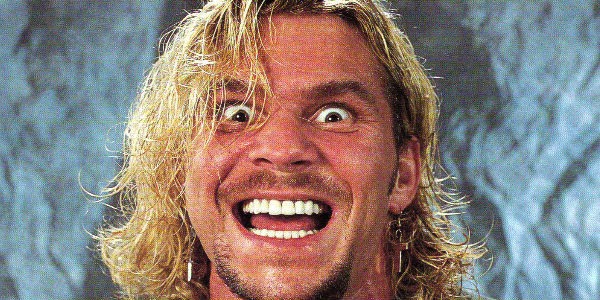
Austin€™s partner in the old Hollywood Blondes tag team had been left behind when Austin went solo in €˜93, and yet again when Austin was released in €˜95. In 1996, however, Brian Pillman finally hit the big time, pulling off one of the greatest real life swerves in the history of professional wrestling. And he did it all by getting himself sacked. Pillman was a mouthy wind-up merchant with a cheeky grin€ and a mind like a steel trap. Unlike Vince Russo, who treated worked shoots like punchlines to bad jokes, Pillman understood that they were really magic tricks, requiring perfect timing, sleight of hand and complete commitment to get away with. Together with Eric Bischoff, Pillman came up with a plan for his character €˜the Loose Cannon€™ Brian Pillman, that would elevate him from midcard also-ran to main event status in one fell swoop. He would do something out of order, Bischoff would legit sack him, and then Pillman would go to ECW (who had had a talent-swapping programme set up with WCW for a while a year or two before), become utterly notorious, and return to WCW again down the line to some extraordinary fanfare. Bischoff, a man well used to thinking outside of the box and with absolutely no hesitation when it came to putting over angles that hadn€™t been tried before, was ecstatic. At February 1996€™ Superbrawl pay-per-view, Pillman took his moment: he wrecked a strap match with Kevin Sullivan by exposing the business and revealing to the fans that Sullivan was the real life booker of the show, the man who called the shots. True to his word, and seeing dollar signs flashing before his eyes, Bischoff fired Pillman as agreed, who went to ECW, as agreed. Free of his contract with WCW, and finding himself at the centre of a bidding war, Pillman did exactly as he€™d always planned and took the best offer that came along, one from the WWF: leaving Eric Bischoff waiting by the phone like the homecoming queen jilted on prom night.

1. To Be The Man You've Got To Pay The Man

In his prime, €˜the Nature Boy€™ Ric Flair was one of the greatest of all time. Everyone knows this. It€™s a professional wrestling truism. Everyone also knows that drama follows Naitch around like a lost puppy begging for scraps. When Jim Herd was appointed executive vice president of WCW in 1988, he would clash with Flair repeatedly over the booking direction for the promotion. Flair was not only the NWA world champion at the time, but also one of the shot callers at WCW, as a member of the booking committee. By contrast, Herd had a background in fast food management, and knew as much about professional wrestling as he did particle physics. Convinced that Flair€™s time was past, Herd wanted him to drop the title to Lex Luger: in turn, Flair refused, advising him that Sting had been promised a run with the belt. Matters came to a head when the hapless Herd simply gave up negotiating and sacked Ric Flair in July 1991, stripping him of the NWA/WCW world heavyweight championship. There was just one problem with that: Flair took the belt with him to the World Wrestling Federation. Herd didn€™t realise that the wrestler holding the NWA title always paid a $25,000 deposit for the physical belt itself to prevent them from skipping promotions with the championship. Flair had paid his deposit, and Herd now owed him the money back, with interest€ but Herd wouldn€™t pay it, instead suggesting that Flair perform a frankly physically impossible act upon his own person. In turn, Flair countered by directing Herd to undertake an equally unlikely expression of intimacy with himself. The irony was deep: the tactic that was supposed to stop the champion from taking the belt away with him now prevented him from giving it back. Flair sent the championship strap to Vince McMahon, who paraded it around WWF television, incensing and embarrassing the NWA. Meanwhile WCW didn€™t have a champion or a title belt, and were forced to set up a contender/contender match to crown a new champion€ giving winner Lex Luger one of Dusty Rhodes€™ old belts with tape on it spelling out €˜WORLD CHAMPION€™. The matter was eventually resolved, but had far reaching repercussions. The reason that McMahon set up what would become known as the Montreal Screwjob was because he knew the extent of the PR nightmare that had befallen the NWA and WCW when he and Flair had their opponents€™ top title in their possession, and remembered vividly the lesser embarrassment that WWF womens€™ champion Alundra Blayze had caused him when she defected to WCW and dropped her title belt in a trash bin on his rival€™s television show. McMahon couldn€™t handle the idea of Bret Hart potentially doing the same thing to him, should he leave the WWF as world champion: the resulting scandal of Hart€™s betrayal led to babyface announcer Vince€™s outing to WWF fans as the true power in the company, which led directly to his capitalising upon their dislike of him by creating the Mr. McMahon heel authority figure to feud with his new angry rebel star, €˜Stone Cold€™ Steve Austin. In turn, €˜Austin versus McMahon€™, in all its various permutations, was the cornerstone angle of WWF€™s programming throughout the Monday Night War, and the storyline that pushed WWF over the top in ratings as WCW€™s ship began to sink. What does all this mean? It means that Jim Herd€™s insistence that he knew what was best for business for WCW in 1991 indirectly led to the WWF€™s beating WCW in the television ratings war in 1998. Talk about shooting yourself in the foot. Heard any other stories of controversial firings in WCW? Tell us all about it in the comments...

In this post: 
Bret Hart WCW
 
Posted On: 
Contributor
Contributor

Professional writer, punk werewolf and nesting place for starfish. Obsessed with squid, spirals and story. I publish short weird fiction online at desincarne.com, and tweet nonsense under the name Jack The Bodiless. You can follow me all you like, just don't touch my stuff.