10 Things You Didn’t Know About WWE In 1999

One of the craziest years in the history of WWE.
As we have seen from previous installments, sometimes the biggest stories in WWF/E happen off screen rather than on screen. Last time, in 1998, we learned that Crash Holly won a WWF contract based off one dark match, Bret Hart would have faced Shawn Michaels at Wrestlemania 14, and Michaels was ready to come back after just one year. In 1999, the world unfortunately lost Owen Hart. But the WWF also had the Higher Power angle, the Austin-as-CEO angle, and the Chyna-as-WWF-Championship-contender angle. Even though the WWF was doing gangbusters and winning the Monday Night War, from a creative perspective, 1999 was all over the place. They were firmly rooted in the Crash TV style of booking, but it made for exciting television each week. With so much happening on- and off-screen, you€™d think you would know everything that went on backstage in the WWF, but you€™d be wrong. There are plenty of little nuggets of trivia that came from this year. Some of these you may have also known about, but simply forgot. After 1999, this column series will go backwards to 1992, then 1991, and so on and so forth. Without further adieu, here are 10 things you didn't know about the WWE in 1999.

10. Quebecer Pierre Was Going To Be Re-Introduced As Khris Kannonball
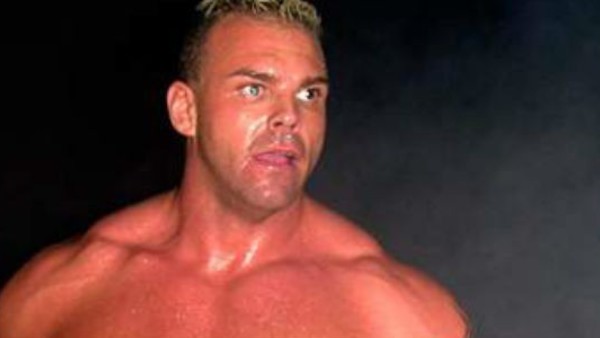
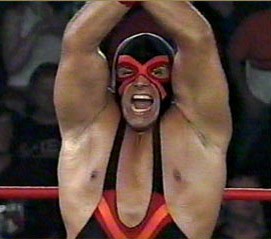
It seems the Quebecers get more press in this column series than anybody else, but they€™ve had so much under-the-radar longevity in WWF/E history. Jacques€™s roots can be traced back to the mid-80s with the Fabulous Rougeaus, and Carl Ouellett (Pierre) has had numerous repackagings throughout the 1990s. The first was as Jean-Pierre Lafitte in 1995, with his most famous moment being a loss at In Your House to Bret Hart. Second was the short-lived reunion of the Quebecers tag team with Jacques. What many people didn€™t know was that there was to be a third repackaging for Ouellett as Khris Kannonball. Of course, because this was the 1990s, the Cs were replaced with Ks. How cute (kute?).Thankfully, this trend has not caught on during the new millennium. Oh crap€
Anyway, Kannonball worked a few dark matches in 1999, but nothing ever came of it, and Ouellett ended up back in WCW as a member of Team Canada with Lance Storm in the year 2000. Amazingly, Ouellette has stated as recently as 2008 that he would like another shot in WWE.

9. Nicole Bass Got Harassed€Like, A Lot

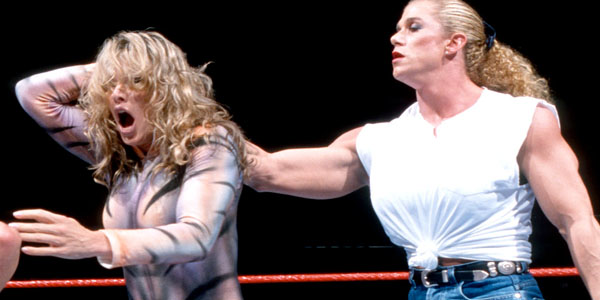
Few may remember Nicole Bass, the amazon-like powerhouse (or a poor man€™s Chyna, if you will) who served as Sable€™s bodyguard in 1999. The partnership was short-lived, as she joined Sable at Wrestlemania 15 and Sable left the WWF two months later. On Sable€™s last night on Raw, Commissioner Shawn Michaels told Bass to €œstep off, mister.€ Apparently, a woman as big as Bass still had feelings, and she was extremely upset by Michaels€™s offhand comment. To be fair, Shawn looked completely wasted. https://www.youtube.com/watch?v=e8YXes4-OyQ Bass€™s harassment wasn€™t confined to on-camera, allegedly. She quit the WWF and filed a lawsuit claiming sexual harassment by Steve Lombardi, aka the Brooklyn Brawler. The case went to court in 2003 and was ultimately dismissed.

8. WWF Taped Super Astros Before Raw For Most Of The Year

https://www.youtube.com/watch?v=38t2omQHKjU WWE has always valued the Latino demographic very highly. A big reason for the pushes of Eddie Guerrero, Rey Mysterio, and Alberto Del Rio over the past decade has been the desire to reach out to the Latino demographic. In 1999, the WWF took it a step further by taping exclusive matches for Super Astros, which aired exclusively on Univision. The show featured exclusive Mexican wrestlers like El Hijo Del Santo, Negro Casas, and Papi Chulo, who would become Essa Rios. The show was promoted in typical CMLL or AAA style, with wrestlers banding to stables and facing each other in 2-on-2 or 3-on-3 tag team matches. The show aired for the better part of the year, ending in September.

7. More Titles Were Given Away Than Any Year
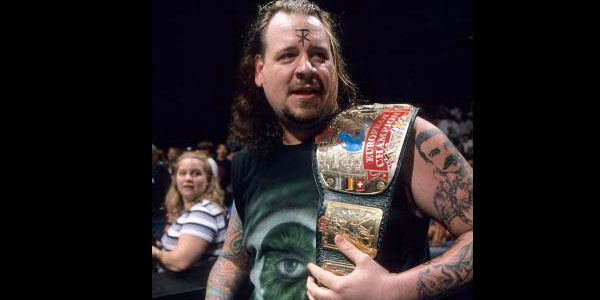
1999 was a big year for title changes. Belts were proverbial hot potatoes. The WWF Championship and Intercontinental Championship changed hands more than any other year in their existence at that point. Titles changed hands so much in 1999 that folks were just giving them away! Handing off championships wasn€™t a completely new tactic. Andre the Giant gave (or rather, sold) the WWF Championship to Ted Dibiase. In 1999, this happened three times, more than any other year. It started when Shane McMahon gave the defunct European Championship to Mideon, who reinstated it. Later that year, that same belt would be given by Jeff Jarrett to Mark Henry, who helped him defeat D€™Lo Brown the previous night at Summerslam to win both the European and Intercontinental Championships. A couple months later, the British Bulldog won the Hardcore Championship on Smackdown and immediately gave the belt to Al Snow. So any fan who claims that the belts today don€™t mean as much as they used to possibly forgot about 1999, where the belts meant so little that they were given away.

6. Triple H Wrestled Five Times In One Night
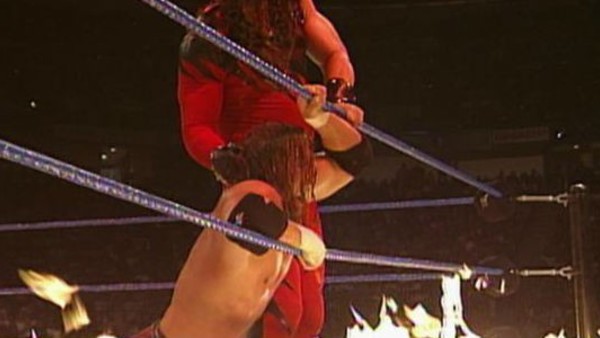
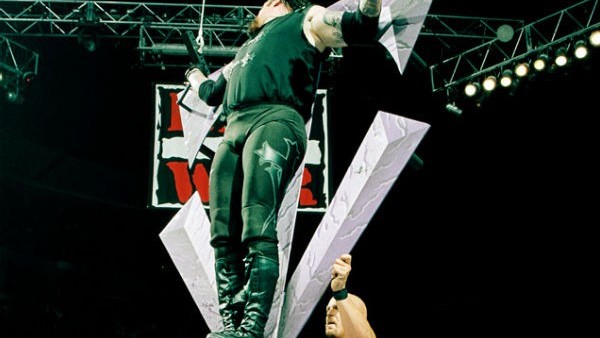
Here€™s a nice bit of trivia. What is the most amount of matches a person has wrestled in a single night against different opponents? The answer is five, and it was accomplished by Triple H on a single episode of Smackdown in September. In order for Triple H to appear in the Unforgiven Six Pack match for the vacated WWF Championship (that he had previously lost to Vince McMahon), Hunter would have to wrestle against his potential five opponents at Unforgiven and win at least three of the matches. First, he had to fight Big Show in a chokeslam match (which he lost). Second, he defeated Kane in an Inferno Match. Then he had to face The Undertaker in a Casket Match, but Undertaker refused to wrestle (he was injured), so Mideon and Viscera took Undertaker€™s place, and Triple H lost again. He then defeated Mankind in a Boiler Room Brawl. Finally, Hunter defeated The Rock in a Strap Match when the British Bulldog turned on Rock. It€™s crazy to think that with such a loaded roster they booked Triple H to wrestle five times in a single night, but that€™s what happened!

5. The Domestic Violence Angle

Poor Chaz Warrington. The former Mosh of the Headbangers went through the gimmick ringer in 1999. First, he was repackaged as Beaver Cleavage, a parody of Leave it to Beaver with his €œmother,€ Mrs. Cleavage, played by bodybuilder Marianna Koltos. Chaz famously €œbroke character€ on-air to talk about how much the gimmick sucked, and he was repackaged simply as €œChaz,€ and Marianna played his girlfriend. One week in late 1999, Marianna came out with a black eye, and it was implied that she was a domestic violence sufferer, and Chaz was the perpetrator. Chaz would get beaten up by the fellow wrestlers. Mercifully, the awful storyline was put to a halt as Chaz€™s former partner Thrasher would appear and say that Marianna was lying the whole time. She was arrested, and Chaz was free to reform the Headbangers with Thrasher. The WWE likes to look at the Attitude Era with rose colored glasses as if it all was gravy, but some €œedgy€ storylines like this one seriously missed the mark.

4. Bret Hart€™s Only Regret About Leaving The WWF

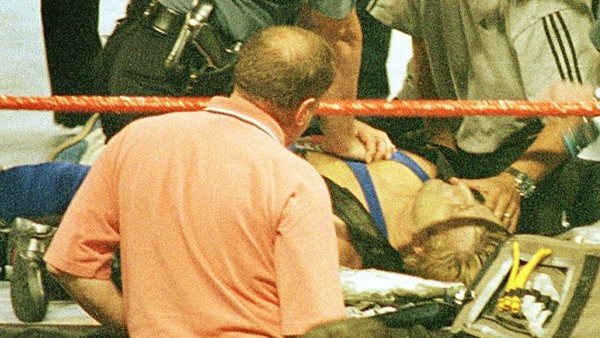
Unfortunately, the most memorable part of the WWF in 1999 was the tragic accident that claimed the life of Owen Hart. Not a year goes by that WWE fans remember what happened in late May more than 15 years ago. Owen€™s brother, Bret, left the WWF in 1997 after the infamous Montreal Screwjob. For years, Bret said he had no regrets about leaving the WWF. That is, until the accident. Bret stated in his 2005 DVD interview that his only regret about leaving the WWF in 1997 was that he wasn€™t still with the company in 1999 to dissuade Owen from doing the stunt which ultimately killed him. Hindsight is 20/20 though; Owen had successfully done the same stunt in late 1998.

3. Sable Sued The WWF

Many know Sable as one of the greatest Divas of all time, and the current wife of Brock Lesnar. She had a successful run with the WWF from 1996 until 1999, and returned to the WWE in 2003. What few people know, however, is that the 2003 return was extremely unlikely given how Rena Mero departed from the WWF. When she left in June 1999, Rena filed a $110 million lawsuit against the WWF citing allegations of sexual harassment and unsafe working conditions. According to the suit, she was asked to go topless and she refused. She also wanted the rights to the name €œSable,€ which Vince McMahon countersued for. The lawsuit was settled out of court.

2. Kurt Angle€™s Official Debut Was As A Babyface

https://www.youtube.com/watch?v=_WNS8T33opA Kurt Angle€™s debut as a full-time wrestler in the WWF was as a heel who thought he was a babyface at the 1999 Survivor Series. For the months prior, Angle would wrestle dark matches to get himself ready for wrestling in front of large crowds. But Angle€™s very first appearance on WWF television was as an honest-to-goodness babyface. It happened on the March 7 episode of Sunday Night Heat, which took place in Angle€™s hometown of Pittsburgh, PA, when Tiger Ali Singh appeared in the ring and offered $500 to any American who would blow their nose in the American Flag. He asked Angle to do it, but Kurt refused. Singh upped the ante to $2,000 and then $5,000, and it looked like Kurt was about to do it, but rather, Angle blew his nose in the Indian flag and hit a belly-to-belly suplex on Singh. To win another bar bet, Angle officially debuted in the WWF as a babyface. It€™s true, it€™s true!

1. WWF And WCW Wrestlers Wrestled On The Same Card

Brian Hildebrand Any time WWF and WCW wrestlers have matches on the same card, it€™s a big deal, and it€™s usually for a good cause. This cause was for Brian Hildebrand, otherwise known as WCW referee Mark Curtis. Years prior, he was diagnosed with stomach and bowel cancer. He had surgery to remove it, but it came back in 1999. On July 30, a benefit show was held at the Rostraver Ice Garden in Pittsburgh, PA, called €œCurtis Comes Home.€ On that card, Eddie Guerrero wrestled Billy Kidman and Shark Boy, the WCW Revolution stable of Chris Benoit, Shane Douglas and Dean Malenko wrestled in the main event, and Mick Foley defeated Al Snow and D€™Lo Brown. Chris Jericho, who was signed to the WWF but had yet to officially make his debut, also wrestled on the card, beating Terry Taylor. Unfortunately, Hildebrand passed away to his disease only a couple months later. Be sure to follow me on Twitter @PocketSeagull.

Contributor
Contributor

Justin has been writing about professional wrestling for more than 15 years. A lifelong WWE fan, he also is a big fan of Ring of Honor.