Batman Symbolism: What 15 Most Famous Villains Really Mean

What do Batman's key foes represent in relation to the Dark Knight himself?
Batman has one of the most awesome and iconic rogues galleries in all of fiction and arguably the greatest rogues gallery in comic books, period. It's full of weird, sinister and strangely wonderful characters who have become as popular - or at least almost as popular - as the Dark Knight himself in some cases. It's easy to make the mistake in thinking that it's so good because of the simple fact that the characters are so varied and high in number, but there's so much more to the Dark Knight's foes than that. Every single one of them represents something. Whether it's an aspect of Batman's life or personality, a challenge to a specific ability that he has, a polar opposite designed to reflect Batman in reverse or whether it's because it's like the hero is looking in a twisted mirror, all of his villains are symbolic in a particular and special way. In this article, we're going to list some of Batman's most iconic baddies and explain exactly what they symbolically represent in Batman's life. Here are fifteen famous Batman villains and what they really mean (note, some villains - such as Clayface and Harley Quinn - have been excluded because, in the case of guys like Clayface, their symbolism is the same as too many others and the list would have been too repetitive with them in and, in the case of characters like Harley Quinn, they aren't directly thematically related to Batman at all)...

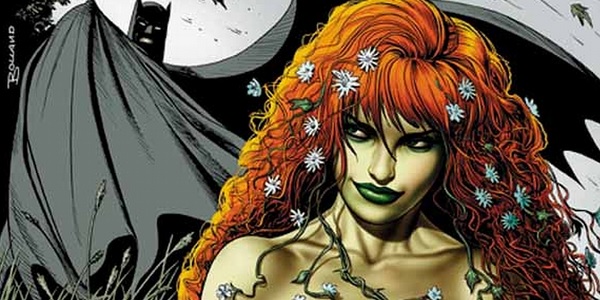
15. Poison Ivy - His Toxic Mirror

Poison Ivy is about as different from Batman as it's possible to be - she's female for a start - and yet she represents an awful lot of his personality and background. She mirrors his obsession with order and avenging his parents - given that it has been confirmed that, in her pre-Poison Ivy life, Pamela Isley's lost her parents - but, in her case, it's about restoring natural order to the planet and avenging mankind's destruction of the environment and the natural world, rather than fighting crime to maintain order. She also has two identities (the aforementioned Pamela Isley and Poison Ivy), like Batman himself, and his genius in planning and preparation is mirrored by her genius in botany. Plus, as an occasional love interest to the Dark Knight, she is "poison" to Batman in exactly the same way that his secret identity is "poisonous" to any other love interest he may have.

14. Black Mask - Opposing Parental Issues
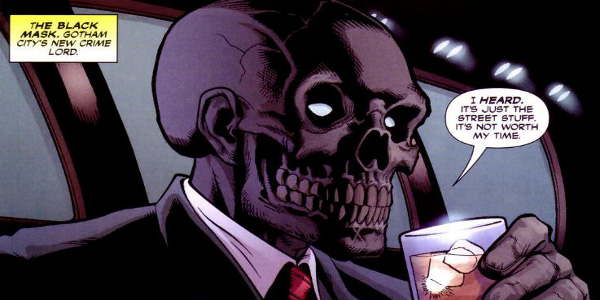
Black Mask AKA Roman Sionis grew up with rich parents, just like Batman, but his upbringing was very different to the hero's Far from being loving parents like Thomas and Martha Wayne, Roman's parents were completely and utterly self-absorbed and they cared more about their social status than their son. When Roman was born, the doctor on the scene accidentally dropped him on his head, but parents were less concerned about their son's well-being and more concerned about covering up the whole incident so their high society friends wouldn't find out. As he grew up, he grew to resent them. When a rabid raccoon attacked him at the Sionis' family country estate, Roman was told not to mention the incident to anyone. Plus, in order to appear well-to-do, they became friends with Thomas and Martha Wayne and forced Roman to be friends with Bruce. They would act friendly around the Waynes, but speak ill of them behind their backs, which angered Roman. The final nail in the coffin was when he fell for a working class secretary named Circe and they disapproved of her. He killed them in a fire and, as a result, is Batman's complete opposite with regards to the parent-son relationship part of his life, as he lost his parents through no fault of his own. He also has a personal vendetta against Batman's alter-ego, Bruce Wayne - his childhood "friend". This came about after Bruce bailed him out when he took over his father's business - Janus Cosmetics - on the condition that Sionis give up control and allow Wayne to appoint his own Board of Directors, which embarrassed him. As such, he also represents a threat to the non-heroic side of Batman's personality, which makes him somewhat unique.

13. The Ventriloquist - Two Identities, But Expressed Differently
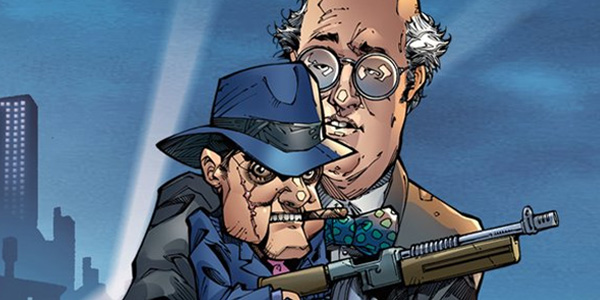
The Ventriloquist (the villainous name of at least two characters in the DC universe, one of whom is a man called Arnold Wesker and the other who is a woman called Peyton Riley) represents a huge exaggeration of the two identities inherent to Batman and Bruce Wayne. With Batman, his identities are that of an American billionaire, industrialist and philanthropist by day and a dark, costumed superhero by night. With the Ventriloquist, his second identity manifests in the form of a ventriloquists dummy that he calls Scarface. The Scarface persona - who carries a trademark Tommy gun - is a highly skilled criminal strategist in the same way that Bruce Wayne's Batman persona is a highly skilled crime fighter and, in that way, they are opposites of each other (with the whole gun thing being a polar opposite to Batman's no gun policy).

12. Man-Bat - An Exaggerated Version Of Same Theme
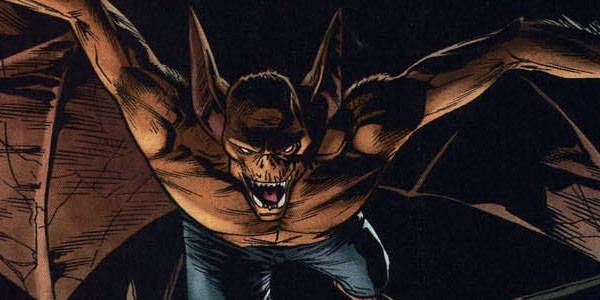
Man-Bat is Kirk Langstrom and he takes the theme Batman uses to strike fear in to his enemies and goes one step further. By using a bat-gland formula of his own creation on himself, with the intention of giving him a sonar sense to compensate for the fact that he was going deaf, he transformed in to a giant humanoid bat-like creature. As a result, he became the fearsome creature that Batman tries to appear to be, went on a rampage, and has subsequently been mistaken for Batman by terrified criminals on several occasions - though the serum took away his intelligence and it was down to Batman to cure him. In simpler terms, he is a literal bat-man, as opposed to a man whose costume is themed as such. He is a bat in man form as opposed to a man in bat form. Fairly simple symbolism, in this case, really.

11. Mr. Freeze - Physical Coldness = Emotional Coldness
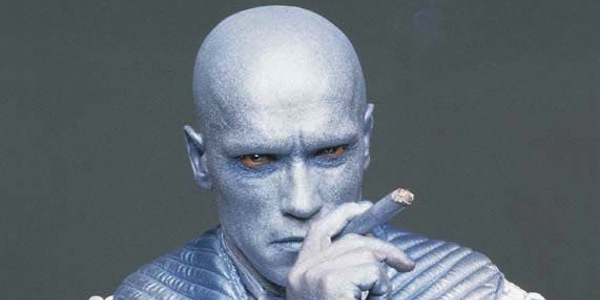
Mr. Freeze's literally coldness represents the emotionally cold shell of a man that Batman could potentially become if he allows his tragic past to overcome him. Victor Fries' need to become his villainous alter-ego was also instigated by a family tragedy that somewhat mirrors Bruce Wayne's own. In Wayne's case it was the loss of his parents and, in Fries' case, it was the loss of the love of his life - his wife Nora. Nora was ill and Fries decided to cryogenically freeze her using a device of his own design, so that he could keep her alive while a cure was being researched. His boss interrupted and tampered with the experiment, which resulted in an explosion that killed her. Fries survived the accident, but the chemicals in the freeze ray lowered his body temperature to the point that he had to constantly wear a cryogenic suit in order to survive. Following the loss, he swore revenge on those responsible and became Mr. Freeze - a man as cold physically as Batman could be if he allowed grief to devour him.

10. Killer Croc - The Savagery Within
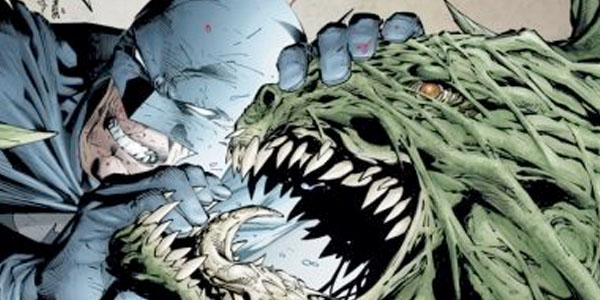
Killer Croc somewhat mirrors (albeit in an inflated and exaggerated manner) the savagery that is required of and inherent to the Batman persona i.e. the monstrosity of Batman's own rage. Croc is Waylon Jones - a man who was born as a normal human, but had a skin condition reminiscent of epidermolytic hyperkeratosis. In addition to the presence of a metagene, this endowed him with enhanced versions of the abilities associated with the reptilian ancestors of the human race and he became a villain as a result. In a sense, he is also a representation of the monster Batman could become if he allows his rage to get the better of him and he is also something of an urban legend come to life, just like Batman is in a way.

9. Hugo Strange - Mirrors Batman's Obsessive Side
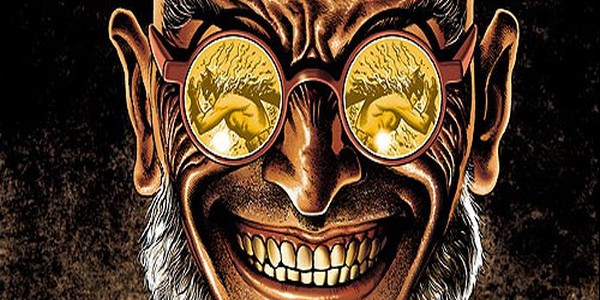
Hugo Strange is someone who mirrors Batman somewhat, in the sense that he is a genius in fields such as psychology, chemistry and biology - and in the sense that he occasionally gets himself in to peak human shape - but that's not what he represents to Batman. He represents Batman's obsessive side. Whereas Batman's obsession is crime eradication and avenging his parents' death, Hugo Strange is obsessed and fascinated by Batman himself - so much so that it reach the point of antagonism. He would dress like Batman in private - getting some kind of weird kick out of doing so - and spent the rest of his time trying to bring the Dark Knight down. He assisted the police in trying to capture him, brainwashed a policeman in to becoming a violent vigilante who he sent to kill him and eventually found out Batman's true identity and set about making Bruce Wayne's life a living hell. Essentially, he was something of a Batman stalker, in much the same walk Batman's stalks criminals and he emphasises how dangerous obsession can be.

8. Scarecrow - Twisted Execution Of Same Modus Operandi
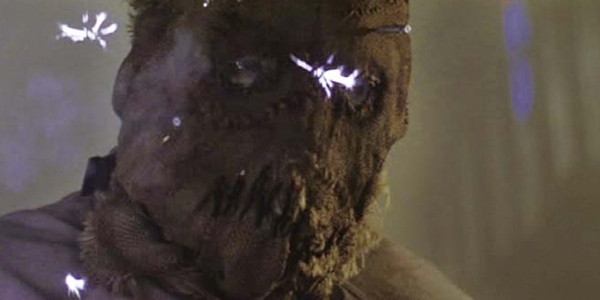
Scarecrow represents a twisted version of the methods Batman uses - his modus operandi - to utilise fear as a weapon. Of course, Batman uses fear for the purpose of deterring criminals from committing crimes, and the way in which he inflicts it is by donning a bat costume and kicking other criminal's backsides. Opposingly, Scarecrow uses fear for evil, paralysing his victims by terrifying them in order to immobilise them and get them out of his way, and the way in which he inflicts it is via a fear toxin of his own creation - something he learned to make in his career as his alter-ego, psychiatrist Dr. Jonathan Crane - which causes terrifying hallucinations (whilst also wearing a terrifying Scarecrow costume, hence his name). Essentially, he's using Batman's methods in a more extreme and completely different manner in order to achieve completely different goals and, as such, he mirrors Batman in a bizarre way. He also uses a "violent dancing" fighting technique that is far more chaotic than the martial arts disciplines Batman practises.

7. Ra's Al Ghul - Same Quest, Different Methods
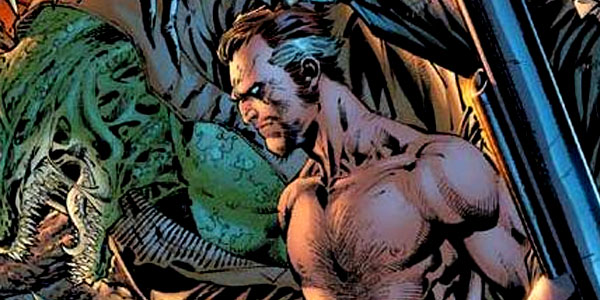
Ra's al Ghul is someone who is on a quest quite similar to that of Batman's - one that aims to eradicate crime - but he takes his to a more ideological extreme. Born 700 years ago in a tribe of nomads in one of the Arabian deserts, Ra's gained life longevity from the Lazarus Pit and has spent his life studying to increase both his physical and mental capabilities. As a result, he is both a genius and an incredible fighter, and he has earned himself the position of leader of the League of Assassins. He seeks to purge humanity of crime and corruption via the method of mass genocide - a completely opposing method to Batman - and yet he wants to recruit the hero as his successor (which, of course, Batman opposes). He matches Batman intellectually and matches or even surpasses him in terms of his combat skills, so there are comparisons to be made on both those fronts. And, while their aims in life are similar, the way they go about it couldn't be more different and Ra's represents the opposite side of the crime-fighting spectrum.

6. The Penguin - Physical & Organisational Opposite
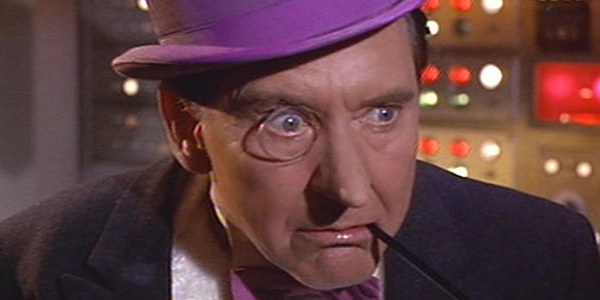
Oswald Chesterfield Cobblepot AKA Penguin is another twisted version of both Batman and his alter ego Bruce Wayne, in that he's a wealthy gentleman and a privileged son of Gotham like Wayne, but he is all about organised crime, whereas Batman is all about organised justice. Penguin is also the complete physical opposite of Batman. Whereas the hero is a good-looking prime physical specimen, he is obese and unattractive. Whereas Bruce Wayne is a businessman in charge of a lot of people with a professional organisation and with many connections in the business world, Oswald Copperpot is a crime boss in charge of a lot of henchman and with many connections in the unerworld. Like Batman, he is also a genius and, surprisingly, he is also very capable in a physical fight. His other juxtaposition with Batman is that he turned to crime when his mother died, whereas Batman fights crime because of the death of his parents.

5. Bane - Extreme Version Of The Self-Made Warrior

Bane represents a very extreme example of the self-made warrior that Batman has become and, as a result, also represents the fear that there's somebody stronger that him who he can't defeat. His origins also make him a sort of third-world, or even primal, version of Batman. Born in a prison in the fictional Caribbean Republic of Santa Prisca where his father was being held, Bane had to serve his father's life sentence and, as such, was there until his death. He trained and fought in the prison as he grew up in the tough and merciless conditions, but was strong and brutal enough to become the prison's "king". The prison's controllers took note of his strength and eventually forced him to become a test subject for a mysterious drug known as "Venom" which had killed every other test subject. It enhanced his strength to superhuman levels and he escaped the prison. Having heard stories about Batman whilst in there, he sought to battle him and headed to Gotham. As well as having physical abilities that dwarf Batman's, he also possesses a genius-level intellect to rival him. He has a photographic memory, is an expert tactician, strategist, combatant, mercenary and escapologist, as well as a master of disguise. Essentially, he is everything Batman is mentally, and everything Batman is physically and more.

4. Two-Face - Exaggeration Of Dual Identity
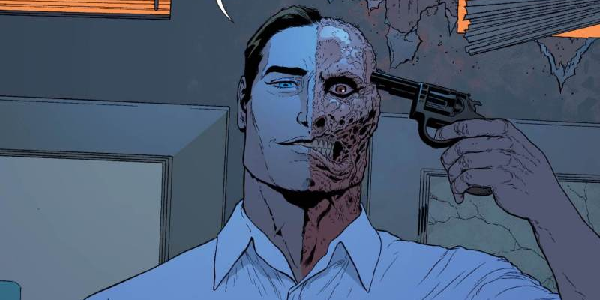
Two-Face is the ultimate exaggeration of the duality of Batman's identity - and the duality of any superhero with an alter-ego for that matter. He is Harvey Dent and, for much of his life, he was a good-looking district attorney and had a clean-cut image, just like Bruce Wayne. However, he is disfigured in a sulphuric acid attack - with exactly one half of his face being horrifically burned and scarred - and the event drives him to a life of crime, caused him to develop multiple personality disorder and he became completely obsessed with duality. Two-Face does things by chance, in accordance with the flip of his two-headed coin in an almost obsessive-compulsive manner. As a result, Batman has exploited his "need" for the coin to his advantage on many occasions by depriving him of the coin mid-toss to delay his ability to make decisions. This is completely opposite to Batman's need for order and making sure he does things rationally. Unlike Batman, his two halves exist constantly and simultaneously, so he can't hide one half from the world like Bruce Wayne does.

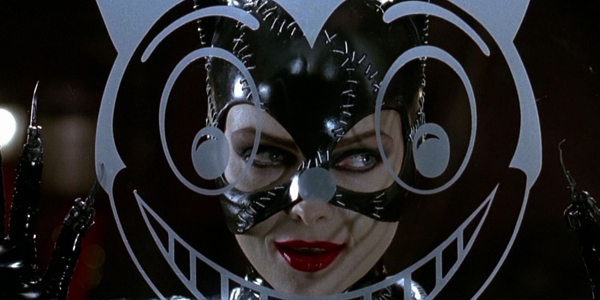
3. Catwoman - Female Equal

Catwoman is essentially Batman's equal, except she's a woman who uses the cat as her theme, while he is a man who uses that bat as his theme. Each character lies in a moral grey area, carefully straddling the line between right and wrong, with Batman himself not being beyond using questionable methods to get the good job done and Catwoman not incapable of surprising us with a good deed when she'd set out to do something mischievous - but Batman lies more on the "right" side of that line and Catwoman lies more on the "wrong" side. Both characters wear black, both are peak level athletes and highly adept hand-to-hand combatants and both are excellent with regards to stealth. They have been love interests on numerous occasions and it's no surprise that they are attracted to each other, given that they will see the best parts of themselves in each other.

2. The Riddler - The Intellectual Equal
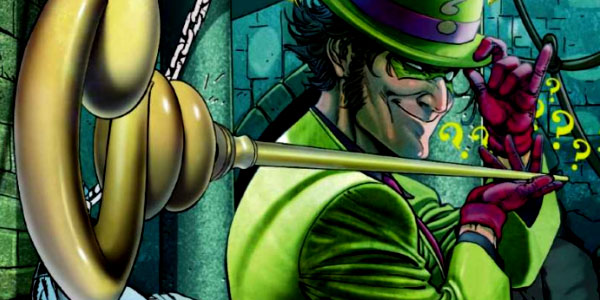
Riddler represents opposition for Batman's intellect which, of course, is one of his most powerful weapons. He attempts to one-up Batman in this area and what their rivalry basically provides is mental exercise for the Dark Knight. Their expertise are actually quite similar - inductive, abductive and deductive reasoning, lateral and critical thinking, pattern recognition, great knowledge of a number of different sciences including engineering, chemistry and technology, vast knowledge of philosophy, literature and geography and a near photographic memory. The difference between them is how they choose to use their intellects. Riddler likes to challenge people, Batman's likes to complete the challenges. Riddler likes to put people in danger, Batman likes to save them. He is both identical to and the complete opposite of Batman at the same time.

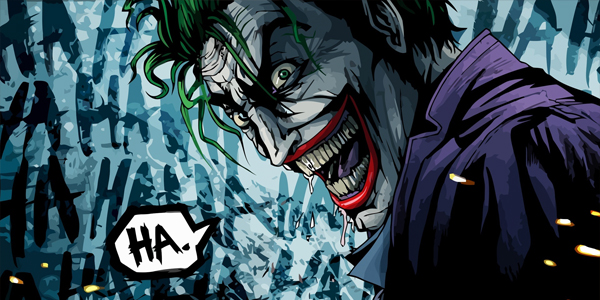
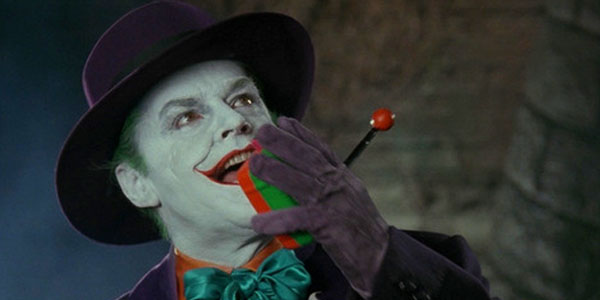
1. The Joker - The Opposite Reaction

The Joker is, of course, Batman's arch-enemy and, as such, he is as far removed from the Dark Knight as it's possible to be - an opposite in every sense. He is the ultimate representation of the chaos and theatricality that Batman's existence has brought to Gotham City. Whilst Batman's purpose is to sustain order, Joker represents the notion that every action has an opposite reaction. Batman is good, Joker is evil. Batman won't kill, Joker couldn't care less about killing. Batman is organised, Joker is far from it. Batman is secretive and low-profile, Joker is very open wants an audience. Batman wears black, Joker wears bright colours. Batman is pensive and moody, Joker is constantly smiling and laughing. What's more, they need each other. They represent each other's needs and give each other purpose - and that's the only reason they haven't brought each other down permanently yet. So there you have it - fifteen famous Batman villains and what they really mean. Did you enjoy this article? Do you agree with the descriptions if these villains in terms of their symbolism? Which other Batman villains represent aspects of Batman's life that weren't covered on this list? Let us know your thoughts in the comments section below. And please feel free to follow me on Twitter!

Contributor
Contributor

I'm a Tottenham Hotspur fan who loves comics and comic book movies.