20 TERRIBLE CGI Moments From Recent Movies
The CGI moments you won't believe made the final cut.
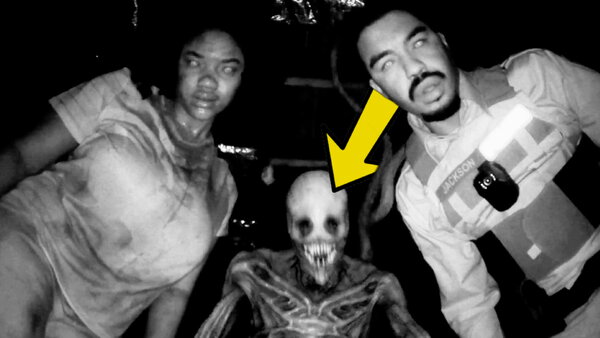
You'd be hard-pressed to watch a movie released in 2026 that doesn't feature CGI in some form, because if it isn't being used for elaborate world-building and alien creatures, it's probably still being used for set extensions and visual clean-up.
And while Hollywood has proven time and time again that CGI is an incredible tool which can be used to create some truly awe-striking, otherwise-impossible images, there are also many instances where it just doesn't cut the mustard.
That's unfortunately the case with these 20 recent VFX movie moments, each of which fell far short of the expected standard for one reason or another.
From laughably uncanny horror movie monsters to unconvincing green screen work, dodgy digital animals, and some especially egregious use of Generative AI, these moments all pulled audiences out of the movie with their shockingly poor effects.
In most instances, it's fair to assume that the production lacked either the time or money to get the required result, and so had to settle for these lacklustre images instead, each of them being widely discussed and even ridiculed on social media...
20. The Aliens - Hope
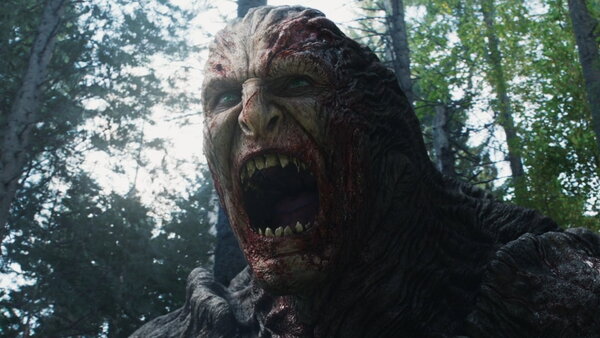
There was much anticipation for Hope - the new monster film from The Wailing filmmaker Na Hong-jin, and when reviews from its Cannes premiere regularly singled out the poor monster VFX, the director announced that he would be refining them before its general release a few months later.
Yet the end result that hit cinemas worldwide is still quite appalling.
Considering that several alien creatures are featured extensively in the film's second and third acts, and they're regularly shown in broad daylight, the fidelity of the effects needed to be extremely high.
But the creatures are actually distractingly low-res throughout, unaided by clunky animation during the film's many lengthy chase sequences.
Yet perhaps the biggest misstep of all is having one of the aliens be played by Michael Fassbender, resulting in a distracting uncanny valley likeness that isn't close enough to be convincing yet familiar enough to be the wrong kind of attention-grabbing.
19. Digital Backdrops - Return to Silent Hill
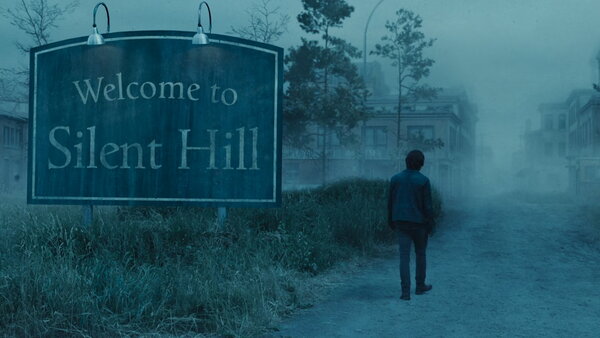
There were many red flags surrounding the release of Return to Silent Hill, not least that it was produced for just $23 million - less than half of the $50 million director Christophe Gans was given for his original 2006 Silent Hill adaptation.
This certainly suggested the production would be more pared-down both in terms of its production design and visual effects, and the end product proved how difficult it'd be to reproduce the atmosphere of the survival horror video game franchise on a relatively meagre budget.
One of the biggest issues is how totally naff the low-quality digital backdrops look - every time we see James (Jeremy Irvine) walking through Silent Hill, it's painfully apparent the set has been crudely digitally extended and bathed in a garish CGI fog.
The 2006 film's conception of Silent Hill looked so much better than this, and while poor VFX aren't quite this reboot's worst offense, the fact we're never persuasively transported into the world of the games is one of its biggest issues.
18. Fox & Deer - Disclosure Day
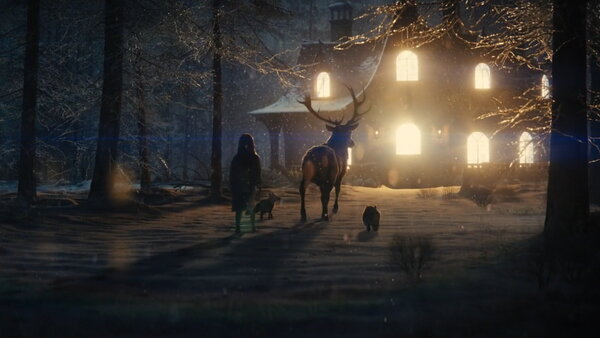
Steven Spielberg is a filmmaker well-versed in utilising CGI to wow audiences, so it's a damn shame that his new sci-fi film Disclosure Day features some of the worst digital animals of any recent blockbuster.
Late in the film we see a memory of when a young Margaret (Emily Blunt) was abducted by aliens, with the aliens posing as animals in an attempt to keep her calm.
Yet the deer and fox that appear in Margaret's room are composed of laughably shoddy VFX for a $115 million movie - from their low-fi fur detail to their stiff movements, nothing about them looks real at all.
While some have defended these digital animals as intentionally uncanny because they're actually aliens in disguise, that's quite a reach when faced with the far simpler explanation that the production simply ran out of time to do any better.
But rest assured, these aren't the only dodgy CGI animals we'll be seeing on this list...
17. Blanka - Street Fighter
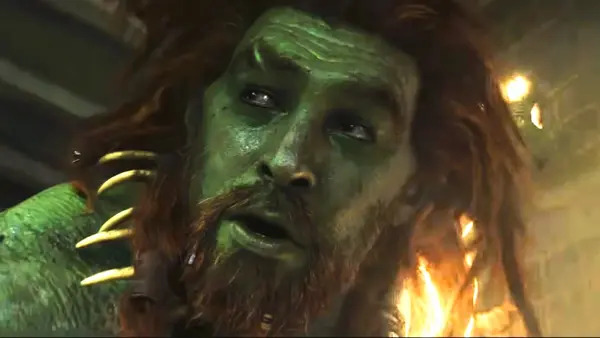
Though the new Street Fighter movie did a relatively solid job adapting most of its larger-than-life characters into live-action form, the hulking, green-skinned mutant Blanka was always going to be one of the toughest to get right.
On paper Jason Momoa seemed like a pretty inspired choice to play the character, yet this iteration of Blanka falls totally flat because of the frustratingly ropey VFX work.
While Momoa did perform as Blanka on set in a performance capture suit, the end result tumbles straight into the uncanny valley, enough that one could believe Momoa never once stepped foot on set.
This garish abomination is a pale shadow of the beloved video game character, especially during close-up shots of Momoa's face awkwardly pasted onto the digital mutant body.
It's unfortunately reminiscent of the one thing no CGI character ever wants to be likened to - The Scorpion King from The Mummy Returns.
16. AI Slop Cartoons - Ice Cream Man
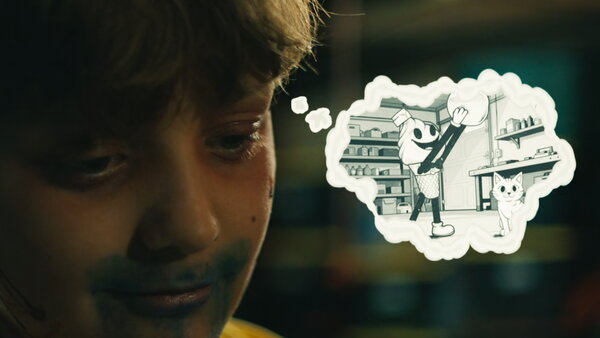
Say what you will about the other VFX gaffes on this list, but most of them weren't egregiously employing Generative AI in their workflow to the extent that general audiences actively called it out on the weekend of the film's release.
Yet Eli Roth's horror film Ice Cream Man was pilloried for using Gen AI to create effects shots involving old-timey animation which hypnotises children to become murderers.
Between the suspiciously AI-esque aesthetic and brief length of the clips, it was clear that something was off, and though Roth initially claimed no Gen AI was used for these "hand drawn" scenes, he later claimed he "misspoke" after audiences spotted a credit for AI VFX company DarkHalf.
Considering Roth could've opened his own wallet and paid a talented human artist a few thousand bucks to produce these short sequences - he is worth $20 million after all - it's embarrassing that he took such a lazy, creatively bankrupt shortcut.
15. All The Green Screen - Moana
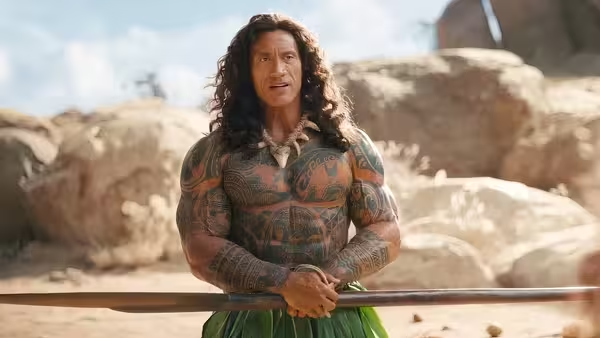
Disney's live-action Moana remake already had a tough time convincing most folk that it "needed" to exist considering the original animation is only a decade old and still looks bloody fantastic, and it sure didn't help that so much of the film was the product of sterile green screen filmmaking.
Even though portions of the film were allegedly shot on the real Hawaiian island of O'ahu, it's painfully clear that large swaths of it were nevertheless captured in a studio, with the apparently lush oceanic backdrops being comped in later.
It's just never really convincing that Dwayne Johnson and Catherine Laga'aia are on an island for real - pretty much the entirety of the movie has a hermetically sealed, soulless feel to it, with the overly plastic VFX made worse by flat colour grading determined to strip all life and vibrancy out of it.
This added up to a package so unappealing that even the Disney faithful didn't bother showing up for it.
14. Deadite Will - Evil Dead Burn
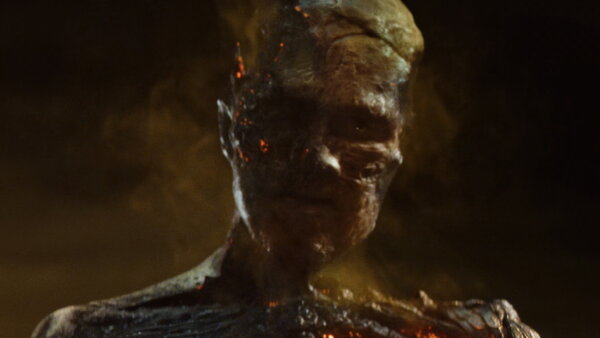
The Evil Dead franchise generally always serves up a creatively gnarly end-boss, but the series' most recent entry Evil Dead Burn sadly went and broke the streak with its garish CGI abomination.
In the third act, protagonist Alice (Souheila Yacoub) ends up facing off against a charred Deadite iteration of her late husband Will (George Pullar).
While most of the final Deadites in the series have been a combination of practical and digital effects, Deadite Will is seemingly a total CGI creation - a smoldering humanoid that, per the unremarkable VFX work, looks ugly in all the wrong ways.
It doesn't help that this is by far the least imaginative of all the end-boss villains in the Evil Dead franchise, and that disappointment is compounded by the decision to ditch practical effects work entirely and offer up a rather crude, dull-looking CGI model instead.
It's at least a fitting end for the most underwhelming film in the franchise.
13. Fake Sunrise - The Rip
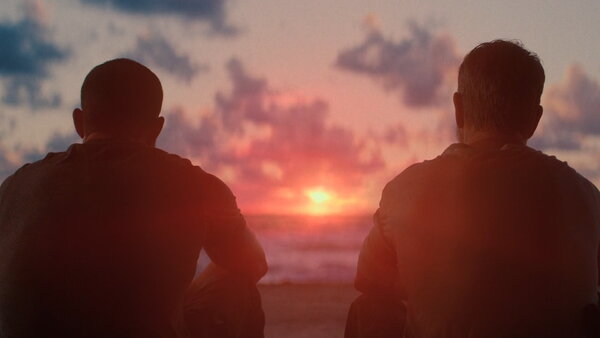
Despite being a $100 million Netflix blockbuster with an emphasis on practical action sequences, Joe Carnahan's action thriller The Rip ends with a feat of bafflingly undercooked VFX.
In the final scene, surviving cops Dumars (Matt Damon) and Byrne (Ben Affleck) sit on a beach, drink a beer, and watch as the sun rises.
It's supposed to be a poignant send off for these two characters, yet the sunrise itself is so hilariously artificial that it undercuts any emotion the scene is otherwise trying to muster.
It doesn't help that Dumars and Byrne's dialogue throughout the scene references the sunrise, and the sunrise itself relates to a one-liner repeated throughout the movie - "Just live to see another sunrise."
Accepting that planning for a real, picturesque sunrise is a challenging task for even mega-budget movie productions, did it really have to look so comically fake, like something out of a low-budget beer commercial?
It certainly doesn't help that no actual sunrise has ever looked so ridiculously oversaturated.
12. The Wild Boar - Send Help
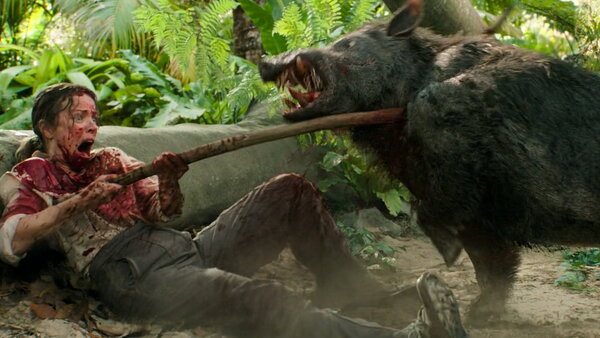
Now, even accepting that Sam Raimi's otherwise-brilliant new film Send Help is unabashedly campy, it was tough not to wince at how awful that digital wild boar looked.
Midway through the film, protagonist Linda (a phenomenal Rachel McAdams) hunts and kills a wild boar after a tough battle, where Raimi treats us to many close-up shots of the CGI animal in broad daylight, ensuring all the VFX imperfections are laid bare.
Now obviously the production was never going to use a real wild boar, and rightly so, but it's also clear that the film's relatively modest $40 million budget wasn't nearly enough to support such nuanced animal animation.
The boar looks hilariously rubbery, and while the scene is ultimately played for dark laughs, we're still supposed to buy into it as a real, threatening creature. Yet because it's so blurry and low-detail, this is basically impossible.
Movies from 20 years ago have given us better digital boars than this.
11. AI Deepfakes - Scream 7
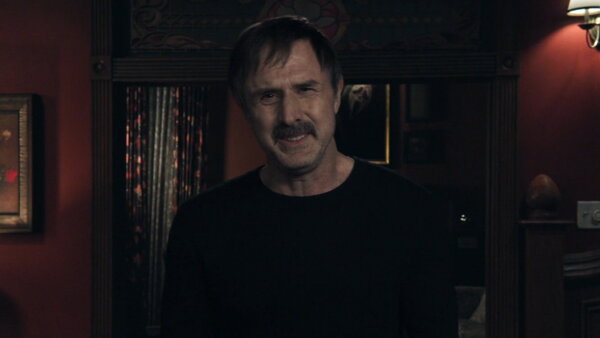
The Scream franchise has never been big on elaborate VFX, which only makes it stick out all the more in the most recent entry.
While the digital blood featured throughout Scream 7 isn't great, by far the most garish VFX element is the AI deepfakes used to have Sidney (Neve Campbell) be taunted by dead figures from her past - friends and foes alike.
Though the likes of Matthew Lillard, David Arquette, Scott Foley, and Laurie Metcalf of course filmed their "deepfake" cameos for real, it's maddeningly clear they were simply shot against a green screen and then clumsily composited into a not-quite-convincing 3D model of the Macher house.
The transitions between each deepfake, as we glide digitally around the video game-y hallways of Stu's house, look laughably goofy, ensuring an already-flimsy premise is even more difficult to take seriously.
Perhaps appropriately, and surely by accident, the AI slop ends up looking like, well, AI slop.
10. Bison Stampede - The Dog Stars
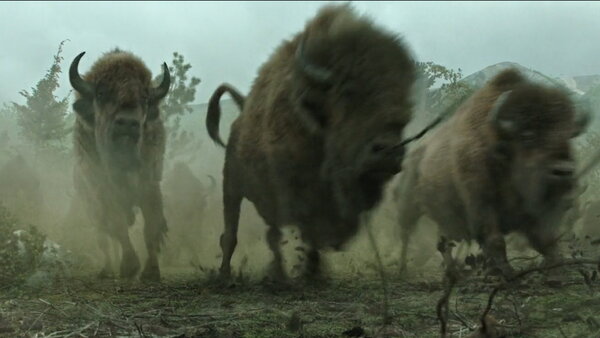
More terrible CGI animals now.
Though the canine in Ridley Scott's post-apocalyptic thriller The Dog Stars is thankfully a real dog for the most part, there's one moment of animal effects fakery that's absolutely woeful.
While repairing his plane, pilot Hig (Jacob Elordi) is forced to cower from an impending stampede of bison, which are presented here as a blurry mess of hideous digital blobs.
The bison merely rush towards the camera in a grotesque smear - nothing has any weight to it whatsoever, ensuring the audience doesn't buy the intended sense of threat to Hig and his aircraft, no matter how much artificial camera shake was added to the sequence in post.
It goes without saying that there was no way for Scott to pull off this sequence practically, but even so, it seems like the $110 million blockbuster needed either more time or money - or more likely, both - to get this set-piece right.
9. The Cart Flip - Animals
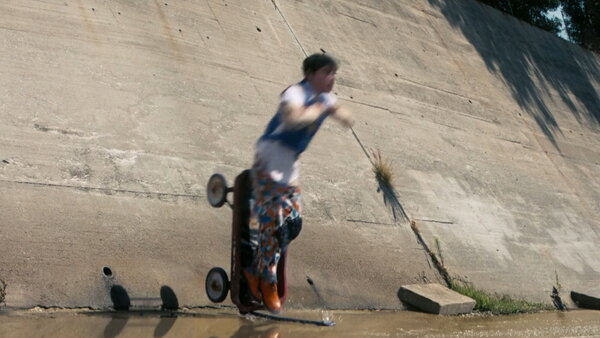
When a clip from the end of Ben Affleck's new Netflix thriller Animals went viral on social media, you couldn't be blamed for assuming it was a joke and not actual footage from a real movie directed by an award-winning filmmaker and released on one of the world's biggest streaming services.
The film revolves around the kidnapping of a boy, Hector (Jacob Estrada), who is mistaken for the son of rich mayoral candidate Mark Kimball (Affleck).
During the handover at the end of the movie, the kidnapper appears with Hector in a cart, which he then pushes down a slope, as a terrified Mark rushes to catch him.
Cue a gut-bustingly goofy sequence in which the cart hits the ground, catapulting a clearly green-screened Hector through the air and into Mark's arms.
This is embarrassingly shoddy looking for an otherwise very professional-looking Hollywood movie, and considering that Affleck freely admitted he used AI for "lots of things" on the film's production, it left many to assume that these poorly composed shots were the fault of AI slop.
8. Bryan's Transformation - Resident Evil
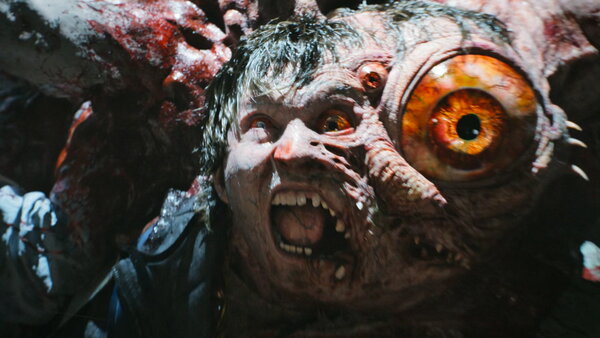
Zach Cregger's Resident Evil is one of the strongest video game movies to date and generally employed visual effects in a smart, shrewd way.
But it all goes a little off the rails in this regard in the movie's finale, when courier protagonist Bryan (Austin Abrams) succumbs to his infection and mutates into a grotesque monster similar to William Birkin's transformation in the second Resident Evil game.
Conceptually it's great, but the effects themselves just aren't up to snuff, especially as Byran's transformation takes place in a sterile, bright white room where there's no way for Cregger to conceal the less-detailed aspects of the CGI.
But even when Bryan has the cover of night in the final scene of the movie, it's still incredibly rubbery and unconvincing - a damn shame considering the brilliantly creative body horror effects on display throughout the film otherwise.
It doesn't kill the movie by any means, but it does detract slightly from the impact of that shocking ending.
7. The Infected Cat - Cold Storage
Sci-fi horror comedy Cold Storage revolves around a fungal infection which leaks out of an abandoned military base and threatens to annihilate the human race.
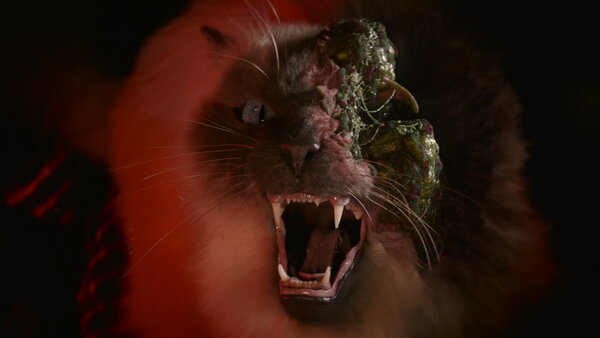
The film features numerous instances of infected CGI animals, and while none of them look great, there is one that takes the cake - the mutated cat.
At one point a dead cat is brought back to life by the fungus, resulting in a few unflattering close-up shots of the rabid feline screeching.
Absolutely nothing about the cat looks even remotely believable - not even the most basic cat features are close to correct, the entire CGI entity looking laughably plastic and fake.
At least Cold Storage isn't taking itself particularly seriously so the B-movie-esque VFX work isn't a deal-breaker, but considering the stellar cast roped into this project - including Liam Neeson, Joe Keery, Lesley Manville, and even the great Vanessa Redgrave - you'd expect better results.
6. Video Game-y Backdrops - Mortal Kombat II
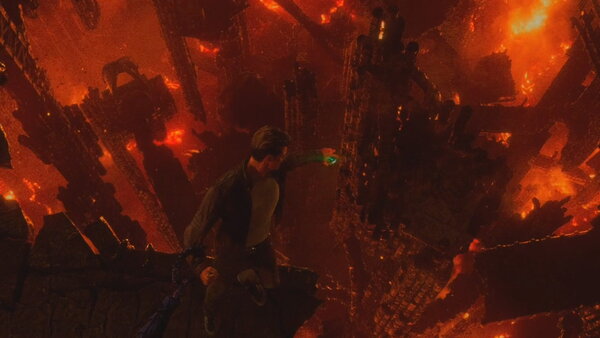
Even accepting that Mortal Kombat II is of course based on a beloved video game franchise, the $80 million action sequel really overdid it with the egregious amount of green screen carnage.
As fun as the movie generally is, this is offset by most of the movie being bathed in an unmistakable artificial sheen, considering how much of the action was clearly shot against a neutral backdrop, with the "real" location being keyed in during post.
The big issue of course is that the environments themselves don't look very good at all - they're distinctly digital-looking and aren't even as visually engaging as the stages from the most recent video game.
The fact that so much of the film is shot with a shallow depth of field is presumably part of a wider attempt to disguise the limitations of the CGI environments.
All in all, they pale massively in comparison to the lavish practical sets of the original 1995 Mortal Kombat movie.
5. Bubbles - Michael
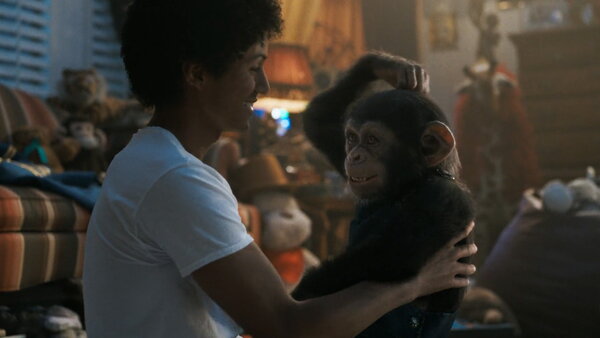
The Michael Jackson biopic was an undeniably extravagant production, with a budget estimated to be as high as $200 million.
CGI was used extensively throughout the film, to complete Jafaar Jackson's transformation into his late uncle, to recreate some of the pop star's most iconic performances, and also to realise Jackson's pet chimpanzee Bubbles.
While a real chimp was likely never considered for the movie for many obvious reasons, you'd certainly expect the end result to look decidedly better than this on such a mega-budget music biopic.
Though Bubbles doesn't look too bad in a still frame, it's his movement that makes the illusion totally fall apart.
Bubbles is so clearly animated and doesn't convincingly mesh with Jackson when the two are interacting, ensuring the digital animal feels more like a soulless concoction.
Considering Hollywood mastered digital chimps years ago with the more recent Planet of the Apes movies, there's not much of an excuse for sub-par results on one of 2026's most expensive films.
4. Digital Blood - Psycho Killer
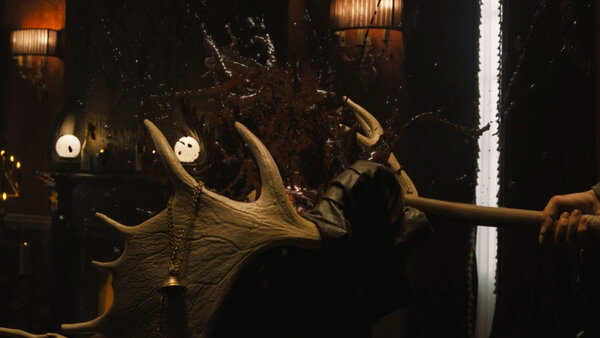
Practical blood effects have become increasingly less common due to the huge amounts of time required to reset each take, often requiring actors to be re-costumed and sets cleaned, ultimately making everything more expensive.
And while CGI blood generally isn't the end of the world when it's used sparingly and smartly, the recent dud horror-thriller Psycho Killer is a perfect example of how not to use it.
The film, penned by Se7en screenwriter Andrew Kevin Walker, is meant to be a dark, gritty slice of genre pulp, yet pretty much any time there's a drop of blood spilled throughout the movie, it's digital.
This culminates in an eyesore of a sequence later in the movie where the serial killer known as the Satanic Slasher (James Preston Rogers) kills the members of an orgiastic cult, sending Kool Aid-esque waves of CGI blood spraying all over the place.
Practical blood just has a visceral quality to it that a gooey digital replacement can never fully replicate.
3. Charred Mason - Whistle
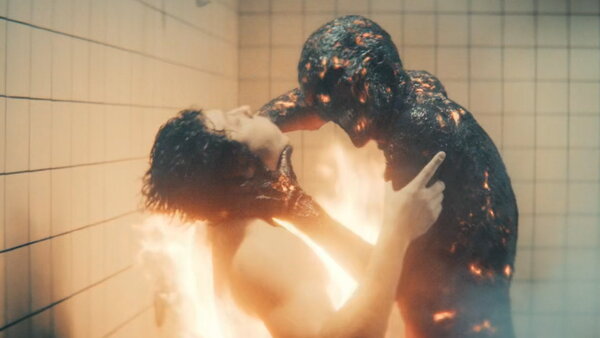
Despite its many flaws, Corin Hardy's new horror film Whistle actually has a brilliant premise - that blowing an Aztec death whistle causes anyone who hears it to be hunted down by a manifestation of their own intended future demise.
And so, the film kicks off with star athlete Mason (Stephen Kalyn) being attacked in the showers by a charred visage of himself - because he was fated to burn to death later in life.
That's all well and good, except the charred doppelganger is an entirely digital creation which wouldn't look out of place in a movie released at the turn of the century, when Hollywood was still making sense of how to use VFX.
On top of that, the doppelganger's interactions with the flesh-and-blood Mason, who was obviously portrayed by an actual human being on set, don't mesh convincingly at all, making it come off nightmarish in all the wrong ways.
2. Kara Saves Ruthye - Supergirl
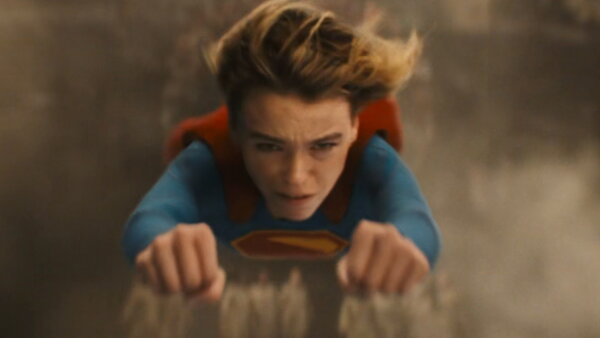
Warner Bros. reportedly spent close to $200 million on Supergirl, yet for all Milly Alcock's fine work in the lead role, it was a disappointingly by-the-numbers superhero flick hampered by some shockingly low-rent CGI.
It doesn't help that so much of the film's visual palette is deeply off-putting brown sludge, but even if you can forgive that, there's one infamous moment in Supergirl's climax that should've never been approved for release.
When Supergirl (Alcock) flies out of a cave to rescue her young charge Ruthye (Eve Ridley) from Krem (Matthias Schoenaerts) and his cohort, the effects look half-finished at best.
Alcock looks awkwardly composited into the environment in terms of both lighting and movement, ensuring nobody watching is convinced we're actually watching a superhero flying for real.
Considering this is one of the character's core abilities and the offending shot occurs during one of her most heroic moments in the movie, it's a basically unforgivable misfire which only gave the film's detractors more ammunition to ridicule it with.
1. The Monster - Bodycam

Brandon Christensen's new found footage film Bodycam is an impressive micro-budget achievement for the most part, if also demonstrating why most filmmakers working without significant resources tend to avoid substantial VFX elements.
Bodycam follows a pair of cops who attend a domestic disturbance call only to find something far more disturbing, and at the end of movie the surviving cop is faced with a demonic tentacled creature.
Yet despite the entity being humanoid in nature, it's realised through low-rent CGI that's ultimately more silly-looking than terrifying - better resembling an unfinished asset than something ready for release.
Considering how easily found footage can conceal the flaws of practical effects, it surely would've made more sense to just have a creature performer wear a monster suit, even if it didn't look that great.
Compared to the digital mess we got, it would've absolutely been better. Or failing that, perhaps don't give us a clear look at the creature at all.