10 Absolute Worst Flops In Movie History

You've seen better film on teeth.

If you look down the list of the biggest hits of all time (adjusted for inflation), it could double as an All Time Best list. Jaws is on there, of course, as are Star Wars, E.T. and The Exorcist. Further down, you€™ll find the likes of Back To The Future, Ghostbusters and Blazing Saddles. A relative what's what of Hollywood accomplishments. Now look down the list of box office bombs, and note the drop off in quality: Cutthroat Island is on there, of course, as are Heaven€™s Gate and The Adventures Of Pluto Nash. Further down, you€™ll find the likes of A Sound Of Thunder, Sahara and The Wolf Man. If you haven€™t seen them, here€™s a one-word review: €œMeh.€ It€™s probably an oversimplification, but if you were to compile a list of blah movies you regret watching, it would closely resemble the list of box office duds. There are no €œcult€ movies here or €œlost classics€ €“ that is, unless you think that R.I.P.D. will reward a second viewing. If a movie loses millions for a studio, fails to find an audience either on cable or DVD and eventually disappears into a black hole€ well, there€™s a reason for that. Even a wet fart of a picture like Attack Of The Killer Tomatoes has a cult following, so if your movie can€™t attract a lukewarm response, that€™s probably because it sucks.


10. The Hottie And The Nottie (2008)

Here's the premise: Paris Hilton is, like, a total hottie whose BFF is a €˜nottie€™ with tombstone teeth, a facial mole, an infected toenail. Because it€™s an accepted physical law that you can€™t get into a hottie€™s pants if you don€™t like her nottie, that€™s what Joel David Moore spends the movie attempting to do. With €˜hilarious€™ consequences. Produced by Paris Hilton€™s production company, The Hottie And The Nottie doesn€™t just want to tell you how €˜hot€™ Paris Hilton is, it also has a message about judging others by their physical attributes. Viewers considered that a tad hypocritical, and the movie made barely $2 million worldwide. Even the normally likeable Moore, who€™s funny in Adam Green€™s movies (Hatchet, Chillerama), comes off as a repellent creep. You keep wanting more people to smash him in the face, while Hilton, who€™s spent all that time and money keeping herself in the public eye, should consider investing in a second facial expression.

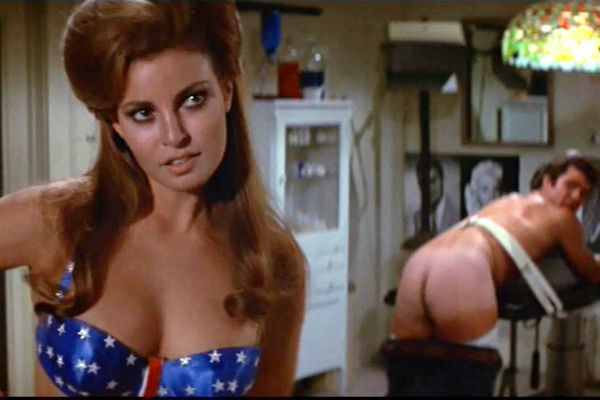
9. Myra Breckinridge (1970)

At its core, Michael Sarne€™s film is essentially a multi-million dollar homoerotic gag, though it€™s hard to say whether the joke was at the expense of Gore Vidal (who wrote the source novel) or backers Twentieth Century Fox, who were left red-faced when the movie grossed only $4 million. Courtesy of a sex change performed by Dr John Carradine, Myron Breckinridge (Rex Reed) has transformed into Myra Breckinridge (Raquel Welch) and decided, for no particular reason, to teach €œCinema Love Making€ at a phony dramatic school run by his/her uncle. Also around, for equally unfathomable reasons, is Mae West, who sings Hard To Handle and talks about establishing €œa boy bank where credit is always good.€ Over the course of 94 agonizing minutes, Welch beds Farrah Fawcett and straps on a dildo to sodomize one male lover, during which she comments: €œMy goal is the destruction of the last vestigial traces of traditional manhood from the race.€ She would€™ve been better off quoting Shakespeare: €œA tale told by an idiot, full of sound and fury, signifying nothing.€

8. An Alan Smithee Film: Burn Hollywood Burn (1998)
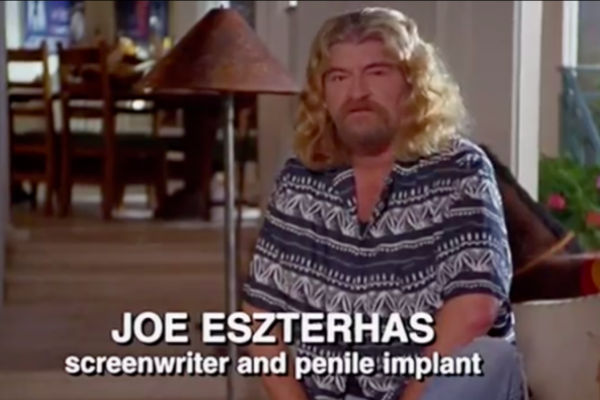
While Flashdance, Jagged Edge and Basic Instinct made Joe Eszterhas notorious, Sliver, Jade and Showgirls turned him into a joke, so Burn Hollywood Burn was the screenwriter€™s attempt to bite the hand that fed him, an €˜insider€™ satire from the man most qualified to write it. It should€™ve been brilliant. It€™s not. Described by Roger Ebert as €œa spectacularly bad film €“ incompetent, unfunny, ill-conceived, badly executed, lamely written and acted by people who look trapped in the headlights€, Burn centres on Trio, a $200 million cop movie whose director, Alan Smithee (Eric Idle), would rather steal the negative and hold it to ransom than attach his name to it. You see, he can€™t adopt a pseudonym because the name used by the Director€™s Guild when a filmmaker refuses credit is€.Alan Smithee! In fact, so desperate was Burn€™s director, Arthur Hiller, not to be associated with this misfire that he took the Smithee pseudonym, making An Alan Smithee Film a true Alan Smithee film. No, really, this is the funniest €˜joke€™ in the movie. As it turned out, Hiller wasn€™t the only one who had no faith in the movie: when finally released, it opened on 19 screens, taking $45,779 during its box office run.

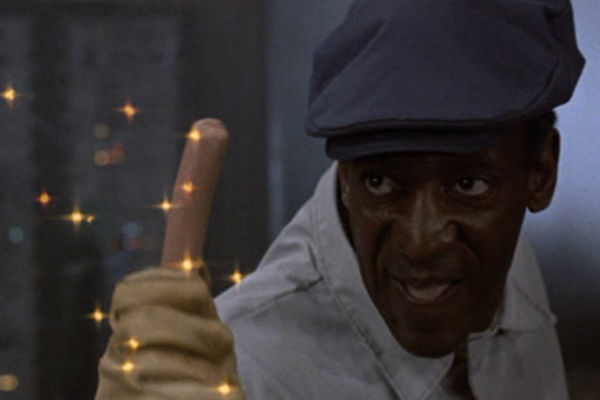
7. Leonard Part 6 (1986)

Lots of money, talent and product placements for Coca Cola (which owned Columbia) went into Leonard Part 6, and the film certainly isn€™t lacking for ideas or set pieces €“ they€™re just not very good ideas or very clever set pieces. Bill Cosby is spy-turned-restauranteur Leonard Parker, who€™s brought out of retirement to track down a €œvegetarian and former ecologist€ with a formula for controlling the minds of various creatures. Said formula turns lobsters, frogs and gophers into crazed killers capable of throwing cars through the air, and only Cosby can save the day with his underarm rocket launcher and flying ostrich. Which might sound like goofy fun, and in the hands of Barry Sonnenfeld it could€™ve been another Men In Black, but every single joke lands with a thud. After Cosby failed to attend the premiere, having previously warned audiences to stay away, the movie opened at #10 and made barely $5 million during its theatrical run.

6. Striptease (1996)

Based on a decent novel by Carl Hiaasen, Striptease is a dumbed-down-for-the-masses vehicle for Demi Moore, who got $12.5 million to play a stripper who wants to regain custody of her daughter from Robert Patrick, a slimeball who steals wheelchairs to make a quick buck. Even though she dances like Elizabeth Berkeley in Showgirls, Moore comes to the attention of Dave Dilbeck (Burt Reynolds), a Congressman with a weakness for titty bars and murdering his opponents, causing her to wonder aloud, €œHow did I get so popular?€ (how, indeed?). When Dave invites her to dance for him on her yacht, she storms out after he confesses to stealing (and making love to) her laundry lint, and if that sounds lame and silly, it€™s just the tip of the iceberg in a film that mistakes shameless mugging for comic timing and often substitutes airless drama for jokes. Having previously bombed in a €œfreely adapted€ version of The Scarlet Letter, Demi badly needed a hit, but Striptease grossed only $33 million during its theatrical run. It did, however, win her a Razzie award for Worst Actress.

5. I Know Who Killed Me (2007)

When schoolgirl Aubrey disappears, her parents and the police assume she€™s been abducted by the killer of one of her classmates, but when a lookalike named Dakota is found by a motorist, everyone believes she€™s the missing girl. Are they mistaken, or are Aubrey and Dakota the same person? It€™s an intriguing set-up, but it was never going to work - both girls are played by Lindsay Lohan. In between parental spats, DUI arrests and stints in rehab, Lohan€™s party-girl image caused studio executives to publicly rebuke the star, whose name was becoming a punchline in the tabloids and on TV talk shows. Things got worse when the grosses for I Know Who Killed Me came in. Released when the summer blockbusters were still in theatres, takings fell off by 64% after its first week, then by 87% the following week, resulting in a total domestic take of $7,498,716 on a $12m budget. Even in its opening weekend, it had only averaged $2,656 per screen, which coupled with bad word of mouth and poor reviews meant there wouldn€™t be too many high profile movie roles in Lohan€™s future.

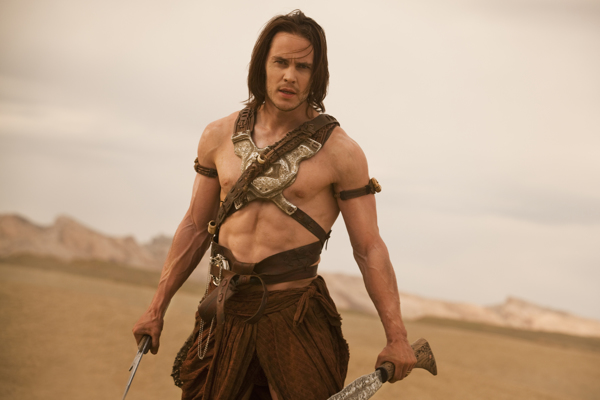
4. John Carter (2012)

As choppily edited and incoherent as a 1980s Indonesian fantasy film, this $250 million epic fail was Disney€™s attempt to wring a franchise out of the Edgar Rice Burroughs character, which does not bode well for the forthcoming Tarzan remake starring Alexander Skarsgard. With its Avatar-like aliens and expensive action sequences, John Carter must€™ve looked like a great €œpackage€ to studio executives, but the lack of character motivation and backstory, coupled with an editing style that reduces every shot to three seconds (or less), means the film plays more like a 2 hour long trailer. There€™s a shapeshifting alien, a beautiful Martian princess and some hoo-hah about a medallion, but the filmmakers don€™t want to give the viewer any more information than that for fear of slowing the movie down. The resulting picture keeps the audience at arms€™ length throughout, and when the critics proved predictably unkind (USA Today called it €œbloated, dreary and humourless€), the film struggled to a $73 million domestic haul in US cinemas.

3. Catwoman (2004)

One of Roger Ebert€™s most hated films, this $100 million megaflop opened on over 3000 screens and didn€™t even make back half of its budget in the US. Worldwide, it grossed only $81 million. Bearing no resemblance to Selina Kyle, the villainess who first appeared in Batman #1 (1940), Patience Phillips (Halle Berry) is a graphic designer (!) exterminated with extreme prejudice by Sharon Stone when she stumbles across a diabolical masterplan involving a skin cream with dangerous side effects. This naturally leads to Berry running around in S&M gear with her midriff exposed, swearing vengeance on Stone and whoever greenlit a movie with cheesy effects, dreary action sequences and crummy logic. Throw in a €˜comic relief€™ gay character and you have a movie that, had it been a hit, would€™ve shaken Western Civilization to its foundations.

2. Howard The Duck (1986)

Howard The Duck is one of the most depressing €œcomedies€ ever released by a major studio, but this particular cloud has a silver lining. When the $37 million picture made only $16 million in the US, George Lucas sold off his new CGI division, which went on to become Pixar. It€™s a shame that the movie falls so flat because Steve Gerber€™s original comic book character is loads of fun, a cynical, bad tempered duck from another world who€™s angry at being stuck on a planet where Jimmy Carter can become President. In this megabomb, however, he€™s the invention of a focus group, a special effect intended to appeal to a broad demographic. Now give us all your money and shut up. Writing in Twilight Zone Magazine, Gahan Wilson called the film, €œoutstanding in its attempt to cater to an audience of remarkably low intelligence. I think it would be fair to say that the level of its aim could be described as condescending, even insulting, and it€™s kind of awesome to try to envision what kind of theaterful they must€™ve had in mind.€

1. Alone In The Dark (2005)

During the mid-00s, there was puzzlement at how Uwe Boll was able to raise large budgets and attract name casts despite his inability to make good (or even profitable) films. Alone In The Dark cost $20 million to make, took $10 million worldwide and yet somebody handed him $70 million to make In The Name Of The King: A Dungeon Siege Tale. If AITD caused his investors to open their coffers, you have to wonder if they were nucking futs. Even after multiple viewings, the movie remains completely impenetrable. From the opening text crawl to the motivation of the villain, it€™s impossible to become involved because you€™re never exactly sure what€™s going on. Screenwriter Blair Erickson claimed Boll wanted an action film with a mysterious central character not unlike Blade or The Crow, but after expressing his disappointment at Erickson€™s draft in a harshly-worded e-mail (€œyour story is an author€™s piece, a drama, where we spend time with people!!!€), the writer dropped out. Boll eventually handed writing duties to producers Michael Roesch and Peter Scheerer (who also scripted the in-name-only sequel), who were unable to lick the central problem: rather than tell an origin story, the film had to follow on from Alone In The Dark: The New Nightmare, the fourth entry in the videogame franchise. In other words, the movie was only ever going to appeal (or make sense) to hardcore gamers. It was setting itself up to fail.

Contributor

Ian Watson is the author of 'Midnight Movie Madness', a 600+ page guide to "bad" movies from 'Reefer Madness' to 'Poultrygeist: Night of the Chicken Dead.'