10 Amazing Silent Films You Should Watch
Just because there's no dialogue doesn't mean they are no good.
 Sound films were introduced in 1927 with The Jazz Singer, the first full length film with synchronized dialogue, and the movie industry never looked back (with the notable exception of the great Charlie Chaplin, who continued making silent films throughout the 1930s). Nowadays, its hard to get modern audiences interested in films that have no spoken dialogue and rely on a very dated, theatrical form of acting. But with the surprise success of The Artist in 2012, which won five Academy Awards despite having only two lines of spoken dialogue, it became clear that a silent film could capture the attention of audiences today. If the writing is good, and the acting is good, it follows that the film should be good, whether it was made in 1922 or 2014. While there are many classic silent films, these are some of the very best. They stand the test of time, and are just as good today as they were when they first hit theaters. Hopefully, viewers who are skeptical of the merits of silent film will find at least one or two that might capture their interest.
10. The Cabinet Of Dr Caligari
 Forget about Saw and Paranormal Activity -- The Cabinet of Dr Caligari is straight up terrifying. The 1919 silent film is one of the most enduring horror films that we've been given from German Expressionism, a unique art movement from the post war period. German Expressionism is all about dark shadows and distorted angels, and the sets of this film are so perfectly designed that they almost become a character in their own right. The Cabinet of Dr Caligari is the story of a mysterious doctor and his somnambulist servant Cesare, as told in the framing story by a young man as he visits his former beloved in a psychiatric facility. It's probably the first film that really dealt with the concept of altered mental states, which are wonderfully represented on screen with the Expressionist style. Caligari features one of cinema's very first twist endings, and at only 67 minutes long it manages to tell a well-paced, engaging story without overstaying its welcome.
9. Broken Blossoms
 If you can ignore the casual racism, Broken Blossoms is definitely worth a look in. After DW Griffith dealt with the firestorm of controversy from The Birth of a Nation, he was determined to prove to the world once and for all that he wasn't a racist. And bless him, he really tried. His first effort was the tremendously long Intolerance, which spanned several hundred years of time to depict different instances of intolerance. For Broken Blossoms, he focused his efforts on just one simple story line, that of a jaded, opium-addicted Chinese man who sets out to help a girl who is abused by her father. Yes, the Chinese character is played by a white man in a skullcap. Yes, he is affectionately addressed as "Chinky", and yes, he is an offensive stereotype. But it's done with the best of intentions. DW Griffith is sort of like everyone's racist grandfather who you almost can't blame because he grew up in a different era and doesn't know any better. And to be fair, the decision to depict any kind of interracial relationship, explicit or not, was remarkably ahead of its time. Lillian Gish turns in one of the best performances of her career, as the helpless girl who broke audience's hearts with her sad little smile.
8. Sherlock Jr
 Buster Keaton made hundreds of films throughout his career, but Sherlock Jr is one of his best. Keaton is at his most playful, experimenting with the medium of film in new and interesting ways. He plays a shy projectionist who fantasizes about being a great inspector like the one in the film that he's presenting. The stunts and effects used in Sherlock Jr are elegant and complex -- some even required the use of surveyor's equipment, so they could be sure that Keaton and the camera are positioned exactly right to maintain continuity. While the projectionist is dreaming, he manages to walk into the movie screen, making Sherlock Jr one of the first examples of a film within a film. The movie is funny, to be sure, but Keaton also manages a certain tender sweetness between his character and his love interest which makes the film more than just a series of sight gags. It's a tremendously fun film that only runs for about 45 minutes, so it's not a major time commitment for the casual viewer.
7. Falling Leaves
https://www.youtube.com/watch?v=-_cYhqVblLc Alright, everyone needs to do themselves a favor and take twelve minutes to watch this early silent film from 1914. Falling Leaves was a film made by one of the pioneering female directors in France, Alice Guy Blaché, who is generally credited as being the first to develop a system for narrative filmmaking. It's a lovely domestic picture that demonstrates the medium's innate ability to illicit emotions from audiences, even with rudimentary camera work and primitive film techniques. Falling Leaves is the story of a girl who is diagnosed with consumption, and her mother is told that she will be dead by the time the rest of the autumn leaves fall. But the girl's little sister overhears this pronouncement, and with a childish innocence decides that it's up to her to save her sister's life -- so she goes out into the yard and begins tying leaves to the trees with string, so that they might never fall. You have to have a heart of stone not to be emotionally affected by that.6. Un Chien Andalou
 Un Chien Andalou is a short film that was made in 1920s France. It's the brainchild of Salvador Dali and features one of the most gruesome match shots in film history, that of a razor going through a woman's eye. Is there anything else you really need to know? It's a collaboration between artist Dali and filmmaker Buñuel (who went on to direct a number of surrealist classics, such as The Exterminating Angel and The Discreet Charm of the Bourgeoisie). They made the film to resemble the surreal nature of a dream, so there is no traditional linear story line to speak of. Although there isn't a clear plot to follow, Un Chien Andalou manages to illicit an unexpected emotional reaction from the viewer. It uses Freudian free association to great success, using the medium of film to match concepts and images in an unprecedented fashion. There's something refreshing about a film made by someone whose mission statement was: "No idea or image that might lend itself to a rational explanation of any kind would be accepted." Really, what's not to love?
5. Faust
 F.W. Murnau was one of the most illustrious filmmakers of the silent era, cementing his reputation in German expressionism before being lured away to Hollywood for his last few films (his career was cut tragically short as he died in a car crash in 1931, only five years after Faust was made). In his competent hands, Faust could hardly be anything but a classic. He wove a complicated tale, basing his film on Goethe's Faust, but also using elements from the older legends. It was a massive undertaking with a huge budget, unprecedented in German filmmaking and only surpassed in the silent era by Metropolis a year later. Faust, as we know, is the story of a bet that takes place between an angel and a demon over a righteous man's soul. The stakes are high, and there's a tremendous amount of imaginative filmmaking that had to be utilized to tell the story credibly. Murnau doesn't disappoint. His shots are complex yet elegant, and he deftly combines the grim humor of the devil with the high drama of Faust, even managing to wring genuine human emotion out of the sometimes overwhelming epic.
4. The Big Parade
 The Big Parade is a film starring the tragically underrated John Gilbert, one of the many silent film actors who struggled to make the transition to sound. It's about a rich idler who enlists in the army when the US becomes involved in World War One, and does an excellent job of showcasing all the horrors of trench warfare. The Big Parade is particularly notable for the simple fact that it was made in 1925, only seven years after the war ended. The director King Vidor was loaned hundreds of army trucks and airplanes, as well as over 4000 soldiers, from the US War Department. The result is a beautifully shot, chillingly realistic combat film, that occasionally looks like it's using actual war footage. The Big Parade has a palpable sense of grief and tension which can only come from having experienced the Great War firsthand. John Gilbert and Renee Adoree turn in masterful performances that defy the stereotype of silent film acting, and make this not only a great silent film, but one of the best war films of all time.
3. City Lights
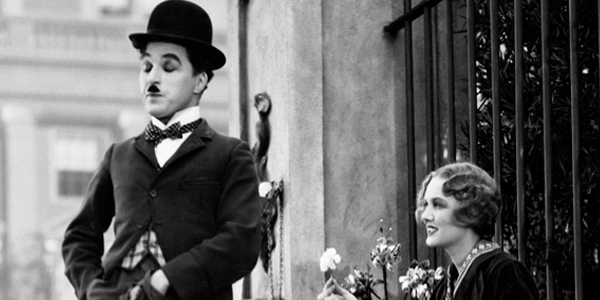 Realistically, any of Charlie Chaplin's films could have ended up on this list. Almost every single one of them is worth checking out, but for the viewer who is new to the silent era, it's probably best to start off with one of his most famous films. City Lights is the achingly sweet story of the lovable Tramp (played by Chaplin) who meets and falls in love with a blind woman who mistakes him for a wealthy benefactor. You can feel almost at once that City Lights is intensely personal to Chaplin -- some people have suggested that the film is autobiographical, with the blind girl representing his mother (who died a few months before filming began on this film) and the millionaire representing his father. City Lights was met with decent reviews when it first came out, but it wasn't until the film was re-released in 1950 that it received major critical praise, leading James Agee of Life Magazine to famously dub the last scene as the "single greatest piece of acting ever committed to celluloid."
2. My Best Girl
 My Best Girl isn't one of the most famous silent films. Strictly speaking, it might not even be Mary Pickford's best film from a critical perspective. But it's an incredibly sweet romantic comedy, and in a lot of ways it has more in common with modern films than some of the other highly acclaimed silent films that are out there. Sure, Birth of a Nation is significant, but in terms of watchability, My Best Girl has it beat, easily. It's the story of a poor young girl who falls in love with her boss's son -- only she doesn't know it, because he's working as a stock boy to prove himself to his father. My Best Girl is noteworthy because it stars Mary Pickford, who was easily the most influential woman of the silent era, and the man who would eventually become her third husband, Buddy Rogers. Although they wouldn't marry until ten years after this film was released, they have a palpable chemistry that comes through even with the admittedly chaste relationship on screen.
1. Metropolis
 If you are a fan of the science fiction genre, you owe a debt of gratitude to Fritz Lang for creating the silent classic Metropolis. It's a perfect spectacle, with eerie set pieces that are impressive even to audiences who grew up watching modern blockbusters. Metropolis was the most expensive silent film ever made, and it shows -- the film has a scope and a sense of ambition that was unprecedented in the medium. Lang had a tremendous attention to detail and a lyricism that created visually dynamic scenes at a time when most camera work had a tendency to be relatively static. One only has to watch the sequence where the workers shuffle to the factory together, hundreds of mindless drones perfectly in sync with one another, to see how genuinely exciting Lang's filmmaking style was. It's an enduring science fiction classic that not only influenced an entire genre beyond measure, but can be watched to this very day with the same sense of wonder that audiences in 1927 must have felt.