10 Astonishing Things You Didn't Know About Iconic Movie Scenes
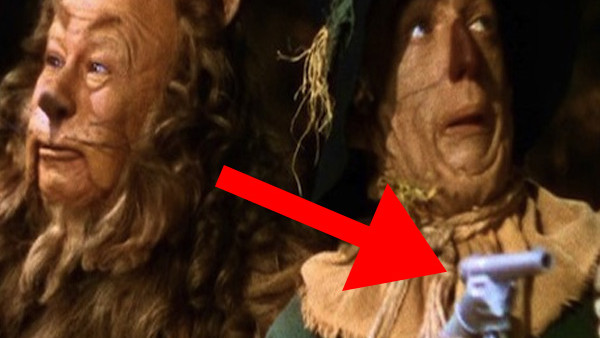
The Scarecrow always comes packing heat.
It doesn't matter how many times you watch a movie - sometimes you're going to miss things, and it's up to the Internet to help put you on the right path.
There's always more than meets the eyes when it comes to the movies, and sometimes the most interesting things take place behind the scenes, during the production process, or are so hard to spot that they slip under the radars of most movie-goers. And it's those revelations that are consistently the best form of cinephile currency there is. Especially when it furthers your appreciation or makes a certain part of a movie more interesting as a result.
Those tidbits, production insights and scene-changing revelations are particularly of note when they're dedicated to classic scenes in seminal movies, changing your perception of things you've seen so many times that they've almost become second nature. Which is precisely where the following astonishing facts come in...
10. Gene Wilder Only Agreed To Play Willy Wonka If He Was Allowed To Somersault In During The Character's Grand Entrance - Willy Wonka & The Chocolate Factory

Gene Wilder, who played the iconic role of Willy Wonka in the movie adaptation of Roald Dahl's classic children's book, took the cliched Demanding Actor trope a step further when he went temporarily crazy and made an incredibly specific request regarding his own casting. If his request was denied, he would refuse the role. So what was it? Money? An easy work schedule? Nope, he was insistent on doing a somersault.
Here's what he wrote in a letter to the director of the movie before he was cast:
"When I make my first entrance, I'd like to come out of the door carrying a cane and then walk toward the crowd with a limp. As I walk toward them, my cane sinks into one of the cobblestones I'm walking on and stands straight up, by itself; but I keep on walking, until I realize that I no longer have my cane. I start to fall forward, and just before I hit the ground, I do a beautiful forward somersault and bounce back up, to great applause."
Why, you're wondering, was this the only thing that Wilder wanted in exchange for his casting? No idea, except for the fact that - in his own words - "from that time on, no one will know if I'm lying or telling the truth."
9. The Scarecrow Wields A Revolver In The Haunted Forest Scene - The Wizard Of Oz
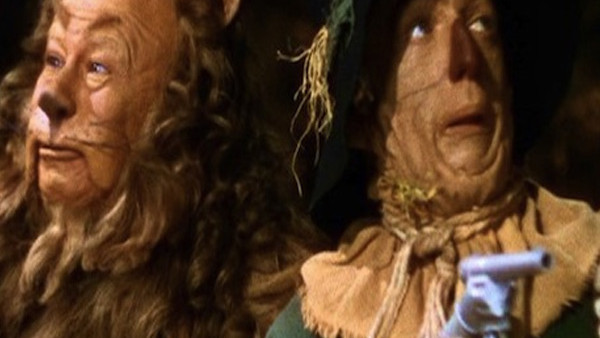
Even if, for some reason, you actually saw this while watching The Wizard of Oz, chances are that you wrote it off as a mere trick of the eyes. But go back and give yourself some credit - the scarecrow really is holding a revolver in one scene during The Wizard of Oz.
It's an easy thing to miss though, and for three pretty big reasons.
Firstly, why in the name of all that is logical would the Scarecrow, an inhabitant of the magical land of Oz, be wielding a loaded gun? Secondly, it's not really all that easy to spot, unless you're looking for it. Thirdly, it's near-impossible to see on TV versions.
But it's there, as Dorothy and the gang make their way through the haunted forest, which makes Scarecrow's definitive crippling fear of the Wicked Witch so illogical.
8. Gene Kelly Performed The Iconic Rain Sequence Whilst Sick And Running A Fever Of 103 °F - Singin' In The Rain

It's easy to assume, given how enthusiastic and full of life Gene Kelly looks during Singin' in the Rain's most famous sequence, that he's a picture of good health.
In reality, he was on the verge of fainting at pretty much any moment, because he was as sick as a dog. Despite his soaring temperature, and the fact that the scene required him to be perpetually soaked and bounding about gleefully, he persevered and committed one of the most iconic dance scenes in all of Hollywood's history to film.
7. Jeff Bridges Would Furiously Rub His Eyes To Prepare For Any Scene In Which The Dude Might Have "Burned One" Before Appearing In - The Big Lebowski

It would make sense to assume that Jeff Bridges just smoked a bunch of drugs before every scene in the Coen's quirky masterpiece The Big Lebowski, given the requirements of the character. But his method was far simpler - and less illegal.
Before every scene he filmed, to achieve the Dude's iconically mellow look, Bridges would approach his two-headed director and ask them whether or not they thought that the Dude had "burned one".
The answer was usually yes, and as a result, Bridges would retire to a corner of the room, and proceed to frantically rub his eyes until he achieved the appropriate effect. Apparently, this was the only time he would ever take to discussing his character with the Coens throughout the entirely of production.
6. Tommy Lee Jones Improvised The Best Line In The Movie - "I Don't Care" - During The Dam Scene - The Fugitive

Most people remember The Fugitive for Harrison's Ford beard, and an astounding Tommy Lee Jones performance, for which he won an Oscar for Best Supporting Actor, and he deserves even more credit than fans would ever notice.
The most memorable scene in the movie sees his marshall confronting Ford's wrongly accused Kimble in a dam, before the latter jumps to freedom. It's at this point where Ford, pointing a pistol at Jones, yells "I didn't kill my wife!" and Jones fires back "I don't care!"
The beauty of this line, of course, sums up Jones' position in the movie - he doesn't give a damn whether or not Ford committed the crime or not, it's his job to take him in, and that's all that matters. Working out whether he's innocent is for somebody else.
And it turns out that Jones actually improvised the line, which was originally written as the rather more clunky "So you didn't kill your wife..."
5. Coconuts Were Used Instead Of Horses Because The Production Couldn't Afford Them - Monty Python & The Holy Grail

Monty Python and the Holy Grail is often regarded as being one of the funniest movies ever made, a rare timeless comedy, helped by the fact that most of the jokes aren't easily forgotten. One of the most memorable moments in the movie, of course, occurs when we're first introduced to King Arthur.
Rather than riding a mighty steed, he is instead followed around by a servant clapping two halves of a coconut together, recreating the sound of hoofs, whilst he "gallops" around on foot. It's a brilliant sight gag and typical of the anarchic humour of Monty Python, which makes the truth behind it all the more astonishing.
It turns out that these iconic scenes only spurred from the fact that the production couldn't afford to provide its cast with actual horses, and the coconuts were introduced as a way of getting around the problem. Of course, having the horses would have been nowhere near as funny, so it emerged as a blessing in disguise - proof that more money doesn't always heed better results.
4. The Rain In The Background Of The "Bug" Scene Was Designed To Look Like Matrix Code - The Matrix

The Matrix movies are crammed with tons of tiny details, of course, given the scope of story and the subject matter, but here's a little detail that occurs towards the beginning of movie that lots of people tend to miss.
In the scene that sees the electronic bug removed rather gruesomely from Neo's belly button, the rain in the background is designed to look like the famous "Matrix Code". It's a great, understated visual clue for this not being the real world and an indication of the intricacy of the Wachowskis' approach to story-telling.
3. Francis Ford Coppola Found Don Vito's Cat On The Paramount Lot And Put It In The Movie On A Whim - The Godfather

It's strange how some things that end up being incredibly iconic stem from moments that - at the time, anyway - occurred on a whim.
The opening scene of The Godfather featuring Don Vito Corleone and his feline friend has become one of its most memorable, and yet the original script never called for it at all. In fact, it only ever occurred because of a last minute change.
Francis Ford Coppola apparently stumbled upon the cat whilst wandering around the Paramount studio lot - when it wandered onto the scene, Coppola let it roam about and it proceeded to jump up onto Brando's lap whilst he read his lines - from prompt cards - and the rest is history.
Lots of Brando dialogue had to be re-dubbed, however, because the cat was purring so hard that it ruined most of the takes.
2. Linda Hamilton's Twin Sister Was Used For The Scene Where The T-1000 Imitates Her - Terminator 2: Judgment Day
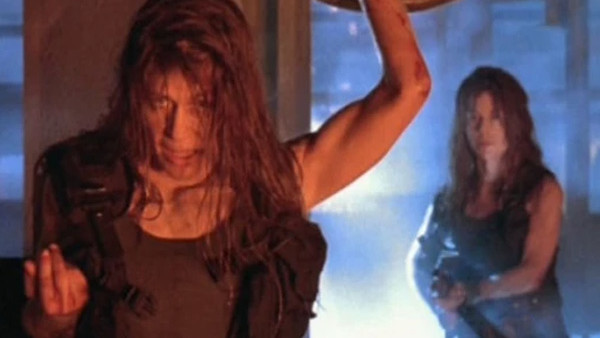
Given how much awesome CGI there is in James Cameron's first Terminator sequel, it would be safe to assume that CGI was used to pull-off the shots where there needed to be two Sarah Connor characters on-screen at once, as a result of the shape-shifting T-1000. After all, if Cameron managed to render a liquid metal robot assassin, he could achieve something like that with ease, right?
In reality, Cameron opted for a different technique - an incredibly logical one that probably saved a lot of time and effort: he just used Linda Hamilton's real-life twin sister, Leslie, in the background shots.
The same technique was used in an earlier scene when the T-1000 becomes a prison guard.
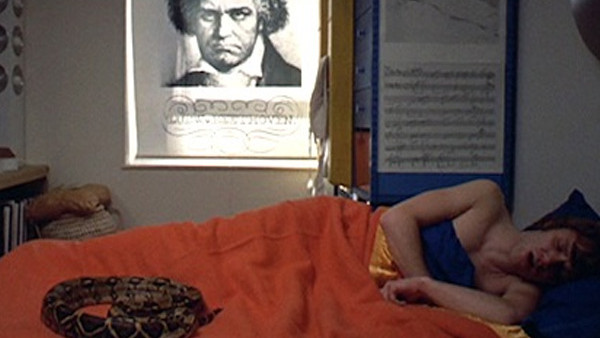
1. Stanley Kubrick Factored In Alex's Pet Snake Because He Found Out Malcolm McDowell Was Terrified Of Them - A Clockwork Orange
Aside from being renowned as one of the all-time great movie directors, Stanley Kubrick was also renowned for being a cruel, cold and unsympathetic b*stard, whose idea of "inspiring" his actors usually meant shouting, embarrassing or making them so nervous that they'd do whatever he told them to do without question.
Just ask Shelley Duvall about her experience on The Shining.
Malcolm McDowell, who played Alex DeLarge in Kubrick's adaptation of A Clockwork Orange, also suffered at the hands of his director, who may or may not have been insane at this point. Upon discovering that McDowell had a phobia of snakes, Kubrick decided to write in that Alex DeLarge had a pet snake, despite the fact that such a thing wasn't mentioned in the book, and made no real difference.
This might have been more understandable had the scene in question required McDowell to be scared of snakes. It doesn't. At all. He's playing a character who keeps one as a pet, after all.
Like this article? What have we missed? Let us know in the comments.