10 Awesome Movies Audiences Weren't Ready For
Ahead of their time and then some.
Recent times have shown Hollywood catching up to audience demand years after the fact, what with Wonder Woman and Black Panther finally giving women and black people the quality screen representation they so obviously deserve.
But more often the inverse is true, and filmmakers will deliver a bold, striking vision that neither audiences nor bean-counting executives were quite ready to vibe with.
These 10 films, all unassailable classics in their own right, nevertheless failed to find their deserved audience on initial release, but have enjoyed far greater success on the home video market.
And so, it's clear that each of these movies just didn't get the all-important timing right: general audiences weren't yet ready to embrace that level of weird or ambition, even if a few years might've made all the difference.
Hollywood is of course a trend-driven enterprise like anything else, and these movies were all absolutely well ahead of the curve, yet their difficult-to-quantify style and tone caused the masses to stay well away...
10. Scott Pilgrim Vs. The World

Edgar Wright's hilariously self-aware, visually astonishing action-comedy was released in 2010 to strong reviews and an impressive "A-" CinemaScore, but it ultimately failed to catch on with a wider audience and grossed barely half its $90 million budget.
Looking back almost a decade (!) later, it's tough not to view Scott Pilgrim as a victim of its own timing, and that had the film released even just a few short years later, it would've connected with general audiences far more easily.
In 2019, everyone is buried in their smartphones 24/7, we all know what memes are, video games aren't just for nerds anymore and we all love superhero movies - four facts which weren't fully crystallised with the masses at the turn of the decade.
Upon initial release, many simply dismissed Scott Pilgrim as a weird, niche movie that only cheeto-fingered stereotypes would actually be serviced by, but of course, that couldn't be further from the truth.
It's easy to imagine how, in a blockbuster landscape that now allows a talking raccoon and a tree monster to pull close to $1 billion at the box office, Scott Pilgrim would've enjoyed far greater success had it hit cinemas a few years later.
It of course endures as a cult classic on VOD platforms regardless, but if circumstances were different, we might've actually ended up with the Scott Pilgrim trilogy the material so thoroughly deserved.
9. The Cable Guy

In the mid-90s, Jim Carrey was on one of Hollywood's most legendary hot streaks ever, appearing in two Ace Ventura movies, The Mask, Dumb and Dumber and Batman Forever consecutively, with each proving enormously successful at the box office.
That streak came to an abrupt end, however, with the release of 1996's The Cable Guy, a much darker comedy vehicle for Carrey directed by Ben Stiller, which was a massive departure from his broader prior crowd-pleasing roles.
In fairness, the film still turned a profit at the box office, but critical and fan response was incredibly mixed, and the film quickly sank without a trace while Carrey followed it up with the more accessible likes of Liar Liar and The Truman Show.
But The Cable Guy is a movie audiences failed because they just weren't ready to see Carrey reinvent his rubber-faced persona in this way. Though Carrey himself certainly rose to the challenge, his depiction of a deranged loner was deemed offputting by mass audiences out for the easy laughs.
Stiller's film was an impressively forward-thinking precis on the increasing intrusiveness of entertainment and technology in our everyday lives, but it's easy to imagine how The Cable Guy would've fared better with audiences a few years later.
With Carrey being taken more seriously as a dramatic actor after The Truman Show and Man on the Moon, not to mention America's growing appetite for dark humour in the cynical post-9/11 era, The Cable Guy could've broken out as a sure hit for Carrey rather than the cult curio it actually ended up.
8. Licence To Kill
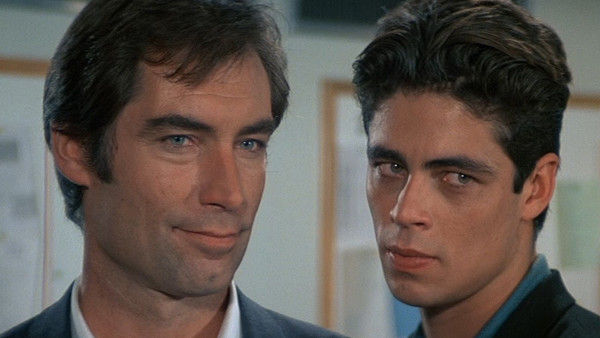
Though Roger Moore had gotten unmistakably long in the tooth by the time he hung up the 007 mantle with 1985's A View to a Kill, audiences still seemed rather enthusiastic about the campy tone of his output, despite Bond producers wishing to try something new.
1987's The Living Daylights served as Timothy Dalton's first outing as Bond, melding more serious elements with the exuberant silliness the Moore films were known for in the hope of easing fans into the transition.
But for Dalton's second film, Licence to Kill, MGM boldly doubled down on the edginess, ditching much of the prior daft humour, upping the brutal violence (even earning a "15" rating in the UK), centring the plot around cocaine smuggling and making Bond more ferociously ruthless than ever before.
Though it turned out a strong box office success regardless, fans were decidedly mixed on this caustic new direction for the franchise and also Dalton's portrayal, resulting in Pierce Brosnan's belated 1995 follow-up Goldeneye returning to a tone closer to The Living Daylights.
And of course, as Brosnan's movies went on, they regressed further back to the silliness of the Moore era, until the franchise was finally rebooted with Daniel Craig in 2006.
And seeing the success of Craig's more serious-minded Bond films, it's easy to appreciate how Licence to Kill had the right idea, but fans just weren't quite ready to accept that tone yet.
After the shambolic absurdity of Die Another Day, Austin Powers making the Bond franchise a laughing stock and the seriousness of the Jason Bourne movies proving hugely popular with audiences, Bond producers finally agreed to change tack, lending some belated validity to what remains the darkest and most ambitious Bond movie ever.
7. Last Action Hero

Last Action Hero is perhaps the ultimate satire of overblown Hollywood action flicks, an outrageously funny action-comedy with an extremely game Arnold Schwarzenegger playing a stereotypically badass action protagonist who ends up interacting with our real world.
Released in the summer of 1993, Last Action Hero was misguidedly marketed as another straight-faced Arnie actioner, coming hot off the heels of Terminator 2: Judgment Day, even though the tone was actually aggressively tongue-in-cheek throughout.
It certainly didn't help that Columbia released it mere days after Jurassic Park, which combined with an utterly flummoxed response from critics and audiences caused Last Action Hero to bomb catastrophically at the box office.
But in the years that followed, Wes Craven proved the audience's appetite for satirical takes on genre films with both New Nightmare and the Scream sequels, and by the time we entered the 2000s, the Age of Irony was well and truly alive.
Considering how popular the self-aware likes of the Jump Street and Deadpool movies have been in recent years, it's tough not to feel like Last Action Hero was a movie made before audiences were enlightened enough to appreciate it.
It endures as a cult gem, of course, but had the masses been willing to accept Arnie poking fun at himself and the 'biz quite this blatantly, Last Action Hero could've been a stonking hit.
6. Unbreakable

M. Night Shyamalan's Unbreakable was the filmmaker's follow-up to the Oscar-nominated The Sixth Sense, for which Shyamalan was nominated for both Best Director and Best Original Screenplay Academy Awards, while the film itself received a nod for Best Picture.
Expectations were sky-high, then, with audiences evidently thirsty for another ingenious horror film with a mind-melting plot twist.
As it turned out, despite marketing that suggested otherwise, Shyamalan opted to go in an entirely different direction with Unbreakable, serving up a wildly imaginative deconstruction of the superhero genre while it was still in its larval stage.
Shyamalan's ambitious project was a fair box office success but ended up grossing barely one-third of The Sixth Sense's worldwide take, unaided by mixed reviews and a brutal "C" CinemaScore, indicating just how little casual audiences thought of it.
Clearly, its grounded take on a genre still finding its footing was too ahead-of-its-time for mainstream audiences to appreciate, and had it released a few years later, it would've been compared far more favourably to the increasing glut of overblown cape fare crowding up the multiplexes.
In addition to Unbreakable's cult fandom, Quentin Tarantino called it a "masterpiece." It's also fair to say that a general fondness for these subversive, boundary-pushing superhero stories has certainly grown as the genre has become more widespread and entrenched over the decades.
5. Starship Troopers

Paul Verhoeven's deliciously entertaining 1997 war satire Starship Troopers largely fell upon deaf ears during its initial release, tanking at the box office with a "C+" CinemaScore and receiving similarly polarised responses from critics.
The big problem with Starship Troopers is that, somehow, most viewers seemed to gloss over the satirical aspects and engage with the film as an earnest piece of fascist, right-wing military propaganda (as per the novel which the movie borrows its name from).
This is despite the movie clearly mocking the oorah themes of Robert A. Heinlein's novel, depicting the human soldiers as uncommonly attractive yet vapid, while the alien insurgents are literally bugs, paralleling U.S. military policy of making foreign forces seem as inhuman and "other" as possible.
Better still, Starship Troopers is literally packed with wink-wink propaganda videos, which to contemporary audiences might even seem too on-the-nose for their own good.
But the important consideration here is that, had Starship Troopers been released in the wake of 9/11 and especially the Iraq War, it likely would've been praised to the moon and back as a bold indictment of American imperialism.
The movie has certainly lived on as a cult fave, but if audiences had been given the necessary real-life lesson in geo-politics by the time it hit cinemas, its general reception could've turned out totally different.
4. Blade Runner

1982 was an absolutely stacked year for sci-fi films, with Ridley Scott's Blade Runner having to contend with the decidedly broader likes of Star Trek II: The Wrath of Khan, E.T., The Thing and Tron.
It didn't really stand much of a chance on original release, then, tanking at the box office amid wildly polarised reviews, with critics and audiences alike dismayed by its slow pace, ambiguous storytelling and dishonest marketing as a more conventional action-adventure flick.
Not helping matters was the mess of a theatrical cut sent out to cinemas complete with a garish Harrison Ford voiceover, which was only corrected with the release of Ridley Scott's superior director's cut in 1992.
Nevertheless, the film's meditative approach to sci-fi wasn't what audiences were used to seeing in 1982, and only years later on home video did it finally find a home befitting its scope and ambition.
With the 2007 release of Scott's exceptional Final Cut, Blade Runner's legacy as a genre landmark was fully cemented.
Almost four decades since its original release, Blade Runner continues to be held up as one of the greatest sci-fi films ever made, but as is often the case, audiences took their sweet time figuring this out.
3. Dredd

2012's Dredd reboot was an absolutely spectacular fusion of hardcore action, impeccable world-building and dazzling visuals, yet due to appalling marketing - which depicted it as a generic action film and needlessly focused on 3D integration - it failed to recoup even its modest $45 million budget.
Now granted, the 1995 Sylvester Stallone-starring effort was bad enough to put many off Judge Dredd for life, but this new take was effectively everything fans wanted the Sly version to be.
Sadly, the interest just wasn't there for a gritty, R-rated action flick like this in 2012, yet it's easy to imagine in a current cinematic landscape that's made box office gravy out of R-rated actioners like John Wick, Mad Max: Fury Road, the Deadpool movies and Logan, Dredd could've thrived with the right marketing.
For starters, Dredd never even had a "red band" trailer and it's fair to say that Warner Bros. basically sent it out to die.
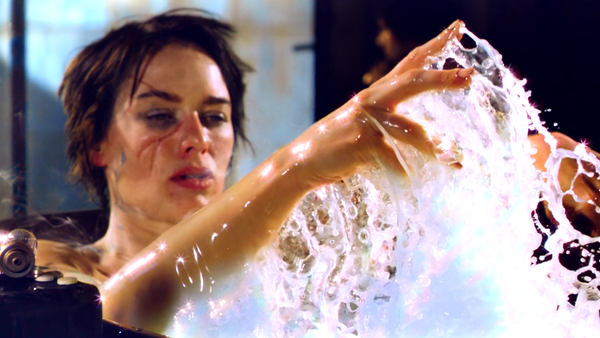
But had the film been held back a few years and capitalised on the R-rated boom of recent times, not to mention Lena Headey's surge in popularity after Game of Thrones blew up, Dredd could've become a solidly successful genre offering and kick-started a franchise.
2. Legend

Ridley Scott strikes again, this time with what is undeniably the weirdest film in his pretty damn demented filmography, 1985's Tom Cruise-starring fantasy romp Legend.
It cannot be understated just how much of an effort this film made to alienate critics and audiences alike.
Far from the typical dose of fantasy froth everyone expected, Legend was scuzzy and rough-edged, more unsettling than cute and featured heroes that were anything but squeaky-clean.
That's without mentioning a brilliantly unconventional score from synth legends Tangerine Dream (depending on which cut of the film you watch), deeply disturbing make-up effects from the guy behind The Thing, RoboCop and Total Recall, and a legendary performance from Tim Curry as the Lord of Darkness himself.
Unsurprisingly, Legend failed to recoup its $24.5 million budget and tanked with critics despite receiving an Oscar nomination for Best Makeup.
Yet it has lived on as a cult classic, and in an era where envelope-pushing genre pastiche is held in a higher regard than ever, it's easy to see why so many have discovered the film in recent years.
In the mid-1980s, however, when fantasy films were mostly straight-faced and never more weird than The Princess Bride, Legend was just too damn much.
1. Annihilation

And finally, our list wraps up with one of the most divisive sci-fi films of recent years, Annihilation, the brainchild of rising sci-fi auteur-in-the-making Alex Garland.
But Garland isn't quite a brand unto himself yet like, say, Terrence Malick, and so with Annihilation following the brilliant-yet-accessible Ex Machina, it's easy to appreciate why its more elliptical, surreal approach caught many viewers off-guard.
Before Annihilation even hit cinemas, though, Paramount felt that the film was "too intellectual" for casual audiences, which was problematic given its $55 million budget.
But due to producer Scott Rudin having final cut privilege, he was able to prevent Paramount from hacking the film to pieces in pursuit of a broader through-line, and it was eventually released internationally on Netflix.
It's easy to view Paramount's decision as cynical, but the film's paltry U.S. box office quickly confirmed their suspicions: it landed a poor "C" CinemaScore and grossed just $43.1 million worldwide.
Clearly, audiences weren't ready to engage with Annihilation's heady, provocative sci-fi logic and world-building, not least the fact that there wasn't a traditional alien creature anywhere in sight.
Despite winning rave reviews and amassing a cult following of fans, Garland's film was released before the overwhelming majority of potential viewers were ready to accept such bold filmmaking.
Obviously we won't be able to fully appreciate Annihilation's impact on the genre for years if not decades, but it's easy to be confident that it will stand tall as a sci-fi landmark 20 or 30 years from now.