10 Awesome Movies That Cost Nothing To Make
Greatness doesn't have to cost the Earth...
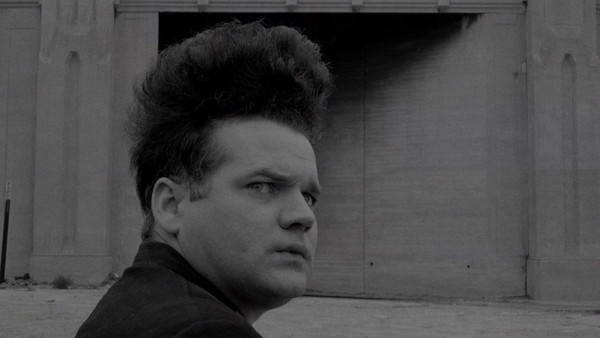
It is not uncommon these days for the average movie in your local cinema to have a budget well into the hundreds of millions. These extravagantly produced tentpole movies have become the staple of our cinema going lives and have also become the cornerstone of the Hollywood business model.
Gone are the days of the mid-budget movie à la Die Hard (1988) or The Sixth Sense (1999), replaced by ultra expensive CGI-laden mega blockbusters. Such is the landscape of the modern film industry that Hollywood would rather make one $250,000,000 movie than five $50,000,000 movies, and financially they are right to do so. A movie like Avengers: Endgame (2019) might cost hundreds of millions but it makes billions back at the box office.
However a movie doesn’t have to cost hundreds or even tens of millions to be good. Sometimes a lack of budget breeds creativity. Since the 1990s, with the advent of digital media and affordable home video technology, there has been an explosion of micro-budget films, so called because they cost (in relative terms) practically nothing to make.
Some of the greatest directors of the modern age, such as Christopher Nolan and Darren Aronofsky, began their careers in the micro-budget world, forging their skills in an environment of ingenuity which developed their distinct auteur styles. And here are the best...
10. Paranormal Activity (2007)

Budget: $15,000
Famous for its remarkably low budget, Paranormal Activity became something of a cultural phenomenon on release. Despite costing less than your average family car, Paranormal Activity grossed hundreds of millions at the box office and has so far spawned five sequels, with a sixth reportedly in the works.
Standing on the shoulders of previous horror pioneer, ‘The Blair Witch Project’, director Oren Peli, a former software engineer, shot the film using simple home video cameras, posing them as security cameras to create a found footage aesthetic.
This low-budget but intimate way of shooting a film creates an illusion of reality, what is on screen looks like it’s actually happening, it’s not dressed up with expensive cinematography or production design. It doesn’t look like a film, it looks real, which makes it all the more horrifying. It could be argued that a film like Paranormal Activity just simply wouldn’t work if it wasn’t made as cheaply as possible.
9. Primer (2004)

Budget: $7,000
One of the cheapest films on our list but also one of the most complex. Costly a paltry $7,000, Shane Carruth’s directorial debut tells the story of two engineers who discover time travel in their spare time.
The plot structure is notoriously complex, at times being deliberately disorientating and Carruth makes no effort to make it easy for the audience. A mathematics graduate and engineer by trade, Carruth fills the dialogue with technical language and makes no apologies about it. This is time travel the hard way, so strap yourself in and pay attention. This might put you off, but the challenging style of the film is very much a part of the experience. Carruth wants you to be confused. It’s as much a story-telling device as it is technical.
In producing the movie, Carruth kept costs as cheap as possible by acting as the director, writer, producer, editor, composer and co-star. Talk about keeping your hands full, but the decision not to hire extra crew members meant Carruth could put as much of that $7,000 on screen as possible.
Carruth kept costs down further by making use of available lighting, rather than using expensive set lights. Blinking fluorescent lights combined with Carruth’s use of grainy 16mm film stock gives the film a gritty and cold aesthetic which further exemplifies the scientific and mathematical tone.
An experimental plot structure, technical dialogue and an unforgivingly complex time loop, makes Primer a challenging but essential watch.
8. Following (1998)

Budget: $6,000
Before Christopher Nolan exploded mega-budget blockbusters onto our screens with films such as The Dark Knight (2008) or Inception (2010), Nolan launched his career with this ultra-low budget neo-noir crime thriller.
The film tells the story of ‘The Young Man’, a struggling writer who begins to follow people in search for inspiration. He becomes intrigued by a mysterious man named Cobb, who convinces him to join him on various burglaries. Becoming addicted to the thrill, it soon becomes more about the act of burglary itself rather than any financial gain.
Nolan made the film while working his day job making corporate videos, shooting it on Saturdays. It took almost a year to complete, only being able to shoot 15 minutes worth of footage each day. To make sure they conserved as much expensive film stock as possible, each scene was extensively rehearsed so they only had to film it in one or two takes.
In keeping with the mind-bending cerebral style that has been consistent throughout his career, Following has all the mind bending suspense, tension, and twists that we have come to expect from a Christopher Nolan movie.
7. Tape (2001)
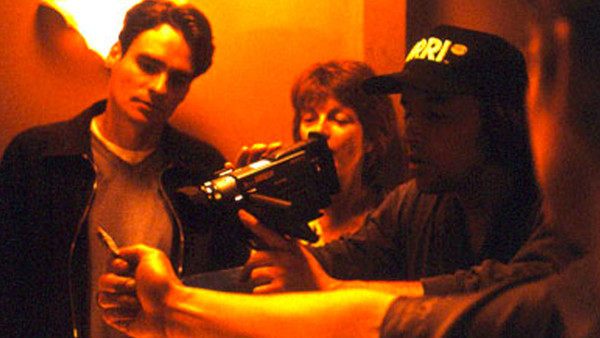
Budget: $100,000
Although this is the most expensive film on this list at a lofty $100,000, it is still absolute peanuts when compared to your average multiplex movie. This film is also unique, in the context of this list, as Richard Linklator was already an established director when he made Tape, having helmed indie hits such as Dazed and Confused (1993) and Before Sunrise (1995). It even stars verifiable stars in Ethan Hawke, Uma Thurman and Robert Sean Leonard. So why drop to such a low budget for this film?
Linklater has never been one to shy away from experimentation, especially when it comes to exploring concepts of time, a theme which has been consistent through his career in films such as Boyhood (2014) or the Before trilogy. Tape is no different. It takes place in real time and is set solely in one motel room. The story is purely centered around the dialogue between the three characters, which means that although it is slow paced, it is there to showcase the acting talents of the three actors. The result is a very intimate and personal drama.
Shot using home-video level tape camcorders, the film doesn’t look particularly great. It’s caught in that period between digital technology becoming more accessible but before the advent of digital HD. However as with Paranormal Activity, the slightly pokey aesthetic enhances the intimate tone of the film. If it was shot on an Arri Alexa in crystal clear 4K, it wouldn’t feel right.
6. Pi (1998)
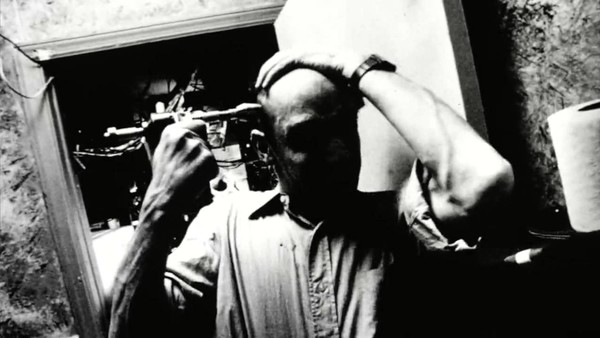
Budget: $60,927
On the face of it, a film about exploring the philosophy of mathematical number theory doesn’t sound particularly enticing.
However, Darren Aronofsky’s first feature film is an intensely psychological thriller about a man obsessed with finding order in the world through mathematics. The main character, Max, tries to rationalise the imperfect nature of humanity through his theories, all the while battling paranoia and hallucinations. As you would expect, it’s a very dark film that uses numbers to philosophise nature, the universe, and man’s relation to it.
Obsession being a common theme in Aronofsky’s work, featuring predominantly in his later films, such as Requiem for a Dream (2000) and Black Swan (2010), Pi lays down the foundations of his signature style in this micro-budget debut. Aronofsky funded the film with donations from his friends and family. Luckily, he was able to pay them all back when he sold the distribution rights for a cool $1,000,000.
5. Slacker (1990)
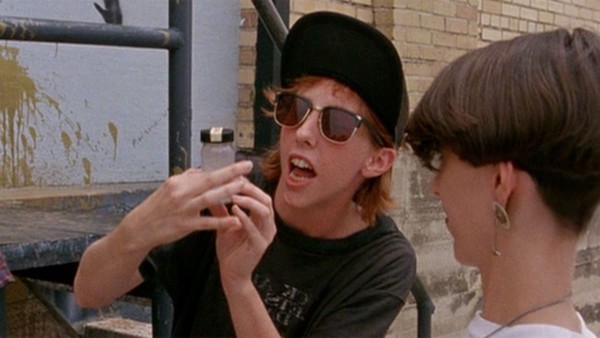
Budget: $23,000
The 1990s witnessed an explosion of independent cinema as home video technology suddenly granted the ability to make a film to anyone who had the will (and a few credit cards). Slacker, the film which launched Richard Linklater’s career, arguably started it all.
With no centralised narrative, the plot is a series of vignettes, telling the story of various characters in Austin, Texas. Each of these stories is tied together with themes of social exclusion and political marginalization. In retrospect, the movie serves as a time-capsule, perfectly encapsulating the attitudes and opinions of Generation X.
Filming on a shoestring budget, the film was acquired for distribution after it premiered in a local theater. Although it never gained a wide release, it soon garnered a cult following at film festivals and on home video, becoming very popular with college students. It became hugely influential in inspiring indie filmmakers throughout the 1990s, most famously director Kevin Smith who became inspired to make his own movie after seeing it.
4. Eraserhead (1977)

Budget: $10,000-100,000
David Lynch’s creepy body horror is a must-see for any fan of Lynch’s work, or horror fans in general. The film is dark, erratic, bizarre, a nightmare come to life. A film is filled with disturbing, surreal imagery. Yet despite it being so instinctively repulsive, it is oddly enthralling at the same time and you can’t help but keep watching.
Lynch made the film with funding from the American Film Institute, which he acquired while he was studying there. However the production was laboured, and after three years he ran out of money. He resorted to begging for donations from his friends and family, and even taking up a paper route in order to get enough money to finish it. It took a further two years, five in total, to complete. There is no official budget for the film, with some estimates as low as $10,000 and others as high as $100,000.
Although little interest was shown on release, his investment paid off as it became a cult hit at midnight movie showings, grossing over $7,000,000 in total.
3. The Blair Witch Project (1999)

Budget: $60,000
The film which revived an entire subgenre of horror and is credited with popularising the found-footage technique. The Blair Witch Project tells the story of three film students who decide to make a documentary on a local legend, the Blair Witch. The three are never seen again, but their footage is discovered a year later. The story is simple, three people go missing in the woods, yet the terrifying way in which the film is presented means it is perhaps the most influential horror film of the modern era.
The most famous moment in the film is the close up of Heather crying, an image that became the poster and has since been much parodied. However the most haunting image is at the climax, when Mike is stood facing the corner as Heather screams. This head scratching yet bone chilling final image left audiences terrified. In fact, during a focus group for the film it was noted that everyone was confused by the ending, but 19 out of 20 said they were scared. Just goes to show that sometimes the unknown is scarier than the known.
This blend of horror and mystery became one of the key factors in the films runaway success at the box office. As mentioned with Paranormal Activity, it is the presentation of this as real that makes it so scary. The marketing behind the film tied into this, releasing missing posters for the three characters as if they had really disappeared. It created intense word of mouth and the film became a pop culture phenomenon.
2. El Mariachi (1993)

Budget: $7,000
Robert Rodriguez is famous for his ‘one-man-crew’ style of filmmaking, often being credited as director, writer, producer, cinematographer, editer, composer and more. This DIY style of filmmaking was born in his very first film, ‘El Mariachi’. It tells the story of a young man simply named El Mariachi, who arrives in town with his guitar looking to perfect his craft as a mariachi player. However a local crime boss mistakes him from an assassin who hides his weapons in a guitar case, and sends his men after him.
Famously, Rodriguez subjected himself to drug testing in order to fund the film, reportedly having written much of the script while under observation in the laboratory. It’s probably a good thing then that the film became an exercise in spending as little money as possible.
Rodriguez made use of what he had, namely a guitar case and a bus, to create a low-budget action movie which looks like it cost a lot more than it actually did. To achieve this, Rodriguez cut whatever corners he could, such as enlisting his actors who weren’t on screen to act as the crew, and using wheelchairs and clip-on desk lamps instead of a dolly and professional lighting. Such is the influence of this film that low-budget guerilla filmmaking is now popularly known as ‘Mariachi style’.
1. Clerks (1994)

Budget: $27,575
Inspired by Richard Linklater’s ‘Slacker’, Kevin Smith decided to use Robert Rodriguez’s advice to “use what you have” to make his own film, and what he had was access to a convenience store.
The same store that Smith worked at during the day, he filmed Clerks in during the night after it had closed, enlisting his friends and cast members to act as the crew. He funded the film by selling his extensive comic book collection and by taking the risky move of maxing out several credit cards. To help keep things cheap Smith used only black and white film stock and centered the film around dialogue to keep the aesthetic of the film as inexpensive as possible.
Clerks tells the story of two convenience store clerks who talk about movies and annoy customers. That’s about it, and although it might appear to be a movie about nothing, really it’s a movie about movies, about pop culture, and our love for them. The picture is grainy and the sound is rough, but the brilliantly witty dialogue, pop culture references and relatable acting results in a uniquely hilarious and charming film.