10 Awesome Movies With Disappointing Sequels
Please don't come back, Arnie.

Franchises typically run out of steam with the second or third instalment, but far more dispiriting is when the race to follow up a big success results in a glut of unnecessary sequels. Or to put it another way, when the success of Pirates Of The Caribbean led to Dead Man’s Chest, At World’s End and On Stranger Tides, with more on the way.
Hollywood operates like the fast food industry, more interested in franchising and marketing than nutritional requirements, and their products seem to target the same demographic. If something worked once, why wouldn’t people want more of the same? We’re not dealing with the audience for Hamlet here.
Well, to paraphrase William Goldman, the pulse to create a sequel is always financial, so they are rarely of the same quality. There are exceptions – Aliens and The Godfather II spring immediately to mind – but most sequels are just following a formula.
There are entire franchises, as outlined in this list, where despite all the prequels, remakes and spin-offs, there isn’t a single instalment that can hold a candle to the first film.
10. Darkman

The best comic book movie not actually based on a comic book, Darkman is exceeded only by Spider-Man 2 as a showcase for Sam Raimi’s visual style and storytelling skills. Peyton Westlake (Liam Neeson) is a memorable creation, a horribly disfigured scientist who uses synthetic skin both to reunite with his fiancée and to take revenge on the thugs that left him for dead.
Neither Raimi nor Neeson returned for the sequels, which were shot back-to-back and sent straight to video. They’re pretty much what you’d expect from 1990s DTV fodder: made quickly and cheaply in Canada, they don’t have the money or the wit to match the original.
Darkman II: The Return Of Durant brings back Larry Drake as the villain (who died in the first movie) but Neeson has been replaced by Arnold Vosloo, who does what he can with the material. He returns in Darkman III: Die Darkman Die, but with their rushed staging and TV movie scope, these pictures can’t hope to match the scale of the Raimi's vision.
9. Lethal Weapon

You’ve seen Lethal Weapon’s cops versus drug ring formula a million times before, but what separates Richard Donner’s movie from the pack is the inspired pairing of Mel Gibson and Danny Glover, plus a fine supporting cast of villains (who knew Gary Busey could be so menacing?). The action’s good too, and Shane Black’s script keeps everything moving along at a fair clip.
Beginning with part 2, the sequels added more humour that very quickly became silly (seriously, who tries to kill someone by booby trapping their toilet?)As the plots became smaller and the action more over the top, the filmmakers hit upon a gimmick that couldn’t miss: they introduced Joe Pesci as Leo Getz (“Whatever you need, Leo Getz!”).
Not content with allowing Leo to hog the limelight, they never gave Danny Glover’s character enough to do, finally reducing him to running around in his underwear for a cheap laugh in part 4. Throw in some forgettable villains, sprinkle with toe-curling attempts at repartee (including a Triad villain who says, “It’s fried rice, you plick!”) and once you’ve added Chris Rock as a motor mouth detective, you’ve really sunk the franchise.
8. Predator

Predator might be a B-movie writ large, but it’s so well-cast, tautly directed and smoothly conceived that it’s some kind of classic. It serves up everything a suspenseful monster movie ought to be in a triple portion, but doesn’t take itself so seriously that the audience doesn’t have any fun.
Incredibly, the same writers and producers reunited for Predator 2, a movie so unforgivably rubbish that Arnie turned it down in favour of Kindergarten Cop. It’s basically a third-rate cop movie with monotonous characters, blah action and zero suspense. The lowest-grossing Predator movie to date, it sank the franchise for 14 years and left the door wide for Alien Vs Predator.
Both AVP films rely on the corniest clichés imaginable, from Lance Henriksen’s cough being a sure sign of terminal illness to the teenagers in Requiem who just want to sneak out and go skinny-dipping, unaware monsters have crash-landed in their town. Even the action is this instalment is sub-par, usually taking place in locations so poorly lit you can barely tell what’s happening.
7. Robocop

As much a satire as an action movie, Robocop owes a great deal to the verve of Paul Verhoeven, a Dutch director making his second Hollywood movie, who brings an outsider’s eye to what could have been a by the numbers sci-fi movie. Anyone who saw the 2014 remake knows what I’m talking about.
Verhoeven didn’t return for the sequels and it shows: the first one was mean-spirited and humourless, the other bland and unmemorable. Neither was particularly exciting and their attempts at satire seemed to have been filtered through a focus group.
According to Frank Miller, who co-wrote both sequels, that’s pretty much how it was. He’d turn in a draft and producers Orion would automatically demand rewrites until it no longer resembled his original story, which is perhaps why Robocop’s Directive #262 reads “Avoid Orion Meetings.”
One person who actively hated the script was Peter Weller, who claimed it lacked the spine of the original. For Robocop 3, he was replaced by Robert John Burke, which tells you all you need to know.
6. Raiders Of The Lost Ark

Most directors of summer blockbusters claim their film is a rollercoaster ride but Raiders Of The Lost Ark is the real deal, a near perfect fusion of action and humour that set the standard for action adventure movies for years.
Alas, even Spielberg struggled to match it in the sequels, which substituted pratfalls for humour and slapstick for charm. Kate Capshaw’s character in Temple Of Doom has the distinction of being one of the most shrill and annoying heroines of the 1980s, capable only of performing unfunny routines and getting herself in hot water. The fact that she later married the director is purely coincidental.
Spielberg wisely roped in Sean Connery for The Last Crusade, but it was still more of the same, with the bickering between the leads attempting to distract you from how thin and forced the material was. Then there’s Kingdom Of The Crystal Skull, whose multitude of sins – overblown action scenes, a witless plot that involved aliens, casting Shia LaBeouf - inspired a South Park parody where Indy gets violated by Lucas and Spielberg.
5. Blade

Let’s not underestimate the significance of the first Blade movie: after years of comic book duds (Steel, Barb Wire, Batman & Robin) here was a movie that did everything right and more importantly was incredibly successful. It knocked Saving Private Ryan off the #1 slot on its opening weekend, which was enough to convince to convince Fox to pull the trigger on an X-Men movie, and the rest is history.
Guillermo Del Toro’s Blade II isn’t as impressive and lacks the freshness of the original, with villains that start behaving in familiar ways when they begin draining Blade’s blood. Rather than attempt to expand the universe, the movie brings throws in more gunfights and explosions.
Then there’s Blade: Trinity, and talk about going from a scream to a whimper. It’s difficult to say which is more half-hearted: the script, the performances or David Goyer’s direction. It’s basically a trailer for the short-lived Blade: The Series, but as an attempt at “franchicide”, it works just fine.
In fact, the movie was so lame that not long after its release, Wesley Snipes went to jail. They said it was for tax evasion, but we know better.
4. The Terminator

Stan Winston once remarked that he'd worked on movies with better effects than The Terminator, but he'd never worked on a movie with as good a story. That pretty much sums up James Cameron's $6 million movie, but if you want to see the same story mounted a $100 million budget, then Judgment Day is for you. Just don’t expect too many differences.
T2 must also bear the brunt for convincing Arnie that Terminators could be funny. In the first sequel, he gets away with one quip (“I need a vacation!”), but by the time of Rise Of The Machine, he’s content to play off his old catchphrases every few minutes. Until near the end, there was more than a touch of déjà vu to the plot, which was basically a facsimile its predecessor
The dour, humourless Terminator Salvation managed only to polarize audiences, but Terminator Genisys deserves credit for turning the franchise into a Mel Brooks movie, complete with “jokes” about how humanity won’t survive unless Kyle Reese and Sarah Connor get it on.
Please don’t come back, Arnie.
3. Saw

The first Saw isn’t really about the traps or about Jigsaw – it’s a movie for the head, whose elaborate plot unfolds with one startling twist after another. The trouble with releasing a sequel every year quickly became apparent when the rushed-looking Saw II arrived in cinemas, boasting a plot that wasn’t as clever as the filmmakers seemed to think.
The rot set in with Saw III, which abandoned any semblance of logic in favour of more traps, more grue and more screaming. Most franchises would die along with their main character, but when Jigsaw breathes his last at the end of the film, he’s already left behind enough traps to set up the next four movies. For a character on his deathbed, that’s not bad.
By the time of Saw 3D there was no plot, just a sense that the train wreck was coming to a halt. Shtick is recycled from earlier instalments and more characters return from the grave, but as another victim faces another round of torture porn, you’re reminded that you’ve seen it all before and simply upping the volume can’t change that.
2. Ghostbusters

1984 was a pretty good year for action comedies, with Beverly Hills Cop, Gremlins and Romancing The Stone all scoring big at the global box office. But the pick of the bunch is Ghostbusters, which after more than 30 years is still one of the best written and most brilliantly cast films you’ll ever see. It has a shot at being Bill Murray’s finest hour, which is really saying something.
It was a different story when, five years later, Ghostbusters II opened to widespread disappointment and indifference. One critic called it “such a lazy effort that the formula machinery is laid bare for all to see. It suffers from writing that that is obvious, sloppy and unimaginative.”
Fortunately, it was up against the likes of Look Who’s Talking and Lethal Weapon 2 at the box office, and without a decent comedy to expose its shortcomings, the picture went on to make $112 million worldwide. But the experience imparted a valuable lesson: Ghostbusters is a one-of-a-kind movie, and you can’t bottle lightning.
Paul Feig, take note.
1. The Crow
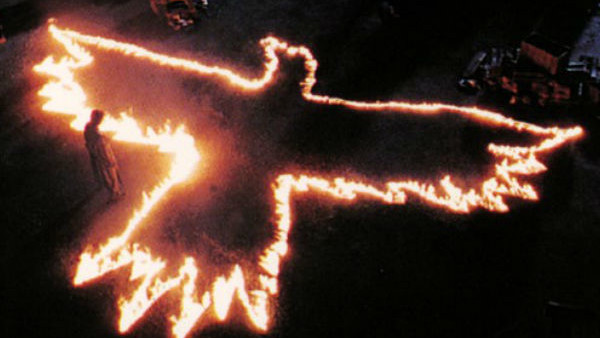
With its trend-setting urban hell production design, cool soundtrack and terrific cast, The Crow has a real shot at being the best comic book adaptation of the 1990s. After more than 20 years, the movie stands up as an example of what can be accomplished when the demand for tie-ins doesn’t overwhelm the content.
Alas, this was as good as it got for James O’Barr’s creation and by the time The Crow: City Of Angels rolled around 3 years later, the series was ready for the scrapyard. It set the trend for each subsequent movie: it was the same story all over again, only without any heart or style, and the actors looked like they’d rather be appearing in another movie.
The best you can say about The Crow Salvation is that it has it has a cool soundtrack album (with The Infidels, Rob Zombie and Pitchshifter – check it out), but The Crow: Wicked Prayer (starring Edward Furlong and Tara Reid) was so listless you wondered why they bothered.
Here’s hoping the proposed remake never sees the light of day.
Agree with this list or have your own sequels to add? Let us know in the comments.