10 Behind-The-Scenes Dramas That Failed To Derail Famous Movies
The original Anchorman was almost a completely different film...
Behind-the-scenes drama on a movie set is never a good thing.
Where there are creative differences, arguments, or spats between the filmmakers and the studio, there's usually an incoherent final product or a movie that lacks a focused, singular vision.
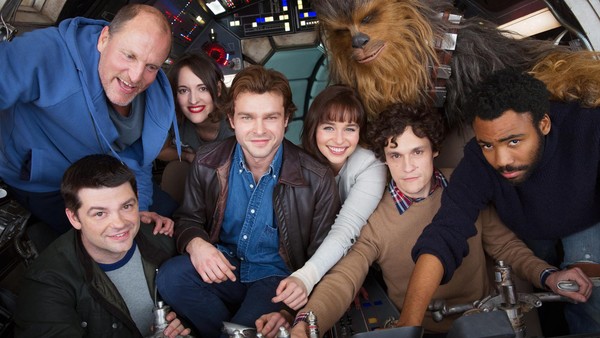
Scenarios like this have become extremely prevalent as of late. 2015's awful Fantastic Four reboot is notorious for its extensive reshoots and quarrel between director Josh Trank and 20th Century Fox, and more recently, Lucasfilm's Han Solo spinoff lost its directors with just a few weeks of shooting to go - though the quality of that particular film remains to be seen.
However, some films can overcome these problems and defy the odds, delivering something that isn't just successful in terms of quality, but also makes plenty of cash and receives heaps of critical acclaim.
Some of the most famous movies of all time suffered a whole host issues during production, from replacing lead actors and switching directors to rewriting and reshooting entire chunks of the story, and the fact that they turned out as good as they did is nothing short of astounding.
10. Everything That Could Go Wrong Does Go Wrong With Apocalypse Now

Apocalypse Now had such a troubled and eventful production that an entire documentary was made to explain exactly what went on (it's called Hearts Of Darkness: A Filmmaker's Apocalypse).
The issues involved are almost too numerous to list. Director Francis Ford Coppola fired leading man Harvey Keitel after just two weeks of filming, replacing him with Martin Sheen, who, at the time, was suffering from alcohol addiction.
As a result, Sheen would regularly show up to set drunk. The scene featuring his character wildly flailing around a hotel room and punching a mirror looked incredibly convincing, and that's because it was real; the actor was off his face and accidentally cut himself on the glass.
Another actor, Marlon Brando, would show up to set having not learnt his lines, forcing Coppola to shut down the movie temporarily so he could take Brando through the script.
Coppola also had to overcome other obstacles, like erratic weather, actors not getting along with each other, and Martin Sheen having a heart attack.
But in the end, none of this held the movie back whatsoever. Apocalypse Now is regarded as one of the finest war movies of all time, and was nominated for Best Picture at the Academy Awards - which is hardly a disastrous result.
9. Peter Jackson Was "Winging It" With The Hobbit Trilogy

While The Hobbit trilogy was nowhere near as good as The Lord Of The Rings trilogy, it was solid, and each film in the series earned a bucketload of cash.
This can't have been the outcome that the filmmakers expected, however, given the enormous amount of pressure they had to endure while piecing the movies together.
Problems on The Hobbit began when Guillermo Del Toro - who had been preparing the movies for many years - left the project before filming began, forcing Peter Jackson to step in and take over.
The problem is, Jackson was given barely any prep time of his own - he had to work with what Del Toro had already done, start from there, and then rush the movies into production.
He was essentially making someone else's movie and was not given the necessary time to be able to fully execute his own vision, resulting in the director having to plan the movie as he was shooting it.
Jackson himself has even admitted that he was "winging it" for most of the production, so it's a small miracle that three good, financially successful movies were even salvaged from this enormous, Smaug-sized mess.
8. Titanic's Bumpy Ride Didn't Hurt A Thing

With over $2.1 billion in ticket sales, Titanic is the second highest-grossing movie in cinematic history, but this staggering success is completely at odds with the troublesome production the movie enjoyed.
The budget for Titanic was initially projected to be around the $100 million mark - 20th Century Fox didn't have much faith in the project and so sought out a partner to help co-finance the film, eventually working with Paramount - but a complicated shoot caused this to balloon closer to $200 million.
The film was initially slated for a July release, but as that date loomed, director James Cameron realised this would be impossible, due to the time-consuming nature of the visual effects shots.
This resulted in Titanic having to be pushed back, which didn't exactly boost the studio's confidence in the project, nor improve its appearance in the eyes of the press, who had been attacking the film for months due to its ballooning costs and apparent mismanaged production.
And then, to pour more salt on the wound, marketing Titanic proved problematic. The marketing team struggled to condense a 3-hour movie down into a 30-second TV spot, leading to several different trailers that sold the film as several different things, from a disaster movie, to a romance, to an action-adventure.
There were other problems too, like 50 of the cast and crew being taken to hospital after eating a shellfish dish that was laced with PCP. Things were not looking good at all.
And then... the movie came out, and all was forgotten. Titanic won eleven Academy Awards, and is one of the greatest success stories in Hollywood history.
7. Rogue One Becomes Almost A Different Movie Entirely

There are numerous accounts of what exactly Rogue One's reshoots were actually used for, but whoever you ask, one thing remains consistent; they were pretty lengthy.
The film underwent several weeks of additional photography in mid-2016, with The Bourne Legacy writer-director Tony Gilroy brought onboard to help shape the final product.
Director Gareth Edwards has said that Disney were happy with an early cut of the film and so handed him reshoots so he could add whatever he wanted to the story, but many other outlets reported that these reshoots were to rework the entire third act and address the movie's tone, which, at the time, was a little too bleak.
The film's finale originally saw Jyn Erso make her final stand on the beaches of Scarif, shots of which can be seen in early trailers. These, along with many other shots that failed to make it into the final film, were scrapped as the third act was completely changed.
Fortunately, Rogue One turned out great. It was a financial success and was beloved by both fans and critics, and the third act was the film's strongest point - those reshoots, originally thought to be a bad omen, worked beautifully.
6. Back To The Future Survived Its Lead Actor Being Fired & Everything ReShot Weeks Into Filming

Marty McFly is the role that defined Michael J. Fox's career, and without it, his face wouldn't be one of the most recognisable in Hollywood history.
It very nearly didn't pan out this way though. Fox was the first choice for the role, but was unavailable due to scheduling conflicts with his TV show, Family Ties.
This led to Eric Stoltz being cast instead, but after a few weeks of filming, director Robert Zemeckis realised that Stoltz was not right for the part. The actor wasn't bringing the zany energy Zemeckis expected, and while he was a fine dramatic actor, he couldn't handle the film's wacky tone.
Soon after, Fox's schedule had cleared up and he became available, but even though the film now had its leading man, it still faced a massive problem; having to reshoot the portion of the film that was already in the can.
This added several million dollars to the budget, and meant Zemeckis was forced to shoot scenes with Fox that he'd already shot with Stoltz. This was a creatively exhausting process - Zemeckis was essentially doing the same thing twice - but a necessary one.
In the end, Zemeckis was able to make his movie with the right leading man, and the result was one of the most beloved family movies of all time.
5. Toy Story 2 Was Almost Deleted Because Of A Computer Error
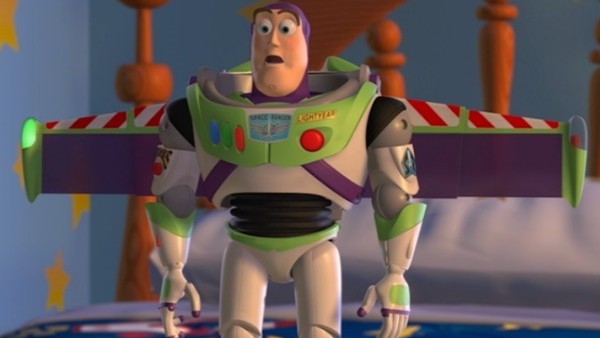
Toy Story 2 was very nearly wiped from existence. We were very nearly deprived of one of the finest sequels ever created, and Pixar very nearly lost an important piece of their legacy. Just let that sink in for a second.
The movie had been in production for around two months when Larry Cutler - Pixar's former Technical Director - was browsing a file directory in which the assets for Woody were stored. Cutler refreshed the directory, and, to his horror, discovered there were less files than before.
He then checked the directories for Hamm, Rex, and Mr. Potato Head, and refreshed again. Suddenly, only Hamm remained. One of Cutler's colleagues, who saw what was happening, quickly picked up the phone, called the people working near the main server and told them to cut the power.
When everything was powered back up, only 10% of Toy Story 2 remained - 90% of it was lost.
This was accidental, of course. An employee had mistakenly entered a delete command at the root level of the Toy Story 2 project, leading to everything being wiped.
A mishap with backup tapes meant that Pixar couldn't even restore all the lost data, but luckily, as they scrambled for a solution - for weeks and weeks - a Pixar employee who had been working from home realised that she had the deleted data stored on a computer in her house.
Pixar were able to restore most of the work they lost and continue their work on the film - finishing it in time for release - and Toy Story 2 would go on to be a roaring success, earning more than five times its budget.
4. Test Audiences Hated Anchorman: The Legend Of Ron Burgundy So Much They Ended Up Saving It

Anchorman is one of the most quotable comedies ever made, and launched the careers of Will Ferrell and Adam McKay to unbelievable heights, but originally... the movie was awful.
Test audiences hated it - with a lengthy subplot about a group of extremists called 'The Alarm Clock' being a particular sticking point - resulting in the studio forcing McKay to re-evaluate his approach.
This led to a massive amount of reshooting and rewriting, with McKay removing the extremist subplot from the film entirely. This changed everything; almost half of the film was remade from scratch, and this is the final version that was released in cinemas in 2004.
And, of course, everybody loved it. The film that Anchorman ended up being is virtually unrecognisable when compared to the film that it very nearly was, and there were so many scenes cut that they made a direct-to-DVD movie - Wake Up, Ron Burgundy: The Lost Movie - out of everything on the cutting room floor.
Test audiences saved the day, and we have that select group of people to thank for helping shape one of the funniest comedies of this century.
3. Vin Diesel Being An Ass Couldn't Stop The Fate Of The Furious
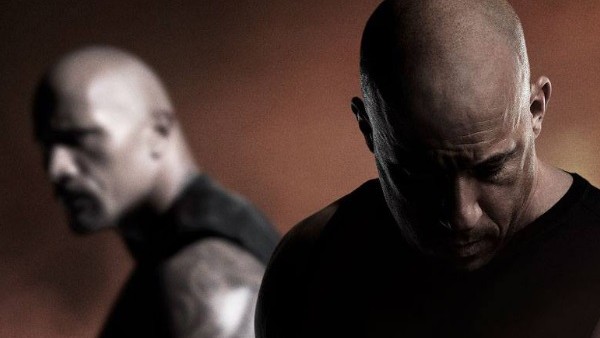
An eighth film in the mega-successful Fast and Furious franchise was always on the cards, but the road this movie took to the big-screen was bumpy, to say the least.
Problems with the movie began in mid-2015, when Jeffrey Kirschenbaum, co-president of production at Universal and one of the spearheads of the Fast series, left the studio to form his own company.
Kirschenbaum had been an integral part of the franchise for many years, so his departure further complicated an already prevalent issue - the director search.
Universal originally wanted James Wan (who helmed Furious 7) to return, but he jumped ship in order to make The Conjuring 2. The studio then moved to snap up Justin Lin (who directed four films in the series) but he was busy with Star Trek Beyond.
Universal then moved back to Wan, offering him an insane amount of money to direct the film for them, but he declined, with the pressure of helming Furious 7 having exhausted him, and another problem said to be influencing his decision to step away; working with Vin Diesel.

Diesel was reportedly a pain to work with and would often summon filmmakers to script sessions late at night. This behaviour put Wan off the project and prolonged the director hunt even further.
Even when F. Gary Gray signed on and things appeared to be going smoothly, reports of a fallout between Diesel and co-star The Rock began to surface, with the latter not happy with the way the former behaved onset.
Many assumed that this would impact the quality of the final film - Vin Diesel was also a producer, and so could have used this position to influence The Rock's involvement in the final cut - but luckily, none of these issues were visible onscreen.
The Fate Of The Furious sped its way to over $1 billion in sales and another critically acclaimed entry in the never-ending franchise. Expect this vehicle to be running for quite some time.
2. World War Z's Ending Is Completely Changed

Like Rogue One, World War Z was forced to reshoot and rework its entire third act, with the difference being that nobody expected the latter to be any good.
So when it was quite good (and made over $500 million worldwide) it came as a complete shock.
World War Z's many problems can all be traced back to one silly decision; the choice to start shooting the film without a finalised script. This resulted in a rushed ending that was missing a lot of the footage that it needed, causing studio executives to order reshoots totalling almost an hour of extra material.
These reshoots saw the film's budget increase to around $190 million, a staggering $65 million more than initially anticipated.
Some of the problems with the third act included the fact that Brad Pitt's character was mowing down zombies like an action star, which was completely at odds with the way the first part of the movie presented him, as an everyday family man.
The film was changed to fix this problem, as well as lowering its political undertones and making it more your typical summer crowdpleaser.
The increase in budget and numerous issues led Paramount executives to think that there was no way the movie would make its money back, so imagine their surprise when it opened to $66 million and a 63 Metascore. Not too shabby at all.
1. Edgar Wright Spends A Decade On Ant-Man Before Another Director Gets To Make It

The story of how Ant-Man finally came to be might just be one of the most complicated, extensive tales in filmmaking history.
An Ant-Man adaptation has been circulating since the 1980s, with comic-book legend Stan Lee beginning the push to bring his kooky creation to the big-screen, but Ant-Man truly gained traction when Edgar Wright became involved with the project in the early 2000s.
Back then, Wright, along with writer Joe Cornish, crafted a treatment for the Ant-Man movie and brought it to Artisan Entertainment (who, at the time, had a movie production partnership with Marvel), but were turned down after Artisan requested something more family-friendly.
Wright and Cornish would later mention their interest in Ant-Man to the Kevin Feige, and an Ant-Man movie was officially announced in 2006 - nine years before it actually came out.

And then, for the next few years, we heard basically nothing. While promoting Hot Fuzz and Scott Pilgrim vs. The World, Wright would mention that he's still tinkering with the script and that Ant-Man is still on the cards, but there were no major updates until 2012 when Wright confirmed he was still directing the movie (he even screened some test footage).
And then... it all started to go wrong.
In 2013, Feige stated that the script was being rewritten in order to bring it more in line with the rest of the Marvel Cinematic Universe, our first clue hinting at the creative differences that would later force Wright to leave the project.
Ant-Man was hit with issue after issue. Patrick Wilson joined the cast, but left shortly after. The film wanted to shoot in the UK but was unable to do so, so had to relocate to the U.S. And then, after several spats with Feige over the film's direction, Wright was removed from the project in May 2014.
Peyton Reed later came onboard and delivered a very good movie, but the shadow of Edgar Wright will forever haunt Ant-Man; what could have been may have been even greater than what we actually got.
Any other nearly-disastrous behind-the-scenes stories that we missed? Let us know in the comments below!