10 Behind-The-Scenes Movie Stories Better Than The Actual Plot
Sometimes bad movies have great stories behind them. Really bad films therefore have great stories.

Have you ever watched a movie and thought, "There was so much wrong with that," or, "Those roles were totally miscast?" Maybe you only made it part way through a film before cursing it in an ancient tongue and walking out of the theater?
A lot of good movies have awesome stories behind them. Things like Akira Kurosawa turning down actor Tatsuya Nakadai to play the role of Unosuke in the film Yojimbo, only to later admit he'd never seen Nakadai. After seeing Nakadai in a film Kurosawa said, "Hey... what do you think of putting Nakadai in Yojimbo?" But Yojimbo is a fantastic movie.
No, no, my friends - what we are looking at are movies that will not be looked back upon fondly. These are not your Terminator 2s, your Apocalypse Nows; it's not even your Three Kings with George Clooney getting in a fistfight. This is the list that has an Uwe Boll film in it - so let that make your mind wander to what kind we've got here.
Perhaps if the drama behind the scenes hadn't been so high, the movies could have been better? Some folks may even like a few of these films - but trust me, if they'd filmed the work behind the scenes it would have made an even better movie.
10. The Actors Commission Their Own Script - MiB: International

The spin-off to the wildly varying franchise of Men in Black was set to be a huge success. Right up until Sony's Executive VP of Production left the studio and was not replaced. This apparently left the production without a mediator to stand between director F. Gary Gray and the infamous Hollywood super-villain Studio Interference. Producer Walter Parkes had a very different vision of the film than Gray - very different from the vision that stars Chris Hemsworth and Tessa Thompson had as well. His interference changed the script they had signed on for so extensively they hired their own dialogue writers to join the crew.
The original script called for social introspection about topical issues such as immigration reform. And it even had a pop-star alien that would resemble The Beatles and merge into a single entity in the climactic final battle. But Parkes' rewrites changed the film into what Rotten Tomatoes calls "amiable, yet forgettable."
Gray and Parkes argued virulently about everything on set and in post production, even the color correction of the film. Gray tried to leave the production numerous times, but Sony convinced him to stay to see the film through to completion. In the end both Gray and Parkes submitted their own cuts of the film for review and the studio ultimately went with what Parkes had to offer.
9. The Whole Production Was At Sea - Waterworld

It has been said that Kevin Costner makes one type of movie: Movies that Kevin Costner likes. Well, we're not totally sure even Costner liked Waterworld, certainly not filming it - since he almost drowned on at least one occasion.
One of the biggest issues with Waterworld was the set: It was filmed on an artificial atoll off the coast of Hawaii. A day consisted of all the actors getting into costume and makeup and then the cast and crew had to be boated from dry land to the atoll to film for a few hours. Then they were all boated back to land for lunch, then boated back out for the next set of filming. It was a logistical nightmare that caused the budget to balloon to nearly double its original amount.
The other big issue on set was Kevin Costner. Costner was a constant pain to the director with what was termed 'backseat directing'. Eventually the director, Kevin Reynolds, left the film entirely and Costner had to direct it himself, calling Joss Whedon to help with last-minute rewrites to the script. Whedon referred to it as "Seven weeks of hell," wherein he just followed Costner around and had to hammer Costner's train-of-thought ideas into the script.
8. The Director Thought He Was Playing SimCity - Heaven's Gate

In the '70s, after making the films Thunderbolt and Lightfoot and The Deer Hunter, Michael Cimino was the new up-and-comer who could do no wrong. Cimino had written the script for Heaven's Gate in 1971, but no one wanted to touch it. Now, with newfound fame and success, he was given a budget equivalent to almost $41 million in today's money. Disastrously, though, he was also given carte-blanche and wound up costing over $111 million, when adjusted for inflation. Based on the Johnson County War, the film is set in the 1890s and stars an ensemble cast of A-listers.
Cimino did all kinds of insane things: He intricately designed a road, only to not like it, and order it to be totally dismantled and moved three feet back; he had a whole tree cut apart and reassembled on set; and even built an entire underground irrigation system to maintain vivid greenery on the stage.
Cimino managed to film 220 hours of footage, costing the studio $200 thousand a day. He delayed filming to wait for the right cloud to pass by! The production took so long John Hurt was able to depart, film the entirety of his scenes for David Lynch's The Elephant Man, and then return to finish filming his scenes for Cimino. Stars Jeff Bridges and Kris Kristofferson actually got so bored during filming they decided to start a band together.
7. Hungarian Officials Thought They Were Terrorists - World War Z

World War Z made several disappointing missteps... opting for fast zombies, deviating wildly from the original novel, casting Brad Pitt. Okay, maybe the last one isn't usually a misstep, but in this case it served to complicate the production immensely.
Damon Lindelhof and Drew Goddard were brought in to do massive rewrites late in production and were given days to fix a script they claimed would take "months of work". By this time Brad Pitt and director Marc Forster were no longer on speaking terms and required a studio mediator to hold conversations. In the end, Pitt had control over the production and held the right of final approval and Forster was not brought back to direct the sequel.
Though it didn't seem to interfere with filming much, one of the more interesting stories occured whilst recording the climactic final shootout with the zombies in Russia - actually filmed in Budapest, Hungary. Dozens of assault rifles, handguns, and sniper rifles were shipped into Budapest only to be intercepted and taken by a Hungarian counter-terrorist unit who raided the production's warehouse. Apparently, someone had forgotten to get customs clearance for a small armory, and they also lied about the guns being dismantled - turns out they were fully functional.
After the Hungarian investigators couldn't identify who was to blame to hold criminally liable, they dropped the charges.
6. The Lead Actor Tried To Shoot Sean Connery - Another Time, Another Place
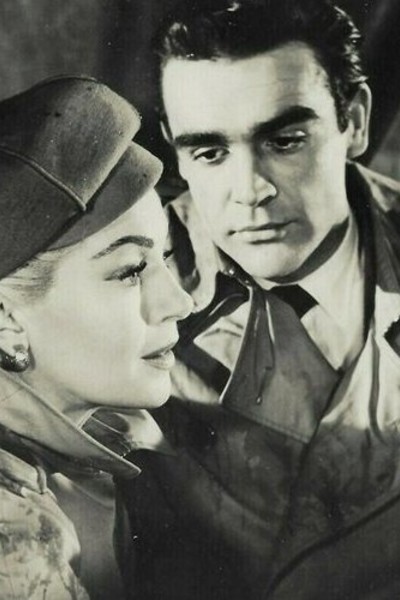
You know it's an old movie when Sean Connery plays the male lead and doesn't even get billing on the poster. Released in '58, it claimed to be "Introducing Sean Connery". The film was a vehicle for perennial beauty Lana Turner - one she needed, because she had recently suffered a series of flops and lost her contract with MGM studios and suffered her fifth divorce.
Here's where an enforcer for Mickey Cohen comes into the picture. Johnny Stompanato had a strange history with women, including converting to Islam while serving in China during World War II, in order to marry a Turkish woman. He abandoned her, along with their son, after moving back to the U.S. After another failed marriage, he started dating Turner.
During, filming Stompanato showed up on set and started arguing with a young Sean Connery - claiming that Connery was 'flirting with his broad'. Keep in mind that Stompanato was a Marine veteran who fought at Okinawa and Peleliu in the '40s. Also keep in mind that by argue I mean he pulled a gun on Connery.
Connery quickly reached out, ripped the gun from the noted mafia enforcer's hand and twisted his wrist hard enough that he ran away. Stompanato was banned from the set and shortly thereafter was stabbed to death by Turner's teenage daughter. The rumor at the time was that she stabbed him because he was beating Turner because of what Connery had done to him - resulting in Connery 'laying low' for a while.
5. Marlon Brando's Meltdown - The Island Of Doctor Moreau

H.G. Wells' seminal 1896 classic deserves the praise it gets. And it can work out in film, proven by the 1932 version called The Island of Lost Souls, which holds a 96% fresh rating on Rotten Tomatoes. But the 1977 version starring Burt Lancaster didn't pan out well. And the 1996 version starring Val Kilmer and Marlon Brando? A veritable shipwreck.
Of course, any story of Brando has to have the fact that he didn't want to learn his lines - rather he had them fed to him through an earpiece. Things became even more difficult when his daughter, Cheyenne Brando, tragically committed suicide.
The cast and crew were constantly at each other's throats, especially Val Kilmer, who cemented a reputation as toxic and hard to deal with from this film, thanks in part to getting served a divorce as soon as he got on set.
By the second day of filming, after numerous delays, co-star Rob Morrow was so beset by the tension and hostility that he called the chairman of New Line Cinema and tearfully begged to be let go from the movie. On day three, the director, Richard Stanely, was fired - partly for not keeping Brando and Kilmer under control. Female lead Fairuza Balk actually left the set in protest and made it 2,500 km before her agent convinced her the studio would ruin her career if she didn't return. And that, folks, was all within the first week of shooting.
4. The Director Considered Assassinating His Lead - Fitzcarraldo

Directed by Werner Herzog, this film was the story of an Irishman in Peru who makes a lot of enemies trying to monopolize a rubber plantation. After the first star contracted dysentery and bowed out of the film, Herzog called in actor Klaus Kinski. He and Kinski had worked together an on an earlier movie, Aguirre, the Wrath of God, that likely could be on this list itself, which included a time when Kinski fired three shots into a nearby tent, upset by the noise of card-playing extras, and actually shot the finger off one of them.
If we're ignoring that one in favor of this one, you know it's got to be good. In Fitzcarraldo, the titular character wants to transport a ship over a hill to put it on a different, nearby river. The actual Fitzcarraldo performed this by cutting a 30-ton ship into pieces and reassembling it in the other river. But no - Herzog, later calling himself the 'Conquistador of The Useless' - decided to, instead, move an actual 300-ton ship, in one piece, over a hill.
As one might expect, neither Kinski or Herzog were popular. Herzog was initially friendly with the locals - one of the local chieftains even offered to murder Kinski - a suggestion Herzog actually considered before deciding he needed him for the film. But thanks to violations of tribal laws and Herzog's careless decisions resulting in several local tribespeople being killed or maimed, the locals actually burnt down the set and quit the film.
3. Nobody Knew What It Was About - X-Men: Dark Phoenix
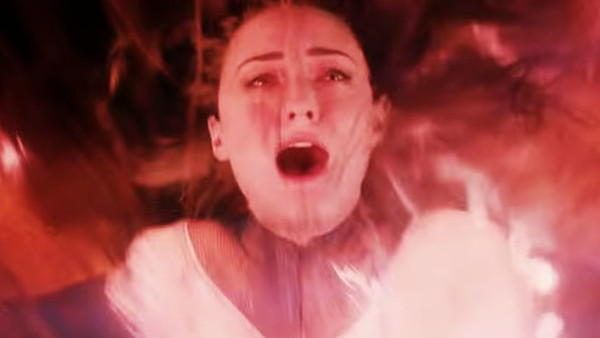
The X-Men series hit a low-water point with 2017's X-Men: Apocalypse and executives walked away feeling that the movie's problems were entirely constrained to flukes, and too many bangs and flashes. In earlier films, when perennial problem-child Bryan Singer refused to show up on set, Simon Kinberg stepped in to help direct - and now he was the sole director for Dark Phoenix.
After the whole movie was filmed they knew reshoots would be needed - but everybody expected this. Acclaimed Kinberg project X-Men First Class had extensive reshoots because half the third act wasn't even written, yet when filming wrapped. Dark Phoenix's release was moved to the following February, but quickly moved further back to June. Apparently this is because James Cameron wanted the February slot for Alita: Battle Angel, fearing too much strong competition otherwise.
Insiders say that the marketing crew had little direction on how promote the film because they weren't sure if it was a franchise end, a new beginning, or what it was. As a result of the poor marketing the film wound up being bested in awareness by Avengers: Endgame - by this time having been out for over five weeks - and the Elton John biopic, Rocketman. As a result longtime X-Men Producer Lauren Donner announced via Twitter that she "Had zero, nothing to do with Dark Phoenix." Fox, to its credit, shot back stating that she didn't have anything to do with the more successful films, either. Ooo, executive drama.
2. Camels And Kidnappings - Ishtar

Elaine May had helped Warren Beatty to write Heaven Can Wait and Reds, the latter of which she went uncredited for. As such, Beatty felt indebted to her, so he helped produce and star in Ishtar - the story of a pair of incompetent musicians who get caught up in a war in Morocco.
Foolishly the movie was filmed on location in Morocco, within the confines of the actual Sahara Desert, itself - during a time when Morocco was beset by rebel insurgents. Likewise, Palestinian paramilitary groups were operating in the area and were said to want to kidnap co-star Dustin Hoffman, a famous Jew. The dunes they were filming on had to be swept for landmines daily before they could film anything.
One of the most famous stories of Ishtar involves a production assistant being sent to buy a blue-eyed camel. He had found one, but felt it was overpriced. He went searching for others, intending to find a cheaper one, but only then learned that blue-eyed camels are exceedingly rare. By the time he made it back to the original seller, the merchant had butchered the creature and eaten it.
It certainly didn't help matters that Beatty, Hoffman, and May were all perfectionists and numerous takes were done for each scene creating a deluge of footage to sift through in post-production. The trio were also said to feud constantly. Ultimately, the film would be considered one of the worst ever made. The resulting stress ruined the friendship between May and Beatty.
1. Two Words: Uwe Boll - Alone In The Dark
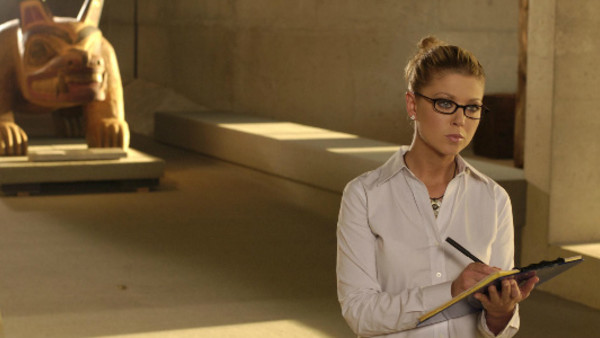
Here's the Uwe Boll story you were promised, and it will not disappoint - unlike an Uwe Boll film.
Let's set the scene: Post-production was still undergoing on Boll's film House of the Dead, arguably one of his best films with a 3% on Rotten Tomatoes. Boll decided he wanted to make a film based on the classic game Alone in the Dark.
Rights are purchased, writers are brought in to fashion a treatment - writers familiar with the game franchise. All the while, they keep checking out Boll's earlier films, which he had proudly sent them on VHS (this appears to have been in 2004, mind you). With each round of e-mail correspondence between them and Boll they became increasingly frustrated - what was a game about atmospheric tension and being 'alone in the dark', Boll wanted to turn into an action-packed schlog.
The writers asserted that Boll specifically told them to steal ideas from other movies - citing the fact it also seemed to be a motif of his earlier films. One writer, Blair Erickson, related that Boll's movie Sanctimony is just a rip-off of the movie Se7en, but as an "inept, half-assed, cliched pile of confusion".
In the end, Boll secured Christian Slater, Tara Reid, and Stephen Dorff to star in a film that scored a whopping 1% on Rotten Tomatoes. Erickson's article about working with Boll is far-and-away better than any of Boll's actual films.