10 Best Aussie Road Rage Movies

The fury of Down Under.
€œAustralia lends itself to the road movie,€ reflects the author of a forthcoming new book on Aussie/Kiwi cult and genre movies. €œThe cities and the outback are so sparsely populated. The road-movie scenery is so much more iconic than any country I can think of.€ He might have added that the particular road movies the Antipodeans produced have often carried violent overtones €“ whether the brooding menace of murder committed in the desolate outback, or the post-apocalyptic pile-ups of the MAD MAX series. As Australia€™s Road Warrior returns to the screen (in May 2015), and Tom Hardy hits FURY ROAD, let€™s take a historical trip down those brooding byways that belie the laidback nature of our €˜ocker€™ cousins... Long-time contributor to THE DARK SIDE horror mag and co-producer of THE DEVIL€™S BUSINESS, Sean Hogan€™s modest-but-macabre 2012 indie feature, Jay Slater has set himself a mission down under. He€™s writing a book reviewing €œevery single horror, cult and softcore sex movie from the very first commercial Australian films to the present day€, principally because no one€™s taken such a completist approach before. But there€™s also a degree of personal obsession: €œWhen I was young I started watching Australian horror movies, aged ten, and they all had their own unique template: PICNIC AT HANGING ROCK, MAD MAX, they really drew me in, their individual sensibilities.€ So he€™s one of two writers joining us on our uneasy cinematic road trip to the outback €“ though he€™s unsure how much of a subgenre this really is. €œHow many road movies have the Australians made? Not that many. You€™ve got MAD MAX, you€™ve got STONE, MIDNITE SPARES, I€™m really hard pressed to think of any others.€ Our jovial disagreement is fuelled by the definition of a road movie itself. Is it a film focusing on car journeys, or is it an action movie crammed with car chases? From this viewer€™s point of view, the uniqueness of the Australian road movie is that it takes you somewhere remote, desolate and picturesque. Whether you follow the protagonist€™s physical journey all the way is a moot point, but it€™s taking you to territories you may never visit in your own life. And that applies psychologically too €“ for in what we€™ll glibly label the €˜road rage€™ movie, the rage is as integral as the road...

10. Wake In Fight (1971)

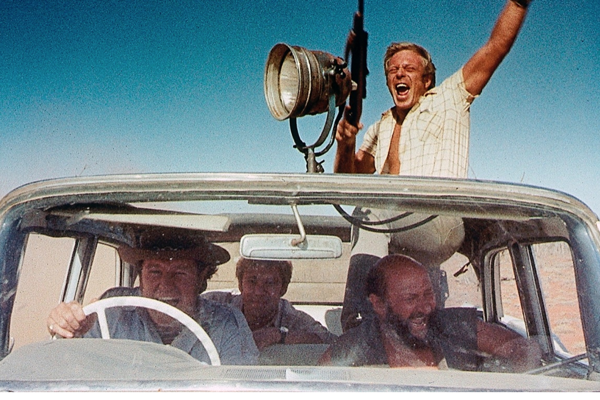
Canadian director Ted Kotcheff chose a hardcore slice of Aussie life to adapt for his debut feature. Something of an internationalist, Kotcheff would later direct for BBC1€™s social realist Play For Today in the 1970s, and introduce Stallone€™s John Rambo to the world in FIRST BLOOD (1982) €“ the more realistic Viet vet outsider of David Morrell€™s novel, rather than the one-man army of later films. But all these career quirks pale against his adaptation of Kenneth Cook€™s 1961 Australian bestseller. In its aesthetic depiction of the outback, WAKE IN FRIGHT is an art movie that€™s too hard-edged for sensitive souls. Based on author Cook€™s travels around the Queensland and New South Wales regions, it tells the story of John Grant (Gary Bond), a mild-mannered schoolteacher who dreams of becoming a journalist in England. Instead he goes to work in the small town of Tiboonda, making a long stop-off en route at the mining town of Bundanyabba. There he tries to fit in with the ocker culture of constant beer drinking and outback €™roo hunts, a lifestyle which sucks him in like a recurring nightmare. The adage that inspired the title, €˜Wake in fright and fear the Devil,€™ is less a piece of local folklore than a metaphor for waking from uneasy sleep and facing a savage hangover. Jay Slater, who describes WAKE IN FRIGHT as, €œBrutal, sad, tender and poignant... Australia€™s greatest film,€ disputes my including it here. €œWhy is it a road movie? You€™ve got these guys in a pickup truck driving out for about four or five minutes.€ But the rural purgatory where they desperately whoop it up is like nowhere many of us will ever visit. More contentiously, he claims, €œIt€™s one of the best Australian horror movies,€ justifying it thus: €œYou€™ve got this guy who can€™t escape from this town which is a nightmare for someone who doesn€™t drink, and he€™s going to die of alcoholism. What€™s not horrific about it? That is hell, for him. The only way he can escape is by committing suicide.€ But we€™re in agreement on the shock of the film€™s authentic kangaroo slaughter footage. Not only are they shot but their tails and extremities are cut off. As the film€™s producer explained when putting it forward for UK certification, €œwe decided to send the camera unit out with professional kangaroo hunters, who are licensed to shoot the animals and who kill every night thousands of kangaroos for commercial gain... both the director... and I feel that this film might wake up the Australian conscience to what is going on in the outback today...€€€œIt€™s just unpleasant,€ demurs Slater, otherwise a champion of the film. €œBut from the credits it€™s all authentic kangaroo hunting, it€™s not illegal. But I€™d be quite happy to see that footage cut out really, it€™s not necessary. It doesn€™t need that sensationalism.€ €œI love WAKE IN FRIGHT, I€™ve read the book and I€™ve got the film,€ says Western Australian horror fiction author Anthony Ferguson, who will enlighten us later about the dark elements of Oz psychogeography. But for him the most disturbing moment isn€™t the mondo-style animal slaughter. €œI thought the scariest thing was the homosexual-type scene with Donald Pleasance.€ Veteran Brit horror and character actor Pleasance plays Doc Tydon, who introduces himself thus: €œI€™m a doctor of medicine... I€™m also an alcoholic. My disease prevented me from practising in Sydney. But out here it€™s scarcely noticeable.€ Schoolteacher John will realise everything€™s gone much too far when he wakes from a drunken jag to find he€™s been anally raped by Tydon. I first saw WAKE IN FRIGHT (under its 70s X-certificate title OUTBACK) as support to a Nick Cave performance in 1989, epitomising the darker side of the Australian culture he€™d left behind and would revisit on a mystical level in his screenplay for THE PROPOSITION. But exposing my wife to the €™roo slaughter scene caused a minor marital spat...

9. The Cars That Ate Paris (1974)

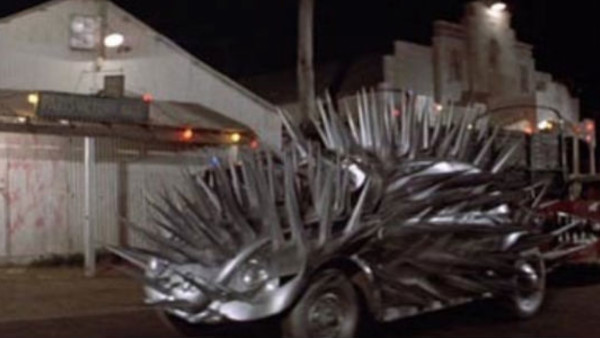
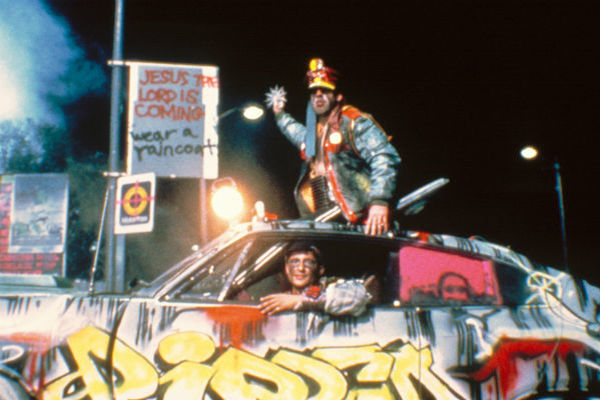
As a kid in the mid-1970s, this writer saw a strange vision in the street. I€™ve been haunting London cinemas, bookshops and pubs for longer than most of you have been alive, and experienced a few odd pop-cultural moments along the way. This one caused a double-take, but I knew instantly what it was: on the back of a trailer was a Volkswagen like a porcupine with deadly metal spikes. I€™d been reading in World of Horror magazine about THE CARS THAT ATE PARIS, and knew that the homicidal-looking Herbie was the weapon in a fight-back in a murderous outback town. It must have been on its way to that autumn€™s London Film Festival, and had presumably been driven in after modification at an Essex car plant. THE CARS THAT ATE PARIS was the first feature by Australian auteur Peter Weir. An uneven black comedy, its storyline of a small backwater (actually Sofala in New South Wales €“ there€™s not actually a Paris, Australia in the sense that there€™s a Paris, Texas) that rigs car accidents in order to loot the victims, despatching any survivors off to lobotomy wards, is similar to the grim humour of contemporary British piece HORROR HOSPITAL (1973). Weir continued his career with the more subtly eerie PICNIC AT HANGING ROCK (1975) and THE LAST WAVE (1978), both of which shared the eerie air of his debut, before going on to work with a post-MAD MAX Mel Gibson and migrating to Hollywood. Predictably, perhaps, Oz genre film buff Jay doesn€™t see Weir€™s automotive carnage as a road movie: €œIt focuses on the car, of course, but the movie is basically set in a static town with the car playing second fiddle as a plot device. The only road part is the beginning of the film, where they attract car accidents to the town. Then, I don€™t really know where these people come from, but there€™s a showdown.€ Indeed, the idiot savant-ish main character of Arthur (Terry Camilleri) €“ whose brother was killed in a staged crash but who€™s been adopted by the town mayor €“ finally leaves town when a phalanx of youthful malcontents raise havoc in their customised vehicles, including the spiky VW. The action scenes are brief, though effective, but it was as much the movie€™s poster that inspired Roger Corman€™s New World Pictures to produce their own piece of auto-carnage, DEATH RACE 2000 (1975), as the film itself. In retrospect, Weir saw THE CARS THAT ATE PARIS as a vision partly realised: €œI never took it as far as I wanted to, the feeling of a country in some sort of economic chaos. There were to be troops in the countryside, anarchy in the air, odd radio reports of massive road accidents€ It€™s interesting when you look at MAD MAX and MAD MAX 2, because George Miller said the same thing: that in the first film he got done what he could, but in the second he was able to put in all the texture he€™d wanted to in the first.€

8. Stone (1974)

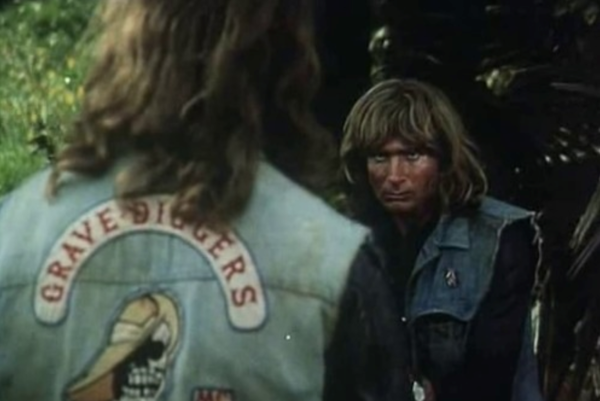
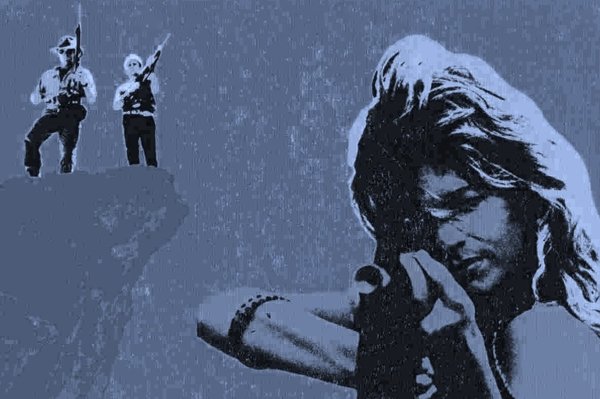
STONE is that rarity in Australian cinema €“ indeed, it€™s almost a one-off €“ the Oz biker movie. A down-under variant on US 1960s biker exploitation movies like HELLS ANGELS ON WHEELS, THE WILD ANGELS and SATAN€™S SLAVES, it was scripted and shot on the roads around Sydney by TV actor Sandy Harbutt for reputedly well under half a million dollars. €œIt€™s very similar,€ says Slater of its relation to the films that inspired it. €œIt has an Australian flavour: hardcore drinking and fighting, but it€™s very straight-laced in comparison to a lot of American biker movies in that respect.€ The eponymous Stone, as played by director Harbutt€™s fellow TV thesp Ken Shorter, is an undercover motorcycle cop who finds his way into the Gravediggers bike gang. He gains the trust of gang leader The Undertaker (Harbutt) as he€™s there to investigate the murders of members of the group. Via some plot convolutions and violent scenarios, it transpires that rival gang the Black Hawks have been enlisted as killers in a regional political conspiracy. €œIt€™s a phenomenal movie in Australian film history,€ says Slater, €œbut it didn€™t really make the grade outside Australia. Today it€™s highly recognised, and a friend of mine, Richard Kuipers, directed the 1999 documentary STONE FOREVER. He was acquiring movies for SBS, the special foreign-language TV channel. Showing stuff like PROFONDO ROSSO* in the Italian language, widescreen, with Italian subtitles. Before DVD these films were highly sought after. He showed STONE in widescreen uncut €“ because the first version shown in the UK was cut by the BBFC, missing most of the violence. €œFor him it was a great thing €“ he interviewed every single surviving member of the cast and crew, and visited the locations. For them STONE is a unique film €“ I think it€™s flawed, it€™s quite dull, the lead actor€™s very bad, it€™s not a great movie. But to the day the film is beloved of the Australian cult film circuit. I€™ve been told the Australian biker scene is phenomenal compared to what we have over here , it€™s a big thing. But is it a good movie? Not really. I€™ve got another one in the book: SIDECAR RACERS, the motorbikes with the sidecars attached, that€™s not very good either. The whole thing with the car and the bike lending itself to Australian cinema is very limited. The only really iconic movie is MAD MAX, that really brings it out.€ Despite disagreeing with STONE fans like Quentin Tarantino, does Slater think it was an influence on MAD MAX? €œThat€™s a good question, that€™s one George Miller would have to be asked €“ but I€™d say yes as an educated guess.€ Indeed, several years later, biker character actors Hugh Keays-Byrne and Roger Ward (Toad and Hooks in STONE) would respectively show up as gang leader Toecutter and police chief Fifi in MAD MAX €“ in a world gone out of control, where the only good biker really was a dead biker.

7. Mad Max (1979) / Mad Max 2: The Road Warrior (1981)

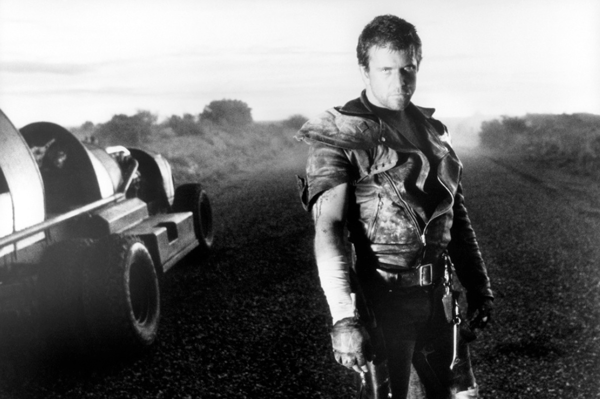
It was a rare event for an Australian action movie to showcase at the Cannes Film Festival €“ indeed, it was a first. But in 1978, it was the international film industry€™s first acknowledgement that first-time director George Miller, a former medical doctor from Brisbane, had invented an incredibly effective new action genre all of his own: the post-apocalyptic road/action movie. €œIt€™s stylish but it€™s also incredibly violent,€ appraises Slater of how the film€™s hybrid elements gelled like aspic. The style comes from playing the film€™s relatively low-budgeted motifs for all they€™re worth: tight-fitting leather cop uniforms; biker apparel; the high-powered Interceptor patrol vehicle rode by highway cop Max Rockatansky (Mel Gibson) and his partner, Goose, and the now-iconic, black-painted Pursuit Special that Max makes his own; the hair-raising, auto-destructive (literally) stunts that lay waste to cars and bikes in a choreography of metal carnage; the Bernard Herrmann-influenced orchestral score by Brian May (not the Queen guitarist), who Miller hired after hearing his music for the Oz horror flick PATRICK (1978). As for the violence, it was pretty relentless for its time; informed less by splatter-movie gore than by Miller€™s own observation of real injuries in the hospital emergency room. The Acolytes, the movie€™s motorcycle gang, are deeply depraved, raping a young couple they waylay on their backroad stalking ground (filmed on location in Queensland); the Goose, Max€™s pal, is burned to a crisp after the gang trap him in his crashed car €“ the shock of his third degree-burned hand reaching from his hospital bed provides a jolt; but all this is just a prelude to the outrages visited upon Max€™s wife, Jessie (Joanne Samuel) and their infant son. €œThe lead-up to the retribution is excellent but it€™s not a perfect film,€ opines Slater of the powerful revenge motif that turns Gibson, a blue-eyed 22-year-old at the time, into a truly mad Max. €œIt€™s a film of three segments: it has a very powerful beginning, with the undercurrent of the collapse of Australian society.€ Even the great unnamed disaster looming in the background is a phantom that haunts the highways. Conjecture about the crumbling society of MAD MAX sometimes suggests the aftermath of nuclear war, but things are not that far gone: the Main Force Patrol fights to maintain some semblance of law and order, still managing to pay employees Max and Goose; the Acolytes have legal representation, so the courts are continuing to work. Instead, as Miller€™s co-screenwriter James McCausland later confirmed, the inspiration was the oil crises of the early 70s: €œLong queues formed at the stations with petrol €“ and anyone who tried to sneak ahead in the queue met raw violence.€ It was a theme developed further in the film€™s truly post-apocalyptic sequel. €œThen you have the retribution at the end, with the guy being handcuffed to the car,€ author Slater observes understatedly of MAD MAX€™s blood-and-thunder climax. €œIt suffers from its middle section which is just padding really €“ his married life, etc, moving into the countryside with his family. It€™s quite flawed in that respect, but it works.€ For this writer€™s money, the slightly pedestrian domestic retreat scenes set us up for the vengeful crescendo that follows. Max is a conscientious young cop who fears he€™s starting to enjoy being part of the €œrat circus€ and wants out; Jessie is an endearingly real, frizzy-haired young woman, far removed from a Hollywood starlet. It€™s devastating when Toecutter and the gang lay waste to their lives, cutting down mother and child in a scene that€™s still shocking today.
Stephen King once remarked that movies like STRAW DOGS, DIRTY HARRY and DEATH WISH could bring out the blood-lusting fascist in even the mildest liberal. MAD MAX has that in spades, the act of climactic vegeance becoming both the film€™s raison d€™etre and the point at which it ends. As rapacious Acolyte Johnny whines at the choice Max has left him €“ he can saw through his own leg or else die when the car he€™s cuffed to blows up €“ a truly maddened Max drives off into an uncertain future. But society will keep on heading down the road to barbarianism. MAD MAX did incredible business in most cinematic territories, to the extent where its budget-to-revenue ratio made it one of the most profitable films of all time. A sequel seemed inevitable €“ though George Miller did consider directing FIRST BLOOD (the gig which went to WAKE IN FRIGHT director Ted Kotcheff). But with MAD MAX 2 €“ often referred to as THE ROAD WARRIOR, its US title €“ Miller and his filmmaking partner Byron Kennedy switched the focus from personal revenge to the tribal wars of an auto-crazy world. €œWhen Part Two came along it was the ultimate car-chase movie of all time,€ says Oz buff Slater. €œEven now . I think the car chase at the end lasted 20 minutes. It€™s phenomenal.€ In many ways as graphic as its predecessor, THE ROAD WARRIOR has a pulp cartoonishness that becomes a pure joy as Miller ups the ante. €œIt€™s a comic-book sensibility: incredibly violent, fast and furious, and really fun,€ acclaims Slater. Though some of the violence was trimmed to allow younger teens to view the film, its breathless, hyper-kinetic movement doesn€™t leave a sense of anything missing. The visual aesthetic is not just post-apocalyptic but post-punk, with this movie€™s predatory motorcycle gang (led by a comic-book archetype called The Humungous) resembling a bunch of semi-mutated, shaven Mohawks rather than Oz bikers. The look influenced a whole school of pre- and post-cyberpunk science fiction, influencing the comics that MAD MAX 2 is often compared with (think of Tank Girl). €œIt€™s a very different movie in that respect €“ the first is more built upon his personal lifestyle, his marriage and the retribution. This is all-out violence A-Z in 90 minutes, but it€™s great for what it is.€ €˜What it is€™ is a relentlessly moving depiction of gang warfare over depleted oil supplies; minimal dialogue and maximum action. The deepest sense of personal pain comes from the mutoid punks killing Max€™s trusty companion dog, but we€™re clearly meant to stay on the ride and avoid too much pointless moralising. €œIt€™s an extremely violent car film without one touch of CGI, or computer tomfoolery,€ notes our impressed Oz correspondent €“ and some of the most frenetic action scenes give the sense that a stuntman could have been seriously hurt, if not killed outright. But of course, computer graphic imagery simply wasn€™t in use at the cinema yet. In his popular 1981 book Cult Movies, an impressed Danny Peary wrote of the original MAD MAX: €œif Australian filmmakers began churning out similar violent, futuristic car-motorcycle films full of spectacular chases and crashes... it could be the start of an international craze equal to that caused by Italian westerns and Chinese kung fu movies...€ Jay Slater, a spaghetti-western aficionado, gets the aesthetic link: €œBoth of those movies are very beautiful to look at €“ to a degree they lend themselves to that spaghetti-western template.€ It€™s a beauty born of desolated locations imbued with violent action €“ a kind of pulp art, though Miller claimed the films of Kurosawa, rather than comic books, as his inspiration. As the embattled tribe that Max helped save moves on to found its own settlement, the hardened shell of a man retreats to the wilderness, eulogised on the soundtrack by the Feral Kid (a once-mute member of the tribe) as the archetypal hero, a living myth. Aside from a couple of Aussie misfires (detailed here) and post-apocalyptic Italian knock-offs like AFTER THE FALL OF NEW YORK (1983), which drew equal inspiration from John Carpenter€™s ESCAPE FROM NEW YORK (1981), MAD MAX 2 remains almost the sum total of the new genre Peary was anticipating.

6. Road Games (1981)

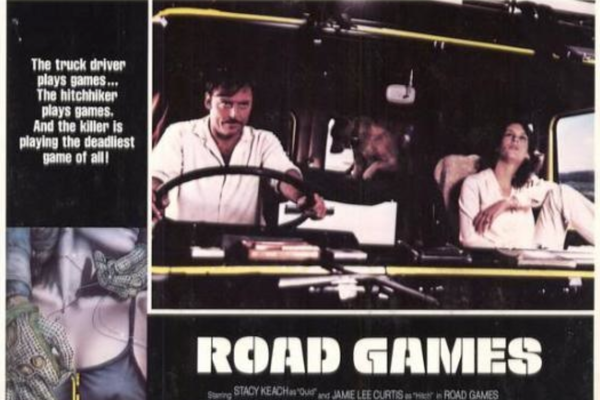
There€™s a killer on the road, his brain is squirming like a toad... but it ain€™t meat truck delivery driver Stacy Keach. Or at least we don€™t think it is, due to the Hitchcockian manipulations of director Richard Franklin. Franklin had debuted with Oz horror cult-movie PATRICK, while ROAD GAMES would sell him to Hollywood as helmsman of a full foray into Hitchcock territory: PSYCHO 2 (1982), which did the previously unthinkable and turned an untouchable black-and-white classic into a short franchise. €œThe actors, Stacy Keach and Jamie Lee Curtis, are fantastic,€ notes Oz-phile Slater of the film€™s lead. €œRichard Franklin€™s got a very good visual eye; I enjoy the games they play with each other and the sexual chemistry. But really, you€™re just watching a guy in a truck.€ Well, maybe just slightly more than that. Though the film sometimes plays like an Antipodean variation on US road movies like EASY RIDER or FIVE EASY PIECES €“ Keach€™s character, Quid, picks up eccentrics who have little to do with the plot €“ rather than any kind of horror movie, it€™s driven by our knowledge that a sex murder has occurred. One of Quid€™s fellow truck drivers, at first unseen, picks up a young woman at a truck stop who he strangles as she plays the guitar naked in a motel room. The dramatic tension for the rest of the film is fuelled by the interplay between Quid and his own pickup, Pamela (Curtis), an American tourist from a prominent family. Will she fall victim to the killer? Or will Quid unjustly take the rap for the other driver€™s crimes? The US stars of what is essentially an Australian road movie were there at the behest of the producers, one of whom, Bernard Schwarz (real name of Hollywood star Tony Curtis), had signed up to the film as a vehicle for his daughter Jamie Lee, then not long out of HALLOWEEN and HALLOWEEN II. €œThey pick up a guy in the outback and there€™s a very lacklustre car chase in a town,€ describes an underwhelmed Slater, €œand that€™s it. It ends. I€™ve expended all this time to watch this very flawed finale.€ In fact the absolute endnote is the discovery of human body parts in Quid€™s frozen meat trailer €“ given that we already know the other driver is a sex murderer, was the Keach character targeted for a frame-up or is there more than one killer on the road? But our Oz correspondent sees the late Franklin €“ who died in 2007, after failing to achieve his potential in Hollywood and returning to Australian cinema €“ as overrated: €œThe same with PATRICK: it€™s not a very good film but it€™s beloved to Australia. This guy is comatose, virtually a vegetable, and everyone raves at the ending when he jumps out of the bed €“ brilliant, fantastic, bravo! They€™re doing a remake and I just don€™t get it.€

5. Mad Max: Beyond Thunderdome (1985)

The film the producers allowed not to be called MAD MAX 3 is a step further down the road of apocalyptic SF. Mel Gibson, though not visibly much older than in the 1979 original, is a bedraggled figure roaming the desert (filmed on location outside Sydney) for over 15 years now. That torn leather police uniform must be starting to reek, and there€™s no longer enough fuel to power his vehicle €“ his wagon now drawn by a camel, not previously noted as indigenous to the Antipodes. There€™s a sense of wonderment to BEYOND THUNDERDOME. Not as violent as either of the first two movies, its imagined societies of Bartertown and the desert home of the lost children€™s tribe being closer to the fantastic worlds of the original STAR TREK TV series, or even THE WIZARD OF OZ. The matriarch of Bartertown, rock singer Tina Turner as the statuesque Aunty Entity, presides over an improvised society where the only fuel left is methane harvested from pig waste. Surprisingly perhaps, Oz movie chronicler Slater, who loves MAD MAX and MAD MAX 2, thinks there was a whiff of pigsh*t about the whole enterprise. €œI tried to watch that three times,€ he laughs. €œThe third time, last Christmas day, I got round to reviewing it €“ which shows how much was going on for Christmas. It€™s an awful movie. Understandably, because when they were on location shooting George Miller€™s best friend died in a helicopter accident.€ Byron Kennedy was the co-originator of the MAD MAX series, creating the first story with Miller. MAD MAX BEYOND THUNDERDOME carries the dedication, €˜For Byron...€™ €œMiller could not direct the movie,€ claims Slater, €œhe only directed the action scenes, it was some other guy doing the movie. It€™s dull, it€™s pedestrian, it€™s unexciting €“ it€™s everything that MAD MAX shouldn€™t be.€ He may know his Oz-ploitation, but many would demur from such a jaded viewpoint. (BEYOND THUNDERDOME carries an 81% Rotten Tomatoes rating.) The film is actually full of action but it€™s more fantastical than visceral, the first MAD MAX that could be watched by kids of all ages. It€™s a fantasy that borrows as much from myth and folklore as from the harder-edged pulp fiction, with imaginatively-realised battles in a post-apocalyptic colosseum. Slater is having none of it. €œAnd the Gyrocopter Pilot, Bruce Spence, who was in the second film, is now not even part of Max€™s memory. It€™s a bonkers film, it€™s just rubbish.€ Indeed, mad it may be: the film€™s most impressive fight is between Max and the Master Blaster, a composite being comprising a legless dwarf (Master) and the near-giant (Blaster) whose shoulders he rides around on. It€™s undeniably vivid but also lifted from Jodorowsky€™s classic psychedelic western EL TOPO (1971), where the titular mystical gunfighter kills the Masters, one of whom is a (genuinely) legless man combining his body with an armless man. But if Max were ever to return to the screen, it seemed he€™d already gone about as far down this particular Yellow Brick Road as he could. Contrary to Ms Turner€™s hit theme song at the end, he would need to know the way home...

3. Midnite Spares (1982) / Fair Game (1996) / Dead-End Drive-In (1986)
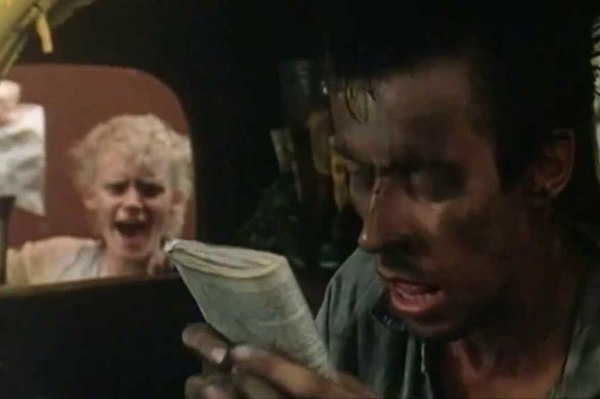
In terms of the brief post-MAD MAX wave of Australian movies, our Oz-ploitation guide gives the first of several dishonourable mentions: MIDNITE SPARES. €œA guy€™s a cop €“ he infiltrates a gang of choppers. You know when you get a car and you cut it together and you get a new car?€ he explains the automotive concept. €œThe car chases are fairly good, fairly competent, but it suffers from bad acting. Bruce Spence is in it, he was the Gyro Pilot from MAD MAX 2, and David Argue, he was one of the hoodlums from RAZORBACK.* David Argue is a phenomenon in Australia, he made a movie about his family, THE ARGUES. But MIDNITE SPARES is just dull really. You may have car chases, explosions, etc, but cinematic gold it€™s not, I€™m afraid. MAD MAX and MAD MAX 2 really put Australian filmmaking on the map, but when it came to car movies they really didn€™t capitalise on what they€™re known for. Even today people see Australia as being a muscle-car film industry, but it€™s really not.€ *Entertaining 1984 Oz monster movie about a giant wild boar. The year after Mad Mel Gibson took a final wander into the desert was a vintage one for post-MAD MAX exploitation movies. But our guide to the less salubrious side of cinema down under is dismissive of their cult status:
€œFAIR GAME you€™ve got in 1986 €“ that€™s where the girl is strapped to the bonnet of a car by three sexist male pigs. It€™s awful! Yes, it has the cathartic punch: you€™ve got the attractive woman, topless, tied to the bonnet of a V8. But it€™s just horrible, and it€™s a dull, boring film but it has a cult following, and I just don€™t know why.€ The very basic plot has three €™roo hunters, who make the drongos in WAKE IN FRIGHT look like squeamish liberals, terrorising a woman who runs an outback animal sanctuary. It even made the film€™s director, Mario Andreacchio, decide that he could never make another exploitation film. €œI don€™t know if they rape her, though it verges on that, but there€™s a sexual charge running through the entire movie. Why does Tarantino rave about it? I just don€™t understand it really. But it€™s a movie that has a reputation for its salacious graphicness and portrayal of violence.€
€œDEAD END DRIVE-IN was directed by Brian Trenchard-Smith. Set in the near-future where the lowlifes and youngsters are basically trapped in a drive-in, they spend their days there. It€™s just dull, the acting€™s appalling, they€™re unlikeable characters €“ although it does have some fantastic stunt work at the end, a car on fire jumping through the air.€ Is it an attempt to do another MAD MAX then? €œWell, kind of... it€™s the breakdown of Australian society and culture. Leading itself into a similar theme, but is it any good? Not really. I€™m not selling these movies, am I?€ he laughs. Indeed. Why go to the lengths of writing a book about a vein of cinema which (excepting WAKE IN FRIGHT and MAD MAX 1&2) leaves you so jaded and dismissive? Slater explains that his first book, EATEN ALIVE! (for which I was his co-editor), was a completist work that covered every grungy Italian cannibal or zombie movie. Sometimes the phenomenon of the film genre itself is more interesting than the individual film. €œThat€™s what I€™m doing for my Australian book €“ if a film€™s not very good I talk about its history and why it€™s so beloved.€ But the post-MAD MAX wave soon broke, and the Australian road movie persisted only in gentler, more conventional forms. It would have to follow a long road before the rage started to resurface €“ decades long, in fact...

3. Wolf Creek (2005) / Wolf Creek 2 (2013)
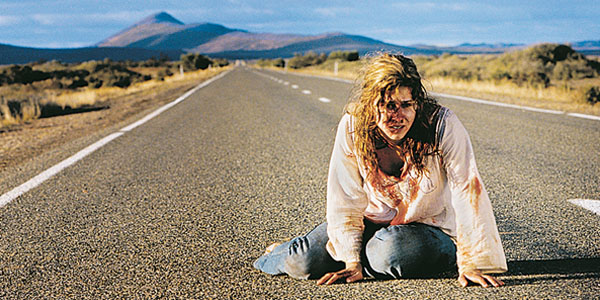
€œWOLF CREEK is almost aligned with torture porn. It€™s fairly unpleasant, but is it a good movie? Not at all, it€™s just violence for violence€™s sake, a lot of it doesn€™t make sense but it€™s graced by a great performance by the lead actor.€ And this is a guy who compiled and co-wrote a book on extreme Italian gore films? In a way, it makes sense: Jay has witnessed so much onscreen sadism as a cult-movie buff (including the films of his former youthful favourite, Lucio Fulci) that he€™s finally been turned off of it. So to temper his views of WOLF CREEK (a film I find tense and suspenseful), I€™ve gone for a second opinion. Horror writer Anthony Ferguson is a native of Perth, Western Australia: €œWe€™re isolated from the rest of the world. It€™s always hot here.€ He€™s also an expert on Australian murder cases, which he€™s been writing about in a book with the working title Killers of Oz. So I was interested in his view of a film that€™s been called an Australian TEXAS CHAINSAW MASSACRE, and is reputedly based on true crimes. €œI thought they did a good job and I loved John Jarrett€™s portrayal of Mick Taylor, the Vietnam vet who was scarred by war and had a violent nature,€ he recounts with amiable enthusiasm. €œI thought that was brilliantly done. I really loved the end where it was clear they weren€™t going to catch him and he just faded away into the background, because it€™s so huge and so sparse. I thought it was a bit lame that he let one of them go, but that happened with Ivan Milat and Paul Onions anyway.€ So is there truth in the screen credit that claims Mick Taylor€™s outback road rage is based on real-life cases? €œThere are two obvious ones. The Peter Falconio murder in 2001 was on a remote road in the Northern Territory. They were driving through the night on a tour from Alice Springs, not so far from WA. Bradley John Murdoch isn€™t a serial killer, he€™s only done that one. There€™s some DNA of his on Joanne Lees€™ t-shirt. A lot of people have questioned her story: even though Murdoch was an experienced bushman, she somehow ran off from his car with her hands tied and he couldn€™t find her. I think her problem is that she is very good-looking, and it was found out in court that she was cheating on Falconio with another guy. So there€™s always going to be a suspicion that she€™s a femme fatale and somehow set the whole thing up. Women are always going to get that. And she€™s profited a great deal from her story €“ she€™s put out a book called No Turning Back.€ But the central character in WOLF CREEK is said to be most closely based on Australia€™s most infamous serial killer. €œIt€™s been noted in the media before that it€™s based loosely on the Ivan Milat case in the Belanglo State Forest in New South Wales, from about €™88-€™92,€ confirms Ferguson, €œbecause he roamed the roads and of course it was backpackers he was after. Milat at the time was a lot younger , a lot fitter, he trained with rifles and knives. I don€™t think he was a Vietnam vet like Taylor in the story. But he was a roadworker so he was always out on the roads; he had a big rural property; he had lots of guns; he had a big fourwheel drive. Apparently, in the 2005 WOLF CREEK, the actual sign on the abandoned mining site gate says, €˜NAVITALIM MINING CO€™ €“ and if you read that backwards €˜Navitalim€™ says €˜Ivan Milat€™. If you look at Milat physically, like 20-odd years ago, and Bradley John Murdoch, there€™s certainly echoes there of Mick Taylor.€ So what is it about the terrain and the backroads of the Australian outback that captures our imagination? Does the author feel it lends itself to this sort of crime? €œAbsolutely 100 percent,€ he agrees, disarmingly. €œI€™m surprised there isn€™t more of it, to be honest. There might be a few isolated cases of rapings and stuff like that, but I€™m surprised there aren€™t more serial killers out there. It might be something to do with the laconic, laidback Australian nature. People just aren€™t vicious enough.€ Or might it be the case that if there were more out there, maybe you wouldn€™t know about it if these guys were concealing their crimes? €œIt€™s possible. Mick Taylor seems to get away with it far too easily.€ How much easier if you€™ve got all that open space? €œOh absolutely. I€™m glad that it doesn€™t happen a lot more, but I€™ve driven right across the desert. It€™s very lonely and there€™s like a million places you could hide a body and they€™d never find it.€ Apparently there€™s a real Wolfe Creek, though spelled with an €˜e€™. €œTo tell you the truth, until I saw the film I didn€™t know it existed. But it€™s right up the top north end of WA €“ many, many hundreds of kilometres from me, several days€™ drive. They€™re getting a lot of tourists up there since the film came out.€ Back in Blighty, Jay Slater remains unimpressed. €œIt€™s all very low-rent isn€™t it?€ he says of the WOLF CREEK-TEXAS CHAINSAW comparison. €œA crazed serial killer in the outback, or Texas, torturing and killing people. The only thing he doesn€™t do in this movie is eat people €“ but in Part Two he does.€ But, perversely perhaps, he agrees the lead role of Taylor is a tour de force. €œJohn Jarrett€™s performance is just amazing. In Part Two he still carries an air of menace, but it€™s like a computer game €“ it€™s very, very bad, there are CGI kangaroos. After WOLF CREEK he made ROGUE, which cost $50 million, and it played in a handful of cinemas. It made a huge loss. I knew him and he said he€™d never do WOLF CREEK 2 €“ he did. And it bombed. I don€™t know what he€™s doing now.€ Ferguson concurs with Slater€™s damning opinion of WOLF CREEK 2: €œYeah, I think the sequel€™s rubbish. It panders to the whole tourist-Australian outback ethos: you€™ve got your obviously CGI-generated kangaroos being mowed down by Mick in the truck. You€™ve got Mick as the traditional Australian horseman with a whip, chasing the guy down through the grass. It€™s a bit extreme, a bit ridiculous. WAKE IN FRIGHT was reflected in WOLF CREEK 2 when Mick runs the kangaroos down, only it€™s nowhere near as well done.€* *Penguin Australia have published WOLF CREEK prequel novels Origin and Desolation Game, written by the film€™s writer/director Greg McLean and Ferguson€™s friend and fellow horror author Brett McBean: €œThey€™re about Mick and how he becomes a monster. I think it€™s about his Vietnam years and stuff like that.€

2. The Rover (2014)

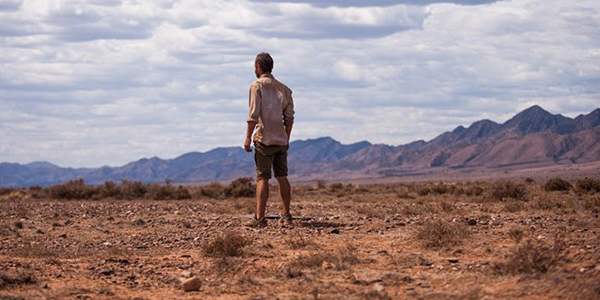
And so the four-wheel drive keeps on turning. The outback road movie seems to be returning to the uneasy aesthetic of Ted Kotcheff and Peter Weir in the 1970s. When THE ROVER was released in 2014, there was a strain of critical opinion that appraised it as an existential art-house variant on MAD MAX. With a cast headed by the ever-intense Guy Pearce (whose Australian director on THE PROPOSITION, John Hillcoat, went to the US to take the apocalyptic road movie to its highest €“ or lowest €“ point in THE ROAD), it€™s an ensemble piece with elements of noir, dystopian SF and a darkly dreamlike tone. €œAh...€ says Jay Slater of the critical plaudits, tempted to lavish a little praise for once, €œto an extent I can see what they€™re driving at. It€™s a film that had so much potential.€ Indeed, director David Michôd is hard-edged Australian cinema€™s current golden boy, his 2010 debut ANIMAL KINGDOM, starring Pearce, is an underbelly expo of Melbourne crime family loyalties. €œGuy Pearce is fantastic; Robert Pattinson, to a degree, does well.€ Thrown together by random violent events in a near-lawless future outback, the TWILIGHT heartthrob plays the psychologically-vulnerable Rey, younger brother to two loose-cannon armed thieves who forms an uneasy bond with volatile loner Eric (Pearce) €“ a drifter we at first assume to be the rover of the title. €œIt€™s quite a captivating film,€ concedes our commentator, €œAustralia collapsing, society-wise.€ Indeed, and the social apocalypse doesn€™t require anything as devastating as a nuclear bomb, or even George Miller€™s oil shortage. Instead it€™s our old friend the economic downturn €“ the same one we€™ve all been living through, but ten years hence and following through to a bitter conclusion. The financial collapse has turned Australia into a Wild West frontier town. As Michôd observes of his bleak social vision, €œpeople from all corners of the world have come out to the desert to scrape out an existence. Petty criminals and miscreants and hustlers.€ The convincingly-observed milieu can also, depending on personal temperament, make you sympathise with desperate men. €œUntil the last minute,€ insists Slater. €œYou get the twist where he buries his dog at the end, and it doesn€™t work. I don€™t know if the filmmaker thought he was being clever but it ultimately destroys the narrative and the time you€™ve invested in the movie.€ This reservation seems to be all that€™s holding him back from the unequivocal praise his book may lavish on WAKE IN FRIGHT or PICNIC AT HANGING ROCK. But in this writer€™s opinion, the plot twist that makes a dead €˜rover€™ the catalyst for so much violence is only a flaw if, say, Kevin Spacey fabricating the plot of THE USUAL SUSPECTS (1995) is a cheat, or it€™s a letdown that Warren Oates never knows what he€™s killing and dying for in BRING ME THE HEAD OF ALFREDO GARCIA (1974). Cinema is the illuminating light of deception, projected at a screen, and THE ROVER brings the glow of the southern hemisphere to that.

1. Mad Max: Fury Road (2015)

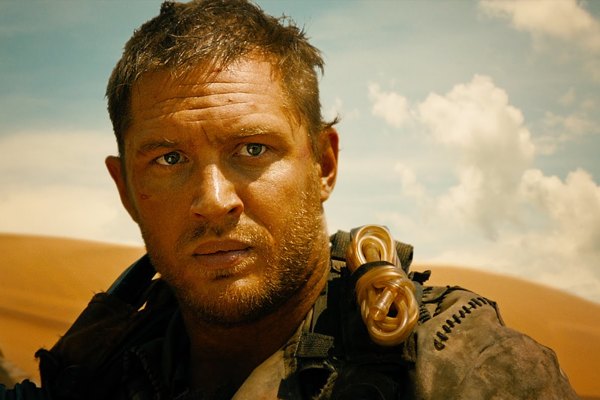
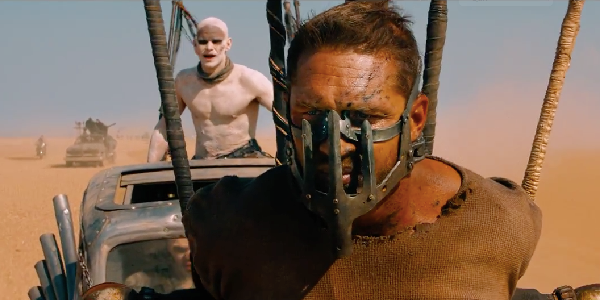
And so the road runs full circle. In May 2015, the fourth Mad Max film debuted at the Cannes Film Fesival €“ just like the progenitor of the series did 37 years before. This will be no apocalypse lite but a return to full civilisational collapse in pulp-SF style. But, despite setting its social breakdown in the backwaters of Australia, like the more realistic THE ROVER, it wasn€™t actually filmed there. Aborting a planned return to the Broken Hill, New South Wales region where Mel Gibson last wandered into the desert, weather conditions forced a change of location to Namibia. Nor does it feature Gibson; though a little long in the tooth, Mad Mel€™s monolithic features might have weathered well as Max Rocktansky. But a full 25 years of development hell (beginning only five years after BEYOND THUNDERDOME) removed him from the project many moons ago. In his place is all-purpose Brit tough guy actor Tom Hardy. With a script co-written by Miller and Brit comics luminary Brendan McCarthy (veteran of seminal titles 2000 AD and Crisis), MAD MAX: FURY ROAD has been previewed by a trailer that places the modern action movie en extremis on a wagnerian scale. I ask Jay Slater if he has any pre-emptive word: €œSomeone we both know had to see it for work,€ he responds, €œand said he doesn€™t like MAD MAX; but if you do you€™ll probably like this. But for some reason, every major effect €“ even though Miller says it was done old-school style €“ has been padded with CGI. So I expect to be disappointed. I€™ll have to watch it anyway, but I suspect it will not beat MAD MAX 2.€ Indeed, some aspects of the trailer are abrim with CGI effects. The great advantage of CGI is that it makes anything look possible; the drawback is that if anything€™s possible then nothing looks really dangerous €“ certainly not at the bone-breakingly risky level of THE ROAD WARRIOR. I ask how Hardy€™s performance reportedly measures up to Mel Gibson in the part. €œTom Hardy is said to be very strong,€ Slater confirms, €œbut the character is a completely different portrayal of Max Rocktansky. Where in the second film he€™s a broken man, very quiet, a loner, he€™s almost like the Man with No Name, the Clint Eastwood character. Whereas his character in the fourth movie is very much more charismatic, engaging. But from what I€™ve been told, it carries on from Part Two. Part Three never happened.€ Continuing from the oil wars of MAD MAX 2, FURY ROAD features (topically, given concerns about the world climate) gangs doing battle over depleted water supplies. According to Hardy, he€™s been signed up for a further three Mad Max films. The road rage goes ever on...

Contributor
Contributor

Writer/editor/ghost-writer transfixed by crime, cinema and the serrated edges of popular culture. Those similarly afflicted are invited to make contact.