10 Best Black-And-White Movies From The Last 25 Years

Who needs those fancy colors anyway?
Some of the greatest films ever made have the key distinction of being black-and-white. And there are some folks out there who wouldn't dare consider sitting down to watch any of them for that exact reason. The ol' two-tone films are simply "too slow" or "too bland" or "too arty." Granted, a lot of these older classics haven't aged well--the acting is broad, the dialogue stilted, and the themes too outdated. But over the last couple of decades there have been some stunning entires into the black-and-white canon. These monochrome masterpieces deserve a fair chance and shouldn't be judged for their lack of color. Modern filmmakers have found breathtaking ways to display those two simple colors. And they do so without retreading on worn out ideas. To that end, let's turn our attention to some modern films that managed to prove that although the era of black-and-white is in short supply these days, it isn't completely dead.

10. Much Ado About Nothing

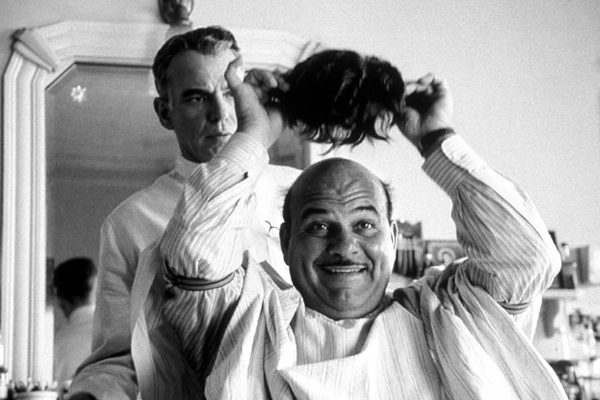
The combination of Joss Whedon and William Shakespeare might seem a curious duo on paper, but leave it to the creator of wonderfully weird cult television series like Buffy and Firefly to make it work. The first 10 minutes of this lighthearted adaptation draws a line in the sand, with audiences either fidgeting in their seats wondering, "the whole movie isn't going to be like this, is it?" with others fidgeting in their seats hoping the whole movie is going to be like this. Because although it looks both old and new, sounds mostly ancient, and feels like nothing that's been done before. But if you let yourself just go with it, it really is quite magical. Not to mention how much fun everyone seems to be having throughout this giddy little rom-com. Nathan Fillion exudes his typical charm, while newcomers Brian McElhaney and Nick Kocher (the YouTube comedic duo known as BriTANick) are gleeful scene stealers. Everyone involved maintains a loose, quirky vibe that makes this version too energetic and humorous to be mad at.

9. A Field In England

This experiment in historical storytelling is like watching a documentary about the English Civil War while tripping on shrooms. If that doesn't sound like your cup of tea, then...sorry? Despite its missteps (forced, pseudo-ironic dialogue and an overly padded runtime), A Field In England excels in every other way. In fact, it does so in spite of itself at nearly every turn. It crams a whole lot of ingredients into the stew, but rather than turning into a bland mush, this bizarre period movie hits pops all over your tastebuds, ensuring there's a flavor in here that you'll find enjoyable. The plot is overly simple, the costumes are straight out of a middle school play, and the scenery is mostly stagnant. And again, this may sound like negative things, but director Ben Wheatley is able to use them all to drive the psychological recklessness that makes the film so endlessly compelling. The best scenes involve soldiers tripping their balls off on hallucinogens and committing some squirm-inducing acts of violence against each other. So...something for everyone.

8. Nebraska

Nebraska is one of those films that probably didn't need to be shot in black and white. There's no particular reason for it, other than as a means in which director Alexander Payne can keep viewers at arm's length from his characters. The bleakness seems artificial at times, maybe because Bruce Dern does such an exceptional job of stepping into the role of bitter ol' curmudgeon that the added desolation from the cinematography feels too overwhelming. Still, despite the overall lack of warmth--and the woeful depictions of every American Midwesterner as either dumb, lazy, or entitled--Nebraska excels because of the father-son relationship at its gooey center. There's no amount of aesthetic overkill (underkill?) that can soil the scenes between Woody and his son (played by Will Forte, with more nuance than you might expect). It's fair to say that Payne's overly-simplified road trip story succeeds in spite of its grey exterior, though it's hard not to wonder what might have been different if he'd let some colors shine.

7. Schindler's List

The ultimate must-see once AND ONLY ONCE drama, Schindler's List is one of the most detailed portrayals of the Holocaust ever captured on film. Stephen Spielberg's directing is masterful while the layered performance of Liam Neeson remains an important time capsule entry for an actor who's recently supplanted these kinds of nuanced roles with over-the-top action fluff. Though commonly viewed (somewhat unfairly) as Spielberg's desperate attempt to capture the Academy Award that had (also unfairly) alluded him until that point, the director never ventures too far outside his sweet spot. The story is boiled down to its core elements--the ploy of Oskar Schindler and the consequences of being a "savior"--and then forces audiences to stare down the brutal depictions of those themes that are played out with an unflinching, uncharacteristic frankness. Shooting the story in black and white is meant to give this all a stark, documentary-like energy deserved of an event of this magnitude, but it accomplishes more than that. In stripping away a typical, commercial layer, Spielberg made the acting and narrative structure stand on their own. Audiences would not be won over with its stylishness, nor would they be allowed the simple distraction of full-color cinematography as an escape from the atrocities occurring in front of their eyes. It made the movie, in part, an investment. The more viewers had to sink into it, the more that final punch was going to hurt. And anyone not teary-eyed by the final sequences were likely too disappointed by this decidedly non-Spielbergian display to be wrapped up in the many different shades of grey presented.

6. Clerks

Created on a budget of just over $27,000 (roughly the amount of money Robert Downey, Jr. pays someone to dust the gold-plated shelf where all of his Academy Awards should be), Kevin Smith's debut foray into directing stands as a testament to what can happen with a little bit of moxie and a notepad full of dick and fart jokes. Shot as a "day in the life" story of two friends, Dante and Randal, Clerks is equal parts messy, mundane, and masterful, with Smith utilizing some of his "film student ingenuity" in ways that might appear a tad pretentious on the surface. And Clerks is exactly that in many ways. But when your main story is about a couple of lackadaisical twenty-somethings with an itch for grandeur who can't stop sitting around talking about Return of the Jedi all day, that pretentiousness plays very effectively. Clerks is a case of unknowingly fortunate circumstances, where the budget simply wouldn't allow for the full color palette to be on display, thus necessitating the unvarnished look into Smith's slacker world. With a little extra color, who knows if the film would have maintained the grungy vibe that it ultimately owes its enduring legacy to?

5. Sin City

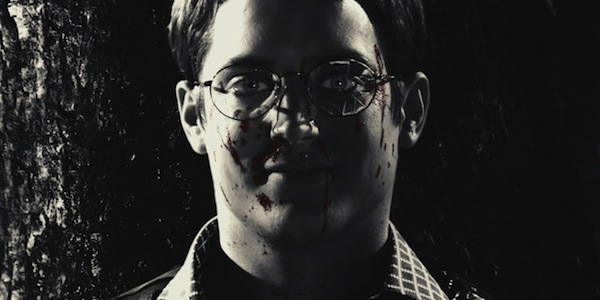
Setting the bar for graphic novel adaptations insanely high, critics of Sin City tend to fall into two categories: those who appreciate the visual playfulness and its role in telling such an ultra-violent story, and those who see this visual severity as the most pretentious way to gloss over the fact that it's telling such an ultra-violent story. Either way, the inky pulpiness of Sin City made a strong impression. The two-tone visuals somehow make the aforementioned scenes of outrageous savagery more disturbing, maybe because the absence of traditional, crimson-colored gore invites the audience to watch without putting their hands over their eyes. The flash-bang speed with which Robert Rodriguez tears through scenes of grim vengeance would perhaps be too much to handle without the visual restraint. In fact, Rodriguez appears to take no small amount of wicked glee in delivering the carnage not normally seen in comic book movies through the off-kilter lens of film noir (albeit with a glossier approach more fitting of the source material). It's like he knows he's getting away with something that he shouldn't be. And let's not forget the incredible cast, who, despite their name recognition, wasn't exactly considered an all-star ensemble at the time of this film's release. Yes, there were some big gets (Elijah Wood was hot off The Lord of the Rings and Bruce Willis is Bruce Willis) but most of the cast list was comprised of up-and-comers (Rosario Dawson, Clive Owen, Jessica Alba) and those considered washed-up (Mickey Rourke, Powers Boothe, Michael Madsen). But it's a testament to the directing and the screenplay that any combination of those actors could have carried the movie by themselves.

4. The Man Who Wasn't There

It would be weird if the Coen brothers hadn't made a black-and-white film. Right? The directing duo whose motto seems to be "worse things should happen" have a singular vision that typically involves quirky character studies and comically horrific happenings. The black-and-white format lends itself superbly to that vision. If there's one thing the Coen brothers do extremely well, it's putting their characters through the ringer. No one in a Coen brothers movie remains unaffected by the time the closing credits role. But if there's two things they do well, it's condescendingly exploring the mindsets of characters that are completely outside the norm. Billy Bob Thornton plays the dim-witted protagonist here, but unlike most other Coen leads, Thornton is a relatively passive and quiet. The Man Who Wasn't There is placed in the general realm of noir, though it plays out more like a slow-burning thriller that just so happens to be presented in two-tone. Infidelity, blackmail, lust, homicide, and inadequacy are all themes the Coens have explored before (and better), but the combination platter is simply delectable and endlessly satisfying.

3. Ed Wood

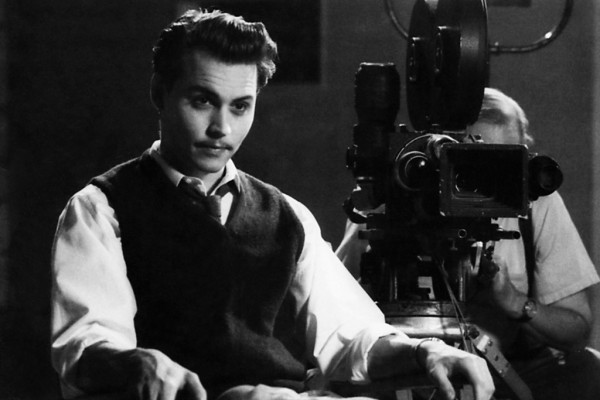
Whereas some films use a black-and-white exterior unnecessarily, perhaps to cover up some fundamental inadequacies or to appear superficially "artsy," Tim Burton's look at b-movie director Ed Wood requires it. Working on the outermost fringes of Hollywood during the 1950s, Ed Wood was an oddball known best for making "the worst movie ever made," Plan 9 From Outerspace. That movie, and the entire ethos of making cheesy, low-budget horror movies, is represented perhaps a bit more glowingly than it should be, with gorgeous visuals and a slickness that would never be found on in an Ed Wood picture. Then again, that's kind of the point of this movie. Rather than focus on the horrible aspects of Wood's career, of which there are many, Burton chooses to embellish his go-getter attitude, relentless optimism, and boyish defiance. The result is maybe one of the most precise, on-point films Burton has ever made. Forgoing his usual flair for the macabre and his propensity for caricatures, he crafts an upbeat comedy that could have easily fallen victim to overwriting and erratic pacing. Instead, it sinks its teeth into the better qualities of its main character and delivers a snappy, polished look at someone who had no desire to learn what either of those two words mean.

2. Following

Starkness. It's the main theme discussed so far with these black-and-white films, and with good reason. When a filmmaker decides they want their movie to focus on one specific subject (or person or storyline or emotion, etc), the go-to method is to turn off the distracting color schemes and let the content speak for itself. Chrisopher Nolan's exceptional debut, Following, proves how well it can pay off. Created much in the same vein as Kevin Smith's Clerks, Following was made on a shoestring budget, with Nolan acting as a production team. He wrote, directed, photographed, and helped edit the movie. To date, it's audiences only real chance to see what a Christopher Nolan lovechild looks like. And for the record, that lovechild is efficiently timed, sufficiently paranoid, and proficiently executed. The plot is as follows: A voyeur who uses writer's block as an excuse to spy on random strangers is called out on his rather unpleasant hobby by one of his sharply-dressed marks. This man invites our amateur voyeur to go along on a breaking-and-entering to show him what true personal intrusion looks like. Both men get their jollies from learning the most personal, intimate details of the lives of total strangers. It's exactly as creepy as it sounds. Following lays the groundwork for his future filmography, showcasing his aptitude for playing with chronology, plot structure, and shifting perspectives. If Memento is his masterpiece, Following is the rough draft he has to paint over.

1. A Girl Walks Home Alone At Night

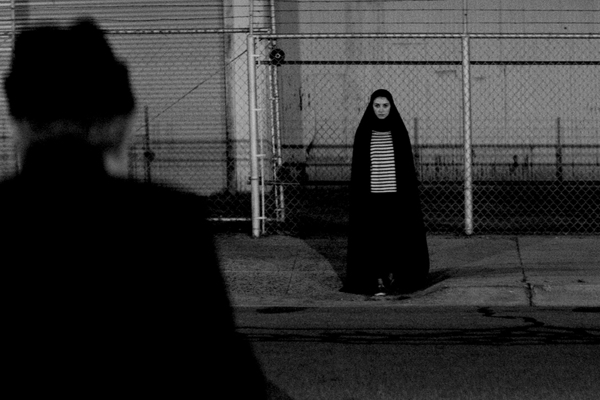
A Girl Walks Home Alone At Night was a clear attempt to make a "cool" movie, blending in whichever random elements Ana Lily Amirpour thought might meld together without causing genre whiplash. And vampire-haters be damned, she did just that. Amirpour likes movies a whole lot, and that simple passion and knowledge oozes out of every frame of this noir-horror-romance-sci-fi-whatever else you want to label it as. Whatever the official genre is, this movie is a straight-up punk look at vampires, and an oddly refreshing view of bloodsuckers that other movies could stand to lean on. The girl walking home alone at night is the vampire, and she makes quick friends with vagrants, junkies, hookers and other "seedy" types. She also bites motherf*ckers who she identifies as predators. And that's about as much of a plot as we get in this Iranian exploration of horror movie tropes viewed through the lens of people who want to beat up the screenwriter and entire cast of Juno.

Contributor

Jacob is a part-time contributor for WhatCulture, specializing in music, movies, and really, really dumb humor.