10 Best CG-Free Martial Arts Movies
If you're this good at punching people in the face, you don't need special effects.
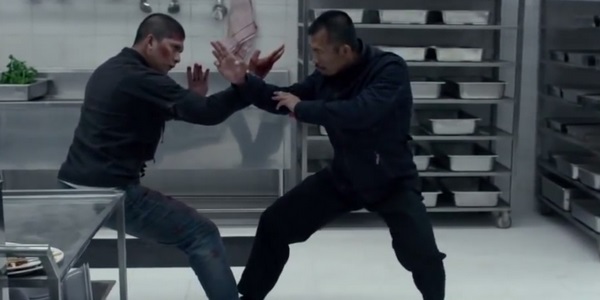
Hollywood has always had an uneasy relationship with the martial arts superstars of the East - on the one hand they've been desperate to court them and bring them into the fold, yet on the other it often seems as if they're never quite sure what to do with them once they've flown them over. Clearly impressed with their pugilistic skills, at the same time they're overwhelmed, unable to keep up with the intensity and speed these consummate performers deliver. As a consequence, while there have been a number of blockbuster movies which attempt to fuse the martial arts genre into the American setting, few of them attain the same feeling of authenticity fans of Eastern cinema have come to expect. The performers are asked to slow down, and tighter shots and more edits are employed, in stark contrast to the great kung fu movies of old in which wide shots and long takes fully demonstrated the fighting prowess on display. For fans, the results often feel sanitised, as if the performances had somehow been diluted in crossing the ocean from Asia to America. Of course, America lacks the cultural tradition of martial arts which makes the Asian movies so successful - American actors don't traditionally learn a martial art and as a result the filmmakers often have to augment action scenes with CG effects which, to the purist, is almost sacrilegious. The release of The Raid 2: Berendal, is a welcome reminder that high impact action movies in which stunt work and incredibly talented fighters stand at the fore are still being made - and remain far better than their CG-enhanced counterparts. Here are ten great martial arts movies completely devoid of computer enhancement - films where the fighters and their unique abilities come to the fore and shine (with the occasional helping hand of a little wire-work...)
10. Ong-Bak

In the early 2000s it felt to some as if the martial arts genre had taken a downturn - superstars Jackie Chan and Jet Li were both trying to make a go of it in America, with varying degrees of success, and the market appeared to have stagnated. What was sorely needed was a new star - an unknown rising talent to wow audiences with gravity-defying fighting prowess. Tony Jaa more than delivered these requirements in 2003's Ong-Bak, a Thai production heralded immediately as Jaa's breakout performance, catapulting him onto the international stage. The comparisons with Bruce Lee, Jackie Chan and Jet Li came thick and fast, and it's easy to see why - while Ong-Bak is certainly no great shakes in the storytelling department (narrative, after all, is never the strong point of a martial arts movie), Jaa's riveting, energetic performance is something to behold, introducing audiences to his brand of Muay Thai (the ancient style Muay Boran) in all its bone-crunching glory. The opening knee to the face in itself is enough to set the stage for the incredible fights which follow. Tony Jaa's subsequent films never quite reached the same impressive levels, and in 2010 he retired to a Buddhist monastery. But fans needn't worry - he has since signaled his return to acting, and will be appearing in a movie with Dolph Lundgren as well as Fast and Furious 7. We'll have to wait and see if Hollywood squanders or makes the most of his unique talent.
9. Ip Man

Donnie Yen has been a staple feature of Hong Kong action cinema for many years, yet despite solid performances in movies such as Iron Monkey and Once Upon a Time in China II (in which he played the villain to Jet Li's hero), he never quite had the same break into stardom as some of his contemporaries. All that changed with the release of Ip Man in 2008, a biopic about the legendary Yip Man, grandmaster of Wing Chun and master to Bruce Lee. Set against the backdrop of the brutal Sino-Japanese War of the 1930s, Ip Man is a martial arts movie with epic pretensions; an ambitious historical scope which director Wilson Yip largely succeeds in pulling off. It also features some stunning fight sequences, filmed with beautiful cinematography usually reserved for art house movies. It no doubt helped considerably having the incredibly talented Sammo Hung (who we'll hear more about later on) choreographing the outstanding fight scenes. Donnie Yen described Ip Man as the most emotionally and mentally difficult film of his career, but fortunately for him it's also undoubtedly his finest.
8. A Touch Of Zen
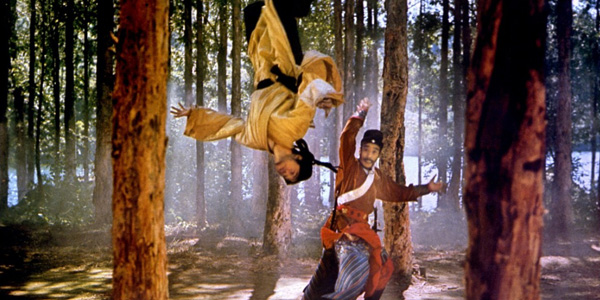
If you were to ask a martial arts movie fan where it all began - which classic movie kick-started the genre - then the chances are they'd answer with A Touch of Zen, King Hu's Taiwanese epic which won the praise of critics and fans around the world on its release in 1971. Two years in the making, A Touch of Zen features superbly executed fight scenes which still hold their own to this day - graceful, soaring aerial battles more reminiscent of ballet, employing wire-work in a way which allows the characters to transcend their mortal origins. And indeed, the film is so much more than an action movie - it touches on something far more spiritually profound and is equally notable for its symbolic content and emphasis on Buddhism, while Hu's grandiose compositions draw inevitable - and favourable - comparisons with the Spaghetti Westerns of the same era. Few martial arts movies have deservedly won awards at prestigious events such as the Cannes Film Festival, and A Touch of Zen earned all the accolades it received. Its influence would be felt again decades later, as the wuxia genre made a return to the screens in the 2000s.
7. Fist Of Legend

A few years before Yuen Woo-ping stunned mainstream audiences with his fight choreography in The Matrix, he crafted combat scenes for Jet Li in 1994s Fist of Legend, a film which, like Ip Man, is set during the Sino-Japanese War of the 1930s. Remaking any Bruce Lee movie is always going to invite potential criticism, but Jet Li's take on Fist of Fury more than delivers the level of action fans would hope for. The conflict between the Chinese locals and the occupying Japanese army might not be explored with the depths of an historical drama, but then that would have made for a considerably duller movie - after all, we're here to see Jet Li fighting, and few martial arts stars combine speed, agility and power quite like him (while filming his scenes in Lethal Weapon 4, director Richard Donner reportedly had to ask him to slow down his moves as he couldn't tell what was going on). Fist of Legend is a highlight of Li's career, although sadly its box office takings rank it as one of his least commercially successful. That aside, it was the film which brought the attention of the Wachowski brothers to Yuen Woo-ping, and in this respect its influence on future action movies cannot be understated.
6. Crouching Tiger, Hidden Dragon

When Crouching Tiger, Hidden Dragon was released in 2000, director Ang Lee was heralded by Western martial arts fans as the heir to the wuxia throne, previously occupied by A Touch of Zen's King Hu. It was every bit the epic of the old masterpiece - a riveting tale of rivalry, deception and love adapted from the work of one of the great Chinese novelists of the 20th century, Wang Dulu. Starring Chow Yun-Fat, Michelle Yeoh and Zhang Ziyi, Crouching Tiger, Hidden Dragon revolves around a great warrior Li Mu Bai (Yun-Fat) who loses his treasured sword to a thief and sets out to retrieve it - and exact revenge on the man who killed his master. Shot with a painterly cinematography, the film stood out for its action sequences, in which Yuen Woo-ping suspended his actors over rooftops and in the upper canopy of forests, engaging in combat as eloquent and melodramatic as the story itself. It is wire-work at its most seamless and effective, perfectly in keeping with the near-mythological tone of the source material and the transcendent spirit of Zen infused throughout. A raft of other wuxia-inspired movies predictably followed after the success of Crouching Tiger, Hidden Dragon, with a number of them almost achieving the same level of greatness. A sequel was announced in 2013, with Donnie Yen reportedly taking the lead role and Michelle Yeoh reprising the role of Yu Shu Lien. It remains to be seen whether or not Ang Lee will assume responsibilities behind the camera.
5. The Prodigal Son
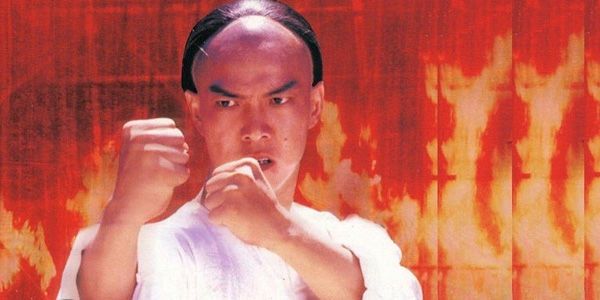
In the West Jackie Chan is far and away the best known star of the Hong Kong New Wave movement of the 1980s, but fans of his early classics will be more than familiar with his two friends and fellow filmmakers, Yuen Biao and Sammo Hung - they frequently collaborated with Chan on a number of his best films including Wheels on Meals and Project A. Working without Jackie Chan on 1981's action film The Prodigal Son, director Sammo Hung and star Yuen Biao crafted one of the most memorable kung fu movie of the era and solidified Hung's reputation as a director who could effortlessly combine brutal yet elegant action sequences with a keen sense of humour and slapstick. Any of the awesome fight scenes throughout the film are fine examples of Hung's directing abilities, and his mastery of filming wing chun in The Prodigal Son would later secure his role as choreographer for Donnie Yen's Ip Man. Yuen Biao delivers the best performance of his career, with the final showdown one of the most exhilarating fights of all time. The scenes which feature Sammo Hung himself are also worth mentioning, with the energetic flipping, spinning calligraphy sequence standing out as a perfect combination of martial arts and comedy, every bit as inventive as the best of Jackie Chan and all the more impressive given Hung's portly physique.
4. The Raid: Redemption

With the sequel currently storming into cinemas, this list wouldn't be complete without a mention of the original, Gareth Evans' ultra-violent, claustrophobic exercise in bone-crunching excess starring Indonesian Iko Uwais. Few movies have delivered quite the same level of wall-to-wall action as The Raid: Redemption. If A Touch of Zen and other wuxia movies fit their action onto a grand canvas, while others tend to shoehorn the action into predictable plots invariably revolving around revenge, Evans decided to par things down to the bone, stripping away even the basics of plot and characterisation and replacing it with a narrative designed solely for the purpose of delivering the next bout of combat. And boy does it work - freed from the constraints of storytelling beyond the basic premise in which an elite police squad works their way up from the ground floor of an apartment block to take out the criminal in the penthouse, what audiences get is 90 minutes of some of the most visceral, dynamic hand-to-hand fight scenes ever committed to film (with a few machetes thrown in for good measure). The Raid: Redemption almost feels like a movie from another era, harking back to the golden age of kung fu movies of the 70s and 80s, where the cast and crew would spend months rehearsing and filming elaborate, intricate action scenes. An American remake is rumoured to be in the pipeline, although fans of the original won't be holding their breaths in anticipation for a superior version.
3. Encounters Of The Spooky Kind
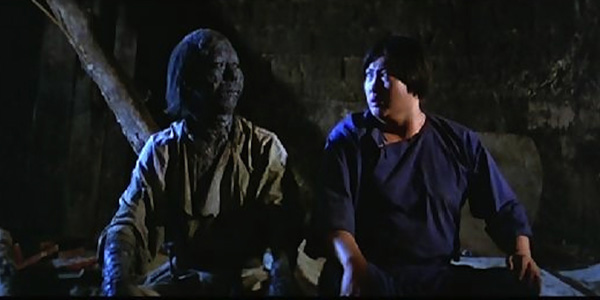
Sammo Hung showed off his directing chops in The Prodigal Son, but with Encounters of the Spooky Kind he decided to cast himself in the starring role, resulting in one of the most off-beat and original martial arts films of all time. Mixing up horror, comedy and kung fu action, Encounters of the Spooky Kind is the quintessential example of the much-loved sub-genre known as jiangshi. Jiangshi are hopping Chinese vampires and zombies, and their distinct movements afforded Hung the ability to craft both truly unique fight scenes and some clever visual gags. The final battle is a wonderful convergence of martial arts, horror and fantasy, clearly the product of a labour of love. Non-martial arts fans in the West are perhaps only familiar with Sammo Hung from his TV series Martial Law, which is a sad thing indeed - he's perhaps the greatest "unsung hero" of Hong Kong action cinema, and Encounters of the Spooky Kind is a genre-defining classic showing him at his very best.
2. Enter The Dragon

You all saw this one coming - a list of the best CG-free martial arts movies is inevitably going to include a Bruce Lee movie, and few would argue that Enter the Dragon wasn't his finest work. The first Chinese martial arts movie to be produced by a major Hollywood studio (Warner Bros. produced it in conjunction with kung fu movie regulars Golden Harvest), Enter the Dragon stars Lee as a Shaolin martial artist called in by British intelligence to go undercover and expose a drug trafficking and prostitution ring headed by the notorious criminal Han. Lee heads to Han's island and participates in a martial arts tournament, facing off a variety of opponents from around the globe and demonstrating "the art of fighting without fighting" (which happens to include punching people very quickly in the face). Needless to say, Enter the Dragon, with its fusion of martial arts action and James Bond-style intrigue (and extravagant villain island) was a huge smash at the box office. Tragically, Bruce Lee died just six days before its Hong Kong release, and Lee remains to this day one of the most iconic figures in cinema history, as popular and enduring as Marilyn Monroe.
1. Drunken Master
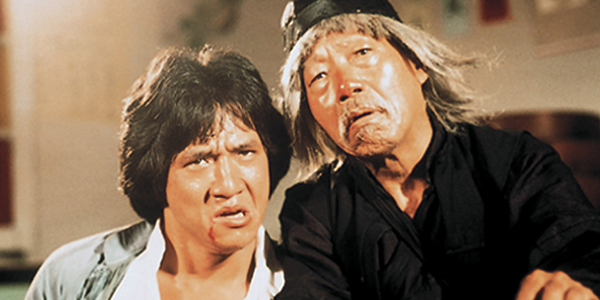
Just as it was inevitable that Bruce Lee would make an appearance on this list, so too is it impossible to write about the best CG-free martial arts movies of all time without mentioning Jackie Chan, a performer who has contributed more to the genre with his incredible fighting skills combined with a comedic knack on a par with the silent heroes Buster Keaton and Charlie Chaplin. Narrowing down Chan's filmography and choosing a stand-out movie is an almost impossible task - his illustrious career features literally dozens of memorable films which combine meticulously choreographed fight scenes and elaborately staged, wince-inducing stunts with slapstick comedy and hilariously bad one-liners. Drunken Master is one of the first movies to kick start this blending of action and comedy, with Yuen Woo-ping's direction combined with Chan's youthful, exuberant performance delivering 110 minutes of some of the finest martial arts ever committed to film. The influence of Drunken Master has been felt ever since, from the numerous Hong Kong action cinema imitators to a host of video games and anime franchises which have employed the drunken fighting style. It's a classic martial arts movie which introduced the world to Jackie Chan's trademark blend of action and comedy, proving that talent trumps computer graphics and visual trickery any day of the week. Agree or disagree with the selection on this list? Why not post a comment below and let us know your favourite martial arts movies?