10 Best Dario Argento Movies
 Dario Argento is an Italian film director who specialises in the peculiarly Italian sub genre - The Giallo. His first film - The Bird With the Crystal Plumage - was a massive hit in Italy and set down the blueprint for directors working within the Giallo sub field. Often copied by other Italian directors, he has never been bettered. Even greater than the Master Mario Bava, Argento's work is so stylish and brave in its experimentalism, it cannot be beaten. Dario Argento IS Giallo. Unfortunately Argento has somewhat lost his way in recent years. The Card Player (1994) received mixed reviews and seemed to be too mainstream for Italian Giallo fans. His film Giallo was released in 2009 but flopped at the box office. One can only pray for a return to form but when he was good, he was in a league of his own and produced legendary Gialli which have thrilled fans of the subgenre for decades. I have picked out his best films for your perusal.
10. Phenomena (1985)
 A lot of murders are committed in a Swiss Academy. Young Jennifer Corvino (Jennifer Connelly) seems to have a telepathic connection with insects which leads her to where the bodies of the murder victims are. Entomologist John McGregor (Donald Pleasance) believes that Jennifer's powers could be harvested to find the murderer. The Head Mistress of the Academy believes that Jennifer is killing people and should be put away in a hospital for the criminally insane. The murderer traps Jennifer in a house and kills McGregor. Jennifer must fight her way through pitfalls laid down by the murderer. But she can always depend on her insect allies for assistance. A film that is best appreciated if you sit back and watch it, rather than analyse and dissect, Phenomena is a must see for horror film fans due to its original content and confident execution. The cast are fantastic - featuring a young Jennifer Connolly and Donald Pleasance as the scientist who believes Jennifer can figure out who the killer is with her affinity with bugs. The soundtrack by Goblin is incredible and heightens the atmosphere considerably. The climax of the film is extremely exciting and suspenseful. Argento created a mini masterpiece with Phenomena.
9. The Stendhal Syndrome (1996)
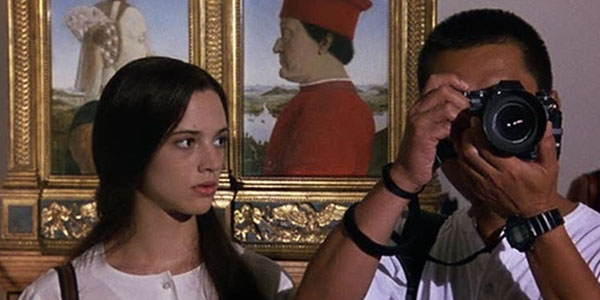 Anna is a detective who is trailing a serial killer to Florence. Whilst at an art exhibition she suffers from a severe case of Stendhal Syndrome. The killer - Alfredo - uses this to kidnap and rape Anna. She is deeply traumatised by this but when Alfredo tries a second attack upon her, she manages to escape. Anna meets Marie - an art student - and falls in love with her. She begins to receive calls from Alfredo. Anna is seeing a psychologist to overcome her trauma. Marie is found dead at home, however Anna's cop body tells her they have retrieved Alfredo's body. The psychologist calls with Anna to ask her if she killed Marie. The cop buddy arrives at Anna's to find a dead psychologist. Anna tells him she has Alfredo inside her and he is making her do terrible things. She kills the cop and police converge upon the house. Anna is quite a well developed female character for a Dario Argento movie. Her interactions with Alfredo are interesting and full of menace. Argento also handles Anna's hallucinations very well. It is a very different film from his earlier works and is not as well appreciated as them, but Stendhal Syndrome - with its lead actress - the heroine Anna - sinking into insanity is fascinating because we are left guessing as to what has happened to her until the end. She couldn't possibly be committing these murders we say to ourselves. Asia Argento (Dario's daughter) is fantastic in her complex role as Anna and she makes what is happening to her truly believable. This much neglected film deserves rediscovery.
8. Four Flies On Grey Velvet (1971)
 Roberto is a drummer in a rock band who is being followed by a strange man. He confronts this man in an abandoned theatre about why he is following him. The man pleads innocence but pulls out a switchblade. In a melee, Roberto accidentally kills him. There is a further complication. A weird masked man was high up in the theatre taking incriminating photos of the murder. Roberto gets the hell out of the theatre, but in the following days receives the dead man's ID in the post. He realises that the masked man has no intention of going to the police and only wants to toy with him and drive him crazy. One of the more obscure Argento films, Four Flies on Grey Velvet is quite an experimental film as Argento was still finding his feet as a director. Some of it doesn't work - such as the attempt to inject humour into the proceedings. I'm sorry Mr Argento, but comedy is not your forte! The film is more atmospheric than gory. It boasts a nice score from Ennio Morricone but the plot is weak. There are few possible killer candidates, not enough twisting of the storyline and a lack of red herrings. Argento experiments with the film techniques that would later bring him great acclaim. The film is very enjoyable despite its flaws. It is not edge of the seat scary, but it works as a stylish thriller
7. Inferno (1980)
 Rose is a poet living in NYC. She finds an ancient book called The Three Mothers - three women who rule the world by sorrow, tears and darkness. Rose becomes convinced she is living in one of the three mothers' house and contacts her brother to come to her assistance. Meanwhile, whilst conducting investigations of her own finds a ballroom in the cellar. A rotting corpse floats up as she tries to retrieve the keys she dropped. Rose's letter gets abandoned by her brother Mark when he drops it after being distracted by a beautiful student in the lecture hall. His friend Sara finds the letter and utterly horrified, goes to read The Three Mothers book. Someone tries to attack her in the library and she flees to her neighbours. They are both killed and Mark finds the letter on the victims. As he exits the building, he sees the beautiful woman who entranced him earlier drive past in a car. Mark rings Rose, but the reception is terrible. She is later killed by a figure with a claw. Mark goes to New York and meets the tenants in Rose's block of flats. A Countess Elise tells him what has happened to Rose. He sees a trail of blood stains and follows them. He feels ill and collapses. Elise sees a shadowy figure dragging him off and is killed herself. Mark escapes. After a bit of farting about and some more deaths, Mark finds himself in the company of the killer. He crawls along a passage and meets Professor Arnold, who he thought was a deaf mute invalid in a wheelchair. Arnold reveals that he is Varelli - the architect of the houses where the Three Mothers reside. In a bit of a shocker, Varelli's nurse turns into one of the Three Mothers. Thankfully there is a fire surging through the building which presumably consumes her. Whenever Inferno was released, the film critics whined a bit about it. It was not as bombastic and in your face as Argento's previous film Suspiria. Consequently, it was not shown much outside of Italy. The soundtrack - from Verdi's Nabucco - the chorus of the slaves, is one of my favourite pieces of opera but has been judged by critics to be out of place and misused in the film. It is a film that continues to divide critical opinion, although horror critics are mainly positive about it, with Kim Newman dubbing it one of the most underrated horror films of the 1980s. I believe that Inferno is a bona fide Argento masterpiece. Okay, it is light on plot and the script is clunky, but it showcases several tremendous set pieces. It generates a chilling atmosphere and is compelling to watch. Much, much better than most of the junk that was produced in horror cinema in the 1980s.
6. Cat O' Nine Tails (1971)
 Franco Arno is a blind, retired journalist who lives with his orphaned niece Lori, nearby the Terzi Institute. While out on a stroll late at night, Arno overhears a conversation between two men in a car in front of the institure. He asks Lori to look at their faces. That same night there is a break in at the Terzi Institute and one of the researchers drops dead on a train station. However Lori recognises the man from the car the previous night. A nosy journalist - Carlos Giordano - is contacted by Arno who asks him to come and help him unravel the drama. Apparently the researcher who died at the train station was pushed under the train deliberately. There is some sort of scandal about new drugs that have been made at the institute that act against criminal instincts. Of course, the murderer finds out that Carlos and Arno are hot on his trail and he will do anything to stop them from unearthing him. Apparently this is Argento's least favourite film. The storyline is a bit slapdash (but coherent plots were never Argento's strong point) but Karl Malden plays an interesting character in the shape of the retired, blind journalist - Franco Arno - and attracts and maintains the viewer's interest throughout the film. Ennio Morricone's score manages to thrill and delight and the cinematography in the film is excellent - especially the shots from the killer's point of view. There is a lot of excitement until we unearth the killer and the shock twist. He may not like it, but The Cat O' Nine Tails remains seminal Dario Argento.
5. Opera (1987)
 Insecure young opera singer Betty is thrust into the limelight when she is made the lead soprano in Verdi's Macbeth, after the original singer is injured in a car crash. A murder occurs in the theatre during her first performance. And subsequent murders occur - afflicting those involved with Betty in some way. Betty is forced by the murderer into watching the killings when the killer tapes needles below her eye so she is unable to blink and must therefore witness the murders. At her last performance in the opera, the killer is unveiled. I always thought that Lucio Fulci was the King of Italian Ocular Mayhem, but in Opera, Argento definitely takes that title with the eye pin scenes involving Betty. Many fans consider this to be Argento's last truly great film. It may be quite an implausible scenario, but it is a visual feast. The film is full of bloodiness and gore and it is genuinely suspenseful and creates a creepy atmosphere. Betty's background with her twisted sadomasochistic mother is very interesting and adds considerable depth to her character. The production values as per usual for Argento are utterly superb, as are the camera work and cinematography. A few steps short of brilliance.
4. Tenebrae (1982)
 Peter Neal is an American writer of violent horror books. He is in Rome to promote his new book and he is accompanied by his assistant Anne and his literary agent Bullmer. His bitter ex-wife Jane is following him, but he is not aware of this. There is a murder in which a beautiful shoplifter is slashed to death by an unknown assailant who sends Peter a message saying that he was inspired by his books. Two detectives are put on the case. The killings continue and Peter notices that a TV reporter is taking an unusually close interest in the case. Peter and his second assistant Gianni go to the reporter's house. While Peter goes to get a better view, Gianni watches in horror as the reporter is hacked to death by a masked assailant. The detectives find out that the reporter was obsessed with Peter's books. They expect the killings to stop. However, Bullmer, who is having an affair with Jane, is killed whilst he waits for her in a secret rendez vous. Gianni is tormented that he saw some detail in the reporter's house that was crucial to the murders. He goes back to the house and remembers he heard the television reporter say to his attacker "I killed them all". Before he can impart this information, he is strangled to death in the car. Through a series of events, it is revealed that Peter is actually the murderer. This plot twist is a little bit dopey. When Peter learned of the TV reporter's spree, it bought back memories of a time when he was sexually humiliated by a young lady when he was a lad in Rhode Island. This has inflamed his latent insanity and fuelled the murders of Jane, Gianni and Bullmer. There is a final showdown between Peter and the police which ends with Peter being impaled on a metal statue. The current Mrs Silvio Berlusconi gets her arm chopped off in a murder scene whose violence and intensity is typical of all of the killings in the movie. Definitely one of Argento's bloodiest pictures, I didn't quite get my head around the revelation that Peter is killing people, but despite this need for suspension of disbelief, the film is intensely watchable and absorbing. The climax is very exciting and harrowing with the final image of Anne screaming in the rain - the only possible response to what she just witnessed. Argento's camera work and cinematography are up there with his best work and apparently he based the film on his own experience of a crazed fan phoning him up and threatening to kill him. A very worthy entry into Argento's canon.
3. Suspiria (1977)
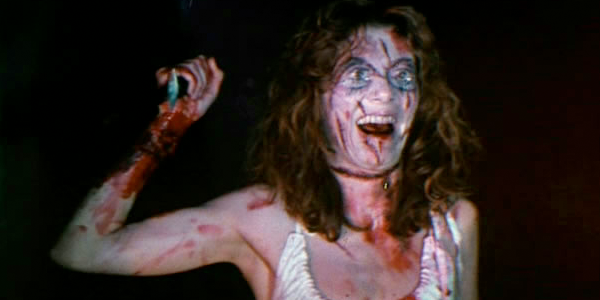 Suzy Bannion, an American dance student arrives in Freiburg to attend a prestigious dance school. She cannot gain access to the academy and spends the night in town. Meanwhile a former student of the dance school - Pat - who was expelled from the academy goes to stay with a friend. They are both brutally murdered in a stunning set piece by Argento. When Suzy arrives at the Academy the next day, she is introduced to Madame Blanc and Miss Tanner. They ask her to stay in the dorms but she has arranged to stay with a girl called Olga. After a weird encounter with the Academy's cook, Suzy collapses during a lesson and wakes up in a dormitory room where a doctor tells her she must stay and drink a glass of strange wine everyday. Suzy befriends a girl called Sarah with whom e shares a room. As they sit down to dinner, a shower of maggots falls from the ceiling which is apparently due to spoiled food in the rooms above. The girls have to stay in a practice hall overnight. Suzy and Sarah become suspicious of the goings on at the Academy, and like all good Argento characters, decide to do a little snooping. They are concerned about the welfare of a student called Pat who is talking strangely. Whilst uncovering some truth about the Academy, Suzy faints and Sarah is killed by falling into a room full of barbed wire from which she cannot extricate herself. The next day Blanc and Tanner tell Suzy that Sarah has left the academy. In her investigations she is told by Sarah's psychologist that the Dance Academy is a front for a coven of witches - Helena Markos founded the academy and she is the Queen with without whom the coven would not survive. These revelations force Suzy into a confrontation with the witches who are planning her demise. She manages to stab Helena and the whole Academy goes up in flames as Suzy flees for her life. Suspiria is one of Argento's most famous and most critically acclaimed movies. Unlike many of his films, the acting is excellent - Jessica Harper is fabulous as Suzy - and his use of colour is very striking. The sequence where the two girls die at the beginning of the movie is legendary for a good reason. The aesthetics of the scene, the ominous music by Goblin and the brutal murders of the two young girls is a heady combination. Again, the plot keeps it light and focuses more on the set pieces than creating a coherent narrative, but this doesn't bother us as the film is so beautiful to behold. The shock of the barbed wire scene and the reanimation of Sarah is horror movie gold dust. Possibly the most beautiful horror film ever made.
2. Bird With The Crystal Plumage (1970)
 Sam is an American writer living in Rome with Guilia, his model girlfriend. Sam has terrible writer's block and is thinking of going back to the States, however, he is witness to an attack on a woman by a masked figure. He tries to help her but cannot get through the double doors to save her in time. The woman - who is called Monica and is the art gallery owner's wife - survives but the police seize Sam's passport. There is a serial killer terrorising the city, and Sam is an important witness. Sam is haunted by some clue to the murders that he is missing. He and Guilia are soon targeted by the killer who phones them up to taunt them. There is a strange chirping noise in the background of the call which is revealed to be the call of a rare bird which is known as The Bird With the Crystal Plumage. The only one in Rome is kept at the zoo - giving Sam an idea of where the killer's abode is. The end of the movie has a chase sequence when Sam is confronted by the killer who is not who you would expect it to be. The killer fails to murder him. Argento's first film, he borrowed the money for the project from his father. The storyline would go on to serve as a blueprint for future Gialli. The audacity of Argento - to mix ultra violence with sexual titillation - thrilled audiences back in 1970, and The Bird With The Crystal Plumage has received overwhelming positive reviews. I find The Bird With The Crystal Plumage to be a film that I could watch over and over again, and with each viewing, something new will spring out to capture my attention. It is so elaborate and stylish. Undoubtedly, along with Mario Bava's Blood and Black Lace, The Bird With the Crystal Plumage is one of the pioneering works of Gialli. And I reckon that 99% of Italian Giallo directors would have given their right arm to pull off something as classy, elegant and effectively brutal as this film.
1. Profondo Rosso
 Music teacher Marcus Daly witnesses the murder of a psychic medium called Helga. He decides to investigate the killing. Helga's killing was proceeded by children's music which Marcus recognises when the killer has a go at him. He is able to foil the attack and later plays the music to a psychiatrist who says whoever is playing the music suffered significant childhood trauma. Marcus' investigations lead him onto a book that may be relevant. He goes to talk to the author but finds out she has been killed. Scared that the police will collar him for the murder, Marcus goes to a house which again might fit a piece of the puzzle. He takes a pick axe to the wall of the house and finds a corpse beside a Christmas tree. The killer knocks him out but he escapes while the house goes up in flames. There is drama involving a child's picture - which is the same as a picture in the burned down house. Marcus manages to get a copy from the school archives and he finds out it was drawn by his friend Carlo. Carlo is now number one suspect in the murders but he gets knocked down and killed by a truck. Plus Marcus remembers that Carlo was in the street with him when one of the murders occurred. Further investigation leads Marcus to Carlo's insane mother Martha who killed her husband when he threatened to put her in a mental hospital. Carlo witnessed this as a child and helped his mother conceal the body. Martha chases after Marcus with a bloody great meat cleaver but fortunately she is decapitated in an accident involving the lift. With Profondo Rosso, Argento not only provides us with amazing kill scenes but also a pretty decent and compelling story line. This is a director operating at the peak of his powers. The acting is solid and the twist in the plot is all too believable and not at all contrived (unlike the plot twist in Tenebrae which I found hard to swallow). Profondo Rosso is another amazing Giallo that those who make the genre films would bend over backwards to emulate. It is rightly regularly cited as Argento's best film. I think it is his most complete film where just everything he does makes for a fantastic movie. I would be eager to hear arguments from readers that Profondo Rosso is usurped by Suspiria in the Best Dario Argento movie stakes!